
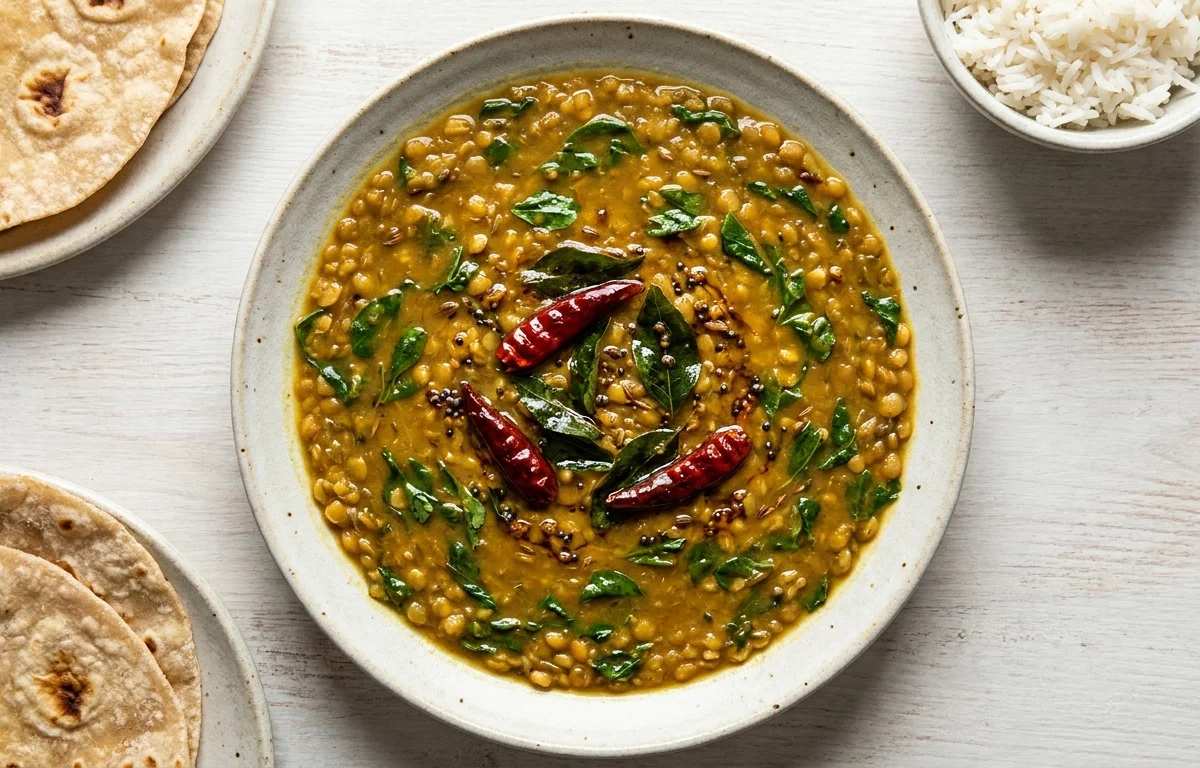
Vegan Methi Dal
A hearty, protein-rich dal infused with the earthy, slightly bitter notes of fresh fenugreek leaves. This simple Indian comfort food is naturally vegan, made with yellow lentils and a fragrant tempering of cumin, garlic, and dried red chilies. Perfect spooned over steamed rice.
For 4 servings
- prep
Rinse the dal and prep the methi.
Wash the toor dal in 2-3 changes of water until the water runs clear. Pluck the methi leaves from their stems, wash thoroughly, and roughly chop them.
TIPUse only the tender leaves and discard thick stems to avoid excess bitterness. - pressure cook · ~15 min
Pressure cook the dal.
1.Add the rinsed dal to the pressure cooker with turmeric powder and 3 cups of water.2.Pressure cook on medium heat for 4 whistles or until the dal is soft and mushy.3.Allow the pressure to release naturally, then open the lid and whisk the dal until smooth.TIPNatural pressure release is important here; it continues to cook the dal gently and prevents it from being grainy. - simmer · ~10 min
Add the methi leaves and simmer.
1.Stir the chopped methi leaves and salt into the cooked dal.2.Simmer on low heat for 8-10 minutes, stirring occasionally, until the methi leaves are wilted and the dal reaches your desired consistency.TIPIf the dal is too thick, add a splash of hot water. It should be easily pourable but not watery. - temper · ~3 min
Make the tempering.
1.Heat oil in a small pan over medium heat until shimmering.2.Add cumin seeds and let them splutter for 30 seconds.3.Add dried red chilies and stir for 15 seconds until they darken slightly.4.Add chopped garlic and sauté until golden and fragrant, about 1 minute.5.Remove the pan from heat, add a pinch of asafoetida, and swirl the pan to cook it in residual heat.TIPAdding asafoetida off the heat prevents it from burning, which can make it bitter. - mix · ~2 min
Finish and season the dal.
1.Pour the hot tempering over the simmering dal. It will sizzle.2.Immediately stir in the coriander powder and red chili powder.3.Simmer for an additional 2 minutes, then turn off the heat.4.Squeeze in the fresh lemon juice and stir well. - rest · ~5 min
Rest briefly before serving.
Let the dal rest for 5 minutes to allow the flavors to meld. Serve warm.
TIPDal always tastes better after a short rest; the flavor deepens as it cools slightly.
What to keep in mind.
6 tips from the recipe — small details that make a real difference to the final dish.
- 1Pick only the tender methi leaves and discard thick stems to reduce bitterness.
- 2Whisk the cooked dal vigorously while still hot for a creamy, smooth texture.
- 3Simmer the methi leaves just until wilted; overcooking makes them lose color and turn bitter.
- 4Use a heavy-bottomed pan for the tempering to prevent garlic from burning too fast.
- 5Add asafoetida off the heat to preserve its pungent aroma without bitterness.
- 6Let the dal rest for 5 minutes before serving so the flavors meld and deepen.
Adapt it for your goals.
Low-oil
Skip the tempering step; instead, dry-roast cumin seeds and garlic in a non-stick pan with 1 teaspoon of oil, then stir directly into the dal.
high proteinHigh-protein
Replace half the toor dal with masoor dal (red lentils) for a quicker cook and a protein boost, keeping the same tempering.
jainJain
Omit garlic and asafoetida; add a pinch of hing (if allowed) and use hing-free cumin and chili tempering.
veganVegan
This recipe is already vegan — simply ensure the oil used is plant-based (e.g., sunflower or coconut oil).
Why this is on our healthy list.
Rich in Plant Protein
Toor dal is a great source of plant-based protein, supporting muscle repair and satiety.
High in Dietary Fiber
The combination of lentils and fenugreek leaves provides soluble fiber that aids digestion and promotes gut health.
Good Source of Iron
Fenugreek leaves and lentils both contain iron, which supports healthy blood oxygen transport.
Low in Saturated Fat
This dal uses just 2 teaspoons of oil, keeping the saturated fat content minimal.
Frequently asked questions
Yes, but use only 2 tablespoons of dried methi (kasuri methi) and add it during the simmer step — fresh leaves are more tender.


