
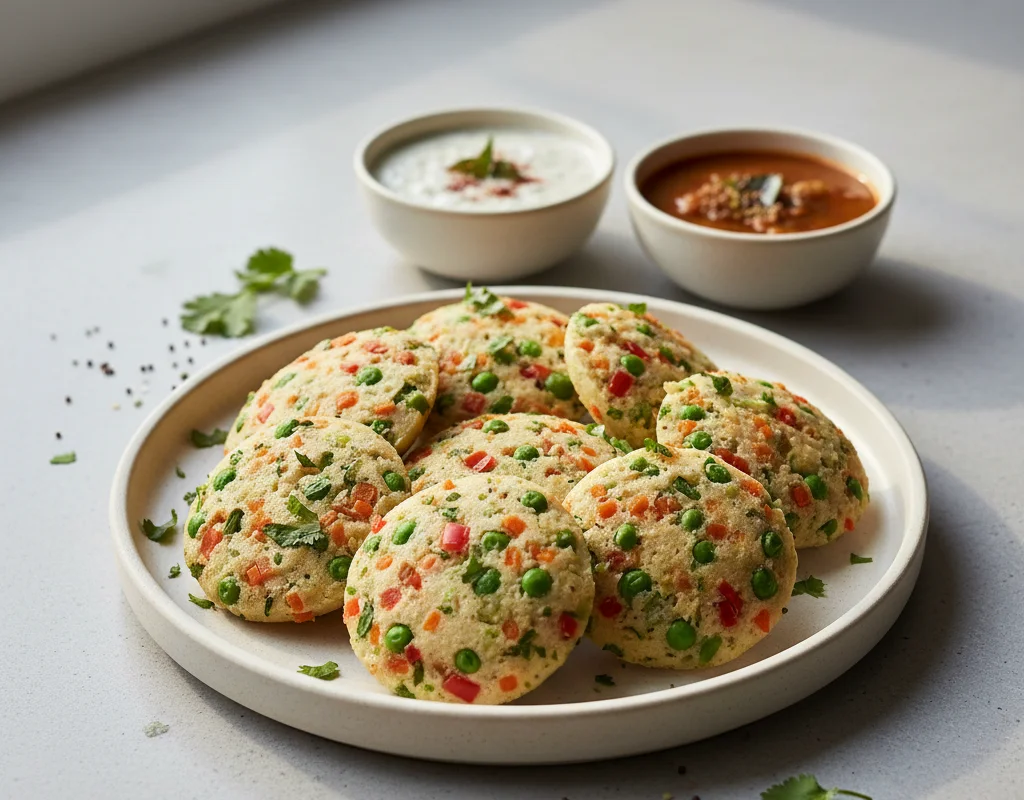
Vegetable Idli
Soft, pillowy steamed rice cakes studded with colorful vegetables. A healthy twist on the South Indian classic that sneaks extra veggies into your breakfast. Pairs beautifully with coconut chutney and sambar.
For 4 servings
- prep
Soak rice and lentils overnight.
1.Wash idli rice and urad dal separately 2-3 times until water runs clear.2.Soak rice with fenugreek seeds in enough water for 5-6 hours.3.Soak urad dal separately in enough water for 5-6 hours.4.Drain both after soaking.TIPSoaking longer (up to 8 hours) gives fluffier idlis. - mix
Grind the batter.
1.Grind urad dal with 1/4 cup cold water to a smooth, fluffy paste. Add water gradually.2.Transfer to a large bowl.3.Grind rice with remaining 1/4 cup water to a slightly coarse paste (not too smooth).4.Mix both pastes together with salt. The batter should be thick but pouring consistency.TIPCold water prevents the grinder from heating up, which can kill fermentation. - rest · ~480 min
Ferment the batter overnight.
1.Cover the bowl with a lid or cloth.2.Place in a warm spot (oven with light on or warm corner) for 8-10 hours or overnight.3.The batter should rise and turn airy with tiny bubbles.TIPIf your kitchen is cold, place the bowl inside the oven with just the pilot light on. - prep
Prep the vegetables and ready the steamer.
1.Gently fold grated carrot, chopped bell pepper, green beans, green chili, ginger, and coriander leaves into the fermented batter.2.Do not overmix — you want to keep the air in the batter.3.Fill the steamer base with water and bring to a boil.4.Lightly grease the idli molds with oil.TIPFold gently — aggressive mixing deflates the batter and makes dense idlis. - steam · ~10 min
Steam the vegetable idlis.
1.Pour batter into each greased idli mold, filling about 3/4 full.2.Place the idli stand in the steamer and close the lid.3.Steam on medium-high heat for 10 minutes.4.Check by inserting a toothpick — it should come out clean.TIPDon't open the lid during the first 8 minutes or the idlis will be dense. - rest · ~2 min
Rest and unmold the idlis.
1.Turn off the heat and let idlis rest for 2 minutes.2.Dip a spoon in water and run it around each idli to release.3.Gently scoop out and transfer to a serving plate.TIPResting makes unmolding easier — hot idlis stick to the mold. - serve
Serve vegetable idlis hot with coconut chutney and sambar.
What to keep in mind.
7 tips from the recipe — small details that make a real difference to the final dish.
- 1Soak the urad dal and rice separately for at least 5-6 hours to ensure a light, airy batter.
- 2Grind the urad dal first until it is fluffy and smooth; this builds the structure of the idli.
- 3Use cold water while grinding to keep the batter cool and aid fermentation.
- 4Place the batter in a warm, draft-free spot (like an oven with the light on) for consistent fermentation.
- 5Fold the vegetables in gently after fermentation to avoid deflating the batter and losing volume.
- 6Do not open the steamer lid for the first 8 minutes of steaming to prevent the idlis from collapsing.
- 7Let the idlis rest for 2 minutes after steaming before unmolding to prevent sticking and breakage.
Adapt it for your goals.
High-protein
Replace 1/4 cup of idli rice with roasted chana dal (split chickpeas) for a higher protein content while maintaining a soft texture.
gluten free confirmedGluten-free confirmed
This recipe is naturally gluten-free; ensure your fenugreek seeds and spices are certified gluten-free to avoid cross-contamination.
low sodiumLow-sodium
Omit the salt or use a salt substitute for a kidney-friendly version; the vegetables provide enough natural flavor.
veganVegan
This recipe is already vegan as written, using no dairy or animal products — just check that your oil is plant-based.
kid friendlyKid-friendly
Finely mince or grate the bell pepper and green beans so they blend into the batter; the idlis become a fun, veggie-packed finger food for toddlers.
Why this is on our healthy list.
High in Plant Protein
Urad dal provides a significant amount of plant-based protein, supporting muscle repair and satiety.
Rich in Dietary Fiber
The combination of idli rice, urad dal, carrots, bell peppers, and green beans offers a good dose of fiber for digestive health.
Probiotic Boost from Fermentation
The natural fermentation process introduces beneficial bacteria that can support gut health.
Low in Fat
With only a teaspoon of oil for greasing, these steamed idlis are a very low-fat breakfast option.
Good Source of Vitamin A
Carrots and bell peppers are rich in beta-carotene, which the body converts into vitamin A for eye health.
Frequently asked questions
Fermentation requires warmth (around 30°C/85°F). If your kitchen is cold, the batter won't rise. Keep it in an oven with the pilot light on or a warm cupboard.


