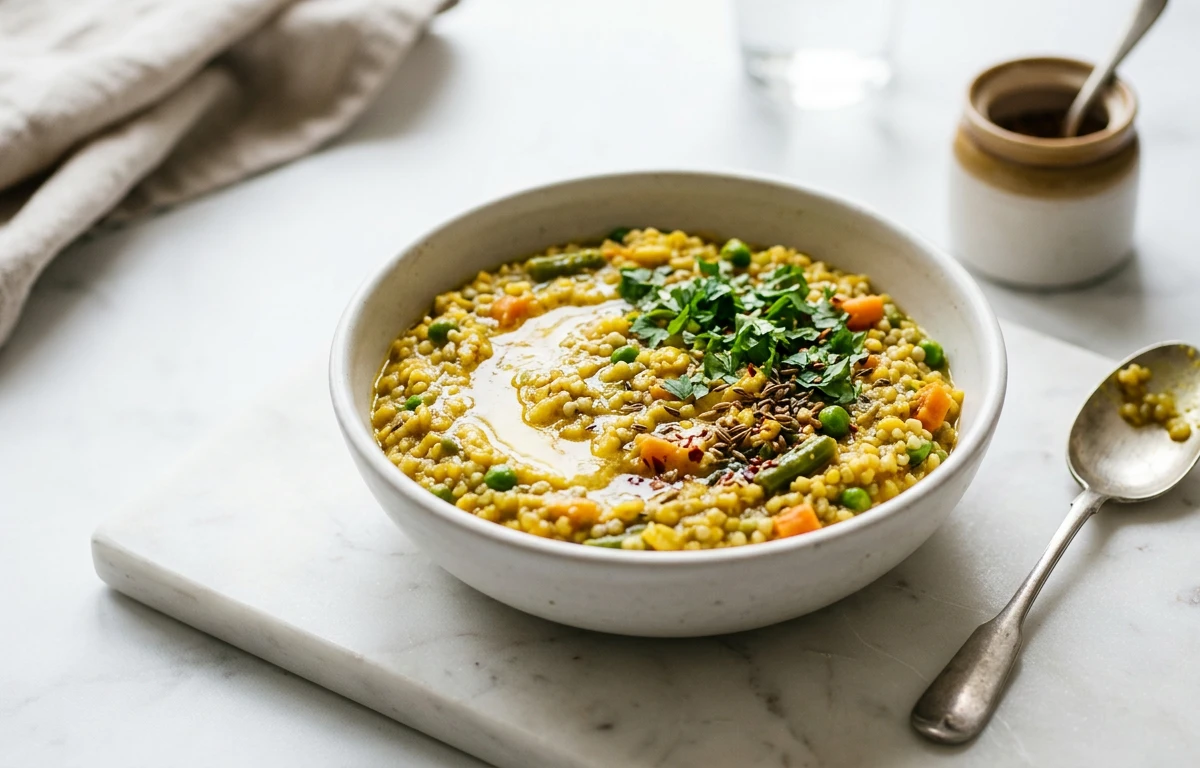
Vegetable & Millet Khichdi
A warm, comforting one-pot meal made with nutrient-packed millets, yellow moong dal, and a medley of seasonal vegetables. Lightly spiced with cumin and turmeric, this khichdi is easy on the stomach, ready in under 40 minutes, and perfect for a wholesome lunch or dinner.
For 4 servings
- prep · ~20 min
Wash and soak the millet and dal.
1.Rinse the foxtail millet and moong dal together under running water twice.2.Soak in fresh water for 20 minutes, then drain.3.Chop the carrot, green beans, and tomato into small, even-sized pieces.TIPSoaking shortens the cooking time and helps the millet cook evenly. - temper · ~2 min
Prepare the tempering in the pressure cooker.
1.Heat ghee in a pressure cooker over medium heat.2.Add cumin seeds and let them splutter for 30 seconds.3.Add asafoetida and grated ginger. Sauté for 20 seconds until fragrant.TIPDon't let the ginger burn — medium heat keeps it aromatic. - saute · ~3 min
Sauté the vegetables and spices.
1.Add the chopped tomato, carrot, beans, and peas to the cooker.2.Sprinkle in turmeric powder and salt.3.Sauté everything together for 2 to 3 minutes until the tomatoes soften slightly. - mix · ~1 min
Add the drained millet, dal, and water.
1.Add the soaked and drained millet and moong dal to the cooker.2.Pour in 3.5 cups of water and stir everything well. - pressure cook · ~15 min
Pressure cook the khichdi.
Close the pressure cooker lid securely. Cook on high heat until the first whistle, then lower the flame and cook for another 3 whistles. Turn off the heat and let the pressure release naturally.
TIPDo not force-open the cooker. Natural release finishes the cooking gently, giving the khichdi a softer texture. - assemble · ~1 min
Open the cooker and mash lightly.
Once the pressure has fully released, open the lid. Give the hot khichdi a good stir and mash it lightly with the back of the ladle to achieve a creamy, porridge-like consistency.
- garnish
Garnish with fresh coriander and serve hot.
Spoon the khichdi into serving bowls. Garnish with chopped coriander leaves. Serve warm with a spoonful of ghee on top, a side of yogurt, or papad.
What to keep in mind.
7 tips from the recipe — small details that make a real difference to the final dish.
- 1Soak the millet and dal for 20 minutes to ensure even cooking and a softer texture.
- 2Use a heavy-bottomed pressure cooker to prevent sticking and ensure even heat distribution.
- 3Do not force-open the cooker; let the pressure release naturally for a creamier khichdi.
- 4Sauté the ginger just until fragrant, about 20 seconds, to avoid bitterness.
- 5Mash the khichdi lightly after cooking for a creamy, porridge-like consistency.
- 6Adjust the water quantity for a thicker or thinner consistency—use ¼ cup less for a firmer texture.
- 7Leftover khichdi thickens on cooling; add a splash of hot water while reheating.
Adapt it for your goals.
Vegan
Replace ghee with 1 tbsp coconut oil or neutral oil for the tempering. This keeps the dish entirely plant-based while still delivering a rich mouthfeel.
low spiceLow-spice
Omit asafoetida and reduce cumin to ½ tsp for a gentler flavour that's ideal for kids or those with sensitive digestion.
high proteinHigh-protein
Double the moong dal to 1 cup and reduce millet to ½ cup, then add 1 cup of water more to maintain the consistency.
Why this is on our healthy list.
Easy on Digestion
The combination of foxtail millet and moong dal is naturally light and easy to digest, making this dish ideal for convalescence or a gentle detox day.
Rich in Plant Fiber
Both millet and moong dal provide soluble fibre that supports healthy digestion and helps keep you full longer.
Loaded with Micronutrients
Carrots, green beans, and peas add a range of vitamins, including vitamin A, vitamin C, and folate, without overpowering the dish.
Low in Fat
With only a small amount of ghee for tempering, this khichdi is naturally low in fat yet still flavourful and satisfying.
Frequently asked questions
Yes, barnyard millet works perfectly. Follow the same soaking time and water ratio, as it cooks similarly to foxtail millet.