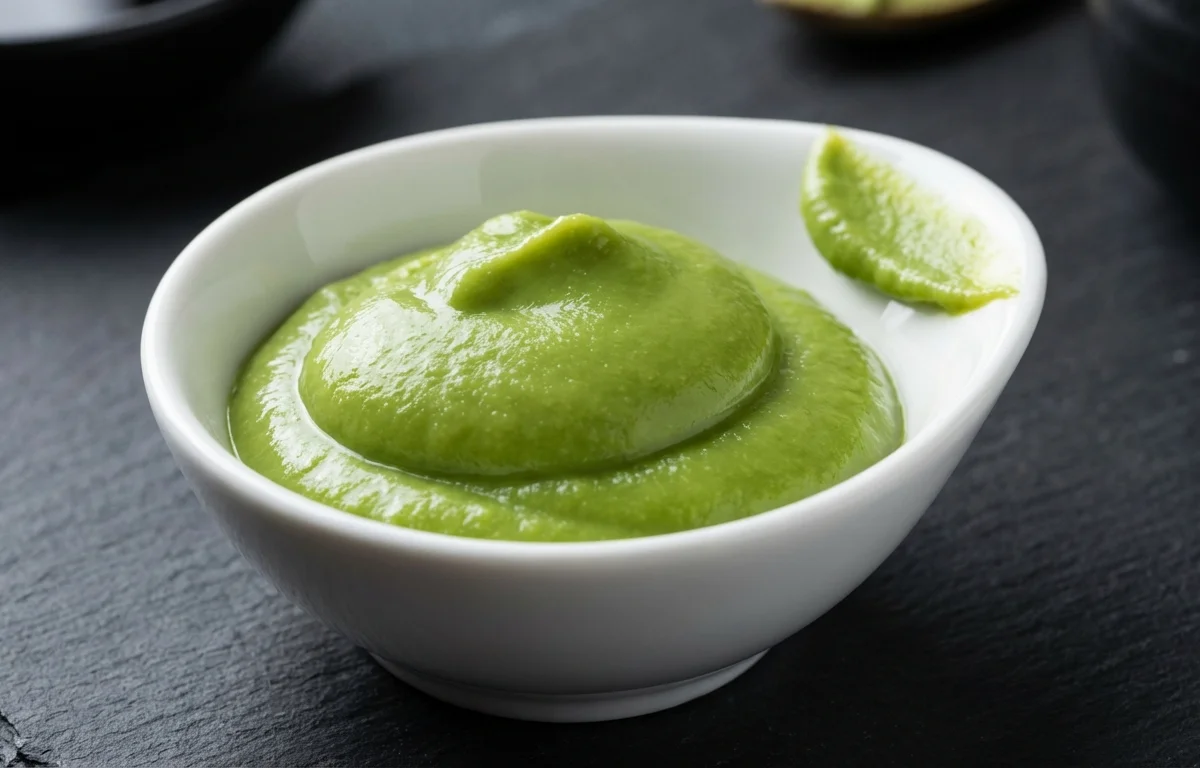
Wasabi Paste
A pungent, nose-tingling Japanese condiment made from fresh wasabi root. Grating the rhizome against a sharkskin grater releases its volatile heat, creating a complex, fleeting spiciness that's completely different from the powdered imitation. A tiny dab is all you need alongside sushi or sashimi.
For 8 servings
- prep
Trim and scrub the wasabi root.
1.Cut off the top knobby end where the leaves attached.2.Gently scrub the rhizome under cool running water with a soft brush to remove any dirt.3.Pat completely dry with a clean kitchen towel.TIPThe heat lives near the skin — don't peel it. - prep · ~2 min
Grate the wasabi in a circular motion.
Hold the root at a slight angle and grate it against the sharkskin grater using slow, firm circles. Work from the thicker end downward. The friction releases the cells that create wasabi's signature heat.
TIPGrate only what you'll use in the next 15 minutes — the heat peaks fast then fades. - mix · ~3 min
Gather the paste and let it rest.
Scrape the grated wasabi into a small bowl. Use the back of a spoon to gently pile it together into a compact mound. Let it sit undisturbed for 2-3 minutes — this allows the enzymes to develop full heat and complexity.
- serve
Serve immediately as a sushi condiment.
Shape a small dab of wasabi paste with the tip of a spoon and set it on the plate next to sushi or sashimi. A portion about the size of a pea is sufficient for most bites.
TIPDon't stir wasabi into soy sauce. Place a tiny amount directly on the fish, then dip the fish side — not the rice — into the soy.
What to keep in mind.
6 tips from the recipe — small details that make a real difference to the final dish.
- 1Use a sharkskin (or fine microplane) grater for the best texture and heat release.
- 2Grate only what you need within 15 minutes, as fresh wasabi's heat dissipates quickly.
- 3Let the grated paste rest 2–3 minutes before serving to allow the full pungency to develop.
- 4Do not peel the root — the most intense heat compounds are concentrated just under the skin.
- 5Store unused wasabi root wrapped in a damp paper towel inside a sealed bag in the fridge for up to 2 weeks.
- 6If the grated paste turns watery, gently blot excess moisture with a paper towel before serving.
Adapt it for your goals.
Imitation-Free Alternative
Use 30 g fresh wasabi root plus 20 g horseradish root (grated similarly) for a milder, longer-lasting heat that mimics the texture of real wasabi while extending the yield.
Quick SubstitutionQuick Substitution
Substitute fresh wasabi with a paste made from 1 tsp real wasabi powder mixed with 1 tsp cold water — let rest 5 minutes — for a pantry-friendly version when fresh root is unavailable.
Why this is on our healthy list.
Natural Antimicrobial
Fresh wasabi contains allyl isothiocyanate, a compound with natural antimicrobial properties that may help inhibit bacteria often found on raw fish.
Low-Calorie Condiment
A pea-sized serving of fresh wasabi paste adds negligible calories while delivering intense flavor, making it an ideal low-calorie accompaniment for sushi.
Rich in Glucosinolates
Wasabi root provides glucosinolates, sulfur-containing compounds linked to antioxidant activity and potential anti-inflammatory benefits.
Frequently asked questions
Yes, but a fine microplane or ceramic grater works best as a substitute. A coarse grater produces a stringy, watery paste rather than a smooth, creamy one.