
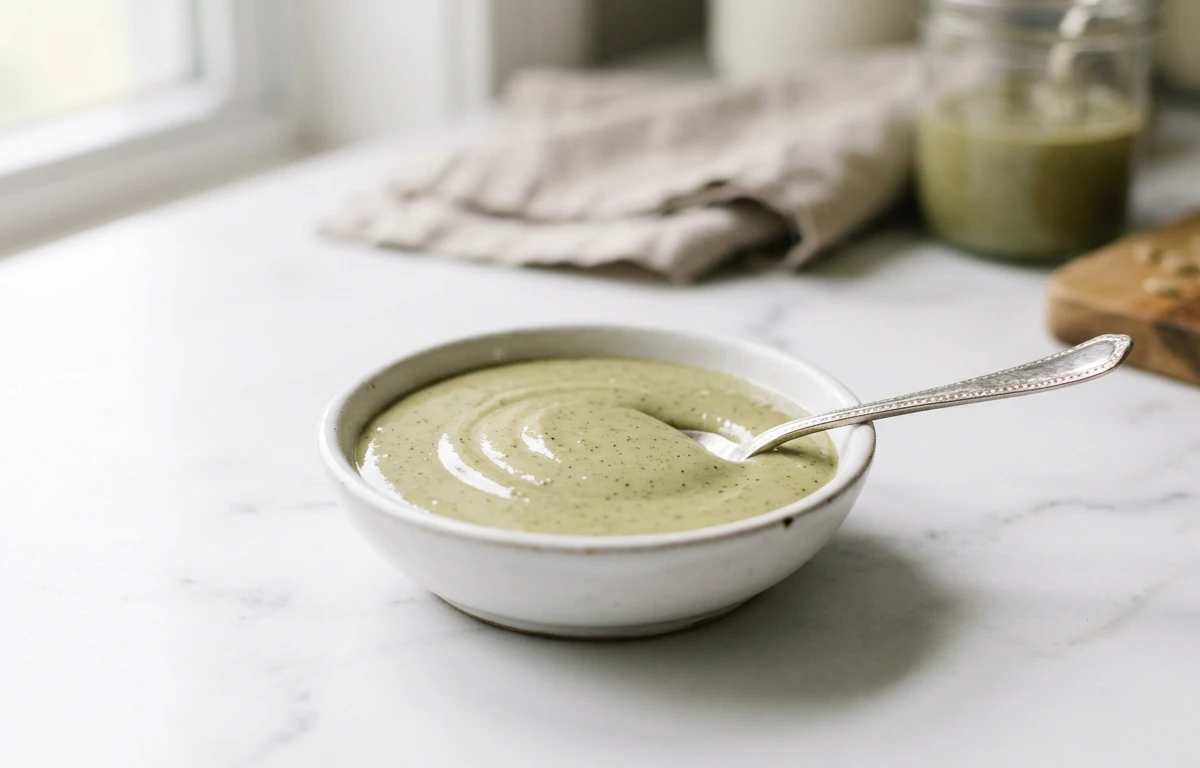
Watermelon Seed Butter
A creamy, nut-free butter made from roasted watermelon seeds with a subtle earthy sweetness and hints of vanilla. Perfect as a spread on toast, swirled into oatmeal, or blended into smoothies. This two-ingredient pantry staple comes together in minutes and keeps for weeks.
For 16 servings
- prep
Preheat the oven and spread the seeds.
Preheat oven to 350°F (175°C). Spread the shelled watermelon seeds in a single layer on a baking sheet.
- roast · ~10 min
Roast the watermelon seeds.
Roast for 8–10 minutes, stirring halfway through, until the seeds are lightly golden and fragrant. Watch carefully — they can burn quickly. Let cool for 5 minutes on the tray.
TIPLight roasting deepens the flavor dramatically. Don't skip this step. - mix · ~2 min
Grind the seeds into a powder.
Transfer the cooled seeds to a food processor. Pulse in short bursts for 1–2 minutes until they break down into a fine, sandy powder. Scrape down the sides with a spatula.
- mix · ~5 min
Process into a smooth butter.
Add salt and continue processing on high for 4–5 minutes, stopping to scrape down the sides. The mixture will go from powder to a thick paste, then finally release its oils and become creamy. Add oil one teaspoon at a time only if needed to help it blend.
TIPPatience is key — it will look dry before it turns creamy. Keep processing. - mix · ~1 min
Blend in the sweetener and vanilla.
Add honey and vanilla extract. Process for another 30 seconds until fully incorporated and silky smooth. Taste and adjust sweetness if desired.
- serve
Transfer to a jar and store.
Scrape the butter into a clean glass jar, seal tightly, and store in the refrigerator. It will thicken slightly as it cools.
TIPBring to room temperature for 10 minutes before spreading if it becomes too firm in the fridge.
What to keep in mind.
6 tips from the recipe — small details that make a real difference to the final dish.
- 1Roast the seeds until just fragrant and lightly golden — over-roasting makes the butter bitter.
- 2Process the seeds patiently; the butter will go through a grainy phase before turning silky.
- 3Add oil only if the seeds seem dry; most watermelon seeds have enough natural oils to blend.
- 4For a smoother texture, warm the seeds slightly before processing to help release oils.
- 5Store in the fridge to keep the butter fresh and spreadable for up to 3 weeks.
- 6If the butter hardens in the fridge, let it sit at room temperature for 10 minutes before using.
Adapt it for your goals.
Sweet-savory
Replace honey with maple syrup and add a pinch of smoked paprika and cayenne for a smoky-sweet spread that pairs well with apples or crackers.
veganVegan
Substitute honey with agave nectar or date syrup to keep the recipe plant-based without sacrificing sweetness.
low oilLow-oil
Omit the added oil entirely; just process the seeds longer (up to 8–10 minutes) until they naturally release enough oil to become creamy.
chocolate swirlChocolate swirl
After blending the butter, swirl in 1 tablespoon of melted dark chocolate and a pinch of cinnamon for a dessert-like spread.
Why this is on our healthy list.
Rich in Plant-Based Protein
Watermelon seeds are a good source of protein, making this butter a satisfying, nut-free option for toast or smoothies.
Contains Healthy Fats
The seeds provide unsaturated fats that support heart health, especially when used in place of processed spreads.
No Artificial Additives
Made with simple, whole-food ingredients — no preservatives, emulsifiers, or refined sugars (if using natural sweeteners).
Nut-Free Alternative
Ideal for people with nut allergies, this seed-based butter delivers a similar creamy texture and flavor without common allergens.
Frequently asked questions
Yes, but reduce or omit the added salt in the recipe to avoid an overly salty butter. Taste before adding more.


