
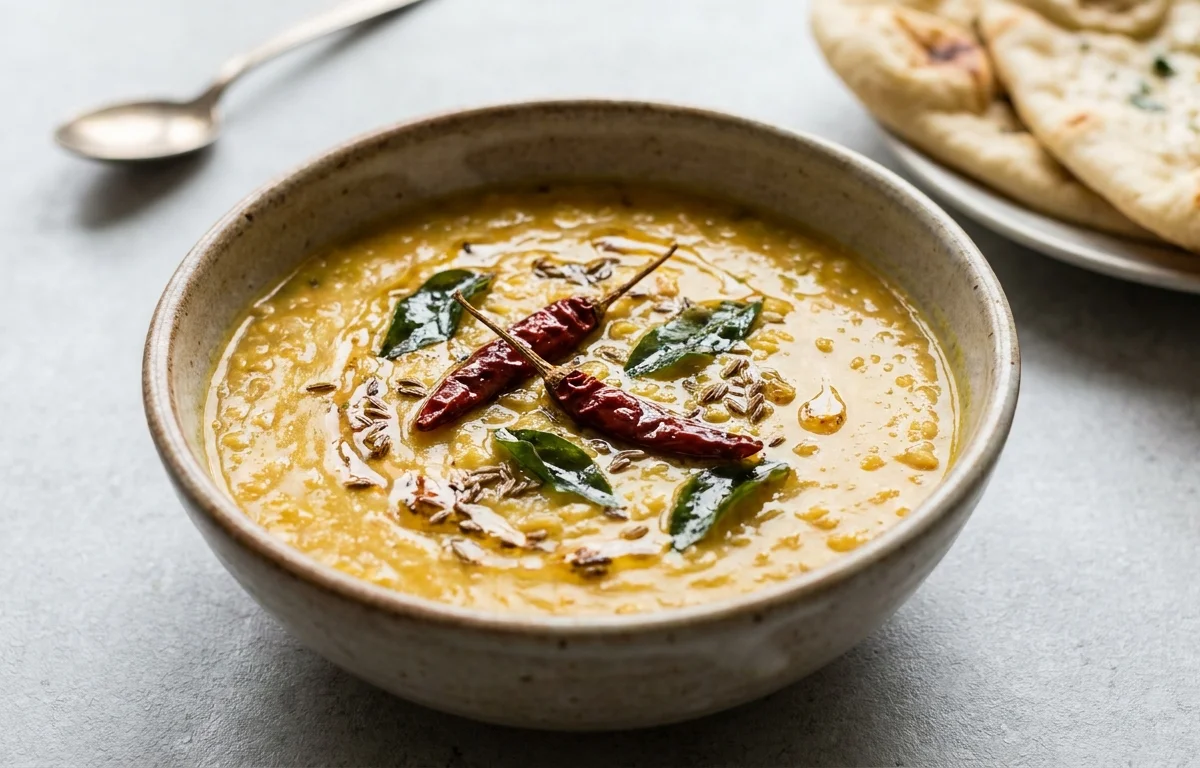
Dal Tadka
A classic North Indian lentil curry, made lighter and healthier. This high-protein, high-fiber dal is tempered with aromatic spices in minimal ghee, creating a comforting and nutritious dish perfect for a weight-loss journey.
For 4 servings
Prepare the lentils.
Wash the toor dal and moong dal thoroughly under running water. Soak them together in enough water for 30 minutes. After soaking, drain the water completely.
TIPSoaking the lentils helps them cook faster and makes them easier to digest.Pressure cook the dal.
- Place the drained lentils in a pressure cooker.
- Add 3 cups of water, turmeric powder, and salt.
- Secure the lid and cook on medium heat for 4-5 whistles, or until the lentils are soft and mushy.
- Let the pressure release naturally before opening the cooker.
TIPIf the dal looks too thick after cooking, add a little hot water to reach your desired consistency.Make the tempering (tadka).
- Heat ghee in a small pan or tadka pan over medium heat.
- Add mustard seeds and cumin seeds. Let them splutter.
- Add asafoetida and dried red chilies. Sauté for a few seconds.
- Add the chopped onion, grated ginger, minced garlic, and green chili. Sauté until the onions turn golden brown.
TIPCook the onions well until they are golden, as this forms the flavor base of the tadka.Cook the masala.
- Add the chopped tomatoes to the pan and cook until they become soft and pulpy.
- Add the red chili powder and garam masala. Mix well and cook for another minute until the oil starts to separate from the masala.
Combine the dal and tadka.
Pour the prepared tempering over the cooked dal. Mix everything together gently. Let it simmer for 2-3 minutes for the flavors to meld together.
Garnish and serve.
Garnish the Dal Tadka with freshly chopped coriander leaves. Serve hot with roti or steamed rice.
What to keep in mind.
4 tips from the recipe — small details that make a real difference to the final dish.
- 1For a creamier texture, you can lightly mash the dal with the back of a ladle after pressure cooking.
- 2Always add spices to hot ghee on low to medium heat to prevent them from burning and turning bitter.
- 3You can prepare a larger batch of the tadka and store it in the fridge for a few days to make quick dal later.
- 4A final squeeze of lemon juice just before serving can brighten up the flavors of the dal.
Adapt it for your goals.
Vegan
Substitute ghee with a neutral vegetable oil or coconut oil to make this recipe completely plant-based.
jainJain
Omit the onion, ginger, and garlic. You can add a pinch more asafoetida and use grated cabbage or raw banana in the tadka for texture.
high proteinHigh protein
Add finely chopped vegetables like carrots, beans, or spinach to the dal while pressure cooking to increase fiber and nutrient content without significantly adding calories.
quickQuick
If you're short on time, you can skip the soaking step. You may need to add an extra whistle or two during pressure cooking.
Why this is on our healthy list.
Excellent Source of Protein
Lentils are a fantastic source of plant-based protein, essential for muscle repair, growth, and overall body function.
High in Dietary Fiber
The high fiber content promotes digestive health, helps regulate blood sugar levels, and contributes to a feeling of fullness, aiding in weight management.
Rich in Essential Minerals
This dal is packed with important minerals like iron, magnesium, and folate, which are vital for energy production and preventing anemia.
Heart Healthy
Being low in saturated fat and high in fiber, this dal can help manage cholesterol levels and support cardiovascular health.
Frequently asked questions
Yes, this version of Dal Tadka is very healthy. It's rich in plant-based protein and dietary fiber from lentils, which aids in digestion and keeps you full. Using minimal ghee keeps the fat content low, making it excellent for weight management and heart health.


