
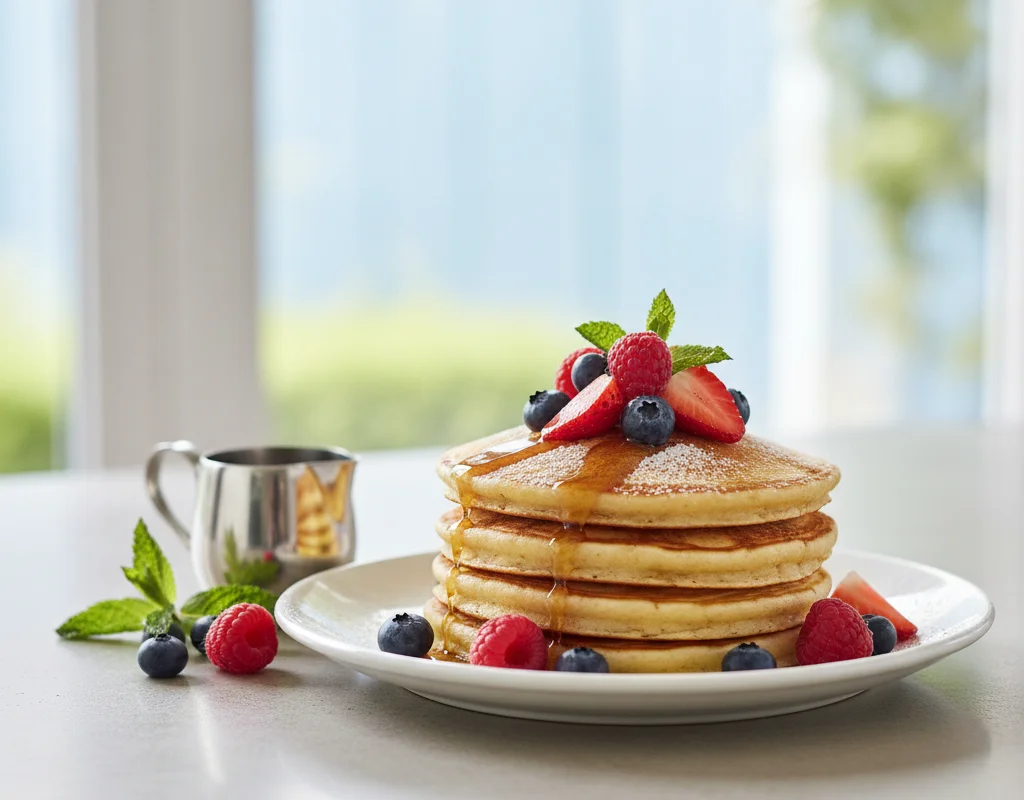
Pancakes
Light, fluffy pancakes with a golden-brown exterior and tender crumb. These classic American breakfast treats come together in minutes using simple pantry staples, perfect for lazy weekend mornings or quick weekday breakfasts.
For 4 servings
- mix · ~1 min
Mix the dry ingredients.
In a large mixing bowl, whisk together the flour, sugar, baking powder, baking soda, and salt until evenly combined.
- mix · ~1 min
Whisk the wet ingredients.
In a separate medium bowl, whisk the egg, milk, melted butter, and vanilla extract until smooth and well blended.
TIPMake sure the melted butter is slightly cooled so it doesn't scramble the egg. - mix · ~1 min
Combine wet and dry mixtures.
Pour the wet ingredients into the dry ingredients. Stir gently with a whisk or spatula just until combined. The batter should be lumpy — a few small flour pockets are fine.
TIPDo not overmix. Overworking the batter develops gluten and makes pancakes tough and flat. - rest · ~5 min
Let the batter rest.
Set the batter aside for 5 minutes. This allows the leavening agents to activate and the gluten to relax, giving you taller, fluffier pancakes.
- fry · ~10 min
Cook the pancakes.
1.Heat a nonstick griddle or skillet over medium heat. Lightly grease with butter.2.Pour 1/4 cup batter onto the hot surface for each pancake.3.Cook until bubbles form on the surface and edges look set (2-3 minutes).4.Flip carefully and cook the other side until golden brown (1-2 minutes).TIPKeep heat at medium. Too high burns the outside before the center cooks; too low makes pale, dense pancakes. - serve
Serve warm with your favorite toppings.
Stack the pancakes on a plate and serve immediately with maple syrup, fresh berries, or a pat of butter.
What to keep in mind.
6 tips from the recipe — small details that make a real difference to the final dish.
- 1Rest the batter for 5 minutes to let the gluten relax and leavening activate, ensuring fluffier pancakes.
- 2Use a light hand when mixing; a few lumps are fine, but overmixing develops gluten and makes pancakes tough.
- 3Test griddle heat by sprinkling water: if beads sizzle and dance, it's ready—too hot and they'll burn.
- 4Wait for bubbles to pop on the surface and edges to look set before flipping; this ensures even cooking.
- 5Keep cooked pancakes in a 200°F oven on a wire rack while you finish the batch, so they stay hot without steaming.
- 6To reheat leftover pancakes, pop them in a toaster or oven at 350°F for a few minutes—skip the microwave to avoid sogginess.
Adapt it for your goals.
Buttermilk pancakes
Substitute milk with 1 1/4 cups buttermilk and reduce baking powder to 1 tsp (the extra acid activates baking soda for an even tangier, fluffier pancake).
gluten freeGluten-free
Replace all-purpose flour with a 1:1 gluten-free baking blend that contains xanthan gum, and add 1 tbsp extra milk if the batter seems too thick.
whole wheatWhole wheat
Use 1 cup whole wheat flour and 1/2 cup all-purpose flour for a nuttier flavor and extra fiber; add 2 tbsp more milk to balance absorption.
add in: blueberryAdd-in: blueberry
Gently fold 3/4 cup fresh or frozen blueberries into the batter just before cooking, and sprinkle a little lemon zest into the batter for brightness.
Why this is on our healthy list.
Good Source of Calcium
Milk and butter provide calcium, which supports bone health and muscle function.
Provides Quick Energy
The combination of all-purpose flour and sugar supplies carbohydrates for a fast energy boost, ideal for breakfast.
Contains Protein
The large egg and milk contribute high-quality protein to help keep you full and support muscle repair.
Frequently asked questions
Overmixing the batter develops too much gluten, making pancakes tough and flat. Stir only until combined — lumps are welcome.


