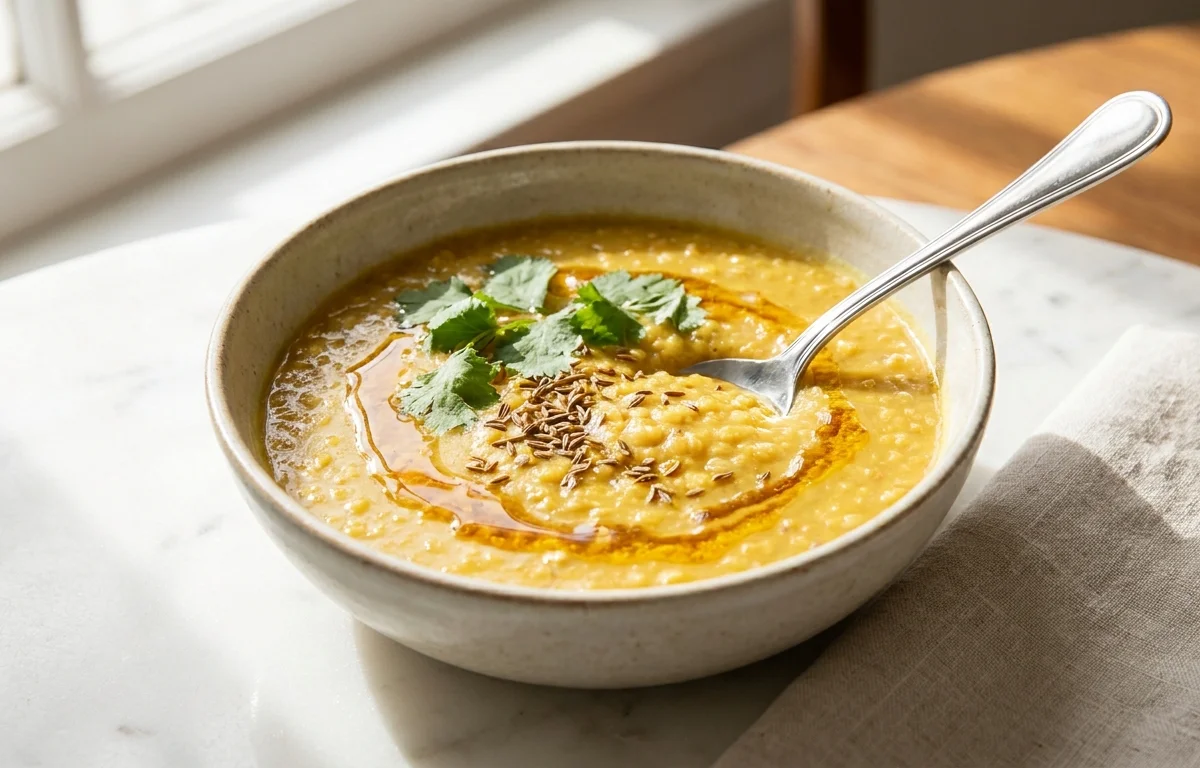
Yellow Lentil Dal
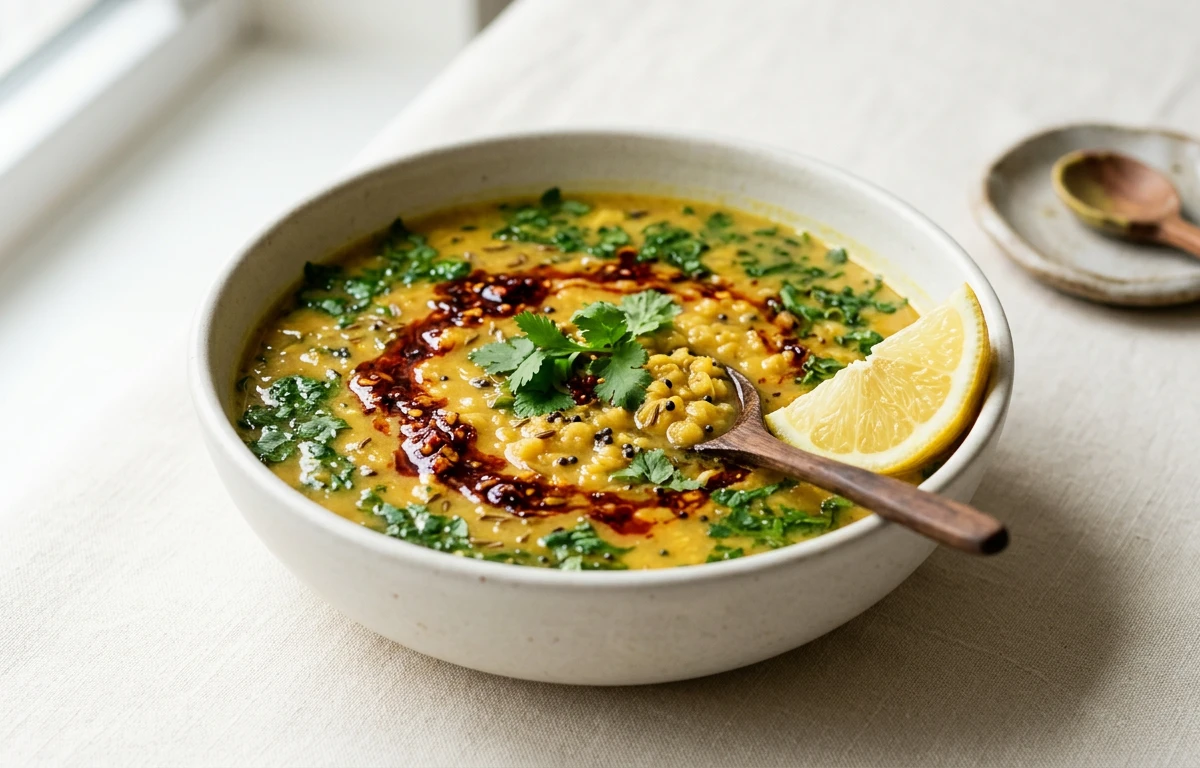
A warm, comforting bowl of yellow lentils simmered until perfectly soft, then finished with a aromatic tempering of cumin, garlic, and mild spices. This everyday Indian staple is light, protein-packed, and comes together in about 30 minutes. Serve it alongside steamed rice or warm roti for a simple, satisfying meal.
For 4 servings
- prep · ~2 min
Wash the yellow moong dal.
1.Place 1 cup yellow moong dal in a bowl and rinse with water 3 to 4 times until water runs clear.2.Drain well. - pressure cook · ~15 min
Pressure cook the dal with turmeric.
1.Transfer the washed dal to a pressure cooker.2.Add 3 cups water and 1 pinch turmeric powder.3.Close the lid and cook on medium heat for 3 to 4 whistles.4.Let the pressure release naturally.TIPNatural pressure release gives the dal a creamier texture. - mix · ~2 min
Whisk and season the cooked dal.
1.Open the cooker and whisk the dal well until smooth.2.Stir in 0.25 tsp salt.3.Add a splash of water if the dal looks too thick.TIPWhisking aerates the lentils and makes them lighter on the stomach. - temper · ~7 min
Make the cumin-garlic tempering.
1.Heat 1 tbsp ghee in a small frying pan over medium heat.2.Add 1 tsp cumin seeds and let them crackle for 30 seconds.3.Add 4 minced garlic cloves and sauté until light golden.4.Add 2 dried red chilies and 1 pinch asafoetida; stir for 10 seconds.5.Add 1 chopped tomato and 1 pinch red chili powder; cook until tomato softens.TIPDon't let the garlic burn — it turns bitter and ruins the dal. - simmer · ~3 min
Simmer the dal with the tempering.
1.Pour the prepared tempering directly into the cooked dal.2.Stir well and let it simmer on low heat for 2 to 3 minutes.3.Adjust consistency with hot water if needed. - garnish · ~1 min
Finish with lemon and fresh coriander.
1.Turn off the heat and stir in 1 tbsp lemon juice.2.Garnish with 2 tbsp chopped coriander leaves.3.Transfer to a serving bowl.TIPLemon juice added at the end keeps its bright, fresh flavour. - serve
Serve the yellow lentil dal hot.
Ladle into katoris and serve alongside steamed basmati rice or roti.
What to keep in mind.
6 tips from the recipe — small details that make a real difference to the final dish.
- 1Whisk the dal thoroughly after pressure cooking; it creates a smooth, silky texture and aids digestion.
- 2Do not skip the natural pressure release — it allows the lentils to soften further and absorb more flavour.
- 3Toast cumin seeds in ghee until they crackle and darken slightly to release their full aroma.
- 4Add lemon juice only after turning off the heat to preserve its bright, fresh acidity.
- 5For a thinner dal, add hot water until you reach your preferred consistency; cold water can dull the flavors.
- 6If the dal thickens as it cools, simply stir in a splash of hot water before serving.
Adapt it for your goals.
Vegan
Replace ghee with coconut oil or a neutral vegetable oil for the tempering. The dish remains aromatic and fully plant-based, perfect for vegan or dairy-free diets.
low oilLow-oil
Reduce ghee to 1/2 tbsp and dry-roast the cumin seeds, garlic, and spices in a non-stick pan before adding a splash of water to deglaze. A lighter version with the same spice profile but far less fat.
with spinachWith spinach
Add a generous handful of chopped spinach along with the tempering and simmer for 3 minutes. This adds iron, color, and a mild earthy note that complements the lentils beautifully.
creamy coconut dalCreamy coconut dal
Stir in 1/4 cup coconut milk after simmering the dal. The coconut adds a subtle sweetness and a rich, velvety finish, making the dal more indulgent and mild.
Why this is on our healthy list.
High in Plant Protein
Yellow moong dal is a top source of plant-based protein, making this dish a satisfying meat-free meal that supports muscle health and keeps you full longer.
Supports Digestion
Moong dal is one of the easiest lentils to digest, and the addition of asafoetida (hing) and ginger-like turmeric further aids digestion and reduces bloating.
Rich in Antioxidants
Turmeric and garlic provide curcumin and allicin, powerful antioxidants that help combat inflammation and support the immune system.
Low in Fat
With just one tablespoon of ghee for the entire pot, this dal is naturally low in saturated fat, especially if you skip the ghee or use a plant-based oil.
Frequently asked questions
Yes. Soak the dal for 30 minutes, then simmer in a pot with 4 cups of water for 25–30 minutes, stirring occasionally, until soft and mushy.