Collard greens often get relegated to a supporting role, simmered for hours with ham hocks and served alongside something fried. And while that's a delicious tradition, it sells these sturdy, dark-green leaves short. On their own, collard greens are a nutritional heavyweight — incredibly low in calories, packed with fibre, and one of the best plant-based sources of vitamin K you can find. The real trick is learning how to cook them so they're tender, not bitter, and you keep all that goodness intact.
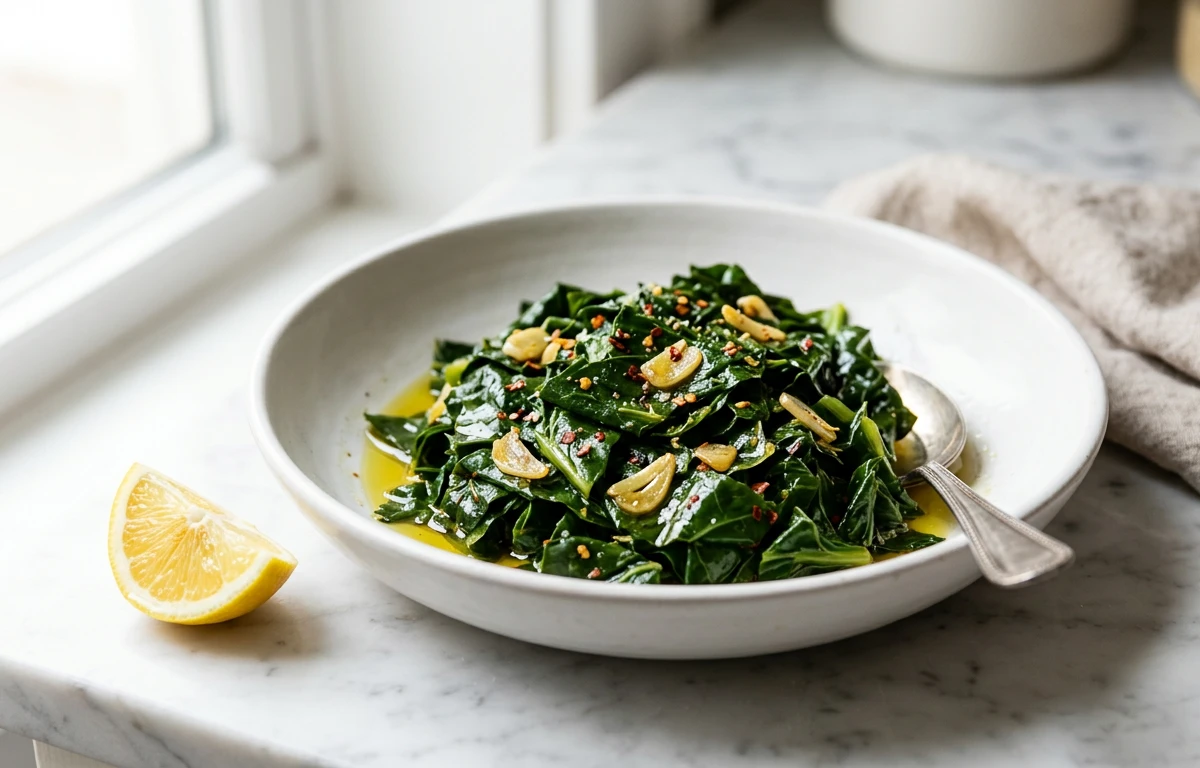
↑ Fresh collard greens are sturdy, with a mild, slightly earthy flavor.
The seriously underrated green
Let's be honest: nobody is writing love poems to collard greens. They're not as trendy as kale or as delicate as spinach. But for pure, unadulterated nutrition, they're hard to beat. These large, tough leaves from the cabbage family are incredibly resilient, both in the field and in the kitchen. A serving is mostly water and fibre, with a surprising amount of protein for a leafy green. The key is to treat them right — a quick braise or sauté is all they need to become tender and delicious, no hours-long simmering required.
IN ONE LINE
Collard greens are extremely low-calorie and low-carb, offering a huge dose of fibre, Vitamin K, and a good amount of Vitamin C. Cook them simply to retain their benefits.
Collard greens nutrition facts
Here’s the nutritional profile for a 100-gram serving of cooked collard greens, which is about one packed cup.
The numbers that jump out are the fibre — 4 grams is a huge amount for just 32 calories — and the vitamins. Collards are one of the single best sources of Vitamin K on the planet, crucial for blood clotting and bone health. They also provide a significant amount of Vitamin A and nearly 40% of your daily Vitamin C.
If you take a blood thinner like warfarin, speak with your doctor. The extremely high Vitamin K content in collards can interfere with the medication. Consistency is key.
The glycemic index of collard greens
People often ask for the glycemic index (GI) of leafy greens, but it's a bit of a misleading question. The GI scale measures how much 50 grams of available carbohydrate in a food raises blood sugar. To get 50 grams of carbs from collard greens, you'd have to eat nearly a kilogram (over two pounds) in one sitting. It's practically impossible.
For all intents and purposes, the glycemic index of collard greens is effectively zero. They are a non-starchy vegetable composed mostly of fibre and water, so they have a negligible effect on blood sugar levels, making them an excellent food for blood sugar management.
GLYCEMIC INDEX · COLLARDS vs COMMON FOODS
Collards have a negligible effect on blood sugar
Collard Greens
est. non-starchy
LOW
Apple
whole fruit
LOW
Pineapple
whole fruit
MEDIUM
White bread
refined
HIGH
Cornflakes
refined
HIGH
SCALE 0–90
04590
How to cook them right (and not boil them to death)
The classic Southern method of simmering collards for an hour or more with smoked meat creates a deeply flavorful dish, but it's not the only way. A quicker cook preserves more of the water-soluble vitamins like Vitamin C.
01
Wash them well.
Collards can be sandy. Submerge the leaves in a sink full of cold water and swish them around to dislodge any grit.
02
Remove the tough stem.
Fold each leaf in half and slice out the thick rib running down the center. You can discard it or chop it finely and cook it first.
03
Slice into ribbons.
Stack a few de-stemmed leaves, roll them up like a cigar, and slice them into thin ribbons (a 'chiffonade'). This helps them cook quickly and evenly.
04
Sauté or braise briefly.
A 10-15 minute sauté with garlic and olive oil, or a quick braise in a little broth, is all you need to make them tender-crisp. Don't be afraid of a little fat and acid (like vinegar or lemon) at the end to balance the flavor.
What collard greens are good for
01
Exceptional for bone health
Collards are one of the richest sources of Vitamin K, which is essential for helping the body use calcium to build strong bones.
>300%
Vit K DV
02
Excellent for digestion
With 4 grams of fibre per serving, collards are fantastic for promoting gut regularity and feeding healthy gut bacteria.
4 g
fiber
03
Supports blood sugar control
The combination of high fibre and almost no digestible carbs means collards have a stabilizing effect on blood sugar levels.
GI <15
very low
04
Rich in antioxidants
Collards provide a great dose of Vitamin C and Vitamin A (as beta-carotene), which act as antioxidants to protect cells from damage.
39%
Vit C DV
What to pair collards with
Collards have a mild, slightly bitter flavor that pairs beautifully with rich, acidic, or smoky ingredients. Adding a little fat helps your body absorb the fat-soluble vitamins A and K.
Eat freely — or be mindful?
Three ways to eat them
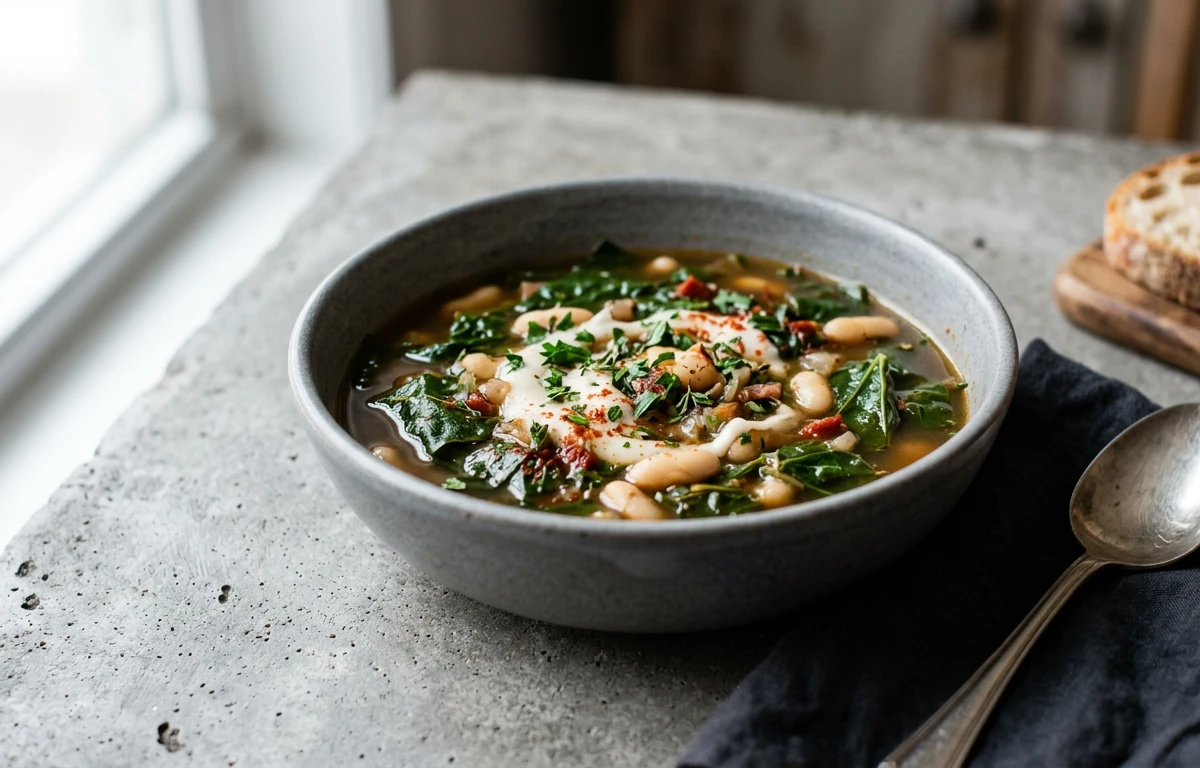
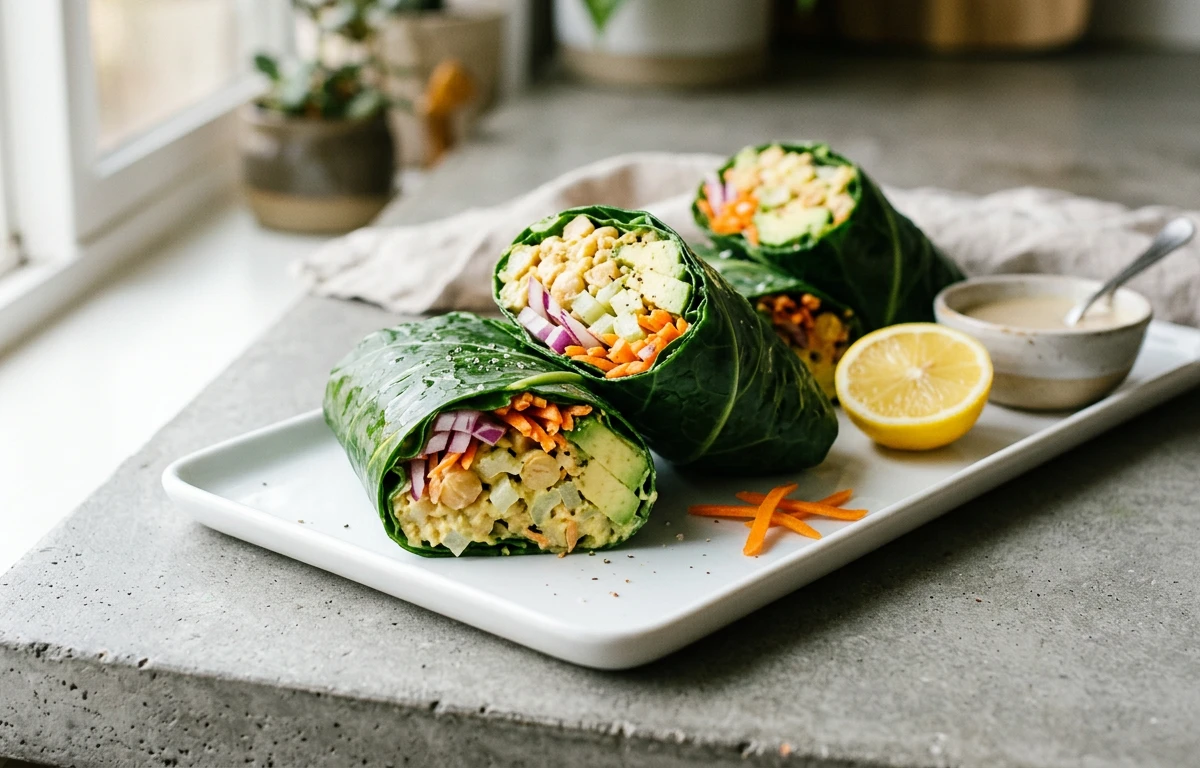
Move beyond the long simmer with these three simple, nutrient-focused ways to enjoy collard greens.
Want more nutrient-dense vegetables in your week?
Our meal planner makes it easy to incorporate healthy greens like collards into balanced meals, with recipes, smart grocery lists, and all the nutrition info calculated for you.
Build my weekly plan →SOURCES & REFERENCES · 3
One more thing
Eating well is rarely about willpower. It’s about having a short list of dinners you actually want to eat. Pick two from this list. Make them next week. The rest will follow.
If you want these on autopilot, our weekly meal planner can drop the picks above into your calendar with one click and build a single grocery list from the merged ingredients.
FREQUENTLY ASKED QUESTIONS
Frequently asked questions
Are collard greens bitter?
They can have a mild bitterness, but it's easily managed. Removing the thick central stem helps, as does cooking them with a little fat (like olive oil) and a splash of acid (like lemon juice or vinegar) at the end.
Do I have to cook collard greens for hours?
Not at all! While long-simmered Southern-style greens are delicious, a quick 10-15 minute sauté or steam is enough to make them tender while preserving more nutrients and a fresher, greener flavor.
Can you eat collard greens raw?
You can, but they are quite tough. If you want to use them in a salad, it's best to slice them very thinly and 'massage' them with your dressing for a few minutes to soften the leaves.
Are collard greens healthier than kale?
They are nutritionally very similar and both are fantastic choices. Collards are slightly higher in fibre and calcium, while kale has a slight edge in vitamin C. The best one is the one you enjoy and eat regularly.
METHODOLOGY
How this article was created
Built using verified nutrition databases, culinary research, and traditional cooking knowledge — every claim is cross-referenced against the sources listed in the article.
· USDA data· Culinary research· Quality reviewed
Read our methodology →TRANSPARENCY
About this content
Articles are curated using trusted food databases (USDA FoodData Central, IFCT), culinary literature, and dietary guidelines, then structured by our editorial team for clarity, accuracy, and usefulness.
· Verified data sources· Culinary research· Quality reviewed
Read our editorial policy →EXPLORE OUR MEALS
Meals that fit this article

AMERICAN · 1677 CAL
Almonds with Sliced Apple + supplement + iron

MEDITERRANEAN · 809 CAL
Greek Yogurt with Berries Almonds and Granola + supplement + iron

GENERAL_HEALTHY · 705 CAL
Banana with Peanut Butter Pregnancy + supplement + iron

MODERN · 982 CAL
Hummus with Crudits and Pita with Fresh Orange Snack + supplement + iron
TAGGED
KEEP READING