If you walk right past the mustard greens at the market, you're missing out. They have a reputation for being 'difficult' or overly bitter, but that's only half the story. These peppery greens are incredibly nutritious — almost no calories, packed with fiber, and a huge hit of vitamin C. Their glycemic index is so low it's barely worth measuring. The secret isn't to avoid them, but to learn the simple tricks to tame their spicy bite.
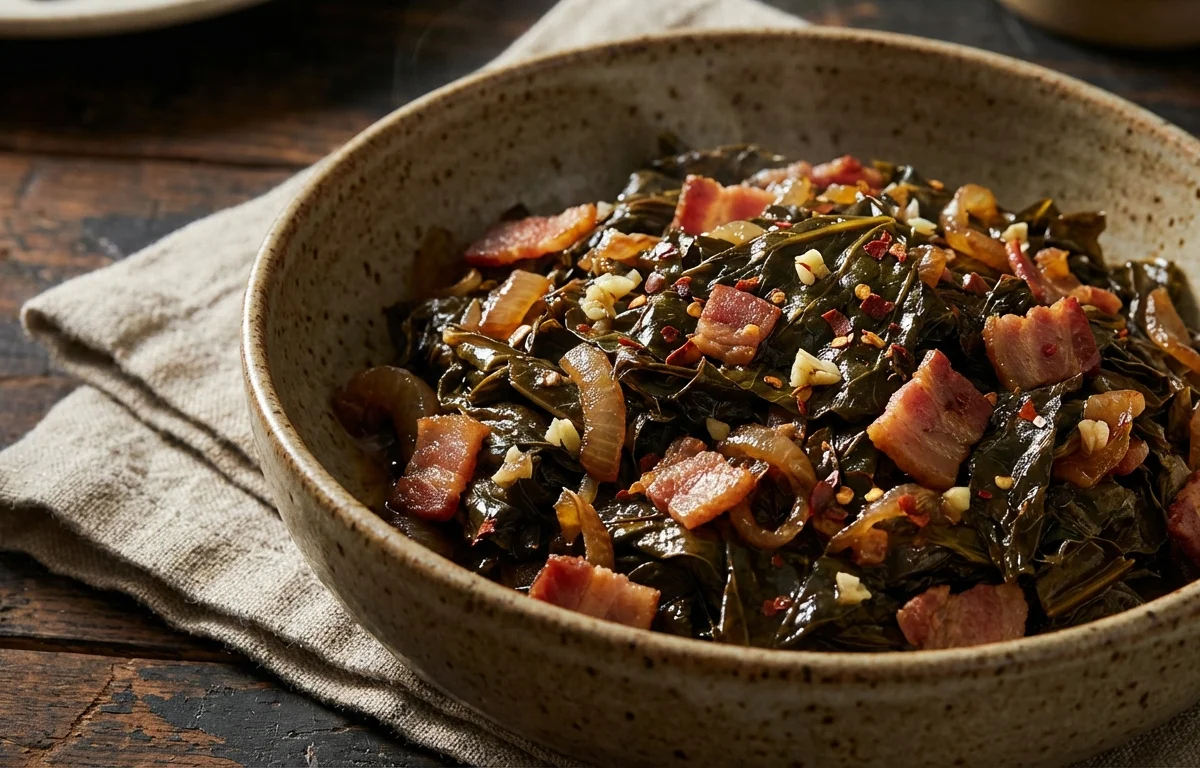
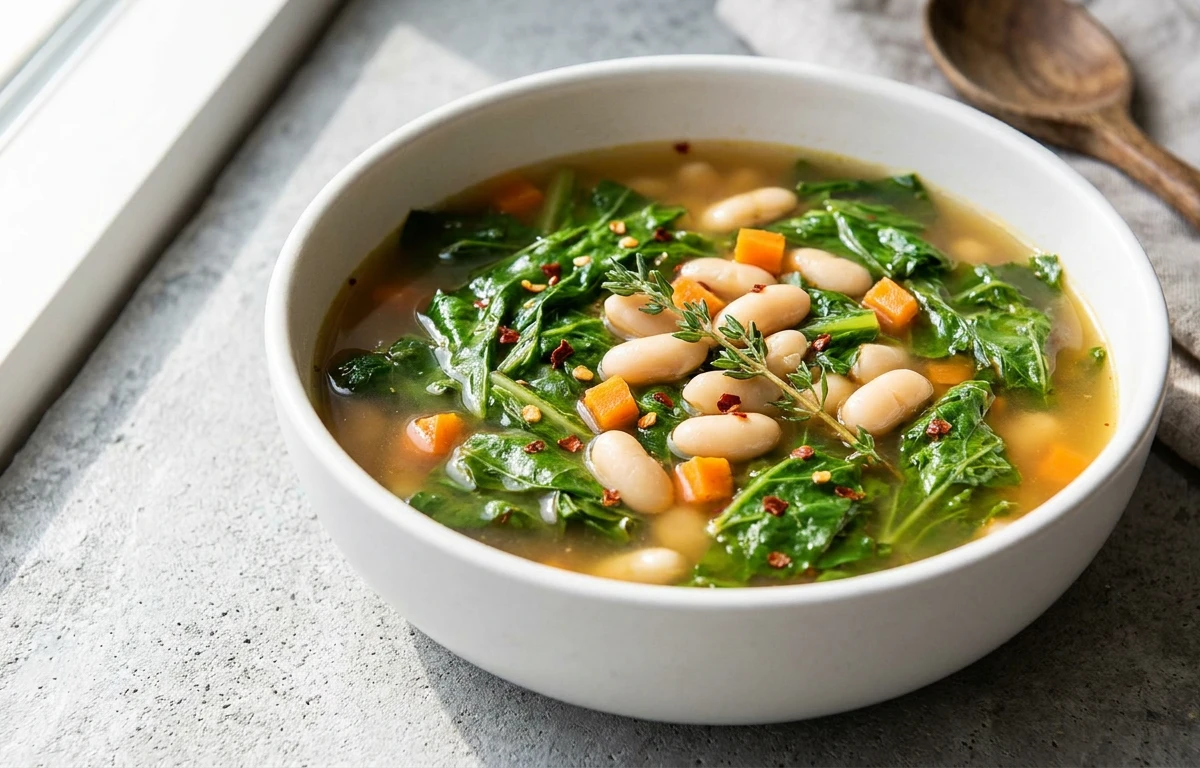
↑ Mustard greens have a peppery kick that mellows beautifully with cooking.
The misunderstood green
Mustard greens are the leaves of the mustard plant, and they have the same peppery, slightly sharp character you'd find in mustard seeds. Eaten raw, they can be pretty intense. But a quick bit of cooking — a simple sauté or braise — transforms them, mellowing the heat and bringing out a deep, savory flavor that's closer to spinach, but with more personality.
They're in the same family as kale and collards, but they cook much faster. Think of them as a robust, flavorful alternative to spinach that won't cook down into nothing.
IN ONE LINE
Mustard greens are a fast-cooking, low-calorie, low-carb green with a peppery bite and a huge amount of vitamin C. Cook them to soften their flavor.
Mustard greens nutrition facts
Here’s the nutritional profile for a 100-gram serving of raw mustard greens, which is a pretty generous bunch (about 1.5 cups, chopped).
The numbers speak for themselves. For just 27 calories, you get a significant amount of fiber and a massive dose of vitamin C — more than three-quarters of what you need in a day. The carbohydrate count is tiny, and once you subtract the fiber, the net carbs are less than one gram. This makes them a true nutritional heavyweight.
The negligible glycemic index of mustard greens
People often ask about the glycemic index (GI) of vegetables. For mustard greens, the answer is simple: it's so low that it's not a factor. Glycemic index measures how much a food raises your blood sugar, and it's really only relevant for foods that contain a meaningful amount of carbohydrates.
With just 4 grams of carbs per 100g serving — most of which is fiber — mustard greens have a negligible effect on blood sugar. They are one of the best foods you can eat for stable energy and blood glucose control.
Because they have almost no digestible carbs, mustard greens won't spike your blood sugar. They are an ideal food for anyone managing diabetes or following a low-carb diet.
GLYCEMIC INDEX · MUSTARD GREENS vs COMMON FOODS
Mustard greens have a minimal blood sugar impact
Mustard Greens
leafy green
LOW
Apple
whole fruit
LOW
Pineapple
whole fruit
MEDIUM
White bread
refined
HIGH
Cornflakes
refined
HIGH
SCALE 0–90
04590
How to cook them right
The key to delicious mustard greens is taming their peppery bite. A few simple techniques make all the difference.
01
Wash them thoroughly.
Like most greens, they can be sandy. Submerge them in a big bowl of cold water, swish them around, then lift them out, leaving the grit behind.
02
Balance the bite.
The peppery flavor is delicious but needs a partner. A little fat (like olive oil or bacon), acid (lemon juice or vinegar), and salt are essential for balance.
03
Don't overcook them.
They cook much faster than collards. A quick sauté for 5-7 minutes or a braise for 10-15 is usually enough. They should be tender but not mushy.
04
Use the 'potlikker'.
If you braise your greens, the cooking liquid (called potlikker in the South) is full of nutrients and flavor. Sop it up with cornbread or use it as a base for soup.
05
Start by mixing.
If you're new to their flavor, try mixing them 50/50 with a milder green like spinach or chard in your first few dishes.
What mustard greens are good for
01
Serious immune support
A single 100g serving provides over 75% of your daily vitamin C, a crucial antioxidant for immune cell function and skin health.
78%
vit C DV
02
Excellent for weight management
With only 27 calories and over 3 grams of filling fiber, mustard greens help you feel full on very few calories, making them a perfect addition to any weight-loss plan.
27
calories
03
Blood sugar friendly
The combination of high fiber and extremely low net carbohydrates means mustard greens have a minimal impact on blood sugar, promoting stable energy levels.
<1 g
net carb
04
Supports digestive health
The 3.2 grams of fiber, mostly insoluble, add bulk to stool and help support regular, healthy digestion.
3.2 g
fiber
What to pair mustard greens with
Mustard greens love bold partners that can stand up to their flavor. Think rich, salty, acidic, and savory.
Eat freely — or be mindful?
Three ways to cook them
Ready to try them? These simple recipes are a great introduction to just how good mustard greens can be.
Want more healthy greens worked into a balanced week?
Our meal planner can build you a personalized plan that incorporates nutrient-dense vegetables like mustard greens, with portions and macros already calculated and a single grocery list at the end.
Build my weekly plan →SOURCES & REFERENCES · 3
One more thing
Eating well is rarely about willpower. It’s about having a short list of dinners you actually want to eat. Pick two from this list. Make them next week. The rest will follow.
If you want these on autopilot, our weekly meal planner can drop the picks above into your calendar with one click and build a single grocery list from the merged ingredients.
FREQUENTLY ASKED QUESTIONS
Frequently asked questions
Are mustard greens good for people with diabetes?
Yes, they are an excellent choice. They are extremely low in carbohydrates and high in fiber, so they have a negligible effect on blood sugar levels.
What do mustard greens taste like?
Raw, they are quite peppery and sharp, similar to horseradish or wasabi. When cooked, the spiciness mellows significantly, leaving a rich, deep, slightly bitter flavor that's more complex than spinach.
How do you make mustard greens less bitter?
Cooking is the first step. You can also blanch them in boiling salted water for a minute before sautéing. Pairing them with fat (like olive oil), acid (like lemon juice or vinegar), and salt also balances the flavor beautifully.
Are mustard greens healthier than spinach or kale?
They have different strengths. Mustard greens have significantly more vitamin C than both spinach and kale. Kale is higher in vitamin A and K, while spinach is a great source of iron and folate. It's best to eat a variety of all of them.
METHODOLOGY
How this article was created
Built using verified nutrition databases, culinary research, and traditional cooking knowledge — every claim is cross-referenced against the sources listed in the article.
· USDA data· Culinary research· Quality reviewed
Read our methodology →TRANSPARENCY
About this content
Articles are curated using trusted food databases (USDA FoodData Central, IFCT), culinary literature, and dietary guidelines, then structured by our editorial team for clarity, accuracy, and usefulness.
· Verified data sources· Culinary research· Quality reviewed
Read our editorial policy →RELATED RECIPES
Cook from this article
EXPLORE OUR MEALS
Meals that fit this article

AMERICAN · 1677 CAL
Almonds with Sliced Apple + supplement + iron

MEDITERRANEAN · 809 CAL
Greek Yogurt with Berries Almonds and Granola + supplement + iron

GENERAL_HEALTHY · 705 CAL
Banana with Peanut Butter Pregnancy + supplement + iron

MODERN · 982 CAL
Hummus with Crudits and Pita with Fresh Orange Snack + supplement + iron
TAGGED
KEEP READING