Red Cabbage: Nutrition, Vitamin C, Glycemic Index & How to Cook It: verified nutrition facts, glycemic context, serving guidance, and practical cooking ideas.
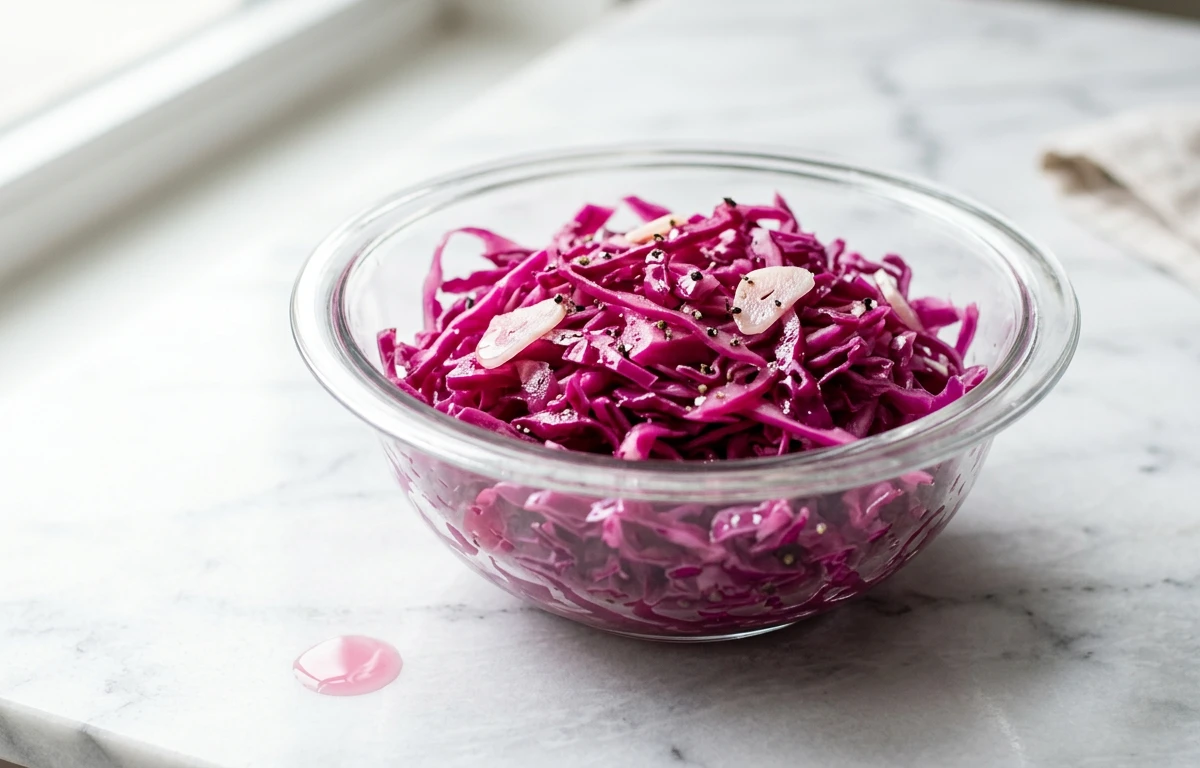
↑ Red cabbage's vibrant colour comes from anthocyanins, powerful antioxidants.
The colourful multitasker
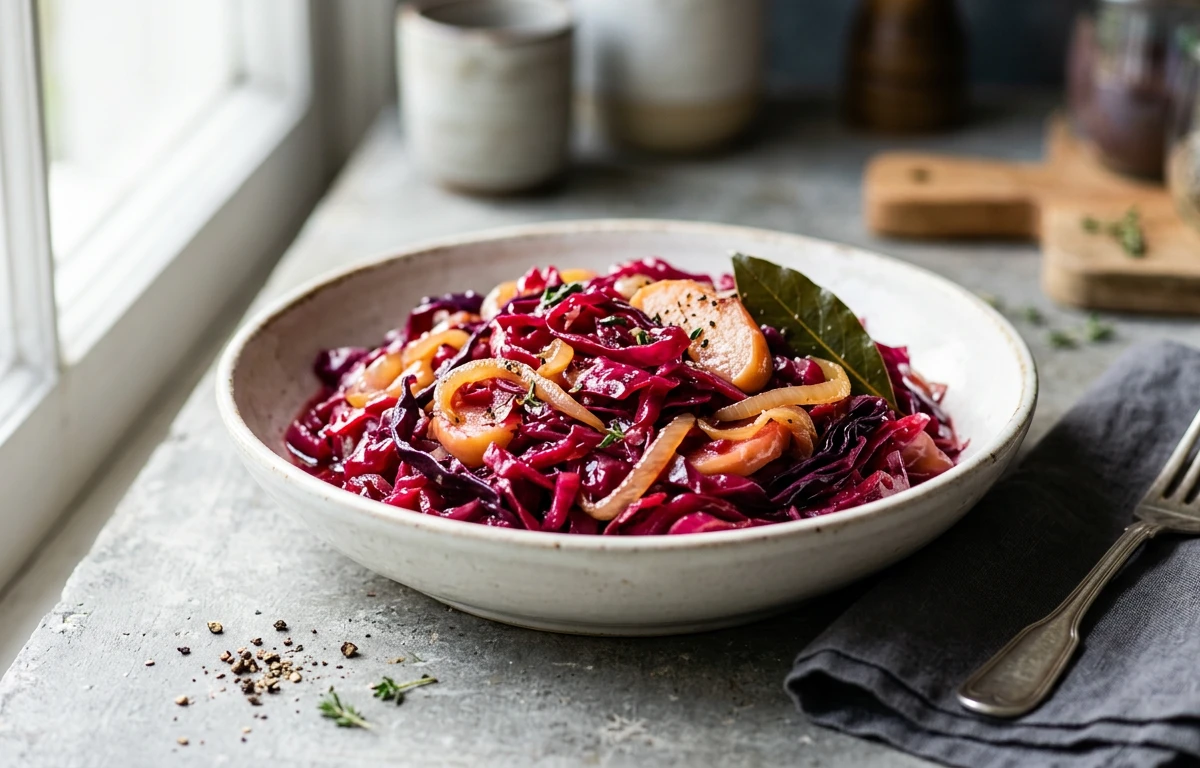
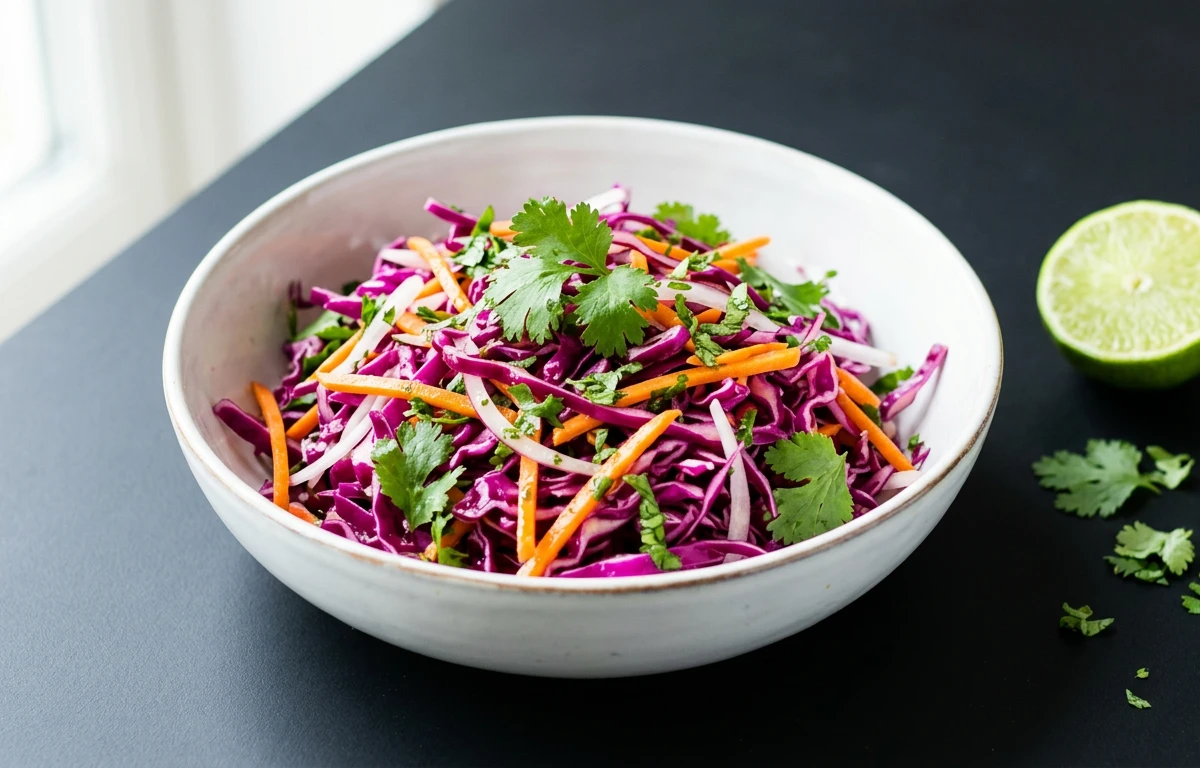
Let's be honest, red cabbage isn't a vegetable most of us get excited about. It's sturdy, a little bit tough, and has a reputation for being, well, cabbage-y. But that's a shame. Because when you shred it finely for a slaw, braise it slowly with apples and vinegar, or quick-pickle it for tacos, it transforms.
More importantly, from a nutrition standpoint, it's a quiet superstar. It's cheap, lasts forever in the fridge, and delivers a huge dose of vitamins and antioxidants for almost zero calories. It's the definition of a nutrient-dense food.
Red cabbage is an incredibly low-calorie, low-carb vegetable that's exceptionally high in vitamin C and anti-inflammatory compounds.
Red cabbage nutrition facts
Here's the nutritional breakdown for a 100-gram serving of raw red cabbage, which is about one cup, shredded.
The numbers speak for themselves. For just 31 calories, you get more than half your daily vitamin C. The carb count is tiny, and most of it is fibrous. It's almost all nutrition, with very little energy baggage.
Red cabbage's glycemic index
The glycemic index (GI) hasn't been formally tested for red cabbage, and for good reason: there's barely enough digestible carbohydrate in a normal serving to measure a blood sugar response. As a non-starchy vegetable that's high in fiber, its GI is considered to be very low, likely well under 15. Its glycemic load (which accounts for portion size) is close to zero. For anyone managing blood sugar, red cabbage is one of the safest foods you can put on your plate.
GLYCEMIC INDEX · RED CABBAGE vs COMMON FOODS
Red cabbage is firmly in the low-GI zone
Red Cabbage
non-starchy veg
LOW
Apple
whole fruit
LOW
Pineapple
whole fruit
MEDIUM
Watermelon
whole fruit
HIGH
White bread
refined
HIGH
SCALE 0–90
04590
The best ways to prepare it
How you cook red cabbage matters. Its vitamin C is water-soluble and heat-sensitive, and those beautiful purple anthocyanins can be lost.
01
Eat it raw.
Shredded finely in salads and slaws is the best way to get 100% of its vitamin C. A little salt and massage can soften it nicely.
02
Quick-cook it.
A quick stir-fry or sauté preserves more nutrients than long boiling. Steaming is also a great option.
03
Don't boil it (unless making soup).
Boiling leaches both the vitamin C and the purple colour into the water. If you do boil it, use the colourful broth in a soup.
04
Add some acid.
A splash of vinegar or lemon juice when cooking not only adds flavour but also helps preserve the vibrant purple colour.
05
Braise it low and slow.
While some vitamin C is lost, slow braising with things like apple and spices makes the cabbage incredibly tender and delicious, and you consume all the cooking liquid.
What red cabbage is good for
01
A huge Vitamin C boost
A single 100g serving provides over 60% of your daily vitamin C, crucial for your immune system, skin health, and iron absorption.
63%
vit C DV
02
Fights inflammation
Red cabbage is loaded with anthocyanins, the antioxidants that give it its colour. These compounds have well-documented anti-inflammatory effects.
Rich
in anthocyanins
03
Supports weight management
At only 31 calories per 100g, it's a very low-density food. The fibre and water help you feel full on very few calories.
31
calories
04
Excellent for blood sugar control
With an almost non-existent glycemic impact and a low carb count, it's one of the best vegetables for metabolic health.
Low
glycemic
05
Good for your bones
It's a solid source of Vitamin K, which works alongside vitamin D and calcium to help build and maintain strong bones.
32%
vit K DV
What to pair red cabbage with
Red cabbage has an earthy, slightly peppery flavour that loves acid, sweetness, and fat to balance it out.
Eat freely — or be mindful?
Three simple ways to eat it
Move beyond basic slaw with these three easy preparations that make red cabbage shine.
Want more nutrient-dense vegetables in your week — without the effort?
Our meal planner intelligently incorporates vegetables like red cabbage into balanced meals, ensuring you get a variety of vitamins and fibre without having to think about it. Get a plan with a single grocery list and simple recipes.
Build my weekly plan →SOURCES & REFERENCES · 3
One more thing
Eating well is rarely about willpower. It’s about having a short list of dinners you actually want to eat. Pick two from this list. Make them next week. The rest will follow.
If you want these on autopilot, our weekly meal planner can drop the picks above into your calendar with one click and build a single grocery list from the merged ingredients.
FREQUENTLY ASKED QUESTIONS
Frequently asked questions
Is red cabbage healthier than green cabbage?
They are both incredibly healthy, but red cabbage has the edge. It contains about 10 times more vitamin A and significantly more iron and anthocyanins (the purple antioxidants) than green cabbage. Green cabbage, however, has more vitamin K.
Is it better to eat red cabbage raw or cooked?
It depends on your goal. Eating it raw (e.g., in slaw) preserves the maximum amount of heat-sensitive vitamin C. Cooking it, especially via methods like braising or stir-frying, makes it easier to digest and can make some minerals more available. A mix of both is ideal.
Why does my red cabbage turn blue when I cook it?
Red cabbage is a natural pH indicator! The anthocyanin pigments turn reddish in an acidic environment and blueish-purple in an alkaline one. To keep it a vibrant red/purple, add a splash of acid like vinegar or lemon juice during cooking.
Can red cabbage give you gas?
Yes, like other cruciferous vegetables (broccoli, cauliflower), it contains fiber and a sugar called raffinose that can be hard for some people to digest, leading to gas and bloating. Cooking it can help, as can starting with small portions if you're not used to it.
METHODOLOGY
How this article was created
Built using verified nutrition databases, culinary research, and traditional cooking knowledge — every claim is cross-referenced against the sources listed in the article.
· USDA data· Culinary research· Quality reviewed
Read our methodology →TRANSPARENCY
About this content
Articles are curated using trusted food databases (USDA FoodData Central, IFCT), culinary literature, and dietary guidelines, then structured by our editorial team for clarity, accuracy, and usefulness.
· Verified data sources· Culinary research· Quality reviewed
Read our editorial policy →RELATED RECIPES
Cook from this article
EXPLORE OUR MEALS
Meals that fit this article

AMERICAN · 1677 CAL
Almonds with Sliced Apple + supplement + iron

MEDITERRANEAN · 809 CAL
Greek Yogurt with Berries Almonds and Granola + supplement + iron

GENERAL_HEALTHY · 705 CAL
Banana with Peanut Butter Pregnancy + supplement + iron

MODERN · 982 CAL
Hummus with Crudits and Pita with Fresh Orange Snack + supplement + iron
TAGGED
KEEP READING