Smoked Gouda Cheese: Nutrition, Calories, Glycemic Index & More: verified nutrition facts, glycemic context, serving guidance, and practical cooking ideas.
↑ Smoked gouda's signature brown rind and creamy interior.
More than just a smoky flavor
Smoked gouda is simply gouda cheese that's been cold-smoked over smoldering wood chips, which gives it that characteristic flavor and mahogany-colored rind. It's a semi-hard cheese that's creamy, rich, and intensely savory.
Nutritionally, it's a story of protein and fat. It's a dense food, which means it packs a lot of energy and nutrients into a small volume. That's not a bad thing — it's what makes cheese so satisfying. The trick is to use that density to your advantage by eating a small amount to feel full, rather than mindlessly eating large wedges.
IN ONE LINE
In moderation, smoked gouda is a low-carb, high-protein food with a negligible effect on blood sugar. The main watch-outs are calories and sodium.
Smoked Gouda nutrition facts
Here's the nutritional breakdown for a 100-gram (about 3.5-ounce) serving of typical smoked gouda cheese. That's a generous portion — about the size of a deck of cards.
The numbers speak for themselves. This is a high-fat, high-protein food with almost no carbohydrate. That 25 grams of protein is a huge amount — about what you'd get from a 4-ounce chicken breast. The fat provides flavor and contributes to a feeling of fullness, but it's also where most of the calories come from.
Gouda's glycemic index
Asking about the glycemic index of cheese is a bit like asking about the wingspan of a fish. The concept doesn't really apply. Glycemic index (GI) measures how quickly a food's carbohydrates raise blood sugar. With only about 2 grams of carbs per 100 grams, smoked gouda has a negligible, near-zero effect. It's a food that provides steady energy without any spikes or crashes.
GLYCEMIC INDEX · CHEESE vs COMMON FOODS
Smoked Gouda has a negligible blood sugar impact
Smoked Gouda
cheese
LOW
Apple
whole fruit
LOW
Pineapple
whole fruit
MEDIUM
White bread
refined
HIGH
Cornflakes
refined
HIGH
SCALE 0–90
04590
The smart way to eat it
Smoked gouda is delicious, but it's also rich. Here's how to enjoy its bold flavor without accidentally eating a whole meal's worth of calories.
01
Watch the portion.
A 1-ounce (30g) serving is a good starting point. That's about the size of a pair of dice and contains around 100 calories.
02
Slice it thin or grate it.
Because the flavor is so intense, a little goes a long way. Thin slices on a sandwich or a small amount grated over a salad can give you all the flavor for fewer calories.
03
Pair with fiber.
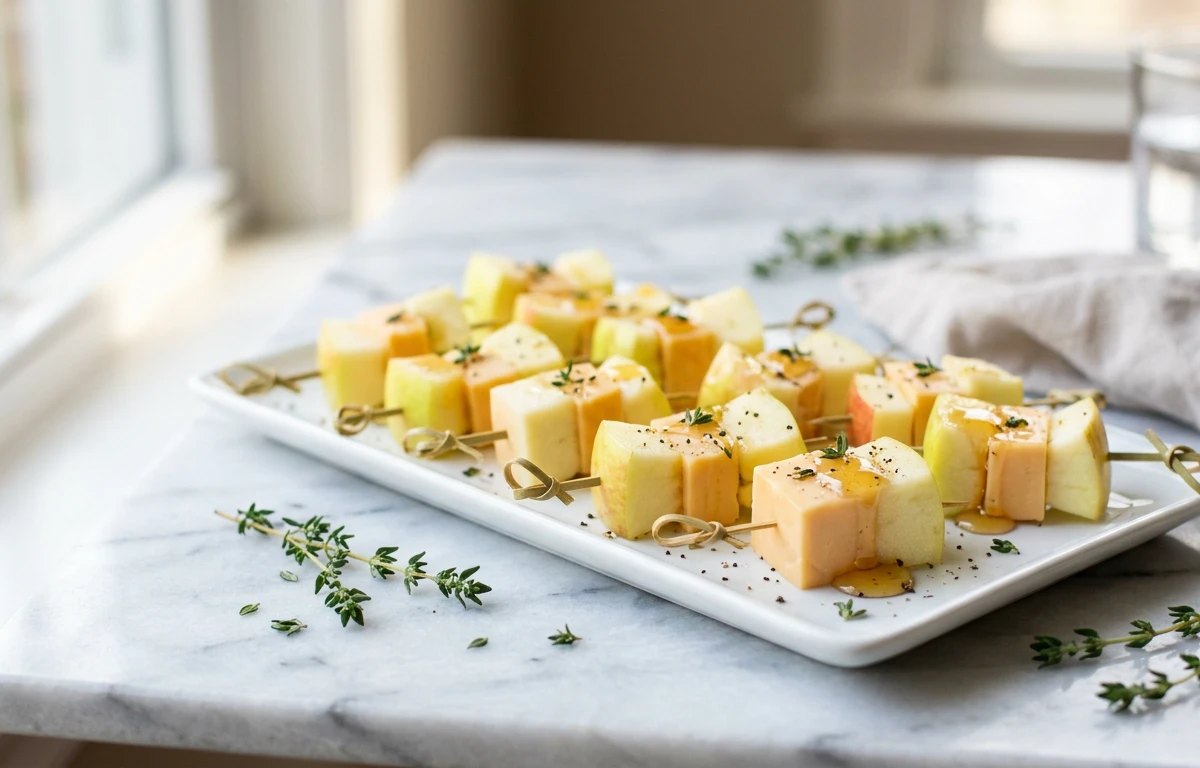
Enjoy it with high-fiber foods like apple slices, whole-grain crackers, or a big salad. The fiber helps make the snack even more filling.
04
Melt it.
When you melt cheese, it spreads out and feels more substantial. A small amount of smoked gouda melted into an omelette or over vegetables feels incredibly decadent.
What smoked gouda is good for
01
A huge protein punch
With nearly 25 grams of protein per 100g, smoked gouda is a fantastic way to support muscle health and stay full for longer.
24.9 g
protein
02
Zero blood sugar spike
Containing almost no carbohydrates, this cheese is an excellent choice for anyone managing blood sugar or following a low-carb or keto diet.
2.2 g
carbs
03
Sustained, steady energy
The combination of high fat and high protein provides long-lasting energy without the spike-and-crash you get from sugary snacks.
356
calories
What to pair gouda with
The smoky, creamy flavor of this gouda works with both sweet and savory partners. Pairing it smartly makes for a more balanced snack or meal.
Eat freely — or be mindful?
Three ways to eat it
A little smoked gouda goes a long way. Here are three simple ways to use its powerful flavor in your cooking.

Want rich foods like cheese worked into a balanced week?
Our meal planner can incorporate satisfying, high-protein foods like smoked gouda into your week, with portions and macros already calculated and a single grocery list at the end.
Build my weekly plan →SOURCES & REFERENCES · 3
One more thing
Eating well is rarely about willpower. It’s about having a short list of dinners you actually want to eat. Pick two from this list. Make them next week. The rest will follow.
If you want these on autopilot, our weekly meal planner can drop the picks above into your calendar with one click and build a single grocery list from the merged ingredients.
FREQUENTLY ASKED QUESTIONS
Frequently asked questions
Is smoked gouda good for weight loss?
It can be, in moderation. While it's high in calories, its high protein and fat content make it very filling, which can help prevent overeating later. The key is strict portion control — a 1-ounce serving is a great snack.
Can people with diabetes eat smoked gouda?
Yes. Smoked gouda has very few carbohydrates and a negligible glycemic index, so it won't cause a spike in blood sugar levels. It's a safe and satisfying snack choice.
Is smoked gouda 'real' cheese?
Absolutely. It's traditional Dutch gouda cheese that undergoes an extra step: cold-smoking. This process infuses it with flavor but doesn't cook the cheese.
How much sodium is in smoked gouda?
It's typically high in sodium, often containing over 800mg per 100g. If you are monitoring your sodium intake for blood pressure or other health reasons, you should enjoy it in small quantities.
METHODOLOGY
How this article was created
Built using verified nutrition databases, culinary research, and traditional cooking knowledge — every claim is cross-referenced against the sources listed in the article.
· USDA data· Culinary research· Quality reviewed
Read our methodology →TRANSPARENCY
About this content
Articles are curated using trusted food databases (USDA FoodData Central, IFCT), culinary literature, and dietary guidelines, then structured by our editorial team for clarity, accuracy, and usefulness.
· Verified data sources· Culinary research· Quality reviewed
Read our editorial policy →RELATED RECIPES
Cook from this article
EXPLORE OUR MEALS
Meals that fit this article

AMERICAN · 1677 CAL
Almonds with Sliced Apple + supplement + iron

MEDITERRANEAN · 809 CAL
Greek Yogurt with Berries Almonds and Granola + supplement + iron

GENERAL_HEALTHY · 705 CAL
Banana with Peanut Butter Pregnancy + supplement + iron

MODERN · 982 CAL
Hummus with Crudits and Pita with Fresh Orange Snack + supplement + iron
TAGGED
KEEP READING