That dusty little shaker of pre-ground nutmeg in the back of your cabinet is doing this spice a disservice. Freshly grated, nutmeg is one of the warmest, most complex aromas in the kitchen. But we tend to think of it as just a flavor, a finishing touch. It's actually a potent spice with a surprisingly dense nutritional profile (if you look at it in bulk) and some very important safety rules. The key isn't to eat more of it — it's to understand that a little goes a very, very long way.
↑ Freshly grated nutmeg offers far more aroma and flavor than pre-ground.
More than just a flavor
Nutmeg is the seed of an evergreen tree, and it comes wrapped in a lacy red membrane that becomes another spice: mace. For centuries, it was one of the most valuable commodities on earth. Why? The flavor, of course, but also its use in traditional medicine. It's intensely aromatic, warm, and slightly sweet.
The thing to remember about nutmeg is that it's potent. Its flavor, its aroma, and its bioactive compounds are all highly concentrated. This is great for cooking, but it also means it comes with a built-in 'stop sign' — a little is lovely, but a lot is a very bad idea.
IN ONE LINE
A pinch of nutmeg is a safe, calorie-free way to add warmth and flavor; its effect on blood sugar is zero. Just remember it's a potent spice, not a health food to be eaten by the spoonful.
Nutmeg nutrition facts
Looking at the nutrition data for 100 grams of nutmeg is interesting, but also a bit absurd — you would never, ever eat that much. It would be toxic. A more realistic serving is about one teaspoon (around 2 grams) for an entire recipe. Still, here's the official data per 100g, which shows how nutrient-dense it is in bulk.
Per 100g, it's high in calories, fat, and fiber. But in a 1/4 teaspoon sprinkle on your latte? You're getting maybe 3 calories, a trace of fat, and not much else. The real story isn't in the macros; it's in the volatile oils and compounds like myristicin, sabinene, and pinene, which are responsible for its aroma, flavor, and physiological effects.
Nutmeg's Glycemic Index (and Why It Doesn't Matter)
You won't find a reliable glycemic index (GI) value for nutmeg, and for good reason: no one has bothered to test it. To measure GI, a person has to consume enough of the food to get 50 grams of available carbohydrate. For nutmeg, this would mean eating over 100 grams of the spice in one sitting — a dangerously toxic dose.
In the real world, you use a tiny sprinkle. The amount of carbohydrate is so minuscule that it has zero meaningful impact on your blood sugar levels. It's a 'free food' from a glycemic perspective.
The most important fact about nutmeg: large doses (reports suggest 1-2 tablespoons or more) are toxic and can cause serious side effects like hallucinations, drowsiness, and nausea. Always use it as a culinary spice, never as a supplement.
GLYCEMIC INDEX · COMMON FOODS FOR CONTEXT
Nutmeg's impact on blood sugar is negligible
Apple
whole fruit
LOW
Mango
whole fruit
LOW
Pineapple
whole fruit
MEDIUM
White bread
refined
HIGH
SCALE 0–90
04590
How to use it right
Getting the best from nutmeg is easy. It just requires a little respect for the spice.
01
Grate it fresh.
The flavor difference between pre-ground and freshly grated nutmeg is night and day. Whole nutmegs last for years. A small microplane grater is all you need.
02
Use it sparingly.
Its flavor is strong. For a pot of sauce or a batch of cookies, 1/4 to 1/2 a teaspoon is often plenty. You can always add more, but you can't take it out.
03
Think beyond baking.
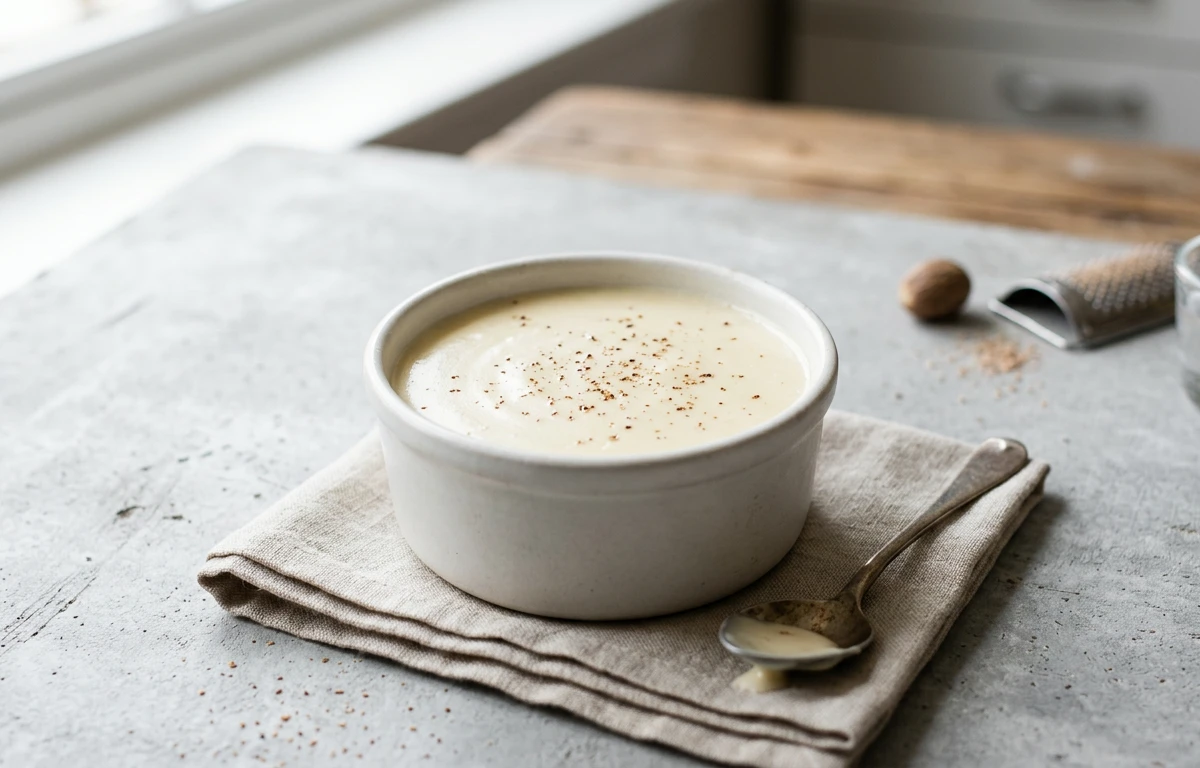
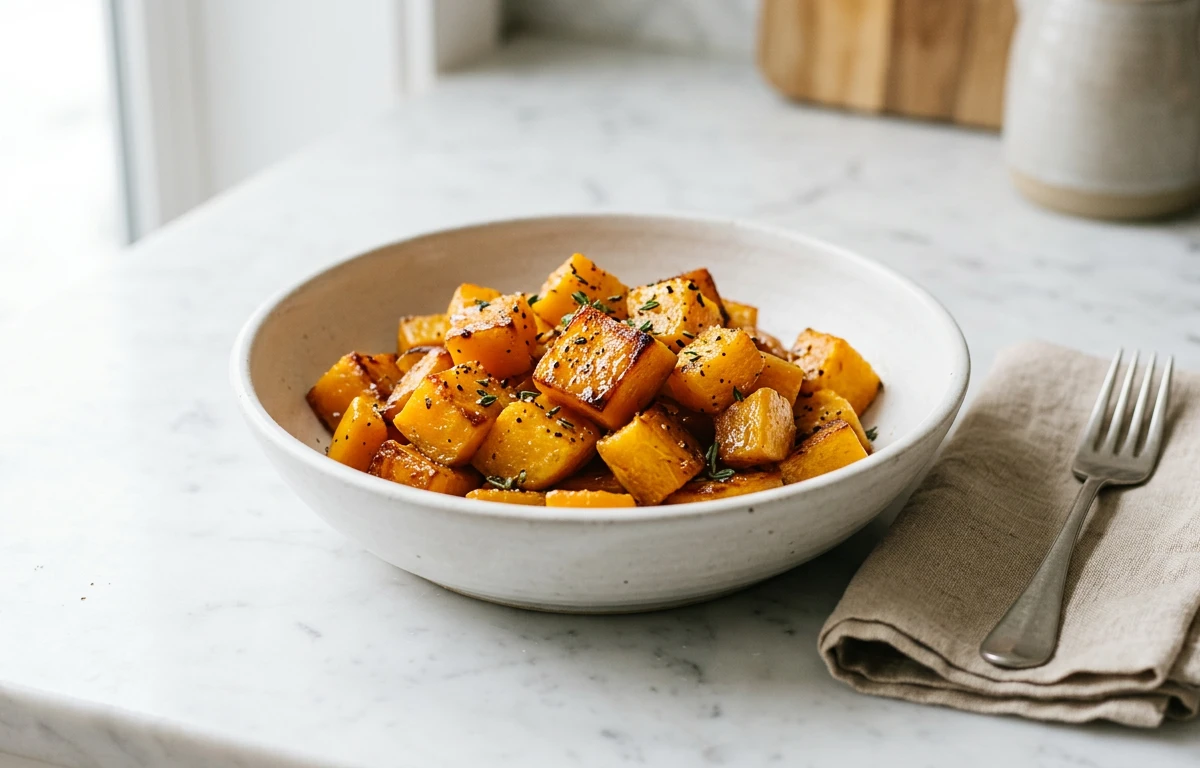
Nutmeg is brilliant in savory dishes. A pinch in a creamy spinach dish, a béchamel sauce, or on roasted squash is transformative.
04
Pair it with creamy textures.
Nutmeg's sharp, aromatic notes cut through and complement rich, creamy foods like dairy, eggnog, custards, and winter squash.
05
Store it whole and dark.
Keep whole nutmegs in a sealed jar away from light. They'll stay potent for a very long time. Pre-ground nutmeg loses its magic much faster.
What nutmeg is good for
01
Flavor without calories
It adds a huge amount of perceived sweetness and warmth to foods and drinks for virtually zero calories, sugar, or sodium.
~3
cals / serving
02
Anti-inflammatory compounds
Nutmeg is rich in monoterpenes like sabinene and pinene, which studies have shown to have anti-inflammatory effects in the body.
Potent
compounds
03
A source of antioxidants
Like many plant seeds, nutmeg contains powerful antioxidants that help fight cellular damage from free radicals.
Rich in
antioxidants
04
Traditional digestive aid
In very small amounts, nutmeg has been used for centuries to help soothe digestion. It may help with the secretion of digestive enzymes.
Tiny
amounts
What to pair nutmeg with
Nutmeg's warm, sweet-spicy character makes it a natural partner for a wide range of foods, both sweet and savory.
Use freely — or be mindful?
Three ways to use it
Here are three simple ways to use nutmeg that go beyond just a sprinkle on eggnog.

Want spices and flavor worked into a balanced week — without the planning?
Our meal planner uses spices like nutmeg to make healthy food delicious, with portions and macros already calculated and a single grocery list at the end.
Build my weekly plan →SOURCES & REFERENCES · 3
One more thing
Eating well is rarely about willpower. It’s about having a short list of dinners you actually want to eat. Pick two from this list. Make them next week. The rest will follow.
If you want these on autopilot, our weekly meal planner can drop the picks above into your calendar with one click and build a single grocery list from the merged ingredients.
FREQUENTLY ASKED QUESTIONS
Frequently asked questions
Can people with diabetes eat nutmeg?
Yes, absolutely. Nutmeg is a spice used in very small quantities. It contains negligible carbohydrates per serving and has no impact on blood sugar levels, making it perfectly safe for people with diabetes.
How much nutmeg is safe to eat?
In culinary amounts—such as 1/4 to 1/2 teaspoon in a recipe that serves multiple people—nutmeg is perfectly safe. Large doses of 1 to 2 tablespoons or more can be toxic and should never be consumed.
Is freshly grated nutmeg better than pre-ground?
Yes. The essential oils in nutmeg are volatile, meaning they evaporate quickly once the seed is ground. Freshly grated nutmeg has a much more potent and complex aroma and flavor than the pre-ground version.
Can I have nutmeg during pregnancy?
Using small, normal culinary amounts of nutmeg to flavor food is generally considered safe during pregnancy. However, large quantities or nutmeg supplements should be avoided.
METHODOLOGY
How this article was created
Built using verified nutrition databases, culinary research, and traditional cooking knowledge — every claim is cross-referenced against the sources listed in the article.
· USDA data· Culinary research· Quality reviewed
Read our methodology →TRANSPARENCY
About this content
Articles are curated using trusted food databases (USDA FoodData Central, IFCT), culinary literature, and dietary guidelines, then structured by our editorial team for clarity, accuracy, and usefulness.
· Verified data sources· Culinary research· Quality reviewed
Read our editorial policy →RELATED RECIPES
Cook from this article
EXPLORE OUR MEALS
Meals that fit this article

AMERICAN · 1677 CAL
Almonds with Sliced Apple + supplement + iron

MEDITERRANEAN · 809 CAL
Greek Yogurt with Berries Almonds and Granola + supplement + iron

GENERAL_HEALTHY · 705 CAL
Banana with Peanut Butter Pregnancy + supplement + iron

MODERN · 982 CAL
Hummus with Crudits and Pita with Fresh Orange Snack + supplement + iron
TAGGED
KEEP READING