Dietary Lifestyle · 9 MIN READ
How to Build Flavor Without Salt: The Six-Stage Cooking Workflow
A professional six-stage workflow for building flavor without salt: aromatics in fat, bloom spices, Maillard sear (140-165 C), simmer with hard herbs…
Loading...
A professional six-stage workflow for building flavor without salt: aromatics in fat, bloom spices, Maillard sear (140-165 C), simmer with hard herbs…
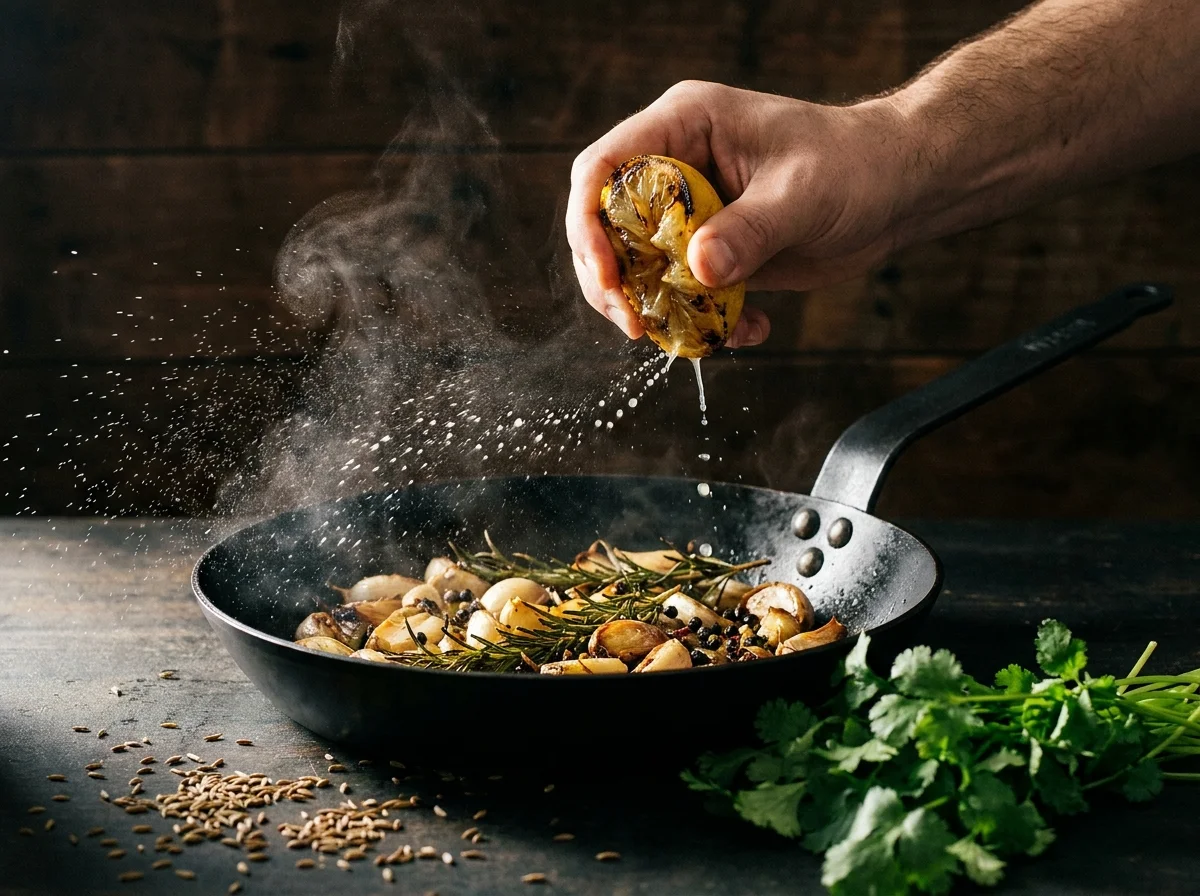
Most low-sodium cooking fails for the same reason: the cook treats flavor as a single decision made at the end of the recipe. Pros treat it as a sequence. Aromatics go into fat first. Dry spices bloom in that fat next. Proteins and hardy vegetables get a hard sear for Maillard depth (the browning reaction proceeds rapidly between 140 and 165 degrees Celsius, or 280 to 330 Fahrenheit). Hard herbs and bay leaves join the liquid for the long simmer. Acid and soft herbs hit at the end so their brightness survives. A tiny pinch of finishing salt lands on the surface, where the tongue meets it directly.
That order is the workflow. Skip a stage and the dish lands flat no matter how much salt you add at the table. This guide walks through each stage with the temperatures, the timings, and the rules that make the chain hold together. It is a companion to our technique-by-technique guide; this one is the timeline.
Salt is the last thing you add, not the first. The reason low-sodium dishes taste flat is almost never the missing salt itself — it is the missing stages of the workflow that should have built flavor before salt was ever in the conversation. This is the order professional kitchens follow, broken down stage by stage.
Browning creates flavor compounds from nothing — proteins and sugars rearranging into hundreds of new aromatic molecules that did not exist in the raw ingredient. No seasoning at the end can substitute for what is supposed to happen at the start.
— Paraphrasing Harold McGee, On Food and Cooking (2004)
Our meal planner builds low-sodium dinners around the six-stage template — aromatics in fat, hard sear, simmer with hard herbs, finish with acid and surface salt — so the workflow runs itself.
Build my planBuilding flavor without salt is not about replacing salt with one trick. It is about respecting the order operations happen in: fat first, dry aromatics in the fat, hard sear for Maillard depth, slow simmer with hardy aromatics, then acid and soft herbs at the end, then a finishing pinch of salt on the surface where the tongue can actually find it. Run the stages in that sequence and a low-sodium dinner tastes correctly seasoned. Reverse the order or skip a stage and no amount of end-of-cook salt will fix it. Start with one weeknight dish, hold the workflow honestly for two weeks, and your palate recalibrates around it.

Kayte is a nutrition writer, food and recipe content creator, and wellness educator. She bridges evidence-based nutrition science with everyday cooking — translating research into practical recipes, meal ideas, and wellness habits that readers can actually use in their kitchens.
Meet the editorial team →Built using verified nutrition databases, culinary research, and traditional cooking knowledge — every claim is cross-referenced against the sources listed in the article. Last reviewed May 2026.
Articles are curated using trusted food databases (USDA FoodData Central, IFCT), culinary literature, and dietary guidelines, then structured by our editorial team for clarity, accuracy, and usefulness.