Low-Sodium Chicken Dinner Ideas That Don't Taste Like Diet Food
Seven weeknight chicken dinners built to a 600 mg sodium budget. With the rotisserie and deli-chicken sodium math (350-1,200 mg per 3 oz) most guides skip.
By Kayte Williams, Nutrition Writer
January 31, 2026 · Reviewed May 2026 · Updated Aug 2026
This guide is for home cooks bringing dinner-time sodium down — usually for blood pressure, heart failure, kidney disease, or as preventive eating — without surrendering the weeknight rotation of chicken dinners. The American Heart Association caps sodium at 2,300 mg/day for healthy adults and recommends an "ideal" target of 1,500 mg/day for adults with cardiovascular risk, noting that cutting intake by 1,000 mg/day measurably improves blood pressure [1]. On the DASH-Sodium trial, dropping intake from ~3,450 mg to ~1,150 mg/day lowered systolic blood pressure by about 6.7 mmHg on a control diet — roughly the effect of a single antihypertensive drug [7].
Chicken is an easier protein than most to cook within these targets, because the meat itself is naturally low in sodium. Raw boneless skinless chicken breast carries only about 70 mg of sodium per 3 oz, raw thigh about 90 mg, per USDA FoodData Central [2]. The problem is what happens to chicken between the farm and your plate. Supermarket rotisserie birds and commercial deli or lunch-meat chicken are brined with sodium phosphate, sodium tripolyphosphate, or salt solutions to retain moisture, pushing the same 3 oz of meat to 350-700 mg of sodium or higher — a 5-10x markup [5][6]. Pre-marinated grocery-store breasts, frozen breaded tenders, and bottled marinades sit in the same band. The seven dinners below are built around home-cooked raw chicken and a working per-dinner budget of about 600 mg of sodium — leaving room for breakfast, lunch, and snacks within a 2,300 mg day. Confirm your individual target with your clinician; people with heart failure, advanced CKD, or resistant hypertension are often prescribed tighter caps.
Why this matters
Chicken absorbs flavor easily, which is why it’s often paired with salty sauces or marinades. When those are removed, cooking method and balance matter much more. Packaged chicken products—pre-marinated cuts, frozen meals, and bottled glazes—can quickly undo low-sodium efforts. Cooking chicken at home gives you full control and allows you to focus on browning, texture, and fresh finishes. Low-sodium chicken dinners work best when the plate is balanced: protein, vegetables, and a flavorful base that doesn’t rely on salt. Once these meals are designed intentionally, they’re easy to repeat and customize.
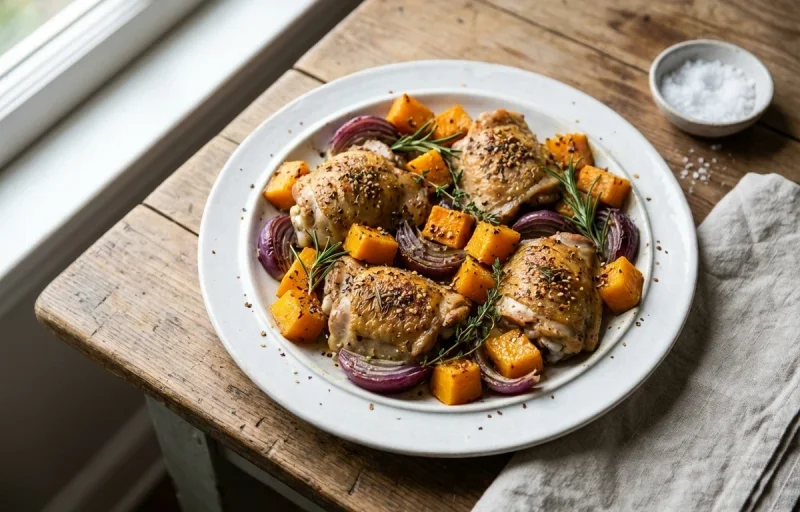
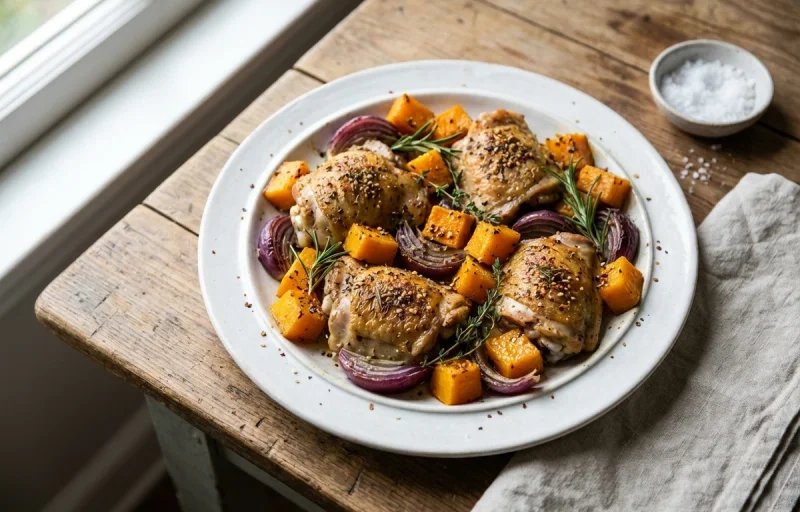
Sheet-pan roasting is the highest-leverage low-sodium technique for chicken: the dry heat caramelizes squash sugars and crisps chicken skin, both of which deliver the savory "complete" signal that salt usually provides. Toss the chicken and squash in olive oil, smoked paprika, cumin, garlic, and black pepper before roasting — total added sodium under 100 mg for the whole tray. A squeeze of lemon at the end is the finishing move.
✓Adults with hypertension, prehypertension, or cardiovascular risk who have been advised to target 1,500-2,300 mg sodium/day [1]
✓People in the early weeks of a low-sodium transition who want familiar chicken dinners while the palate recalibrates [7]
✓Home cooks moving away from rotisserie, deli, and pre-marinated chicken toward raw, home-cooked cuts
✓Adults following the DASH or DASH-Sodium eating pattern under clinician or dietitian supervision [7]
✓Families building preventive low-sodium habits around a shared weeknight protein
LIMIT OR AVOID IF
Skip this if
!You have advanced CKD (stage 3 or higher), advanced heart failure, Addison's disease, or take ACE inhibitors, ARBs, potassium-sparing diuretics, or high-dose NSAIDs — do not substitute potassium chloride salt substitutes (LoSalt, NoSalt, Morton Salt Substitute) without clinician sign-off; NIDDK warns these can drive serum potassium dangerously high [4]
!You have heart failure, cirrhosis, or resistant hypertension with a sodium prescription tighter than 2,000 mg/day — these dinners need to be re-budgeted against your individual cap
!
PRACTICAL TIPS
✓Buy raw chicken, not rotisserie or deli. A 3 oz portion of home-roasted breast carries roughly 70-90 mg of sodium; the same portion of supermarket rotisserie typically runs 350-700 mg, and deli or lunch-meat chicken can hit 800-1,200 mg [2][5][6]. This single swap usually removes more sodium than every other technique combined.
✓Read the label on raw chicken too. "Enhanced," "flavor-injected," "basted," or "contains up to X% solution" on the package means the bird was brined with a sodium-phosphate or saltwater solution — typically adding 200-400 mg of sodium per 4 oz. Look for "air-chilled" or "100% chicken, no added solution" instead.
✓Brine at home if you want the juiciness without the sodium load. A 30-minute dry brine with 1/4 teaspoon kosher salt per pound adds only ~140 mg of sodium per 4 oz portion — versus the 300-500 mg added by commercial enhancement.
✓Skip bottled marinades. A tablespoon of teriyaki or soy-based marinade adds 600-1,100 mg of sodium per portion. A home marinade of lemon juice, olive oil, garlic, and herbs adds essentially none and delivers more flavor.
✓Stock a low-sodium flavor shelf for chicken: lemons, limes, sherry and balsamic vinegars, garlic, ginger, fresh soft herbs (parsley, cilantro, basil, dill, tarragon), smoked paprika, cumin, coriander, Aleppo pepper, sumac, unsalted tomato paste, and dried mushrooms. None contributes meaningful sodium; all add depth the brain reads as "seasoned."
✓Batch-poach plain chicken on Sunday and season each weeknight dinner individually — finishing salt at the plate hits the tongue first and uses 30-50% less than salt cooked into the dish.
Low-sodium chicken cooking comes down to three habits, not a recipe list. First, start from raw chicken (fresh or frozen, ~70-90 mg sodium per 3 oz) rather than rotisserie, deli, or pre-marinated cuts (350-1,200 mg per 3 oz) [2][5][6]. Second, build flavor with browning and a finishing acid before reaching for the salt shaker, then taste before adding any — the Maillard reaction and a squeeze of lemon are the two highest-leverage moves in low-sodium cooking. Third, keep a working per-dinner budget of about 600 mg of sodium so the day stays under the AHA's 2,300 mg cap (or 1,500 mg if your clinician has set the tighter target) [1].
These seven dinners are templates, not prescriptions. If you have heart failure, advanced CKD, cirrhosis, or resistant hypertension, your sodium target is set by your clinician and is often well under 2,000 mg/day — confirm it before adopting any meal plan. If you take ACE inhibitors, ARBs, potassium-sparing diuretics, or have CKD stage 3 or higher, do not substitute a potassium chloride "salt substitute" (LoSalt, NoSalt, Morton Salt Substitute) without clinician sign-off; the NIDDK warns that potassium chloride in packaged foods and at-table substitutes can drive serum potassium dangerously high in these patients [4].
FREQUENTLY ASKED QUESTIONS
Common questions
How much sodium is actually in raw vs. rotisserie chicken?
Raw boneless skinless breast is about 70 mg per 3 oz; raw thigh, about 90 mg [2]. Supermarket rotisserie chicken typically runs 400-700 mg per 3 oz because of sodium-phosphate brining; Consumer Reports' major-chain testing confirmed values in that range [5][6]. Deli or lunch-meat chicken can hit 600-1,200 mg per 3 oz.
What does 'enhanced' or 'flavor-injected' mean on a chicken package?
It means the raw chicken was injected with a saltwater or sodium-phosphate brine before sale, typically adding 200-400 mg of sodium per 4 oz. Look for "air-chilled," "100% chicken," or "no solution added" labels instead.
Can I use bottled marinades on a low-sodium diet?
Not without blowing the budget. Most bottled chicken marinades carry 600-1,100 mg of sodium per tablespoon — more than half a low-sodium dinner's budget. Build marinades from lemon juice, olive oil, garlic, herbs, and spices; finish with a small splash of coconut aminos (~90 mg/tbsp) if you want a soy note.
What's the per-dinner sodium target?
On a 2,300 mg/day AHA cap, about 600 mg for dinner is a workable budget. On a 1,500 mg/day target (often prescribed for hypertension or heart disease), about 400 mg. Confirm your individual cap with your clinician [1].
Will low-sodium chicken always taste bland?
Only at first. The DASH-Sodium trial showed blood pressure responds within weeks, and the palate recalibrates over roughly 8-12 weeks of consistent low-sodium cooking [7]. Browning, finishing acid, and herbs carry the dish through the transition.
Are potassium chloride salt substitutes safe?
Not for everyone. NIDDK warns that LoSalt, NoSalt, and Morton Salt Substitute are unsafe for people with kidney disease and can drive serum potassium dangerously high in anyone with advanced CKD or heart failure, or on ACE inhibitors, ARBs, potassium-sparing diuretics, or high-dose NSAIDs [4]. Ask your clinician before introducing them at the table.
ABOUT THE AUTHOR
Kayte Williams
NUTRITION WRITER
Kayte is a nutrition writer, food and recipe content creator, and wellness educator. She bridges evidence-based nutrition science with everyday cooking — translating research into practical recipes, meal ideas, and wellness habits that readers can actually use in their kitchens.
Built using verified nutrition databases, culinary research, and traditional cooking knowledge — every claim is cross-referenced against the sources listed in the article. Last reviewed May 2026.
Articles are curated using trusted food databases (USDA FoodData Central, IFCT), culinary literature, and dietary guidelines, then structured by our editorial team for clarity, accuracy, and usefulness.
· Verified data sources· Culinary research· Quality reviewed
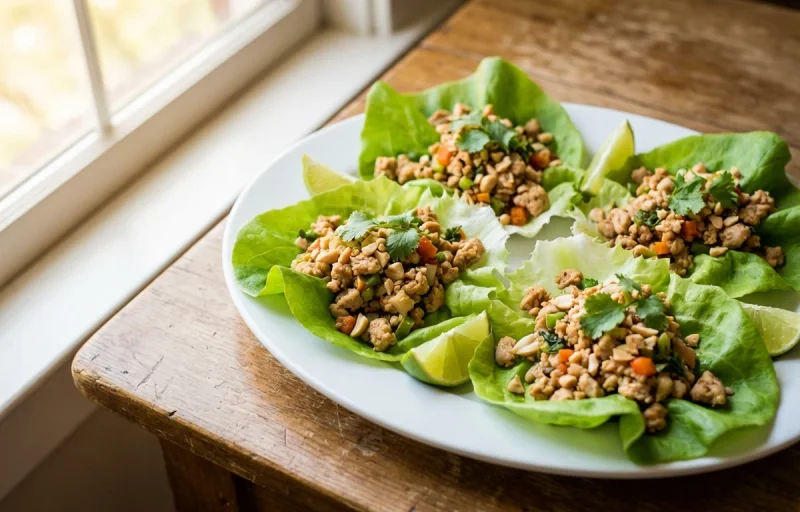
Lean ground chicken (~75 mg sodium per 3 oz raw [2]) gets its character from ginger, garlic, scallions, and a finish of lime — not soy sauce or oyster sauce, either of which would blow the dinner's sodium budget in a single tablespoon. Crisp lettuce cups replace bread or wraps, removing another 200-400 mg that a tortilla or bun would add. Skip bottled hoisin and use a teaspoon of unsalted tomato paste plus rice vinegar to mimic the sweet-tangy note.
Maximize flavor by finely mincing fresh ginger and garlic, allowing them to gently release their aromas before adding the chicken. A squeeze of fresh lime juice at the end brightens all the flavors without needing extra salt.
2
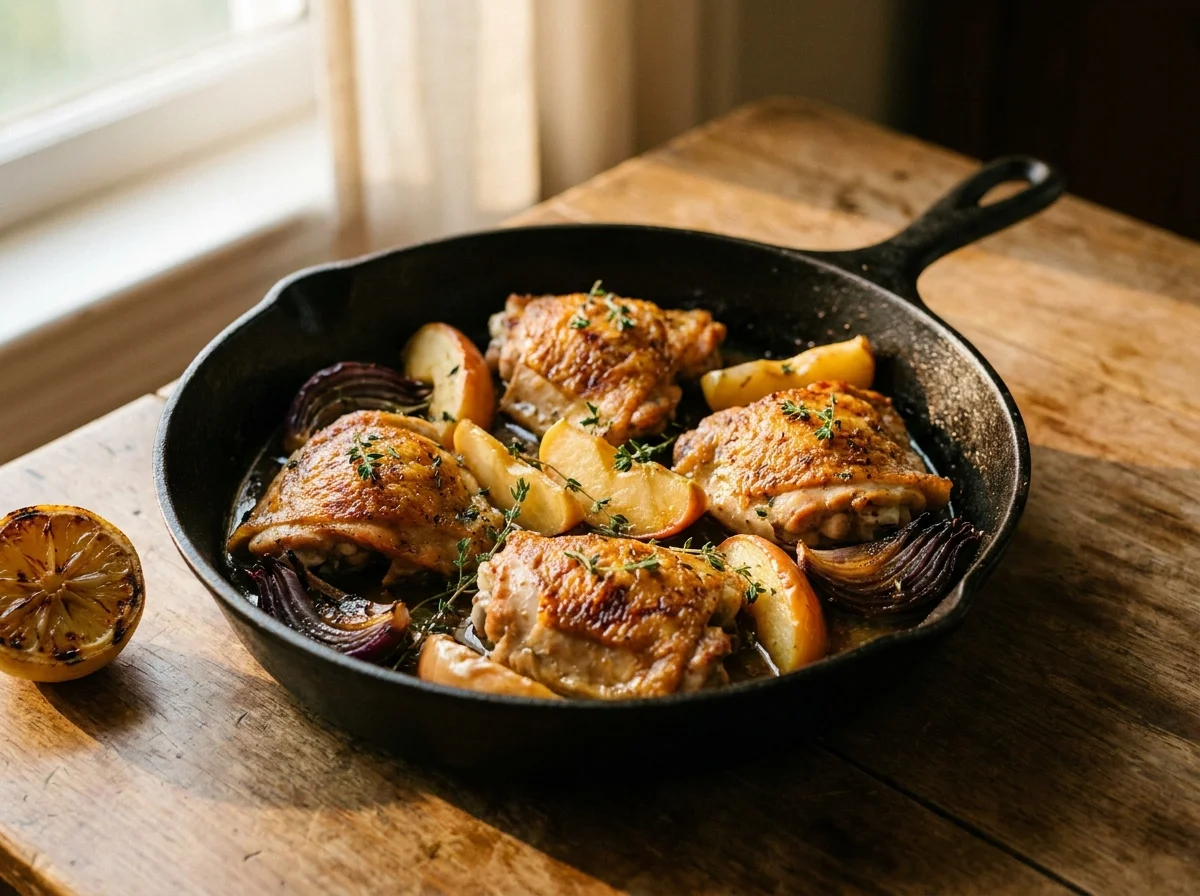
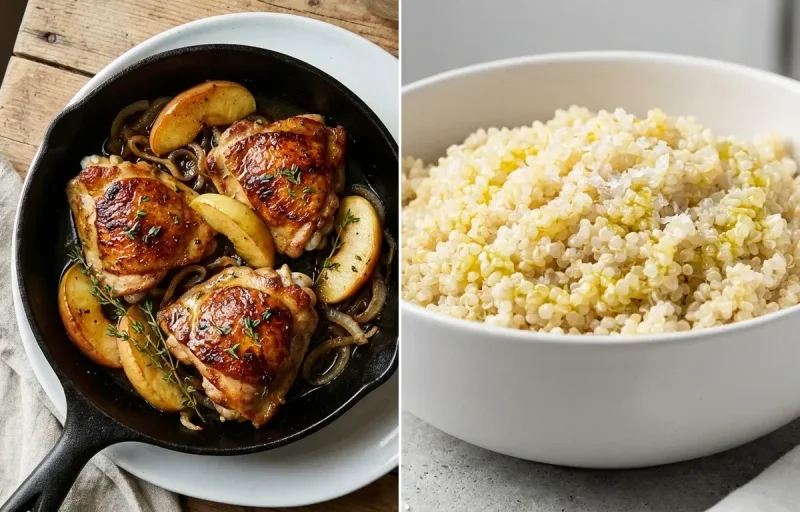
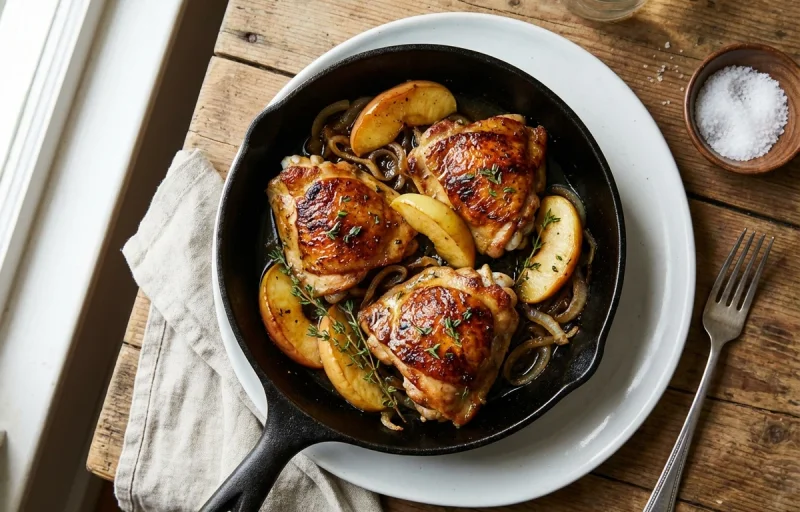
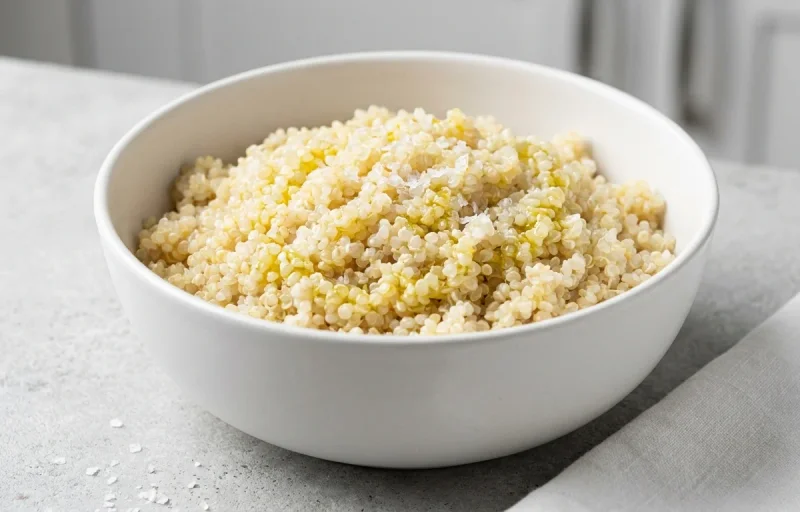
A classic technique meal: apples and onions caramelize in the same pan as the chicken, building deep sweetness and Maillard browning that read as "seasoned" without added salt. Quinoa cooks in unsalted broth or plain water (commercial broth would add 700-900 mg per cup [3]). Finish with cracked black pepper and a thread of cider vinegar; the acid sharpens the apple sweetness and reduces the perceived need for salt by 30-40%.
To enhance the natural sweetness and depth of flavor without extra salt, ensure the onions and apples are properly caramelized by cooking them until deeply golden-brown. A pinch of cinnamon or a dash of apple cider vinegar can further brighten the taste.
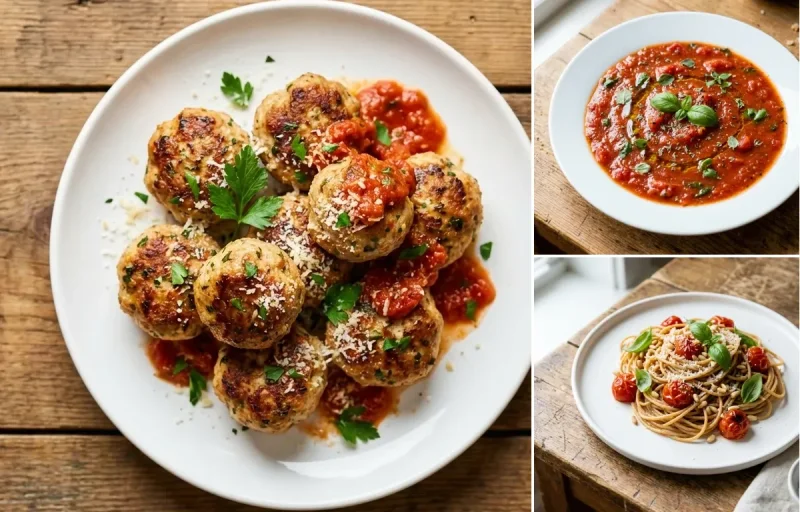
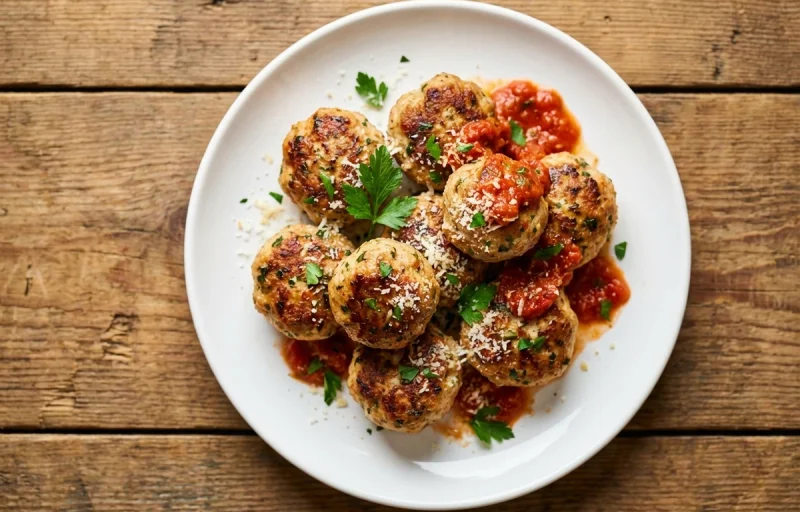
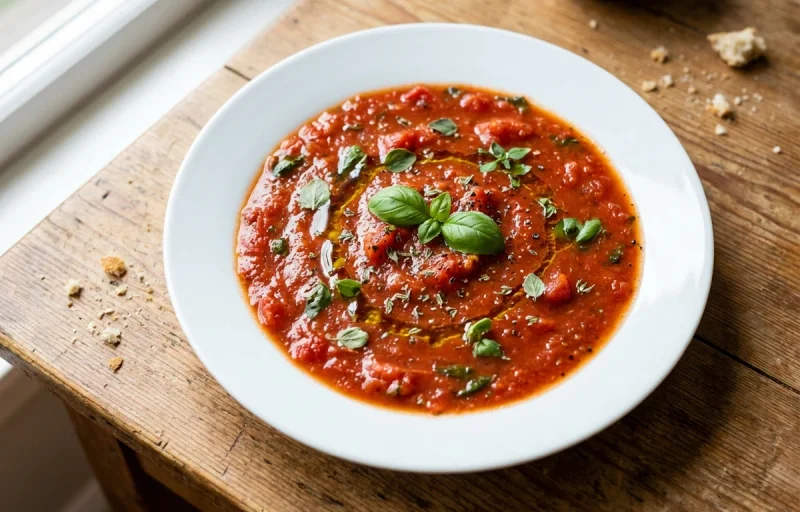
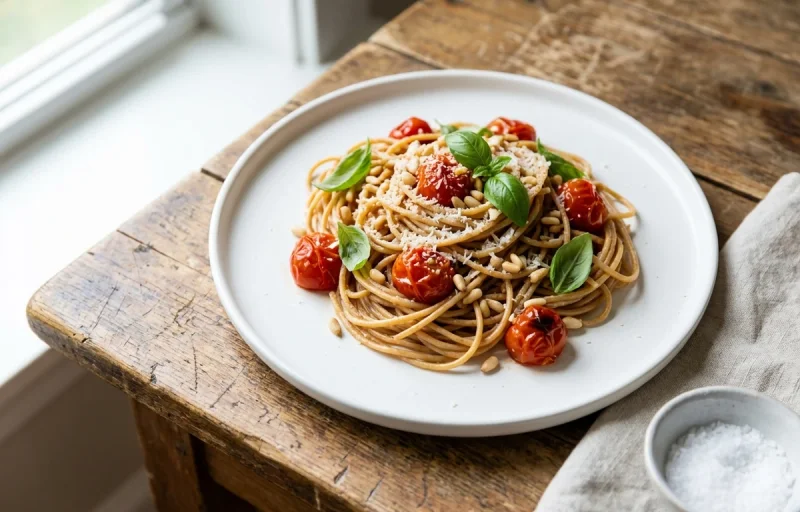
Ground chicken meatballs built from fresh garlic, parsley, oregano, and black pepper — no breadcrumbs (which add ~200 mg sodium per 1/4 cup) and no Parmesan in the mix (which would add another 300-500 mg). The tomato sauce uses no-salt-added canned tomatoes (<50 mg per 1/2 cup vs. ~250 mg in regular), simmered with fresh basil. Cook the pasta in unsalted water; finish each plate with a small pinch of salt and a fresh basil leaf so the sodium hits the tongue first.
To maximize flavor without extra salt, ensure your vegetables are spread in a single layer on the sheet pan to allow for proper caramelization and browning. A squeeze of fresh lemon juice or a sprinkle of fresh herbs like rosemary or thyme after roasting can brighten the dish significantly.
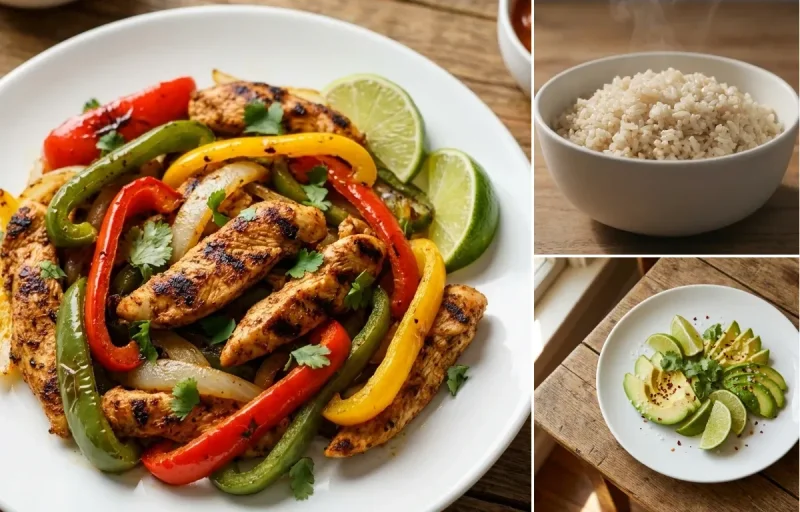
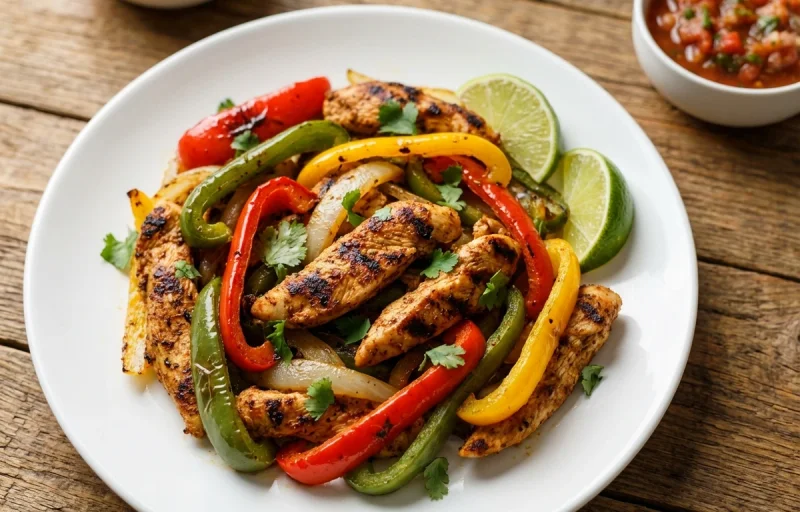
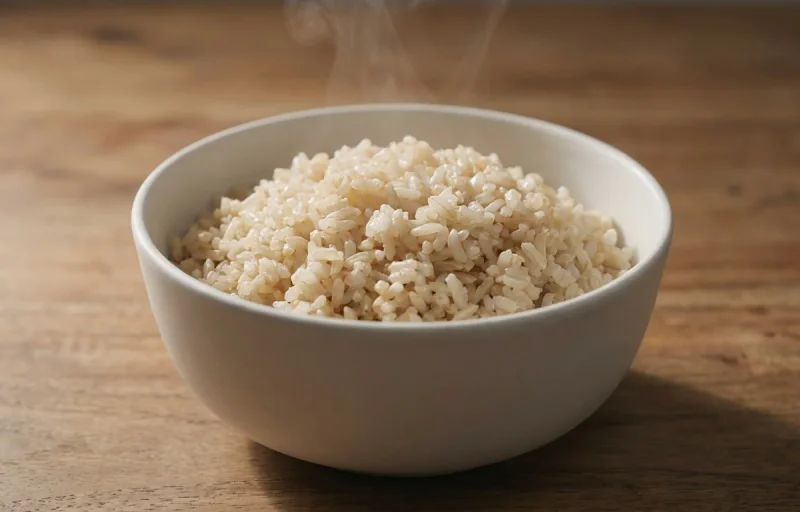
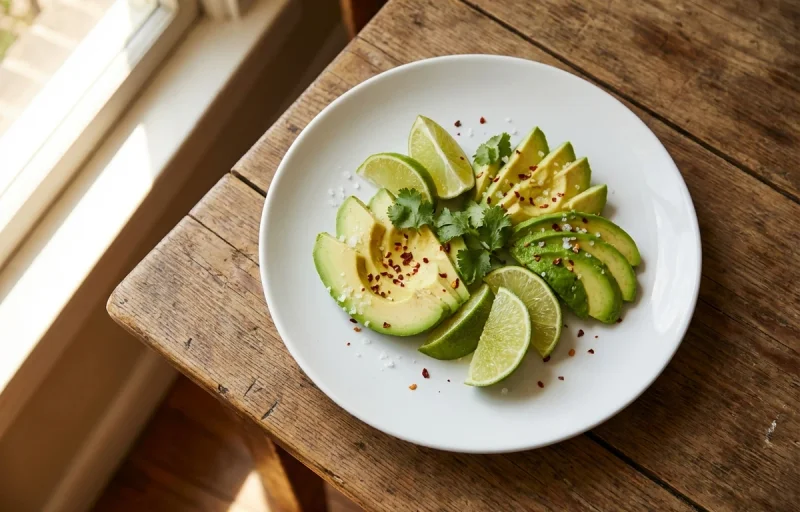
Familiar fajita flavors at about 1/5 the sodium of restaurant or fast-casual versions. Skip the seasoning packet (which carries 1,000-1,500 mg per tablespoon) and build the spice blend at home: cumin, smoked paprika, chili powder, garlic powder, oregano, black pepper. Brown rice cooks in unsalted water. Avocado and a generous squeeze of lime provide the creamy-and-bright finish — the lime acid is doing the same work as salt in the original.
To maximize flavor without salt, focus on high-heat cooking to achieve a pleasant char on the chicken and vegetables, which deepens their natural sweetness and umami. Additionally, be generous with aromatic spices like cumin, smoked paprika, and chili powder, and finish with a bright squeeze of fresh lime juice.
2
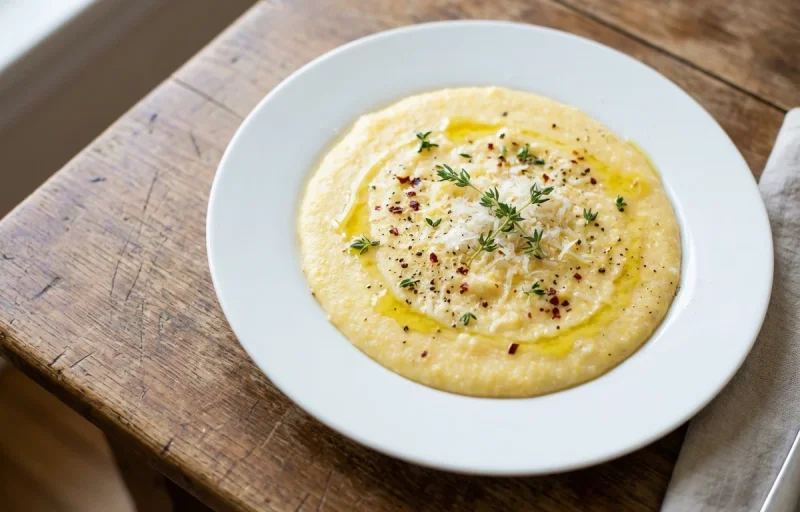
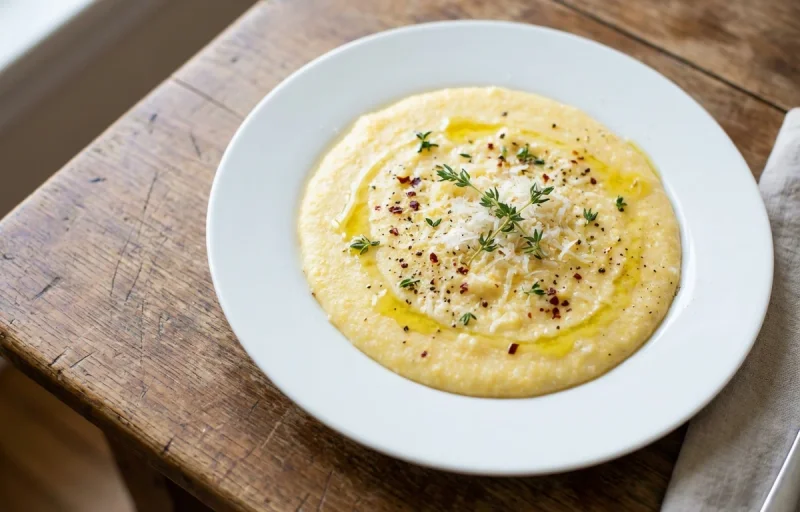
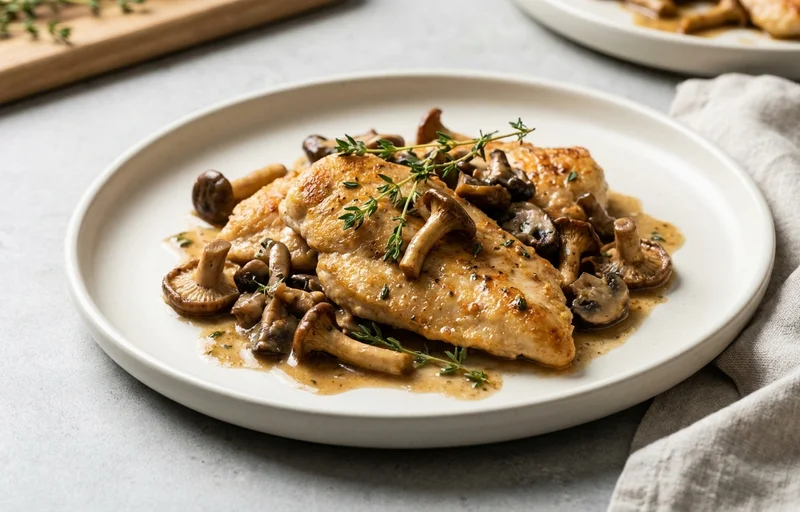
Mushroom umami carries this dish, not salt. Sautéed cremini or shiitake mushrooms deliver glutamate, the savory compound that drives most cravings for salt, at essentially zero sodium cost. Polenta cooks in unsalted water or low-sodium broth with a small finish of Parmesan (use sparingly — Parmesan is ~250 mg sodium per tablespoon, so 1 tbsp across two portions is the budget). Skip the cream; the polenta is creamy on its own.
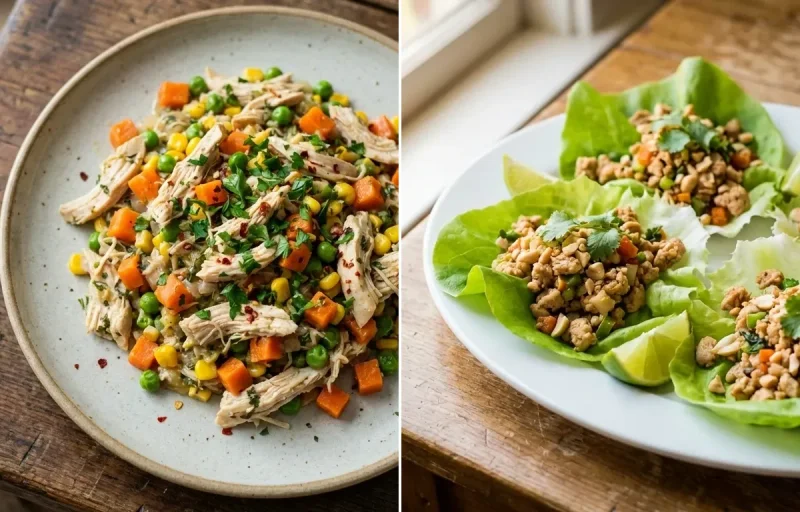
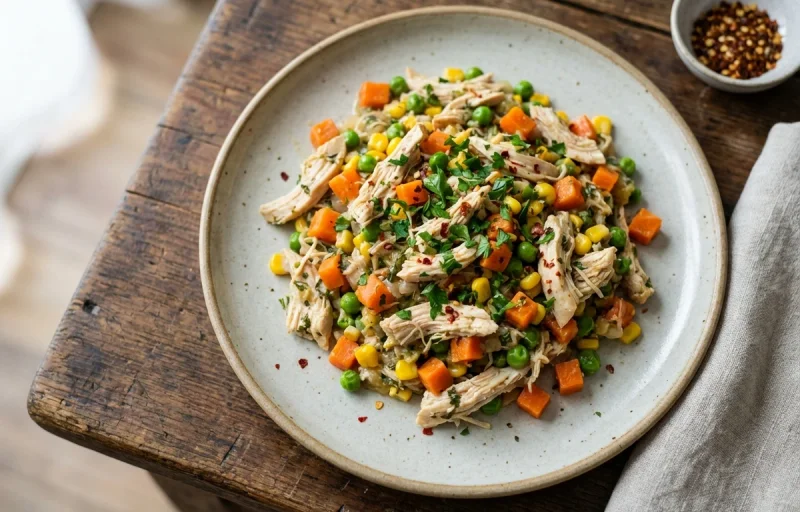
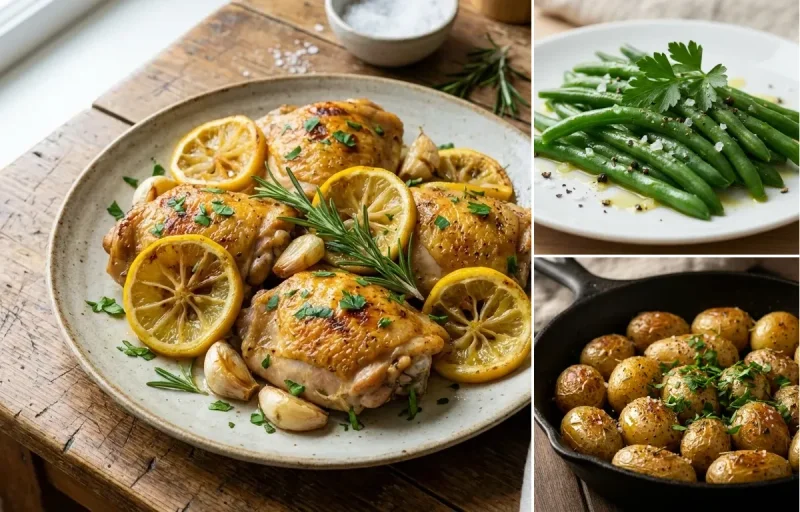
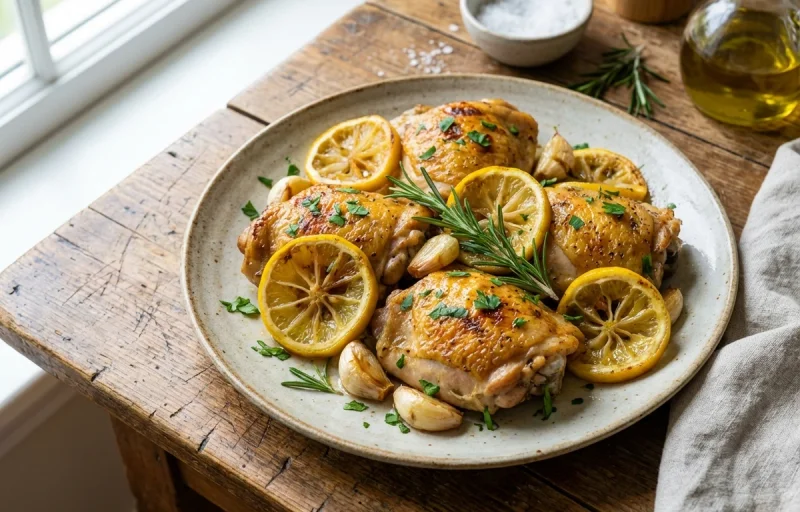
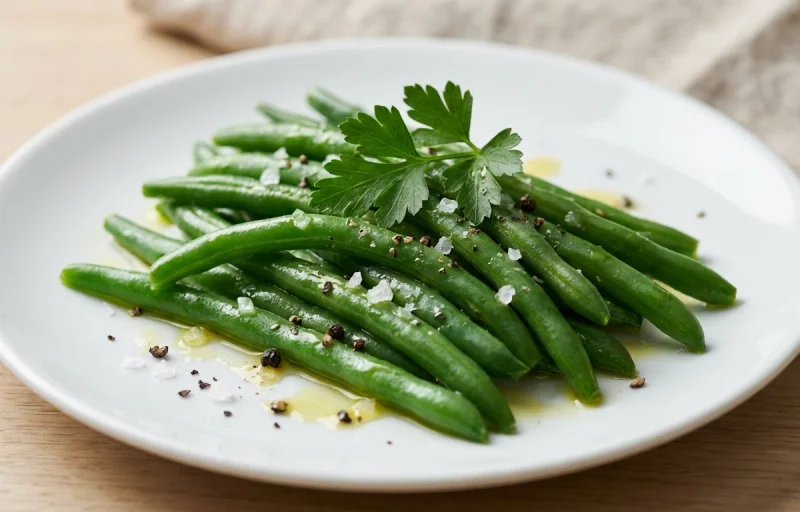
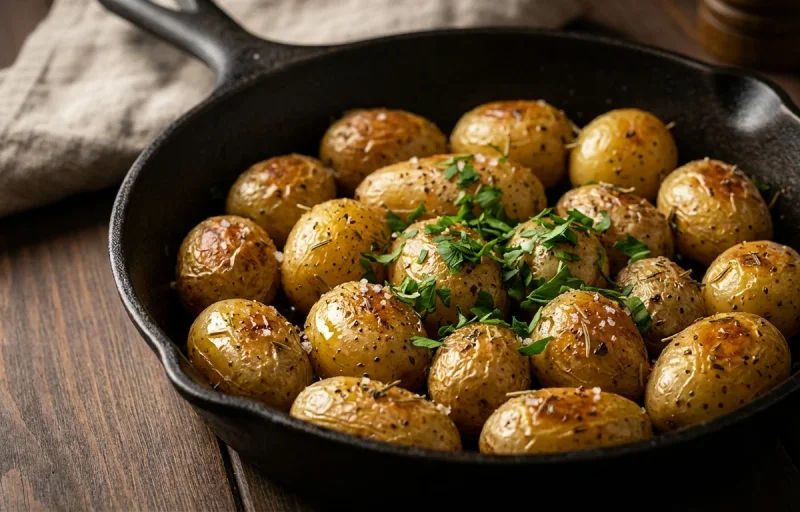
The cleanest expression of low-sodium chicken cooking: olive oil, lemon, garlic, black pepper, and time. The acid and aromatics are doing all the heavy lifting; the chicken's own ~70 mg sodium per 3 oz [2] is most of the meal's sodium load. Steam the green beans without salt and finish with lemon zest. Roast baby potatoes in olive oil and smoked paprika. Total dinner lands well under 400 mg of sodium with a small finishing pinch at the plate.
✓Balanced plate with lean protein, vegetables, and carbs
✓Simple and quick to prepare
FLAVOR TIP
To enhance the natural flavors without salt, finish the chicken with a generous squeeze of fresh lemon juice and a sprinkle of fresh parsley right before serving. The brightness of the lemon will elevate all the other ingredients.
You rely on rotisserie chicken as a weeknight shortcut — these recipes start from raw chicken and won't translate cleanly if you swap in a brined supermarket bird (which adds 300-600 mg of sodium per portion) [5][6]
!You are on a fluid restriction — broth-poached and pan-sauce dinners need to be counted into your daily fluid total
ⓘ This guidance is general. Talk to a healthcare professional or registered dietitian for personalised dietary advice.