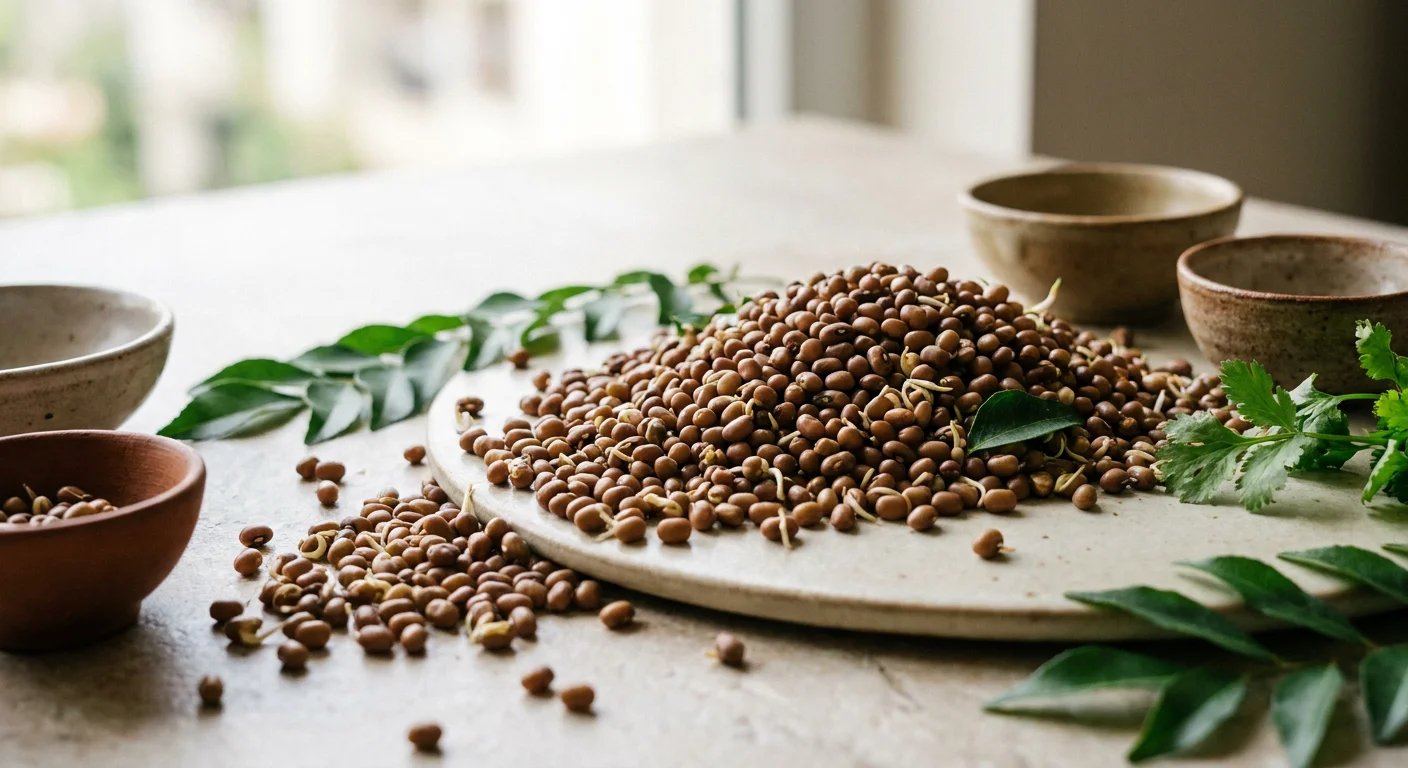
Think of moong bean sprouts as pure, edible crunch. We tend to see them as a last-minute garnish, a handful of freshness thrown on top of a noodle soup. But that wildly undersells them. These humble sprouts are incredibly low in calories and carbohydrates, offer a surprising little hit of protein and fibre, and have virtually zero impact on blood sugar. They're a fantastic, hydrating way to add bulk and texture to your meals without adding much of anything else. It's time to move them from the garnish bowl to the center of the plate.
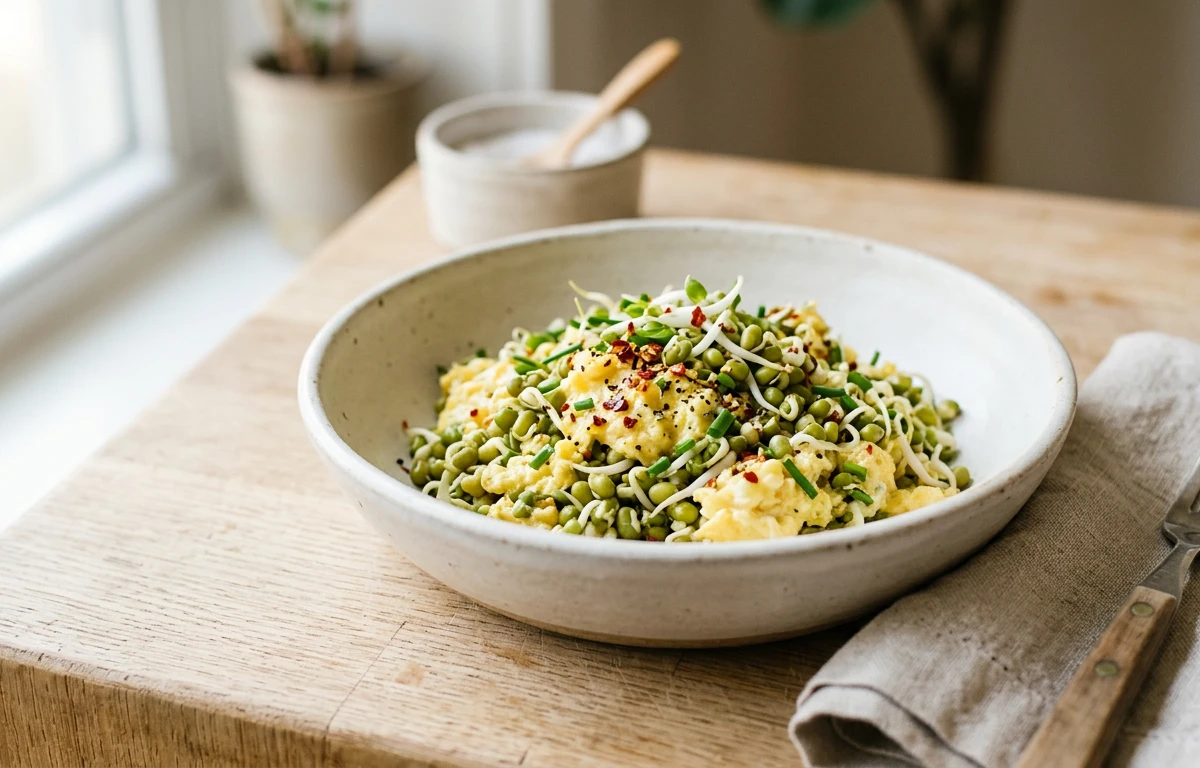
↑ Fresh, crunchy moong bean sprouts are more than just a garnish.
The ultimate low-calorie crunch
Moong bean sprouts are essentially just-born moong beans, caught at their peak of vitality. The sprouting process makes them incredibly hydrating (they're mostly water) and easy to digest. What you're left with is a vegetable that's almost pure texture and freshness.
They don't have a strong flavor — just a clean, slightly green, 'fresh' taste. This is their superpower. It means they can bulk out stir-fries, salads, soups, and scrambles, adding satisfying volume and crunch for a ridiculously low calorie cost. A whole cup of the stuff is only 30 calories. You can't say that about many foods.
IN ONE LINE
A cup of moong bean sprouts is mostly water, with a little fibre and protein. At just 30 calories and under 6 grams of carbs, they're one of the most diet-friendly vegetables you can eat.
Moong bean sprouts nutrition facts
Here's the nutritional breakdown for a 100-gram serving of raw moong bean sprouts, which is about one cup.
The numbers speak for themselves. This is a high-volume, low-impact food. The 3 grams of protein and nearly 2 grams of fibre are surprisingly high for something so light and watery, making them more satisfying than, say, lettuce.
Moong bean sprouts' glycemic index
While there isn't an official, universally agreed-upon number for moong bean sprouts, we don't need one to know their effect. Glycemic index (GI) measures how much a food raises blood sugar. Given that a 100g serving of sprouts has less than 6 grams of carbohydrate, their GI is functionally very low. They simply don't provide enough sugar or starch to cause a significant spike. For anyone managing blood sugar, they are one of the safest vegetables you can add to your plate.
GLYCEMIC INDEX · SPROUTS vs COMMON FOODS
Sprouts have a minimal blood sugar impact
Moong Bean Sprouts
very low carb
LOW
Apple
whole fruit
LOW
Pineapple
whole fruit
MEDIUM
White bread
refined
HIGH
Cornflakes
refined
HIGH
SCALE 0–90
04590
The smart way to eat them
Getting the most out of sprouts is easy, but there's one very important safety rule to follow.
01
Cook them (especially for some).
Raw sprouts carry a risk of foodborne bacteria like E. coli. If you're pregnant, elderly, or have a weakened immune system, you must cook them. For everyone else, a quick blanch or stir-fry is still the safest bet.
02
Add them late.
To keep their signature crunch, add sprouts in the last minute or two of cooking. Whether it's a stir-fry, soup, or curry, they don't need long. Overcooked sprouts turn limp and sad.
03
Use them for bulk.
Don't just sprinkle. Add a huge handful to pad out noodle dishes, fried rice, or omelettes. You're adding volume, water, and nutrients for almost zero calories.
04
Store them cold and dry.
Sprouts go bad quickly. Keep them in the fridge, ideally in a bag with a paper towel to absorb moisture, and use them within a couple of days.
What moong bean sprouts are good for
01
Effortless weight management
Sprouts are a classic 'high-volume' food. They fill up your plate and your stomach with their crunch and water content, helping you feel full on very few calories.
30
calories
02
Excellent for blood sugar control
With barely any carbohydrates and a bit of fibre, moong bean sprouts have a minimal impact on blood glucose, making them a go-to for people with diabetes or insulin resistance.
Low GI
very
03
A surprising protein boost
For a green vegetable, 3 grams of protein per cup is quite good. It contributes to the overall protein content of your meal, helping with satiety and muscle support.
3 g
protein
04
Hydration and digestive health
Their high water content contributes to your daily hydration needs, while the 1.8 grams of fibre helps support regular digestion and a healthy gut.
1.8 g
fibre
What to pair moong bean sprouts with
Sprouts are a team player. Their mild taste and crunchy texture work well with bold flavors that can stand up to them.
Eat freely — or be mindful?
Three ways to use them
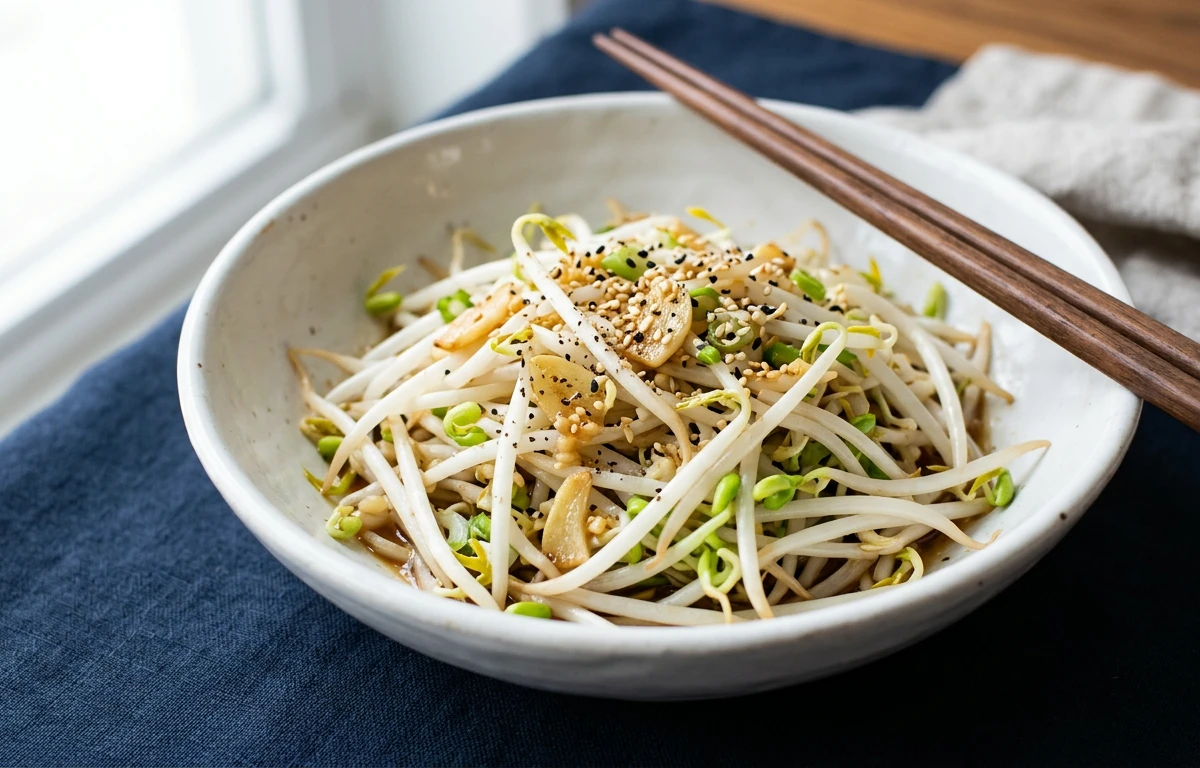
Move beyond the garnish with these three simple recipes that put moong bean sprouts front and center.
.webp)
Want healthy vegetables worked into a balanced week — without the planning?
Our meal planner incorporates low-GI vegetables like moong bean sprouts into delicious, easy recipes. We calculate the portions and macros for you and generate a single grocery list for the week.
Build my weekly plan →SOURCES & REFERENCES · 3
One more thing
Eating well is rarely about willpower. It’s about having a short list of dinners you actually want to eat. Pick two from this list. Make them next week. The rest will follow.
If you want these on autopilot, our weekly meal planner can drop the picks above into your calendar with one click and build a single grocery list from the merged ingredients.
FREQUENTLY ASKED QUESTIONS
Frequently asked questions
Are moong bean sprouts good for people with diabetes?
Yes, they are an excellent food for diabetes management. They are extremely low in carbohydrates and calories, so they have a negligible effect on blood sugar levels while adding satisfying bulk and crunch to meals.
Is it safe to eat raw moong bean sprouts?
Eating raw sprouts carries a risk of foodborne illness (like E. coli or Salmonella) because the warm, moist conditions needed for sprouting are also ideal for bacteria growth. It is safest for everyone to cook them, and it is essential for pregnant women, older adults, and those with compromised immune systems.
Are moong bean sprouts keto-friendly?
Yes, they are very keto-friendly. A 100g serving has about 5.9g of total carbs and 1.8g of fibre, resulting in just over 4g of net carbs. They are a great way to add volume to keto meals.
How do you keep bean sprouts from going bad?
Store them in the refrigerator as soon as you get them home. For best results, place them in a plastic bag with a piece of paper towel to absorb excess moisture, which is the main cause of spoilage. Try to use them within 2-3 days.

ABOUT THE AUTHOR
Shreya Chatterjee
NUTRITION WRITER
Shreya is a nutrition writer and the voice behind The Nutrition Pen, where she turns evidence-based nutrition into simple, repeatable eating habits. Her writing focuses on practical food guidance — what to actually put on the plate — for readers who want to eat well without the noise.
Meet the editorial team →METHODOLOGY
How this article was created
Built using verified nutrition databases, culinary research, and traditional cooking knowledge — every claim is cross-referenced against the sources listed in the article.
· USDA data· Culinary research· Quality reviewed
Read our methodology →TRANSPARENCY
About this content
Articles are curated using trusted food databases (USDA FoodData Central, IFCT), culinary literature, and dietary guidelines, then structured by our editorial team for clarity, accuracy, and usefulness.
· Verified data sources· Culinary research· Quality reviewed
Read our editorial policy →EXPLORE OUR MEALS
Meals that fit this article

AMERICAN · 1677 CAL
Almonds with Sliced Apple + supplement + iron

MEDITERRANEAN · 809 CAL
Greek Yogurt with Berries Almonds and Granola + supplement + iron

GENERAL_HEALTHY · 705 CAL
Banana with Peanut Butter Pregnancy + supplement + iron

MODERN · 982 CAL
Hummus with Crudits and Pita with Fresh Orange Snack + supplement + iron
TAGGED
KEEP READING