Dietary Lifestyle · 11 MIN READ
How to Weave Indian Probiotic and Prebiotic Foods Into Every Meal
How to weave dahi, idli, kanji, achar, and naturally prebiotic Indian staples (onion, garlic, banana, dals, millets) into every meal — with the ISAPP…
Loading...
How to weave dahi, idli, kanji, achar, and naturally prebiotic Indian staples (onion, garlic, banana, dals, millets) into every meal — with the ISAPP…
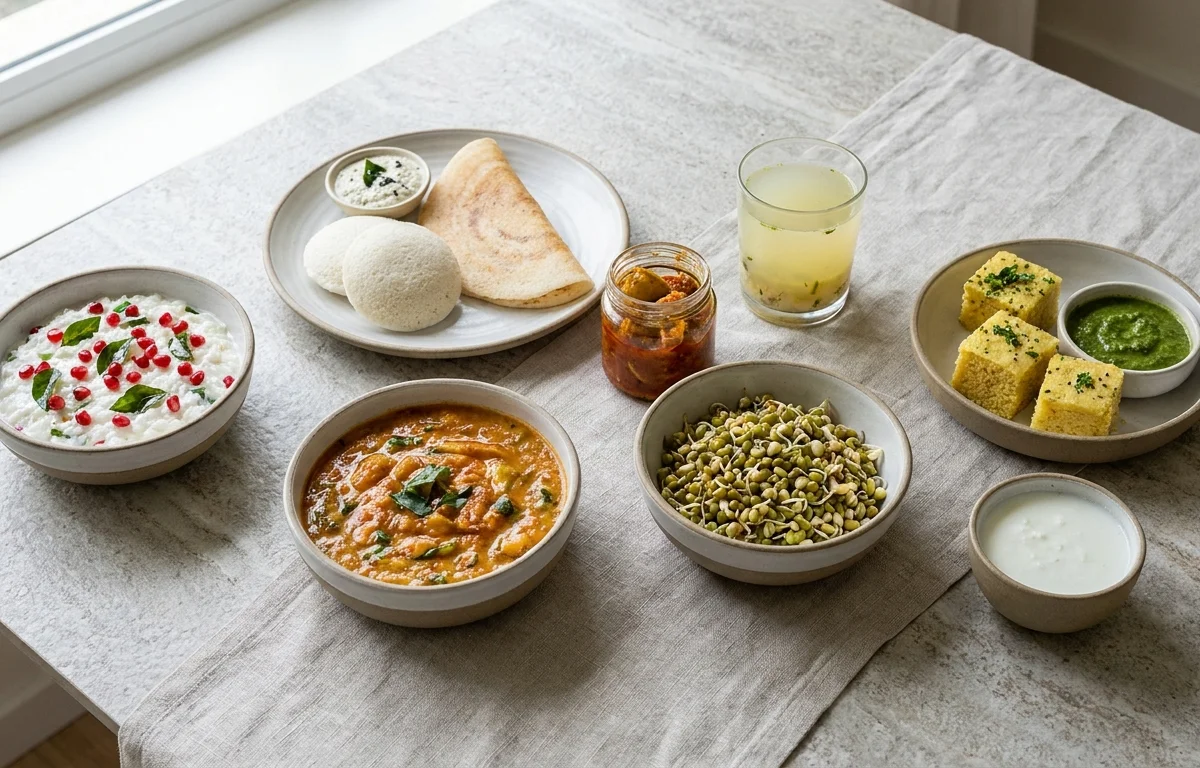
Walk past any supermarket fridge and you will see a wall of expensive kombuchas and kefir shots promising to fix your gut. The marketing is new; the idea is not. Indian home cooking has built fermentation into the rhythm of the day for centuries — a katori of dahi with lunch, idli or dosa from a batter that bubbled overnight, a glass of chaas in the afternoon, kanji jars on the winter windowsill, achar on the side of every plate. None of it is sold as a 'probiotic.' All of it does the work.
Before we go further, one distinction that matters because almost every article on this topic gets it wrong. The International Scientific Association for Probiotics and Prebiotics (ISAPP) draws a clean line in its 2021 consensus: a probiotic is a live, named-strain microbe present at an adequate dose at the time you eat it; a fermented food is anything made through microbial growth, whether or not those microbes are still alive when it reaches your mouth [1]. Sourdough bread is fermented but not probiotic — the bake kills the cultures. The same is true, awkwardly, of steamed idli and most commercial dhokla. The batter is alive; the steamer is not. That does not make idli pointless for gut health — fermentation lowers phytate, raises B-vitamins, and pre-digests the starch into something gentler — but the live bacteria stop at the rim of the steamer pot.
What does carry live cultures all the way to your gut, from the Indian kitchen, is short and unglamorous: home-set dahi (and the chaas, lassi, and raita made from it), traditionally fermented achar (the salt/oil/sun kind, not vinegar shortcuts), and kanji. The benefit is real — Wastyk and colleagues' 2021 randomised trial in Cell put 36 healthy adults on a fermented-food-heavy diet for 10 weeks and saw measurable increases in gut microbial diversity and a drop in 19 inflammatory proteins, while the high-fibre comparator group saw no diversity change [2]. The dose that drove those results: roughly six servings of fermented food a day. That is a lot in a Western context. In an Indian household where dahi shows up at lunch and chaas at 4 p.m. and a spoon of achar with dinner, it is almost the default.
This guide is the weaving instruction — how to put one live-culture food at every meal, how to layer in the naturally prebiotic Indian staples (raw onion, garlic, slightly green banana, dals, millets) that feed the bacteria you just ate, and which beloved 'gut foods' (kadhi, supermarket dhokla, vinegar pickle) you should keep eating for the joy of them but not count as probiotic.
Walk past any supermarket fridge and you will see a wall of expensive kombuchas and kefir shots promising to fix your gut. The marketing is new; the idea is not. Indian home cooking has built fermentation into the rhythm of the day for centuries — dahi with lunch, idli from a batter that bubbled overnight, chaas in the afternoon, kanji on the winter windowsill, achar on the side. None of it sold as a 'probiotic.' All of it doing the work.
The International Scientific Association for Probiotics and Prebiotics drew a clean line in its 2021 consensus statement. A probiotic is a live, named-strain microbe present at adequate dose at the time you eat it. A fermented food is anything made through microbial growth, whether or not those microbes are still alive when it reaches your mouth [1]. Sourdough is fermented, not probiotic — the bake kills the cultures. The same is true of steamed idli, steamed dhokla, fried dosa, and boiled kadhi. The batter is alive; the steamer is not. That does not make these foods pointless for gut health — fermentation lowers phytate, raises B-vitamins, and pre-digests starch — but the live bacteria stop at the cooking step. What does carry live cultures all the way to the gut from the Indian kitchen is short: home-set dahi (and the chaas, lassi, raita made from it), traditionally fermented salt/oil/sun-cured achar, and kanji.
Despite the popular assertion to the contrary, very few fermented foods contain microbes that fit the criteria to be called probiotic. The microbes in fermented foods, even if they remain alive when consumed, do not always qualify as probiotics — they need to be specific named strains, at adequate dose, with documented benefit.
— International Scientific Association for Probiotics and Prebiotics, 2021 consensus on fermented foods [1]
Tell the planner your dietary identity and how often you set curd at home, and it will build a 7-day Indian plate with at least one live-culture accompaniment at every main meal — no supplements, no imports.
Build my plan →Strip the marketing off and the working rules are simple. One live-culture food at every meal — home-set dahi, chaas, raita, kanji, or a spoon of real fermented achar. Cook with the prebiotic staples Indian kitchens already use — raw onion in the salad, garlic and ginger in the tadka, a slightly green banana sliced into the curd, dal at every main meal, millets a couple of times a week. Keep eating idli and dhokla, but for the right reason — they are easier to digest and have more bioavailable nutrients than their unfermented counterparts, not because steam-killed bacteria are doing anything in your gut. Treat the Wastyk 2021 number — about six servings a day of fermented food — as a ceiling worth knowing, not a target to engineer. If you set dahi at home, eat dosa for breakfast on Sunday, drink chaas after lunch, and finish dinner with a spoon of nani's achar, you are already there. The AGA's 2020 guideline is worth remembering as the brake pedal: routine probiotic supplements are not recommended for most digestive conditions [3]. Food, not pills, is where the evidence sits — and the food, mercifully, is the food you already know how to cook.

Sourabh writes about Indian cuisine, budget cooking, and the everyday nutrition questions that come up in Indian kitchens — chapati portions, dal protein, how to keep dishes balanced without losing the flavours families actually want. His pieces lean on credible sources (ICMR-NIN, peer-reviewed studies) and home-cook reality in equal measure.
Meet the editorial team →Built using verified nutrition databases, culinary research, and traditional cooking knowledge — every claim is cross-referenced against the sources listed in the article. Last reviewed May 2026.
Articles are curated using trusted food databases (USDA FoodData Central, IFCT), culinary literature, and dietary guidelines, then structured by our editorial team for clarity, accuracy, and usefulness.