It's the vegetable that rarely gets the spotlight. Ridge gourd—also known as Turai or Peerkangai—is often seen as just a watery, mild-mannered addition to a curry. But that's exactly its superpower. It's a fantastically low-calorie, ultra-hydrating vegetable that acts like a sponge for spices and flavor. Thinking of it as 'bland' is missing the point; it's a brilliant canvas for building a healthy, satisfying meal without a load of carbs or calories.
↑ Ridge gourd's sharp-edged skin is its signature feature.
The underrated, ultra-light vegetable
Let's be honest, no one ever craves a plain ridge gourd. You crave the dish it becomes. This vegetable is all about texture and potential. When cooked, it softens into a silky, tender consistency, a bit like zucchini but with a more fibrous bite. Its real talent is absorbing the flavors around it—garlic, ginger, turmeric, chili, coconut milk—making them go further and adding bulk and hydration to a meal for almost no caloric cost.
It's a staple in many parts of Asia for good reason. It grows easily in the heat, provides incredible volume for very little, and offers a cooling, hydrating balance to spicy dishes. The trick is to stop expecting it to be the star and start seeing it as the ultimate supporting actor.
IN ONE LINE
Incredibly low-calorie and hydrating, ridge gourd is a mild, versatile vegetable that's brilliant at absorbing the flavors of a dish. Always eat it cooked, not raw.
Ridge gourd nutrition facts
The numbers for ridge gourd are all about what's not there: virtually no fat, very few calories, and minimal carbs. Here's what a 100-gram serving (about 1 cup, chopped) provides.
The standout number here is the calorie count: just 17. You could eat a huge, filling bowl of cooked ridge gourd and barely make a dent in your daily calorie budget. The 1.5 grams of fiber is also useful, helping to make that low-calorie volume feel more satisfying. It's not a vitamin powerhouse, but it contributes a little bit of Vitamin C and a whole lot of water.
Ridge Gourd's Glycemic Index
There's no official glycemic index (GI) score for ridge gourd, mostly because there's little point in measuring it. With only 3.6 grams of carbohydrate per 100g serving—much of it fiber—its effect on blood sugar is negligible. For anyone managing blood sugar, this is what you'd call a 'free vegetable'. It adds bulk, nutrients, and satisfaction to a meal without posing any risk of a sugar spike. It sits far, far below even low-GI fruits and grains.
GLYCEMIC INDEX · RIDGE GOURD vs COMMON FOODS
Ridge Gourd Has a Negligible Glycemic Impact
Ridge Gourd (est.)
non-starchy vegetable
LOW
Apple
whole fruit
LOW
Pineapple
whole fruit
MEDIUM
Watermelon
whole fruit
HIGH
White Bread
refined
HIGH
SCALE 0–90
04590
How to cook it right
Ridge gourd is easy to cook, but a few simple rules make all the difference between a delicious, silky dish and a watery mess.
01
Peel the sharp ridges.
Use a vegetable peeler to shave off the ten hard, sharp ridges running down its length. You can leave the rest of the thin green skin on, or peel it all—your choice.
02
Cook it, don't eat it raw.
Unlike its cousin the cucumber, ridge gourd is not pleasant raw. It needs cooking to soften its flesh and develop its mild, sweet flavor.
03
Don't add too much water.
The gourd is mostly water itself, which it will release as it cooks. Sauté it in oil with spices first, then let it simmer in its own juices or a very small amount of liquid.
04
Give it flavor.
This is the most important rule. Ridge gourd is a blank slate. It needs aromatics like onion, garlic, ginger, and spices like turmeric, cumin, and coriander to shine.
05
Watch the cooking time.
It cooks quickly! Sauté for 5-7 minutes or simmer for 10-15. You want it to be tender and translucent, not disintegrated into mush.
What ridge gourd is good for
01
Excellent for weight management
At only 17 calories per 100g, you can eat a large, filling portion. Its high water and fiber content helps you feel full on very few calories.
17
calories
02
Supports stable blood sugar
With just 3.6g of carbs and a negligible glycemic index, ridge gourd is an ideal vegetable for anyone with diabetes or on a low-carb diet.
3.6g
carbs
03
Promotes hydration
Composed of about 95% water, eating ridge gourd is a great way to contribute to your daily fluid intake, especially in hot weather.
~95%
water
04
Gentle on the digestive system
When cooked, ridge gourd is soft and easy to digest. It provides a source of gentle soluble and insoluble fiber that can aid regularity without being harsh.
1.5g
fiber
What to pair it with
Ridge gourd is a team player. It needs partners that bring bold flavors. Think of these as starting points for building a delicious dish.
Eat freely — or be mindful?
Three ways to eat it
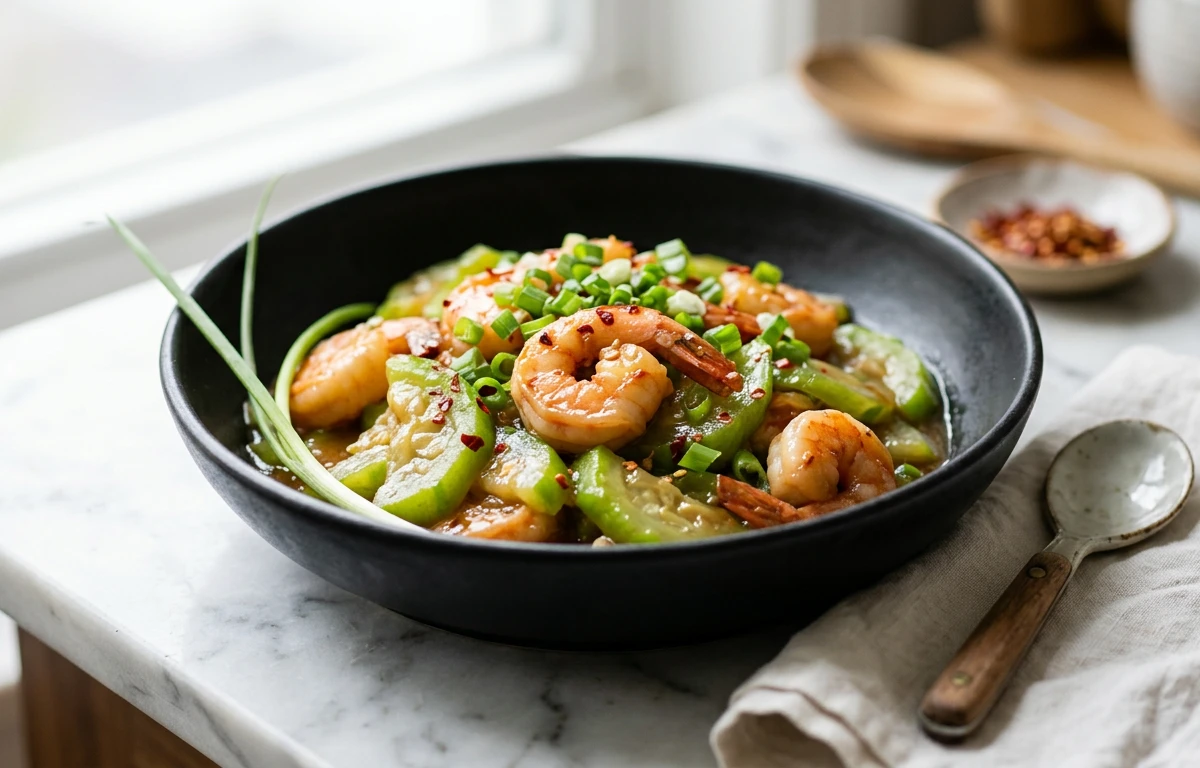
Three classic, easy ways to turn ridge gourd into a delicious and healthy meal.
.webp)
.webp)
Want more low-glycemic meals planned for you?
Our meal planner can help you build a week of balanced, low-carb friendly meals, incorporating vegetables like ridge gourd without the guesswork. Get macros, recipes, and a single grocery list.
Build my weekly plan →SOURCES & REFERENCES · 3
One more thing
Eating well is rarely about willpower. It’s about having a short list of dinners you actually want to eat. Pick two from this list. Make them next week. The rest will follow.
If you want these on autopilot, our weekly meal planner can drop the picks above into your calendar with one click and build a single grocery list from the merged ingredients.
FREQUENTLY ASKED QUESTIONS
Frequently asked questions
Is ridge gourd good for people with diabetes?
Yes, it's an excellent choice. It is extremely low in carbohydrates and calories, so it has a minimal effect on blood sugar levels. It's a great vegetable for adding volume to meals without impacting glucose.
Can you eat the skin of a ridge gourd?
Yes, the thin green skin is edible, but you must peel off the hard, sharp ridges first. Many people peel the entire vegetable for a softer texture, but leaving the skin on is fine and adds a bit of fiber.
What does ridge gourd taste like?
On its own, ridge gourd is very mild and slightly sweet, with a flavor profile somewhere between a zucchini and a cucumber. Its real value is in its ability to absorb the flavors of the spices and ingredients it's cooked with.
How do I stop my ridge gourd curry from being watery?
The key is not to add extra water when you start cooking. The gourd will release a lot of its own liquid. Sauté it in oil with your spices and let it cook in its own juices. If you need more gravy later, you can add a splash of hot water or coconut milk.

ABOUT THE AUTHOR
Shreya Chatterjee
NUTRITION WRITER
Shreya is a nutrition writer and the voice behind The Nutrition Pen, where she turns evidence-based nutrition into simple, repeatable eating habits. Her writing focuses on practical food guidance — what to actually put on the plate — for readers who want to eat well without the noise.
Meet the editorial team →METHODOLOGY
How this article was created
Built using verified nutrition databases, culinary research, and traditional cooking knowledge — every claim is cross-referenced against the sources listed in the article.
· USDA data· Culinary research· Quality reviewed
Read our methodology →TRANSPARENCY
About this content
Articles are curated using trusted food databases (USDA FoodData Central, IFCT), culinary literature, and dietary guidelines, then structured by our editorial team for clarity, accuracy, and usefulness.
· Verified data sources· Culinary research· Quality reviewed
Read our editorial policy →EXPLORE OUR MEALS
Meals that fit this article

AMERICAN · 1677 CAL
Almonds with Sliced Apple + supplement + iron

MEDITERRANEAN · 809 CAL
Greek Yogurt with Berries Almonds and Granola + supplement + iron

GENERAL_HEALTHY · 705 CAL
Banana with Peanut Butter Pregnancy + supplement + iron

MODERN · 982 CAL
Hummus with Crudits and Pita with Fresh Orange Snack + supplement + iron
TAGGED
KEEP READING