When most of us hear 'squid', we think of one thing: a basket of crispy, deep-fried calamari rings. And that's a shame. Because beneath the batter and away from the fryer, squid is one of the leanest, fastest-cooking, and most blood-sugar-friendly proteins you can eat. It's almost pure protein, with barely any fat or carbs to its name. Forget the seaside snack bar; the real squid is a weeknight dinner hero waiting to happen.
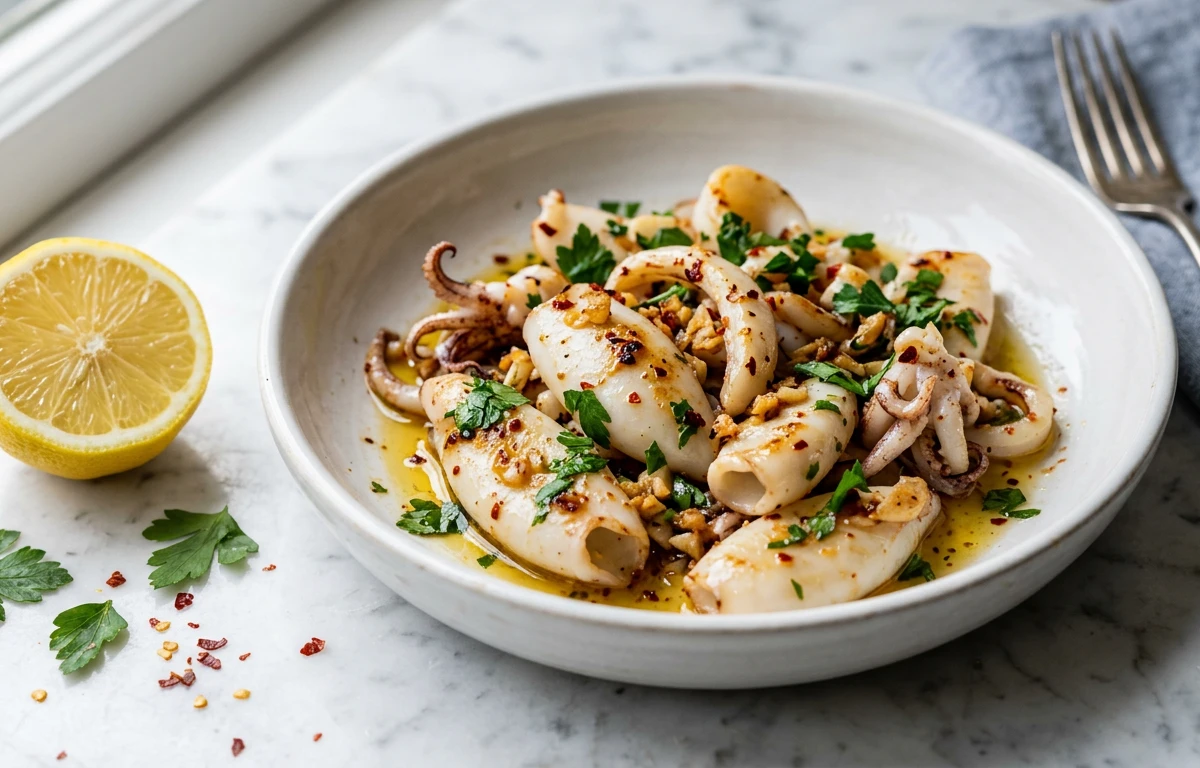
↑ Grilled squid is a world away from fried calamari — lean, tender, and incredibly healthy.
More than just calamari
Let's clear this up first: squid and calamari are the same animal. 'Calamari' is just the Italian word, which over time has become menu-speak for the battered and fried version. But if you get your hands on plain squid — tubes, rings, or tentacles — you're holding one of the world's most efficient proteins.
It's incredibly lean, with more protein than an egg and fewer calories. It cooks in about 90 seconds. And because it's virtually all protein, it has almost no impact on your blood sugar. It's time we rescued squid from the deep fryer.
IN ONE LINE
Plain squid is a lean, high-protein, low-carb food that cooks in minutes. It's the frying, not the squid, that makes it a less-healthy choice.
Squid nutrition facts
Here's what a 100-gram (about 3.5-ounce) serving of cooked squid provides. This is for squid that's been steamed or boiled, without any added fat or salt.
The numbers speak for themselves. This is an incredibly protein-dense food for just 92 calories. For context, the same amount of salmon has around 200 calories, and beef sirloin has over 250. The minimal carbohydrate content is why it's such a star for low-carb and keto diets.
What about the cholesterol?
This is the question that always comes up with squid and shrimp. Yes, squid contains dietary cholesterol. However, for most of us, the dietary cholesterol we eat has a much smaller effect on our blood cholesterol levels than the amount of saturated and trans fats we consume. Since squid is very low in saturated fat, most major health bodies now agree that it can be part of a heart-healthy diet. The old advice to strictly avoid it is now considered outdated.
WATCH OUT
The biggest health risk from squid isn't the squid itself, but the preparation. A plate of fried calamari can pack over 500 calories, a huge dose of refined carbs, inflammatory oils, and sodium.
Squid's glycemic index
Glycemic index (GI) measures how quickly a carbohydrate-containing food raises your blood sugar. With only 3.1 grams of carbs and zero sugar in a 100g serving, squid has a glycemic index that is effectively zero. It simply doesn't have enough carbohydrate to cause a blood sugar response. This makes it an outstanding food for anyone managing blood sugar, from people with diabetes to those just looking for steady, stable energy.
GLYCEMIC INDEX · SQUID vs COMMON FOODS
Squid has a near-zero glycemic impact
Squid
seafood
LOW
Apple
whole fruit
LOW
Pineapple
whole fruit
MEDIUM
White bread
refined
HIGH
Cornflakes
refined
HIGH
SCALE 0–90
04590
The smart way to cook it
The secret to tender, delicious squid is all in the timing. There are only two ways to cook it: very fast, or very slow. Anything in between and it turns into a rubber band.
01
Cook it hot and fast.
For grilling or stir-frying, use high heat and cook for just 60-90 seconds. The moment it turns opaque, it's done.
02
Or, cook it low and slow.
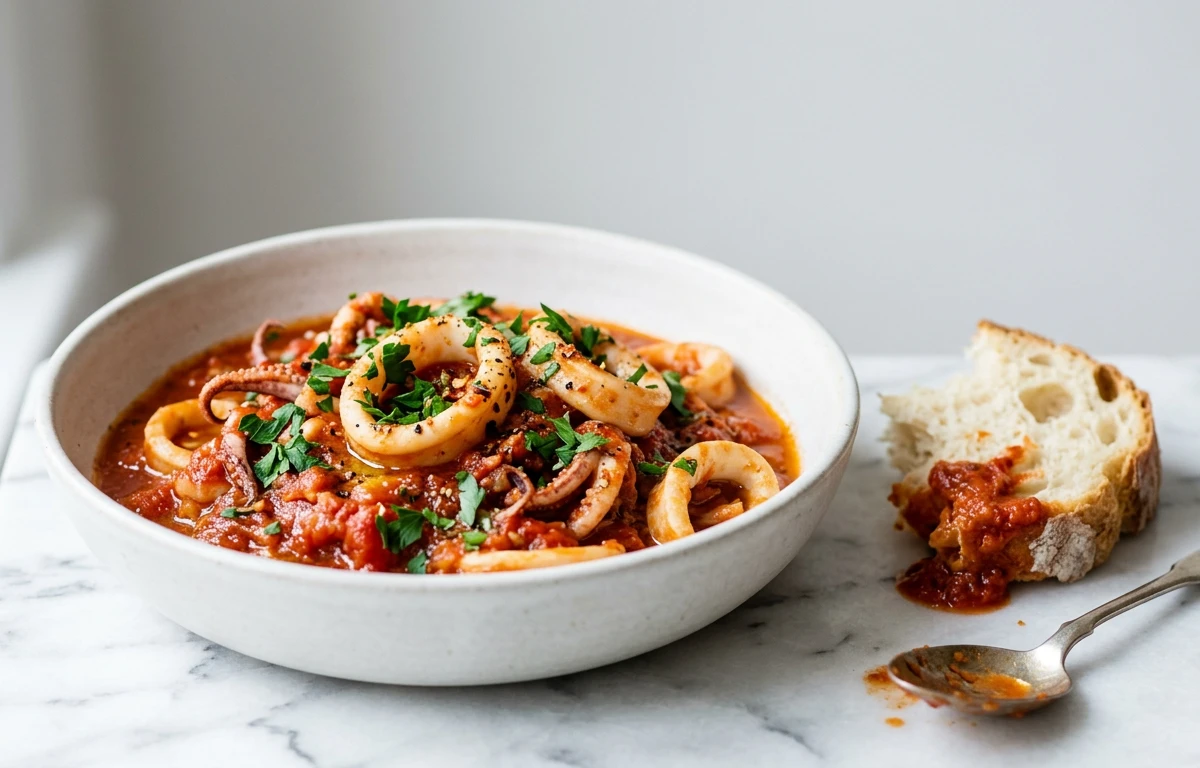
For stews and sauces, simmer it gently for at least 30-45 minutes. It will go through a tough phase and then relax into tenderness.
03
Don't bread and fry.
Grill, stir-fry, poach, or steam it to keep the calories and fat low. A squeeze of lemon is all it needs.
04
Pair it with fibre.
Squid has no fibre, so serve it with a big salad, grilled vegetables, or on a bed of greens to make it a complete meal.
05
Watch the added salt.
Marinades and sauces can be sodium traps. Use herbs, garlic, chilli, and citrus to add flavour instead.
What squid is good for
01
High-quality lean protein
With over 15 grams of protein per 100g serving, squid is excellent for building and repairing tissues, and for keeping you full.
15.6g
protein
02
Weight management
The high protein-to-calorie ratio makes squid incredibly satisfying, helping to control appetite for very few calories.
92
calories
03
Blood sugar control
With a glycemic index near zero, squid is a perfect protein choice for anyone looking to maintain stable blood sugar levels.
GI ≈0
negligible
04
A fast, convenient meal
Frozen squid thaws quickly and cooks in under two minutes, making it a faster option than chicken breast or fish fillets.
<2
min cook time
What to pair squid with
Squid has a mild, slightly sweet flavour that plays well with bold ingredients. The key is to add freshness, acidity, and the fibre that squid lacks.
Eat freely — or be mindful?
Three ways to eat it
Three simple recipes that let the squid shine, keeping it light, healthy, and a long way from a deep fryer.
Want lean proteins like squid worked into a balanced week?
Our meal planner builds weekly menus around your goals, using lean proteins and smart carbs for steady energy. Get a plan with macros calculated and a single grocery list at the end.
Build my weekly plan →SOURCES & REFERENCES · 3
One more thing
Eating well is rarely about willpower. It’s about having a short list of dinners you actually want to eat. Pick two from this list. Make them next week. The rest will follow.
If you want these on autopilot, our weekly meal planner can drop the picks above into your calendar with one click and build a single grocery list from the merged ingredients.
FREQUENTLY ASKED QUESTIONS
Frequently asked questions
Is squid healthy?
Yes, plain squid is very healthy. It's a low-calorie, low-fat, high-protein food with a near-zero glycemic index. The health issues are associated with deep-frying it (as in calamari), which adds significant fat, calories, and refined carbs.
Is squid high in cholesterol?
Squid does contain dietary cholesterol, but research shows that for most people, dietary cholesterol has a minimal impact on blood cholesterol levels. Saturated fat is a bigger concern, and squid is very low in that. It's considered safe for a heart-healthy diet.
How do I stop squid from being rubbery?
You have two options: cook it extremely fast (60-90 seconds on high heat) or cook it very slow (simmering for 45+ minutes in a liquid). Anything in between these two times will result in a tough, rubbery texture.
Is frozen squid as good as fresh?
Yes, for most preparations. Much of the 'fresh' squid you see has been previously frozen anyway. Good quality frozen squid, thawed properly (overnight in the fridge), is an excellent and convenient option.
METHODOLOGY
How this article was created
Built using verified nutrition databases, culinary research, and traditional cooking knowledge — every claim is cross-referenced against the sources listed in the article.
· USDA data· Culinary research· Quality reviewed
Read our methodology →TRANSPARENCY
About this content
Articles are curated using trusted food databases (USDA FoodData Central, IFCT), culinary literature, and dietary guidelines, then structured by our editorial team for clarity, accuracy, and usefulness.
· Verified data sources· Culinary research· Quality reviewed
Read our editorial policy →RELATED RECIPES
Cook from this article
EXPLORE OUR MEALS
Meals that fit this article

AMERICAN · 1677 CAL
Almonds with Sliced Apple + supplement + iron

MEDITERRANEAN · 809 CAL
Greek Yogurt with Berries Almonds and Granola + supplement + iron

GENERAL_HEALTHY · 705 CAL
Banana with Peanut Butter Pregnancy + supplement + iron

MODERN · 982 CAL
Hummus with Crudits and Pita with Fresh Orange Snack + supplement + iron
TAGGED
KEEP READING