Spice10 recipes
black salt.
VegetarianVeganGluten-freeDairy-freeNut-freePeanut-freeSoy-freeEgg-freeShellfish-freeHoney-freeAlcohol-free
ALSO KNOWN AS
black saltkala noonsanchalkala namakhimalayan black saltsulemani namakbit lobonindian black salt
SERVING
CALORIES
0
PROTEIN
0g
CARBS
0g
FAT
0g
FIBER
0g
NUTRITION PROFILE · per 100 g
Everything in this ingredient.
MACRONUTRIENTS
Calories0kcal—
Protein0g0%
Carbohydrates0g0%
Fiber0g0%
Sugar0g0%
Total fat0g0%
Saturated fat0g0%
Trans fat0g—
Cholesterol0mg0%
Water0.20g—
MINERALS
Sodium38000mg1652%
Potassium150mg3%
Calcium35mg3%
Iron45mg250%
Magnesium12mg3%
Zinc0.10mg1%
VITAMINS
Vitamin A0µg0%
Vitamin C0mg0%
Vitamin D0µg0%
Vitamin E0mg0%
Vitamin K0µg0%
Thiamin (B1)0mg0%
Riboflavin (B2)0mg0%
Niacin (B3)0mg0%
Pantothenic acid (B5)0mg0%
Vitamin B60mg0%
Folate (B9)0µg0%
Vitamin B120µg0%
%DV based on a 2,000 cal diet. Source: USDA FoodData Central. A dash in the %DV column means there’s no established Daily Value for that nutrient.
MEASUREMENT CONVERSIONS
How much is what.
1 cup280g
1 tablespoon18g
1 teaspoon6g
1 oz28.4g
1 lb453.6g
1 ml1.2g
1 liter1150g
HEALTH BENEFITS
Why eat it.
- ✓Aids in digestion and reduces bloating
- ✓Lower sodium content compared to regular table salt
- ✓Contains trace minerals like iron and magnesium
- ✓Acts as a natural laxative in small quantities
- ✓Helps relieve heartburn and intestinal gas
COOKING TIPS
In the kitchen.
- 1Add at the end of cooking to preserve its unique flavor and aroma
- 2Use in vegan recipes like tofu scramble to mimic the taste of eggs
- 3Essential for authentic Indian chaats, chutneys, and raitas
STORAGE
Keep it fresh.
- Store in an airtight glass container to prevent moisture absorption
- Keep in a cool, dry place away from direct sunlight
- Ensure the lid is tightly sealed to preserve its distinct sulfurous aroma
FAQ
Frequently asked questions.
What is black salt and how is it different from regular salt?
Black salt, or Kala Namak, is a kiln-fired rock salt used in South Asia. It has a distinct sulfurous smell and flavor, and contains more trace minerals and slightly less sodium than standard table salt.
Why does black salt smell like boiled eggs?
The unique smell comes from its high sulfur content, specifically greigite compounds, which are created during the high-heat processing of the salt with charcoal and herbs.
How should I store black salt to keep it fresh?
Store it in a tightly sealed airtight container in a dry place. It is highly hygroscopic, meaning it absorbs moisture from the air easily, which can cause it to clump.
Can black salt be used as a direct substitute for table salt?
While it can provide saltiness, its strong sulfurous flavor significantly changes the taste of a dish. It is best used in specific recipes rather than as a general-purpose table salt.
Is black salt healthy for people with high blood pressure?
It contains slightly less sodium than table salt, but it is still primarily sodium chloride. People with hypertension should still use it sparingly and consult a doctor.
What are the best vegan uses for black salt?
It is a staple in vegan cooking to create 'eggy' flavors in dishes like tofu scrambles, chickpea flour omelets, and vegan mayonnaise.
Does black salt expire?
Pure black salt does not expire if kept dry, though its pungent aroma may slightly diminish over several years if not sealed properly.
How do I pick the best quality black salt?
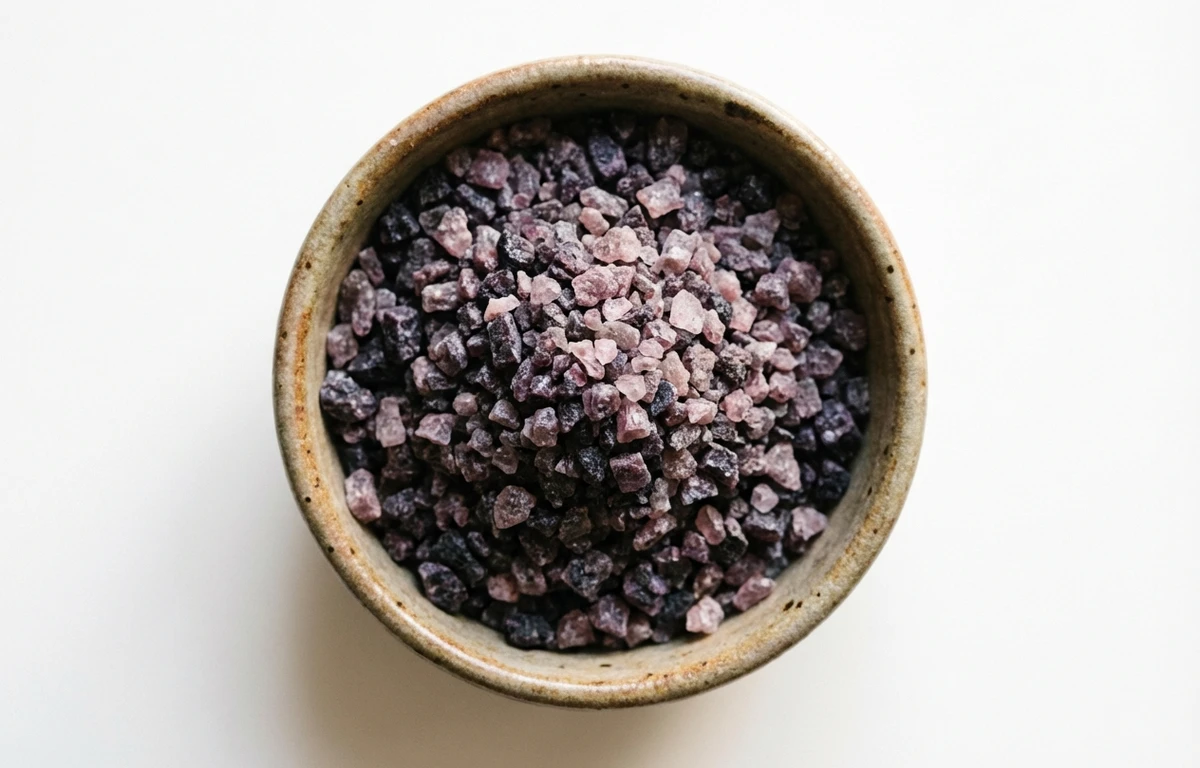
Look for a deep purple or brownish-black color in crystal form, or a pinkish-grey color in powder form. It should have a very strong, distinct sulfurous smell.
Is black salt considered Sattvic or Jain-friendly?
Yes, black salt is a mineral and is generally considered acceptable in Jain and Sattvic diets as it is not a root vegetable and does not contain onion or garlic.
RECIPES
Cook with black salt.
10 recipes · sorted by what’s quick

.webp)