Vegetable10 recipes
cucumber.
VegetarianVeganGluten-freeDairy-freeNut-freePeanut-freeSoy-freeEgg-freeShellfish-freeHoney-freeAlcohol-freeHalalKosher
ALSO KNOWN AS
Cucumberskheerakakdimini cucumberPersian cucumberLebanese cucumbergherkinkhiravellarikka
SERVING
CALORIES
15
PROTEIN
0.65g
CARBS
3.6g
FAT
0.11g
FIBER
0.50g
NUTRITION PROFILE · per 100 g
Everything in this ingredient.
MACRONUTRIENTS
Calories15kcal—
Protein0.65g1%
Carbohydrates3.6g1%
Fiber0.50g2%
Sugar1.7g3%
Total fat0.11g0%
Saturated fat0.04g0%
Trans fat0g—
Cholesterol0mg0%
Water95.2g—
MINERALS
Sodium2.0mg0%
Potassium147mg3%
Calcium16mg1%
Iron0.28mg2%
Magnesium13mg3%
Phosphorus24mg2%
Zinc0.20mg2%
Copper0.04mg4%
Manganese0.08mg3%
Selenium0.30µg1%
VITAMINS
Vitamin A5.0µg1%
Vitamin C2.8mg3%
Vitamin D0µg0%
Vitamin E0.03mg0%
Vitamin K16.4µg14%
Thiamin (B1)0.03mg3%
Riboflavin (B2)0.03mg2%
Niacin (B3)0.10mg1%
Pantothenic acid (B5)0.26mg5%
Vitamin B60.04mg2%
Folate (B9)7.0µg2%
Vitamin B120µg0%
%DV based on a 2,000 cal diet. Source: USDA FoodData Central. A dash in the %DV column means there’s no established Daily Value for that nutrient.
MEASUREMENT CONVERSIONS
How much is what.
1 cup104g
1 tablespoon6.5g
1 teaspoon2.2g
1 ml0.4g
1 liter433.3g
1 piece300g
HEALTH BENEFITS
Why eat it.
- ✓High in water content (about 96%), which is excellent for promoting hydration.
- ✓Contains antioxidants, such as flavonoids and tannins, that help combat oxidative stress.
- ✓A good source of Vitamin K, which is crucial for blood clotting and bone health.
- ✓Low in calories and high in water, making it a useful food for weight management and promoting satiety.
COOKING TIPS
In the kitchen.
- 1For salads or dips, you can 'de-seed' the cucumber by slicing it lengthwise and scooping out the seeds with a spoon to reduce water content.
- 2To create a crispier texture, lightly salt sliced cucumbers and let them rest for 20-30 minutes. Rinse and pat dry before using to draw out excess moisture.
- 3The skin is edible and contains fiber and nutrients; wash thoroughly and leave it on for added health benefits in most dishes.
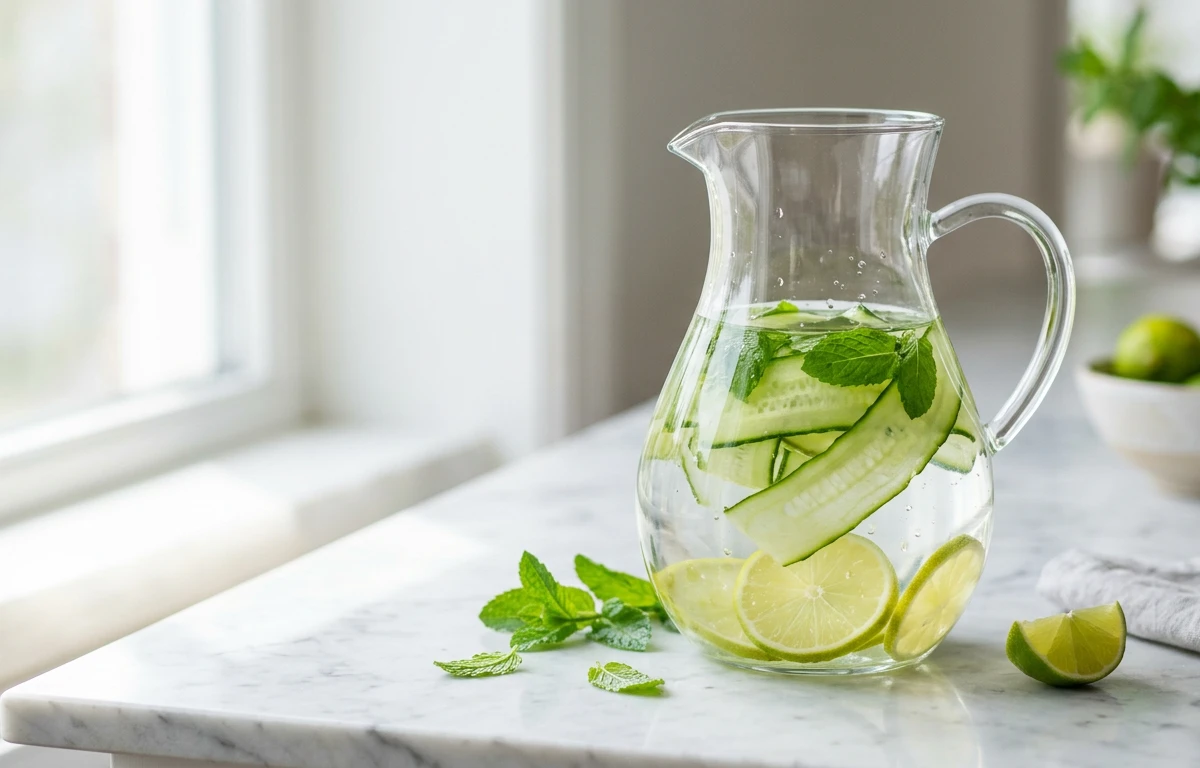
- 4Cucumbers are ideal for creating refreshing cold beverages like infused water, juices, or cocktails.
STORAGE
Keep it fresh.
- Store unwashed cucumbers in the crisper drawer of the refrigerator for up to one week.
- Keep cucumbers away from ethylene-producing fruits like bananas, melons, and tomatoes to prevent them from yellowing and spoiling quickly.
FAQ
Frequently asked questions.
Is cucumber healthy?
Yes, cucumbers are highly nutritious and hydrating. They are composed of about 96% water and provide essential nutrients like Vitamin K, which supports bone health and blood clotting, along with antioxidants like flavonoids that protect cells from damage.
Is cucumber good for weight loss?
Cucumbers are excellent for weight management because they are very low in calories, containing only 15 calories per 100g. Their high water and fiber content helps promote satiety, making you feel full for longer periods without a high caloric intake.
Is cucumber keto-friendly?
Yes, cucumber is very keto-friendly. With only about 3.63g of carbohydrates per 100g, it is a low-carb vegetable that can easily fit into a ketogenic or low-carbohydrate diet.
Do I need to peel cucumbers before eating them?
It is generally better to leave the peel on if it is thin and clean. Most of the cucumber's fiber and a significant portion of its Vitamin K and other nutrients are found in the skin rather than the flesh.
How do you store cucumbers to keep them fresh?
Store cucumbers in the refrigerator's crisper drawer. To maximize shelf life, wrap them in a paper towel to absorb excess moisture and place them in a loose or perforated plastic bag; they typically last about one week this way.
How do you know if a cucumber has gone bad?
A spoiled cucumber will feel soft, mushy, or slimy to the touch. You should also look for visible mold or a dull, yellowish skin color, and discard the vegetable if it has a sour or off-putting smell.
Can you cook cucumbers or are they only for raw consumption?
While most commonly eaten raw in salads or as snacks, cucumbers can be cooked. They can be sautéed, stir-fried, or even added to soups, where they take on a texture similar to zucchini but maintain a milder flavor.
What do cucumbers taste like?
Cucumbers have a very mild, clean, and refreshing taste with a slightly sweet undertone. Their high water content gives them a crisp, crunchy texture that makes them a popular cooling ingredient in spicy dishes.
Are cucumbers a good source of protein?
No, cucumbers are not a significant source of protein, providing only about 0.65g per 100g. They are primarily valued for their hydration, vitamins, and low-calorie volume rather than their protein content.
Can I eat cucumber seeds?
Yes, the seeds of most common cucumber varieties are perfectly safe to eat and contain small amounts of fiber and minerals. However, if a cucumber is very overripe, the seeds may become large and bitter, in which case they can be scooped out.
RECIPES
Cook with cucumber.
10 recipes · sorted by what’s quick