Vegetable10 recipes
red onion.
VegetarianVeganGluten-freeDairy-freeNut-freePeanut-freeSoy-freeEgg-freeShellfish-freeHoney-freeAlcohol-freeHalalKosher
ALSO KNOWN AS
small purple onionchota pyazchota kandasmall red kandababy red onionsmall red onionpurple onionserra ulligaddachuvanna ulliRed Onionsdungripyaajraw red onionpurple onionlal pyazvengayamullikandaerragaddared onionmedium red onion
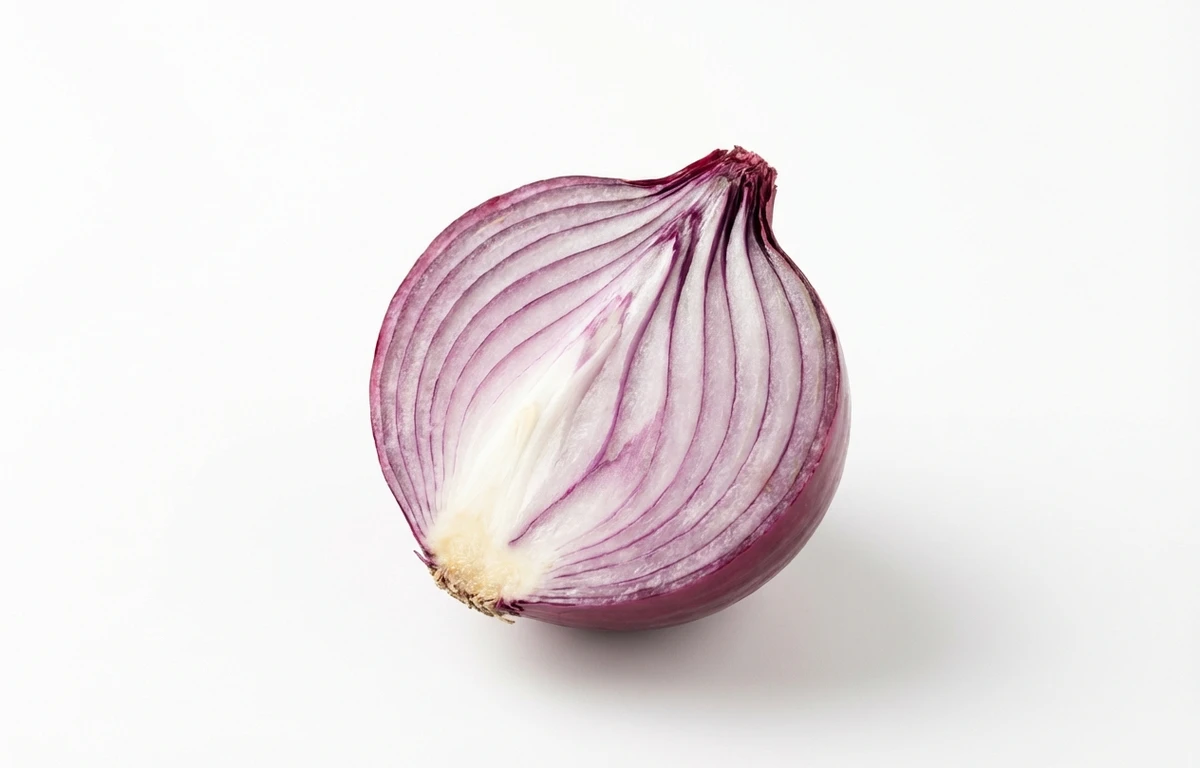
SERVING
CALORIES
40
PROTEIN
1.1g
CARBS
9.3g
FAT
0.10g
FIBER
1.7g
This ingredient is flagged as naturally gluten-free. Per 100 g, it provides 0.40 µg of vitamin K.
NUTRITION PROFILE · per 100 g
Everything in this ingredient.
MACRONUTRIENTS
Calories40kcal—
Protein1.1g2%
Carbohydrates9.3g3%
Fiber1.7g6%
Sugar4.2g8%
Total fat0.10g0%
Saturated fat0.04g0%
Trans fat0g—
Cholesterol0mg0%
Water89.1g—
MINERALS
Sodium4.0mg0%
Potassium146mg3%
Calcium23mg2%
Iron0.21mg1%
Magnesium10mg2%
Phosphorus29mg2%
Zinc0.17mg2%
Copper0.04mg4%
Manganese0.13mg6%
Selenium0.50µg1%
VITAMINS
Vitamin A0µg0%
Vitamin C7.4mg8%
Vitamin D0µg0%
Vitamin E0.02mg0%
Vitamin K0.40µg0%
Thiamin (B1)0.05mg4%
Riboflavin (B2)0.03mg2%
Niacin (B3)0.12mg1%
Pantothenic acid (B5)0.12mg2%
Vitamin B60.12mg7%
Folate (B9)19µg5%
Vitamin B120µg0%
%DV based on a 2,000 cal diet. Source: USDA FoodData Central. A dash in the %DV column means there’s no established Daily Value for that nutrient.
MEASUREMENT CONVERSIONS
How much is what.
1 cup160g
1 tablespoon10g
1 oz28.4g
1 lb453.6g
1 piece110g
HEALTH BENEFITS
Why eat it.
- ✓Possesses antibacterial properties that can inhibit the growth of harmful microorganisms.
- ✓Good source of dietary fiber which aids in digestive health.
COOKING TIPS
In the kitchen.
- 1Soak sliced red onions in cold water for 10 minutes to reduce their sharp 'bite' for raw use.
- 2Caramelize slowly over low heat to bring out their natural sugars for a sweet flavor profile.
- 3Use red onions for pickling as their vibrant color bleeds into the brine, creating a beautiful pink hue.
STORAGE
Keep it fresh.
- Store in a cool, dry, well-ventilated place away from direct sunlight.
- Do not store near potatoes, as onions release gases that cause potatoes to spoil faster.
- Once cut, store in an airtight container in the refrigerator for up to 7 days.
FAQ
Frequently asked questions.
How long do red onions last?
Whole red onions can last 2 to 3 months if stored in a cool, dark, and dry place with good airflow.
Can you freeze red onions?
Yes, you can freeze chopped red onions. They will lose their crunch, so they are best used in cooked dishes after thawing.
How do I pick a good red onion?
Look for onions that are firm, heavy for their size, and have dry, papery skins. Avoid those with soft spots or green sprouts.
What is the best substitute for red onion?
Shallots are the best substitute for raw applications. Yellow onions or white onions can be used for cooking.
Why do red onions make you cry?
When cut, onions release a gas called syn-propanethial-S-oxide, which reacts with the moisture in your eyes to form a mild sulfuric acid.
How do I remove the onion smell from my hands?
Rub your hands with lemon juice, vinegar, or against a stainless steel object under running water.
Can red onions be eaten raw?
Yes, red onions are the preferred variety for raw consumption in salads, sandwiches, and salsas due to their mild-to-sweet flavor.
Are red onions considered a root vegetable?
Technically they are bulbs, but in culinary and dietary contexts, they are classified as root vegetables.
RECIPES
Cook with red onion.
10 recipes · sorted by what’s quick