
Other10 recipes
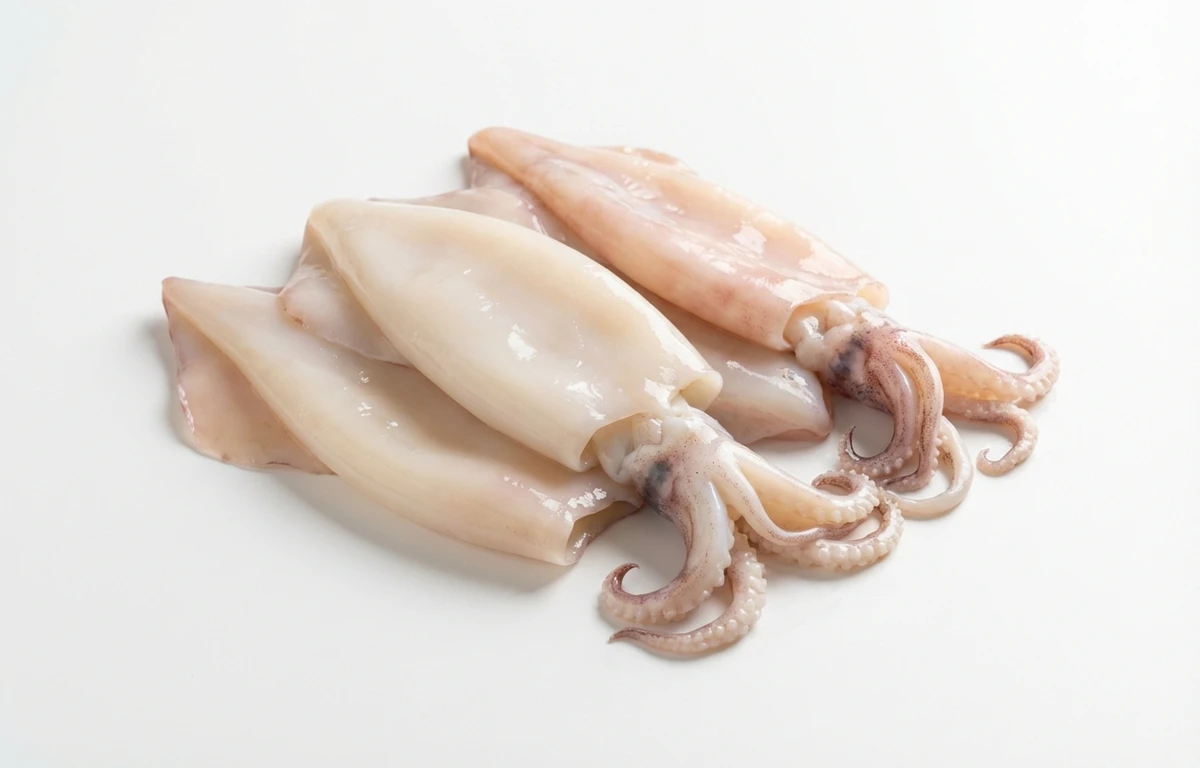
squid.
VegetarianVeganGluten-freeDairy-freeNut-freePeanut-freeSoy-freeEgg-freeShellfish-freeHoney-freeAlcohol-freeKosher
ALSO KNOWN AS
calamarisquid
SERVING
CALORIES
92
PROTEIN
15.6g
CARBS
3.1g
FAT
1.4g
FIBER
0g
This ingredient is flagged as naturally gluten-free. Per 100 g, it provides 0 µg of vitamin K.
NUTRITION PROFILE · per 100 g
Everything in this ingredient.
MACRONUTRIENTS
Calories92kcal—
Protein15.6g31%
Carbohydrates3.1g1%
Fiber0g0%
Sugar0g0%
Total fat1.4g2%
Saturated fat0.36g2%
Cholesterol233mg78%
Water78.5g—
MINERALS
Sodium44mg2%
Potassium246mg5%
Calcium32mg2%
Iron0.68mg4%
Magnesium33mg8%
Phosphorus221mg18%
Zinc1.5mg14%
Copper1.9mg210%
Manganese0.04mg2%
Selenium44.8µg81%
VITAMINS
Vitamin A10µg1%
Vitamin C4.7mg5%
Vitamin D0µg0%
Vitamin E1.2mg8%
Vitamin K0µg0%
Thiamin (B1)0.02mg2%
Riboflavin (B2)0.41mg32%
Niacin (B3)2.2mg14%
Pantothenic acid (B5)0.50mg10%
Vitamin B60.06mg4%
Folate (B9)5.0µg1%
Vitamin B121.3µg54%
%DV based on a 2,000 cal diet. Source: USDA FoodData Central. A dash in the %DV column means there’s no established Daily Value for that nutrient.
MEASUREMENT CONVERSIONS
How much is what.
1 cup135g
1 oz28.4g
1 lb453.6g
1 piece60g
HEALTH BENEFITS
Why eat it.
- ✓Excellent source of lean protein, essential for muscle repair and growth.
- ✓Contains Omega-3 fatty acids (EPA and DHA) that promote heart and brain health.
- ✓Low in saturated fat, making it a heart-healthy protein choice.
COOKING TIPS
In the kitchen.
- 1Squid requires either very fast cooking over high heat (1-2 minutes) or slow cooking over low heat (30+ minutes). Anything in between will result in a tough, rubbery texture.
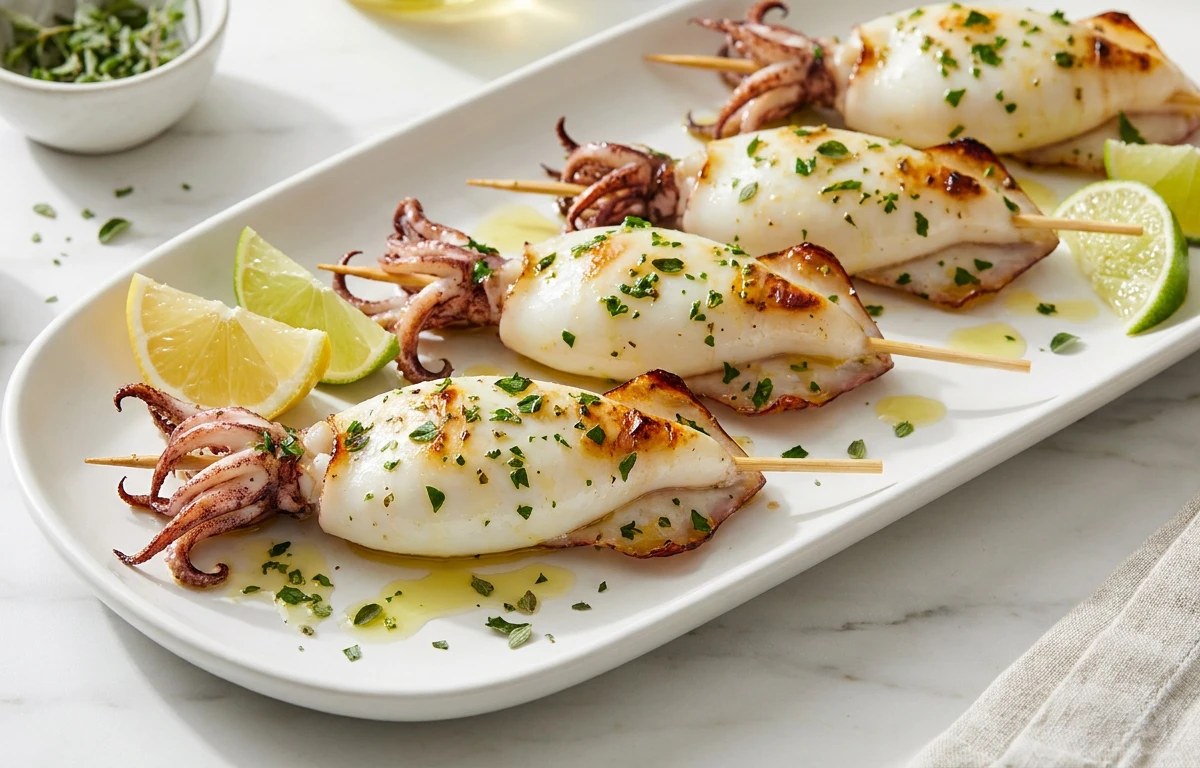
- 2For quick methods like grilling or pan-searing, lightly score the inside of the squid body in a cross-hatch pattern to prevent curling and ensure even cooking.
- 3To clean a whole squid, pull the head and tentacles away from the body, remove the clear cartilage 'quill' from inside the body tube, and peel off the thin, speckled skin.
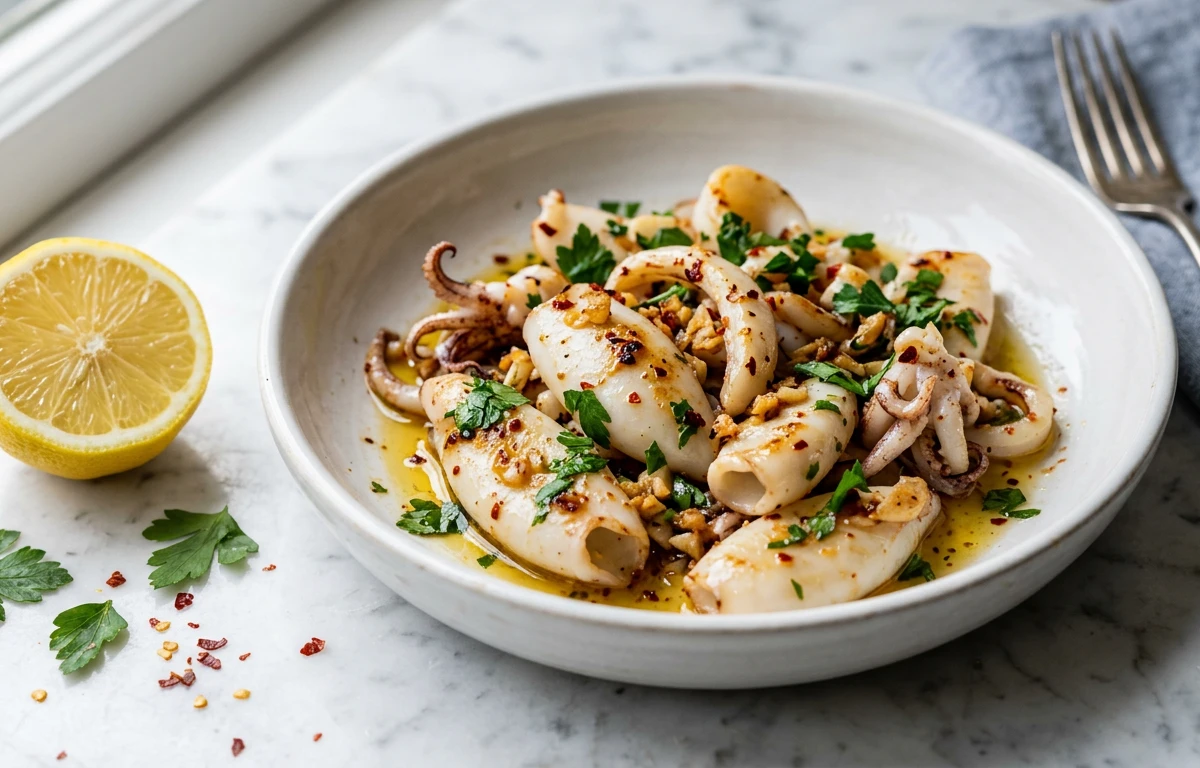
- 4Marinating squid for 15-30 minutes in acidic ingredients like lemon juice or vinegar can help tenderize it before cooking.
STORAGE
Keep it fresh.
- Store fresh, cleaned squid in the coldest part of the refrigerator (below 40°F or 4°C) and use within 1-2 days.
- For longer storage, freeze squid at 0°F (-18°C) in an airtight container or freezer bag for up to 3 months. Thaw overnight in the refrigerator before use.
FAQ
Frequently asked questions.
How much protein is in squid?
Squid is an excellent source of protein, containing approximately 15.58 grams per 100-gram serving. This makes it a highly efficient choice for muscle repair and growth while keeping total fat intake low.
Is squid high in cholesterol?
Squid is relatively high in dietary cholesterol compared to other seafood. However, because it is very low in saturated fat, it can still be part of a heart-healthy diet when consumed in moderation and prepared without heavy frying.
Is squid keto-friendly?
Yes, squid is keto-friendly as it contains only about 3.08 grams of carbohydrates per 100 grams. To maintain a low-carb profile, it should be grilled, sautéed, or boiled rather than breaded and fried.
Is squid gluten-free?
Naturally, squid is 100% gluten-free. However, it is frequently served as 'fried calamari' which uses a wheat-based flour coating; always ensure a gluten-free batter is used if you have a gluten sensitivity.
How do you cook squid so it is not rubbery?
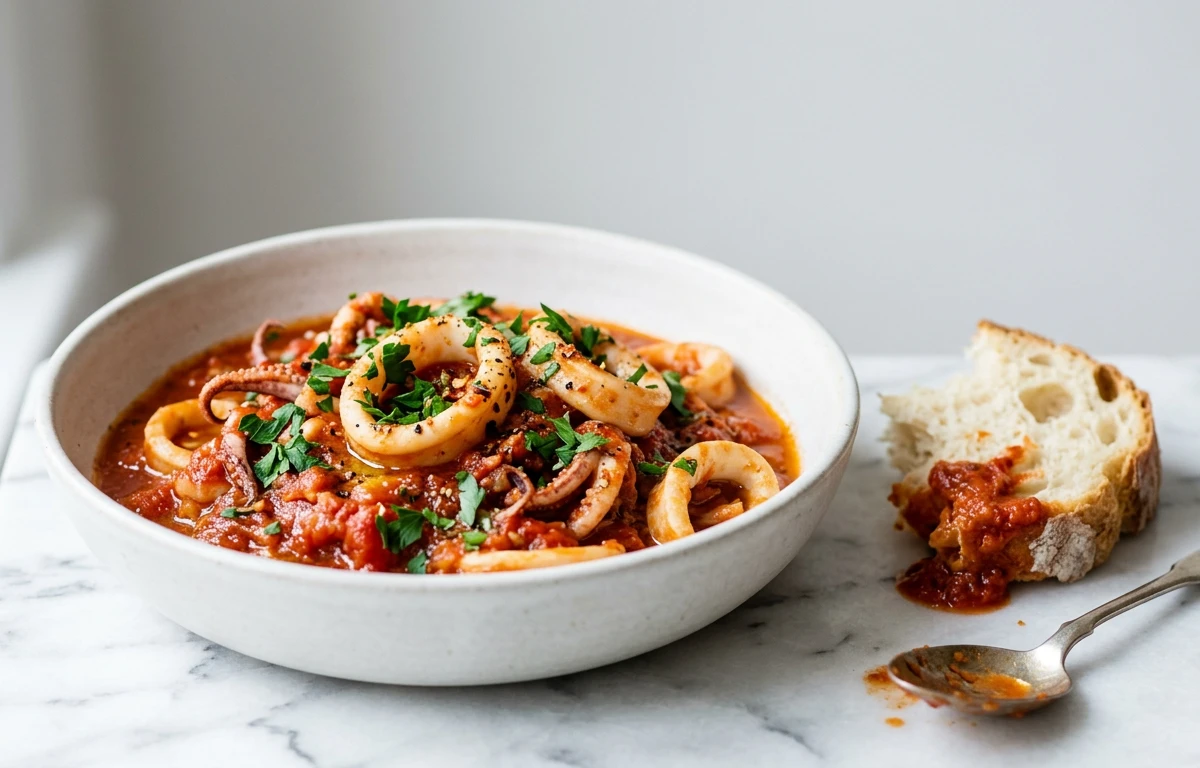
The secret to tender squid is to cook it either very quickly over high heat (under 2 minutes) or very slowly at a low simmer (over 30 minutes). Cooking it for a medium amount of time usually results in a tough, rubbery texture.
What does squid taste like?
Squid has a mild, slightly sweet, and subtle nutty flavor. Its texture is firm yet tender when cooked correctly, and it is excellent at absorbing the flavors of spices, herbs, and sauces used during preparation.
How can you tell if squid is fresh?
Fresh squid should have a clean, ocean-like scent and should never smell 'fishy.' The flesh should be firm and ivory-white beneath the skin, and if the eyes are still attached, they should be clear and bright.
How long does fresh squid last in the fridge?
Fresh squid is highly perishable and is best used on the day of purchase. If necessary, you can store it in the coldest part of the refrigerator for up to 1 to 2 days in an airtight container or tightly wrapped.
Can you eat squid raw?
Yes, squid can be eaten raw and is a staple in sushi and sashimi, where it is known as 'Ika.' It must be extremely fresh and handled according to strict food safety standards to ensure it is safe for raw consumption.
RECIPES
Cook with squid.
10 recipes · sorted by what’s quick
RELATED GUIDES



















