Squid Sukka
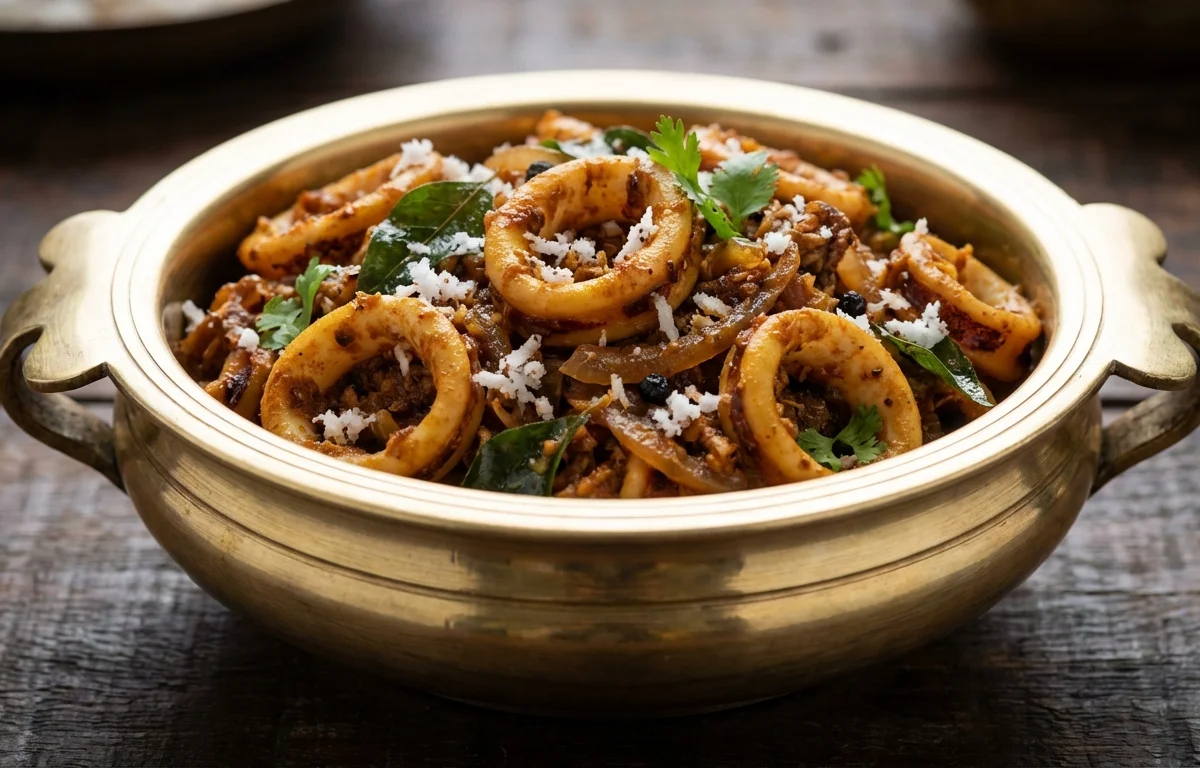
Tender squid rings cooked in a fragrant, spice-laden coconut masala until perfectly dry and intense. This Mangalorean coastal delicacy is packed with layers of roasted spices, tangy tamarind, and fresh curry leaves, making it an irresistible accompaniment to steamed rice or neer dosa.
For 4 servings
- roast · ~7 min
Roast the spices and coconut.
1.In a dry pan, roast coriander seeds, cumin seeds, dry red chilies, peppercorns, and fenugreek seeds on medium heat until fragrant and lightly colored.2.Add the grated coconut and dry roast until golden brown and nutty (3-4 min). Stir constantly to avoid burning.3.Remove from heat, cool slightly, and grind to a coarse powder without adding water. Set aside.TIPEnsure the coconut is well-roasted but not burnt; this deepens the masala's flavor. - temper · ~10 min
Make the tempering.
1.Heat coconut oil in a heavy-bottomed kadai over medium heat.2.Add mustard seeds and let them splutter completely.3.Add curry leaves, chopped garlic, and sliced onions. Sauté until the onions turn golden brown (7-8 min).TIPLet the onions caramelize properly for natural sweetness to balance the spices. - saute · ~8 min
Sauté aromatics and squid.
1.Stir in ginger-garlic paste and turmeric powder. Sauté until the raw smell disappears.2.Add chopped tomatoes and cook until soft and the oil starts to separate.3.Add the cleaned squid rings along with salt. Mix well. The squid will release its own water. - simmer · ~20 min
Cook the squid until tender.
1.Add 0.5 cup water and stir. Cover and simmer on low heat for 15-20 minutes until the squid is perfectly tender.2.Check occasionally and add a splash more water only if it sticks to the bottom.TIPSquid can turn rubbery if overcooked on high heat; keep the flame gentle. - saute · ~7 min
Add the coconut masala.
1.Once the squid is tender and most of the liquid has evaporated, add the roasted coconut-spice powder.2.Squeeze in the soaked tamarind paste (extracted pulp, discard the fibrous bits).3.Stir continuously on medium-high heat for 5-7 minutes until the masala coats the squid completely and looks semi-dry.TIPConstant stirring at this stage ensures the dry masala clings to the squid without burning. - garnish · ~1 min
Garnish with fresh coriander leaves and serve hot.
Transfer to a serving bowl and sprinkle with chopped coriander leaves. Serve immediately.
What to keep in mind.
7 tips from the recipe — small details that make a real difference to the final dish.
- 1Use fresh coconut for the masala; frozen or dried coconut will not yield the same texture or flavor depth.
- 2Do not skip dry-roasting the coconut until golden brown—it's the secret to the nutty, aromatic base.
- 3Cook squid on gentle heat only; high heat will make it tough and rubbery within seconds.
- 4Let the onions caramelize fully before adding tomatoes; this sweetness balances the fiery masala.
- 5Add the roasted masala only after the squid is tender and most liquid has evaporated for a dry, clingy finish.
- 6Taste for salt only after adding the tamarind paste, as tamarind's sourness can mask seasoning.
- 7Rest the dish for 5 minutes off the heat before serving; the flavors meld and intensify.
Adapt it for your goals.
Low-oil
Use just 1 tablespoon of oil for tempering and omit the final oil separation step; the roasted coconut masala still provides ample moisture and flavor.
high proteinHigh-protein
Replace half the squid with large prawns or firm fish cubes (like kingfish) for a mixed seafood sukka; adjust cooking time so seafood remains just cooked.
jainJain
Skip onion and garlic entirely; replace with asafoetida (hing) in the tempering and add extra fennel seeds for depth—still aromatic and delicious.
veganVegan
Already naturally vegan (no dairy), but ensure the tamarind is prepared without any fish-based extracts; serves perfectly as a plant-based coastal curry.
Why this is on our healthy list.
High in Lean Protein
Squid provides a low-fat, high-protein seafood option that supports muscle repair and satiety.
Rich in Iron & B12
Squid is a good source of iron and vitamin B12, essential for red blood cell formation and nervous system health.
Anti-inflammatory Spices
Turmeric, black pepper, and fenugreek seeds in the masala contain compounds known to reduce inflammation.
Healthy Fats from Coconut
Fresh coconut supplies medium-chain triglycerides (MCTs) that may support energy metabolism.
Frequently asked questions
Pull the head and innards from the body, remove the transparent quill, peel off the purple skin, and rinse thoroughly under cold water. Slice into rings.