
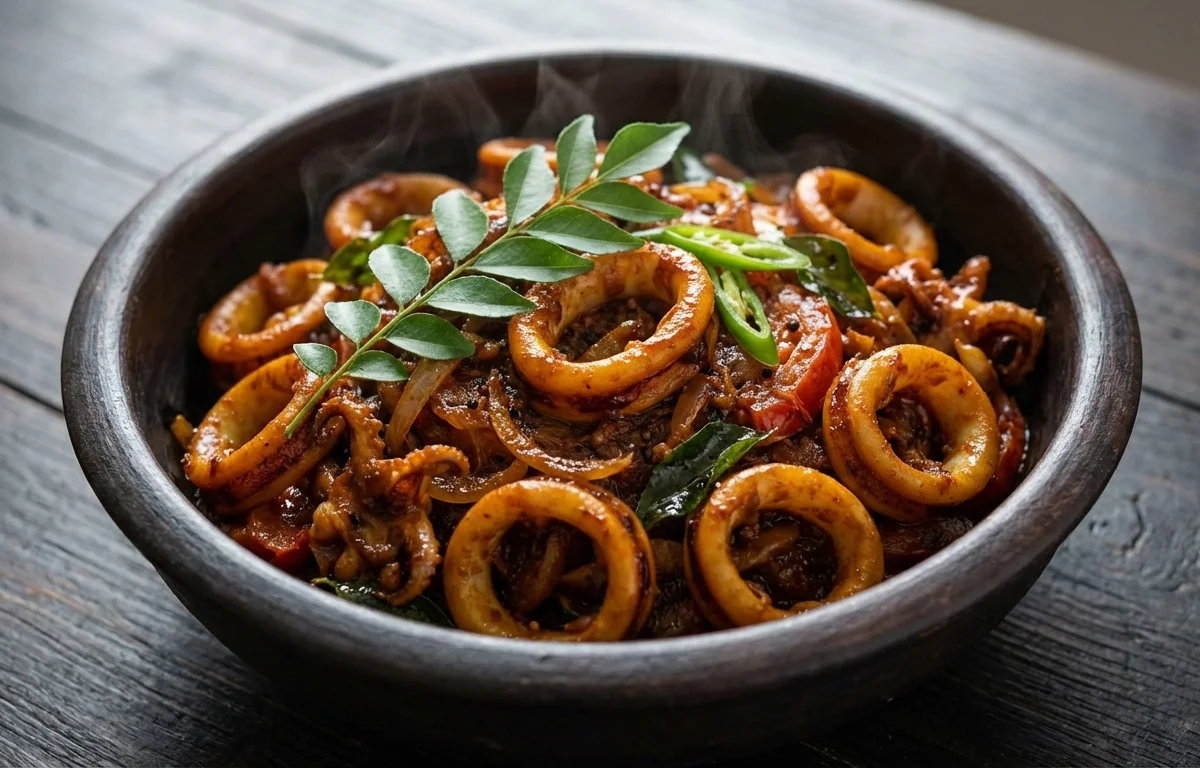
Koonthal Roast
A Kerala-style squid roast with tender pieces coated in a dark, spicy masala. Coconut slices, curry leaves, and black pepper give it deep flavor, making it a great side for rice, appam, or chapati.
For 4 servings
- prep · ~10 min
Clean and cut the squid.
Wash the squid well, remove any tough bits, and cut it into rings and small pieces so it cooks evenly.
- pressure cook · ~8 min
Cook the squid briefly.
1.Add squid, turmeric powder, a little salt, and water to a pressure cooker.2.Cook on medium heat for 1 whistle until just tender.3.Release the pressure naturally and keep the cooked squid aside with any pan juices.TIPDo not overcook the squid at this stage or it can turn rubbery. - saute · ~10 min
Cook the coconut and aromatics.
1.Heat coconut oil in a wide pan over medium heat.2.Add coconut slices and fry lightly until the edges turn pale golden.3.Add curry leaves, onion, and shallot, then cook until soft and lightly browned.4.Add ginger, garlic, and green chili, then sauté until fragrant. - saute · ~6 min
Make the roast masala.
1.Add chopped tomato and cook until soft and pulpy.2.Add red chili powder, coriander powder, black pepper, fennel seeds, garam masala, and the remaining salt.3.Mix well and cook for 2 to 3 minutes until the masala smells roasted.TIPIf the masala catches at the bottom, sprinkle a spoonful of the squid cooking liquid. - saute · ~12 min
Roast the squid in the masala.
Add the cooked squid along with its juices and toss well to coat. Cook on medium-low heat, stirring often, until the masala clings to the squid and the dish turns dark, glossy, and semi-dry.
- garnish · ~1 min
Finish with curry leaves and a final roast.
Add a few more curry leaves in the last minute and give everything a quick toss for fresh aroma.
- serve
Serve the koonthal roast hot.
What to keep in mind.
7 tips from the recipe — small details that make a real difference to the final dish.
- 1Stop the pressure cooking at 1 whistle only; squid toughens quickly if cooked longer.
- 2Use a wide pan for the final roast so the masala reduces fast and coats each ring well.
- 3Fry the coconut slices just to pale golden; darker browning can make the roast taste bitter.
- 4Keep the squid cooking liquid and add it little by little while roasting for extra sea-sweet flavor.
- 5Slice onion and shallot thinly so they melt into the masala instead of staying chunky.
- 6Let the roast sit 5 minutes before serving; the masala tightens and clings better to the squid.
- 7Leftovers reheat best on a pan over low heat, not in the microwave, to avoid rubbery squid.
Adapt it for your goals.
Extra-peppery
Increase the crushed black pepper and reduce red chili slightly for a hotter, more traditional Kerala roast profile.
dry roastDry-roast
Cook the final stage a few minutes longer until almost no moisture remains for a darker, clingier side dish with rice.
with kudampuliWith-kudampuli
Add a small piece of soaked kudampuli during the masala stage for a subtle smoky tang that pairs well with seafood.
prawnsPrawns
Use prawns instead of squid for a quicker seafood roast with the same masala and coconut-curry leaf base.
Why this is on our healthy list.
Protein-Rich Seafood
Squid provides satisfying seafood protein, making this roast filling even though it is served as a side dish.
Aromatic Digestive Spices
Ginger, garlic, fennel, black pepper, and curry leaves add strong flavor while bringing traditional digestive spice elements.
Cooked with Real Aromatics
Onion, shallot, tomato, and fresh curry leaves create depth naturally instead of relying on packaged sauces.
Frequently asked questions
Do not overcook it in the pressure cooker; 1 whistle is enough. Then roast only until the masala coats the pieces and turns semi-dry.



.webp)
.webp)