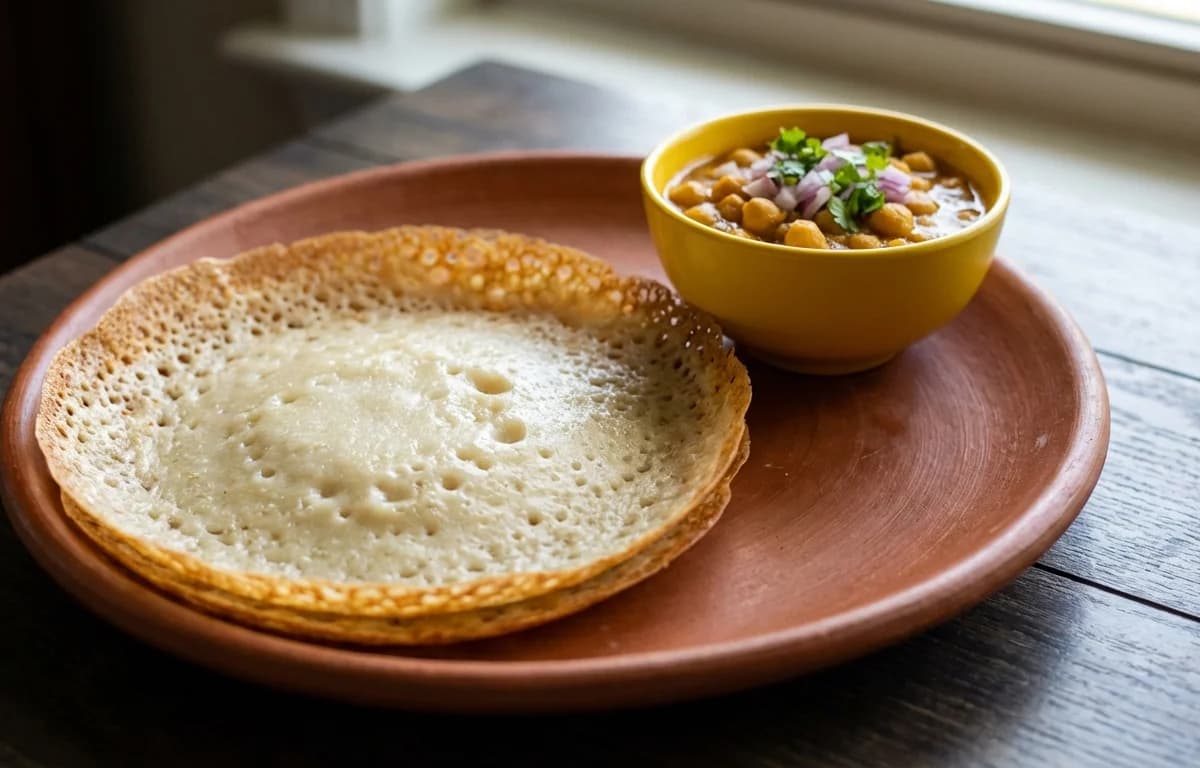
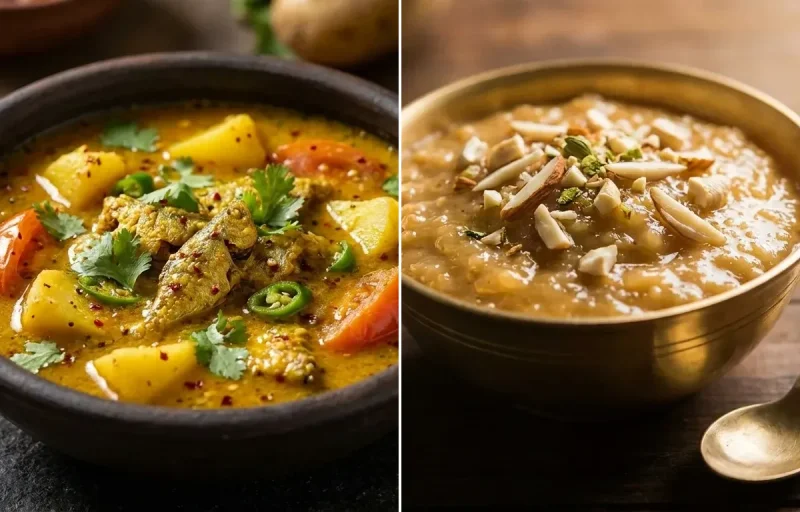
A soft, savory rice and lentil pancake from Odisha. This traditional breakfast staple is slightly thicker and softer than a dosa, pairing perfectly with dalma or ghuguni. Note: This recipe requires 6-8 hours of soaking and 8-12 hours of fermentation time.
Prep20 min
Cook30 min
Soak360 min
Ferment600 min
Servings4
Serving size: 1 serving
454cal
11gprotein
68gcarbs
Ingredients
1.5 cup Parboiled Rice (Known as 'Ukuda Chaula' in Odia)
0.5 cup Urad Dal (Skinned black gram lentils)
0.5 tsp Fenugreek Seeds (Also known as Methi)
2 cup Water (For grinding, plus more for soaking and adjusting consistency)
1.25 tsp Salt (Or to taste)
4 tbsp Oil (For cooking the pithas)
Instructions
1
Soak Rice and Lentils (6-8 hours)
In a large bowl, combine the parboiled rice and urad dal. Rinse them together under running water 4-5 times until the water runs clear.
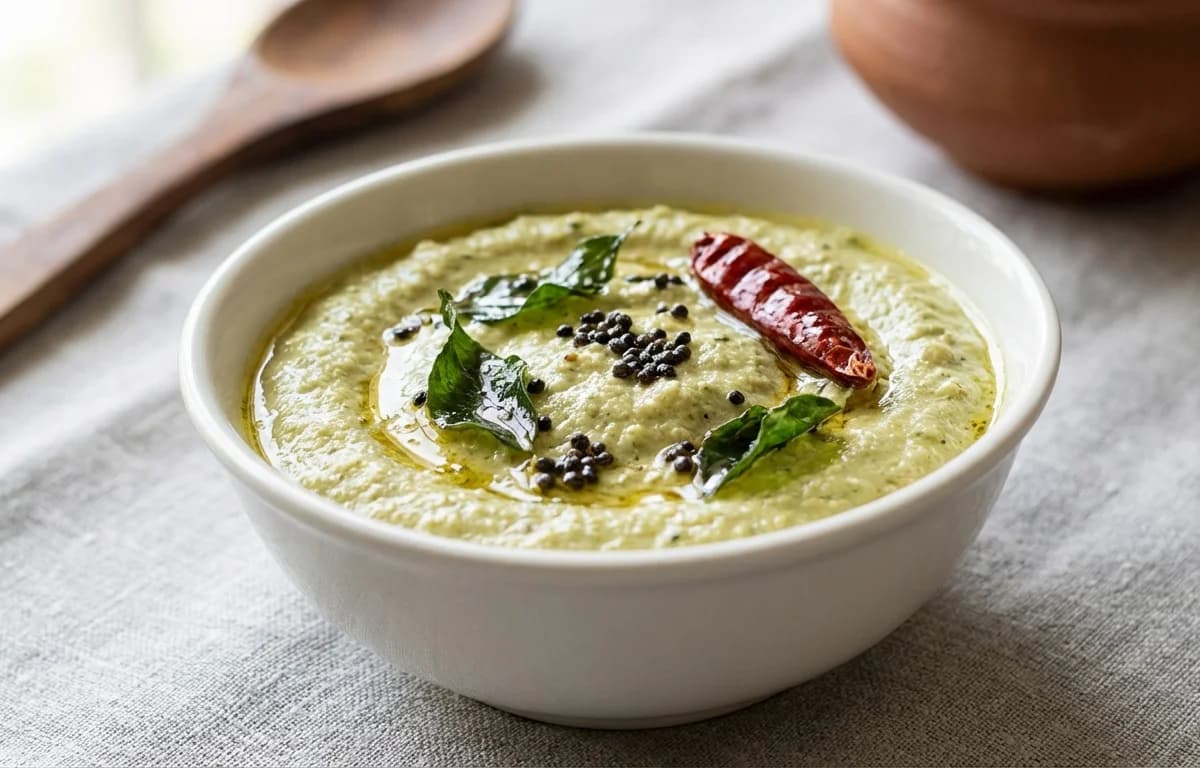
A classic Bengali coconut chutney with the sharp, pungent kick of mustard seeds. This 'Narkel Chutney' is tangy, spicy, and the perfect accompaniment to fritters, snacks, or a simple meal of rice and dal.
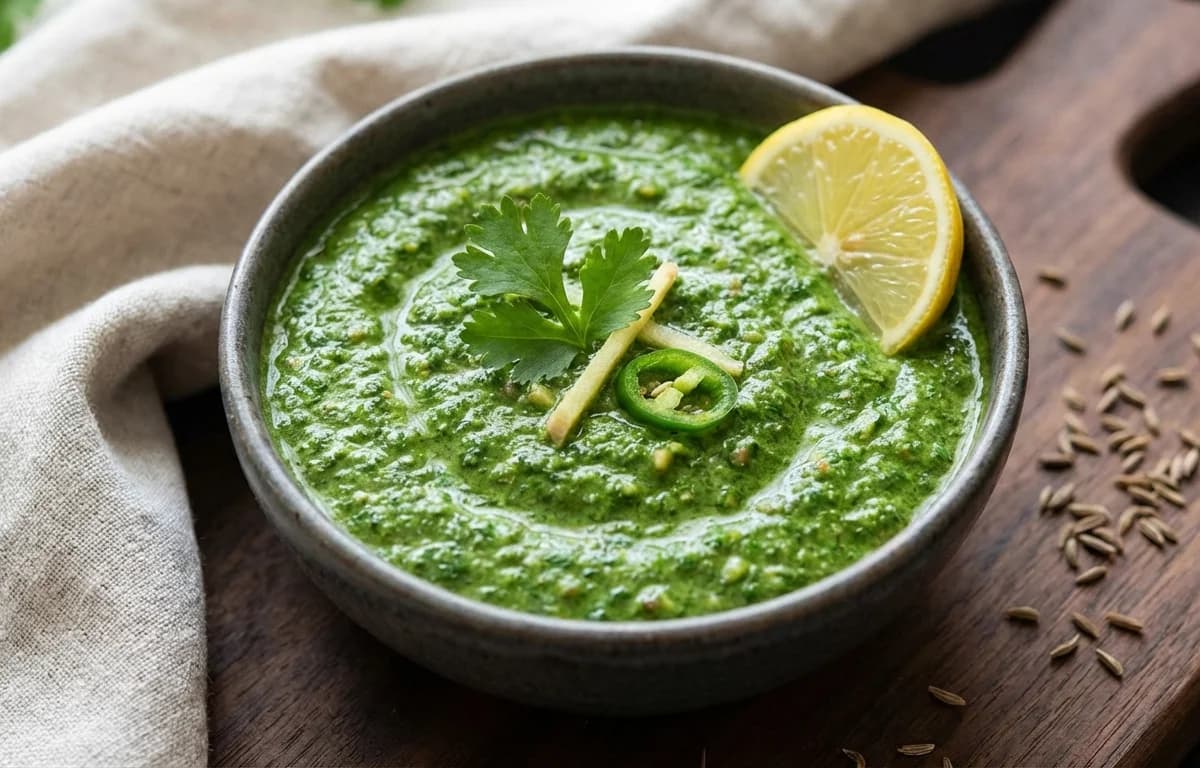
A vibrant and fresh green chutney made from coriander leaves, green chilies, and a hint of lemon. This versatile Indian condiment is the perfect zesty accompaniment to snacks like samosas, pakoras, or sandwiches.
Prep10 min
Cook0 min
Servings8
Serving size: 1 serving
About Chakuli Pitha, Nadia Chutney and Dhania Chutney
Light Chakuli Pitha with tangy coconut and coriander chutneys - a kid-approved, quick to make treat!
This odia dish is perfect for lunch. With 580.83 calories and 13.46g of protein per serving, it's a high-fiber option for your meal plan.
Other Cuisines to Explore
Discover authentic meals from cuisines around the world.
Pour in enough fresh water to cover the rice and dal by at least 3 inches.
Cover the bowl and let it soak for a minimum of 6 hours, or preferably overnight.
2
Grind the Batter (15-20 minutes)
Drain all the soaking water from the rice and dal mixture.
Transfer the mixture to a wet grinder or a high-speed blender.
Add about 1 cup of fresh, cold water and start grinding. Using cold water prevents the blender from overheating and affecting fermentation.
Grind into a smooth, flowing batter, adding more water tablespoon by tablespoon as needed. The final consistency should be smooth and pourable, but not watery. It should coat the back of a spoon.
Transfer the batter to a large, deep container, ensuring it's only filled halfway to allow room for fermentation.
3
Ferment the Batter (8-12 hours)
Whisk the batter with your clean hands for 2-3 minutes. The warmth and natural yeast from your hands aid in the fermentation process.
Cover the container with a lid (do not seal it tightly) and place it in a warm, draft-free place for 8 to 12 hours, or until it has risen, looks frothy, and has a pleasant sour aroma.
In colder climates, you can place the container inside a turned-off oven with the light on.
4
Prepare for Cooking (5 minutes)
Once fermented, add salt to the batter and stir it gently. Do not overmix, as this will deflate the air pockets.
Check the consistency. If it's too thick, add a tablespoon or two of water to reach a pourable pancake batter consistency, slightly thicker than a regular dosa batter.
5
Cook the Chakuli Pitha (25-30 minutes)
Heat a cast-iron tawa or a non-stick pan over medium heat. To check if it's ready, sprinkle a few drops of water; they should sizzle and evaporate immediately.
Grease the tawa lightly with about 1/2 teaspoon of oil using a paper towel or a slice of onion.
Pour a ladleful of batter (about 1/3 cup) onto the center of the hot tawa.
Using the back of the ladle, gently spread the batter in a circular motion to form a pancake about 6-7 inches in diameter. Keep it slightly thick.
Drizzle a little oil around the edges and on top of the pitha.
Cover with a lid and cook for 1.5 to 2 minutes on medium-low heat, until the top surface looks cooked and small pores appear.
Uncover and flip the pitha. Cook the other side for another minute until it's cooked through and has light golden spots.
Remove the pitha from the tawa and repeat the process with the remaining batter, greasing the tawa lightly before each pitha.
6
Serve
Serve hot Chakuli Pitha immediately with traditional Odia accompaniments like Dalma, Ghuguni, or a simple coconut-mustard chutney.
105cal
1gprotein
5gcarbs
9gfat
Ingredients
1 cup Fresh Coconut (grated)
2 Green Chilli (stems removed, adjust to taste)
1.5 tsp Black Mustard Seeds (divided into 1 tsp for grinding and 0.5 tsp for tempering)
1 tsp Tamarind Paste (or a small marble-sized ball of seedless tamarind soaked in warm water)
0.5 tsp Sugar (to balance the flavors)
0.5 tsp Salt (adjust to taste)
3 tbsp Water (as needed for grinding)
2 tsp Mustard Oil (for authentic flavor)
1 Dried Red Chilli (broken into two pieces)
6 Curry Leaves (fresh)
Instructions
1
Prepare the Chutney Paste
In a blender or grinder jar, combine the grated fresh coconut, green chilies, 1 teaspoon of black mustard seeds, tamarind paste, sugar, and salt.
Add 2 tablespoons of water to help the ingredients move.
Grind the mixture in short pulses to a thick, slightly coarse paste. Avoid over-grinding. If needed, add the remaining 1 tablespoon of water to achieve the right consistency. Scrape down the sides of the jar as needed.
Transfer the ground chutney to a serving bowl.
2
Prepare the Tempering (Tadka)
Heat the mustard oil in a small pan (tadka pan) over medium heat. Wait until it becomes fragrant and you see faint smoke, which takes about 1-2 minutes. This step is crucial for removing the raw smell of mustard oil.
Carefully add the remaining 0.5 teaspoon of black mustard seeds. Let them splutter and pop completely, which should take about 20-30 seconds.
Add the broken dried red chili and fresh curry leaves. Stand back as the curry leaves will splutter intensely. Sauté for another 15-20 seconds until the curry leaves are crisp and aromatic.
100 g Coriander Leaves (one large bunch, with tender stems)
3 pcs Green Chili (adjust to your spice preference)
1 inch Ginger (peeled and roughly chopped)
3 cloves Garlic (peeled)
2 tbsp Roasted Gram Dal (also known as pottukadalai or dalia)
1 tsp Cumin Seeds
2 tbsp Lemon Juice (freshly squeezed)
0.75 tsp Salt (or to taste)
0.5 tsp Sugar (optional, to balance flavors)
3 tbsp Cold Water (as needed for grinding)
Instructions
1
Prepare the Coriander (3 minutes)
Thoroughly wash the coriander bunch under running water. For best results, soak it in a large bowl of water for a few minutes to allow any grit to settle at the bottom.
Drain the water and roughly chop the coriander leaves along with their tender stems, which are full of flavor.
2
Combine Ingredients in Blender (1 minute)
Place the chopped coriander, green chilies (stems removed), peeled ginger, garlic cloves, roasted gram dal, cumin seeds, salt, sugar (if using), and lemon juice into a high-speed blender or grinder jar.
3
Blend to a Smooth Paste (2 minutes)
Blend the ingredients on high speed, starting without any water. You may need to scrape down the sides of the jar once or twice.
Add 1 tablespoon of cold water at a time, only if necessary, to help the blades move and achieve a smooth, thick paste. Using cold water is crucial for preserving the chutney's vibrant green color.
4
Final Adjustments and Serving (1 minute)
Once smooth, taste the chutney and adjust the seasoning. Add more salt for savoriness, lemon juice for tang, or a small piece of green chili for more heat if desired. Blend for a few more seconds to incorporate.