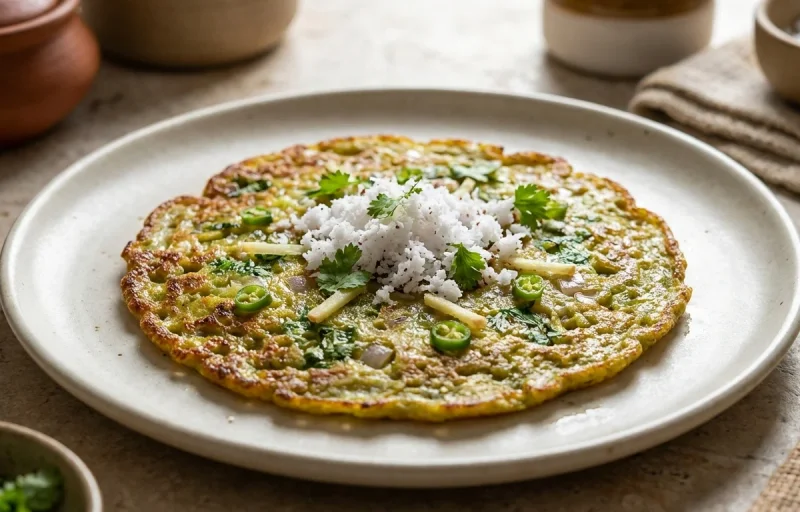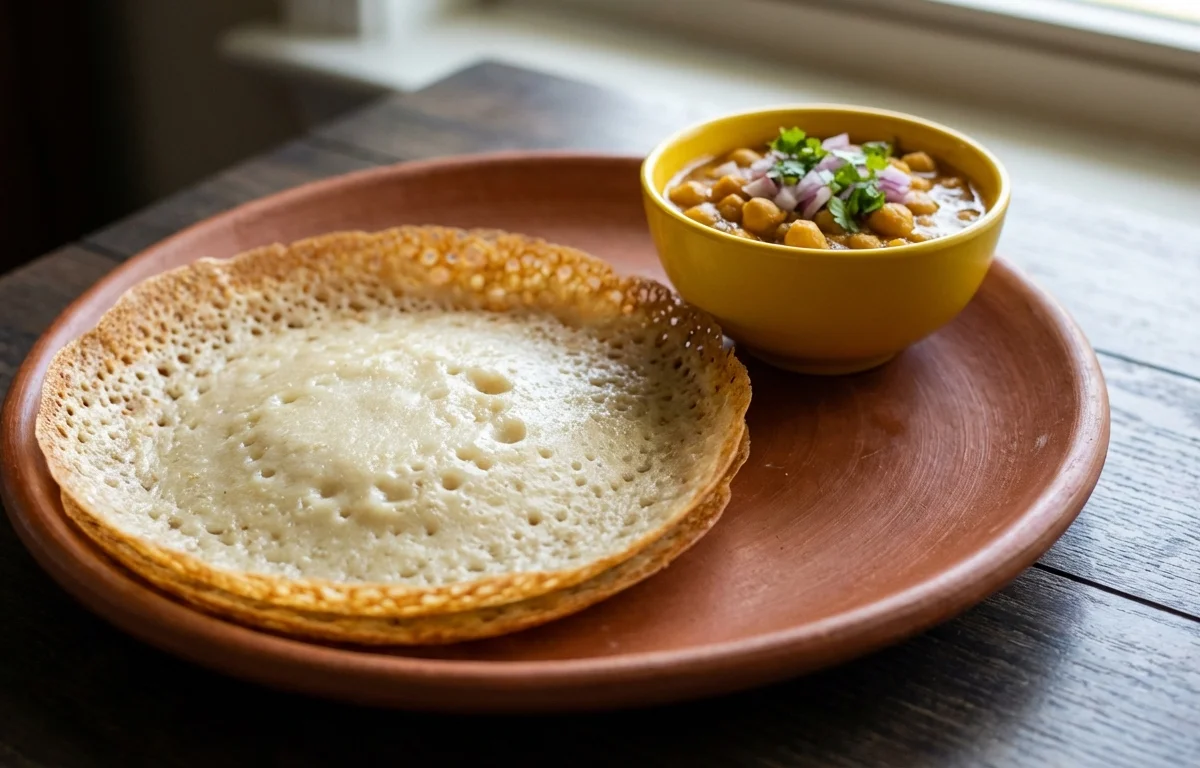
Chakuli Pitha
Soft, lightly tangy fermented rice and lentil crepes from Odisha, Chakuli Pitha cooks up thin and tender like a gentle dosa. They are lovely for breakfast or dinner with ghuguni, chutney, or a little jaggery.
For 8 servings
- prep · ~360 min
Soak the rice and dal.
1.Rinse the rice well until the water runs mostly clear.2.Rinse the urad dal and fenugreek seeds.3.Soak the rice in one bowl and the urad dal with fenugreek seeds in another bowl with enough water for 6 hours.TIPA long soak helps the batter grind smoother and ferment more evenly. - mix · ~15 min
Grind the batter.
1.Drain the soaked rice and dal.2.Grind the urad dal and fenugreek seeds with a little water to a smooth, fluffy batter.3.Grind the rice with enough water to a smooth batter with a very slight grainy feel.4.Mix both batters in a large bowl until well combined and flowing but not watery. - rest · ~480 min
Ferment the batter.
Cover the bowl and leave the batter in a warm place for about 8 hours, until slightly risen and lightly tangy. Stir in the salt just before cooking.
TIPThe batter should be thinner than idli batter and a little thicker than regular dosa batter. - fry · ~25 min
Cook the chakuli pitha.
1.Heat a flat tawa or nonstick pan over medium heat and lightly grease it with a few drops of oil.2.Pour a ladle of batter in the center and spread gently into a thin round crepe.3.Drizzle a few drops of oil around the edges and cook until the surface looks set and the bottom turns light golden.4.Flip and cook the second side for 20 to 30 seconds until just done.5.Remove to a plate and repeat with the remaining batter.TIPKeep the heat medium so the pitha stays soft instead of turning crisp like a dosa. - serve
Serve warm.
What to keep in mind.
7 tips from the recipe — small details that make a real difference to the final dish.
- 1Grind the urad dal very smooth and airy first; that trapped air helps Chakuli Pitha stay soft after cooking.
- 2Keep the rice batter slightly grainy rather than perfectly silky, which gives the crepes their characteristic tender body.
- 3Add salt only after fermentation, so the batter rises more easily and develops a gentle tang.
- 4If the batter gets too thick after fermenting, loosen it with a little water until it pours easily but does not run watery on the tawa.
- 5Wipe the tawa lightly with oil between pithas; too much oil makes spreading harder and can fry the edges.
- 6Cook on medium heat and flip as soon as the top looks set, otherwise the pitha will dry out and turn dosa-like.
- 7Stack the cooked pithas and cover with a cloth or plate to keep them soft and pliable until serving.
Adapt it for your goals.
Low-oil
Use a well-seasoned cast-iron or good nonstick pan and grease very lightly for a softer, less oily breakfast version.
thicker softThicker-soft
Spread the batter a little less for thicker pithas that stay extra soft and are especially good with ghuguni.
instant styleInstant-style
If you cannot ferment overnight, rest the batter briefly and make a milder version, though it will be less tangy and less airy.
jaggery serveJaggery-serve
Serve the warm pitha with jaggery or a drizzle of melted jaggery for a simple sweet Odia-style pairing.
Why this is on our healthy list.
Fermented and Gentle
The soaked, fermented rice and urad batter can be easier to digest than an unfermented batter and brings a pleasant natural tang.
Balanced Grain and Lentil Base
Rice and urad dal together make the dish more sustaining than a plain rice crepe, with lentils adding protein and body.
Lightly Oiled Cooking
Because the pitha is cooked on a greased tawa with only a little oil, it stays relatively light while still soft and tender.
Frequently asked questions
Cold weather is the usual reason. Keep the batter in a warm spot, use a large bowl for rising, and make sure the dal was ground fluffy.