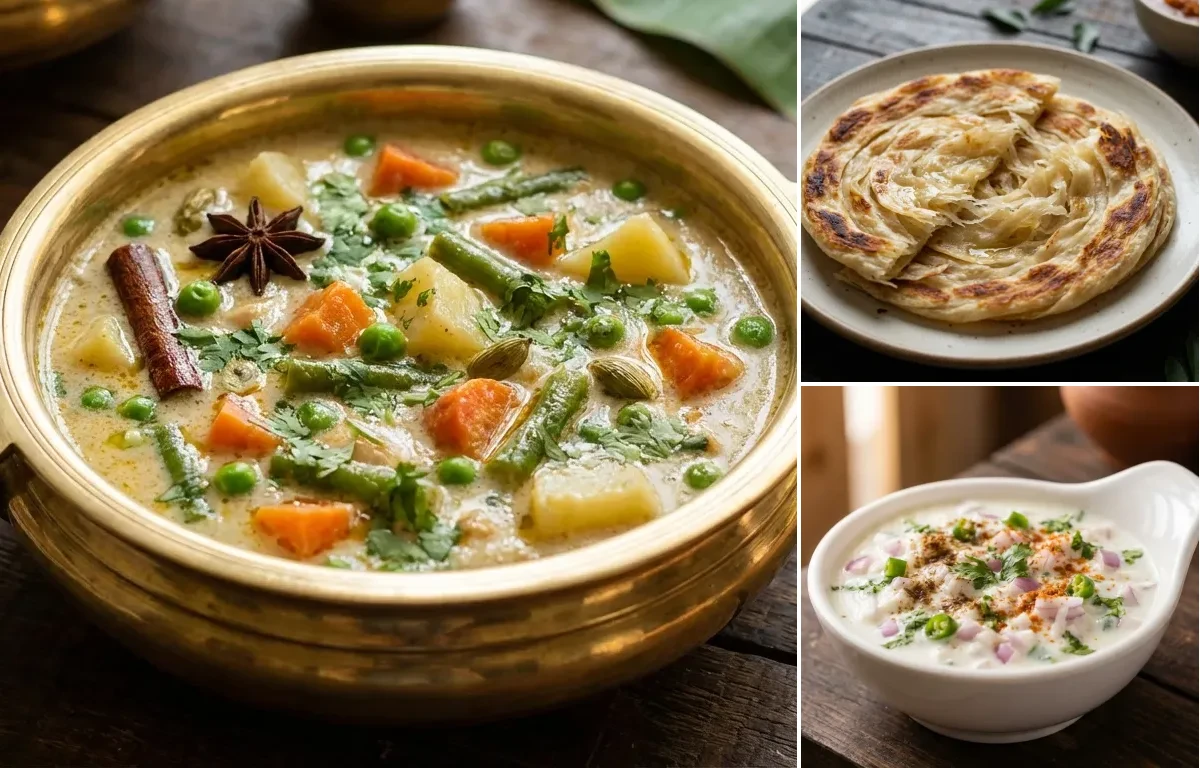
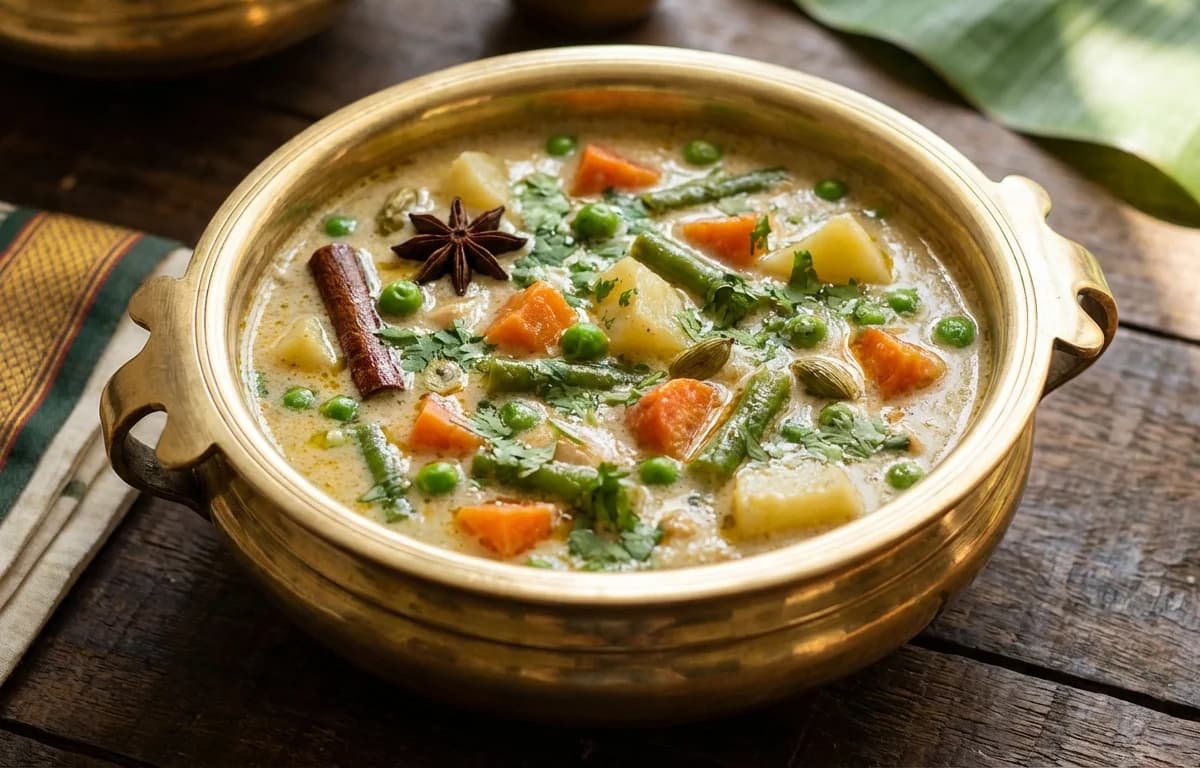
A rich and aromatic South Indian curry from the Chettinad region. Mixed vegetables are simmered in a fragrant, freshly ground spice paste with a creamy coconut base. It's a flavorful dish that pairs beautifully with parottas, chapatis, or steamed rice.
Prep20 min
Cook30 min
Servings4
Serving size: 1 serving
278cal
5gprotein
27gcarbs
18g
Ingredients
0.75 cup Fresh Grated Coconut (Tightly packed)
1.5 tsp Fennel Seeds
1 tsp Poppy Seeds (Also known as Khus Khus)
12 whole Cashew Nuts (Adds creaminess to the gravy)
3 whole Green Chili (Adjust to your spice preference)
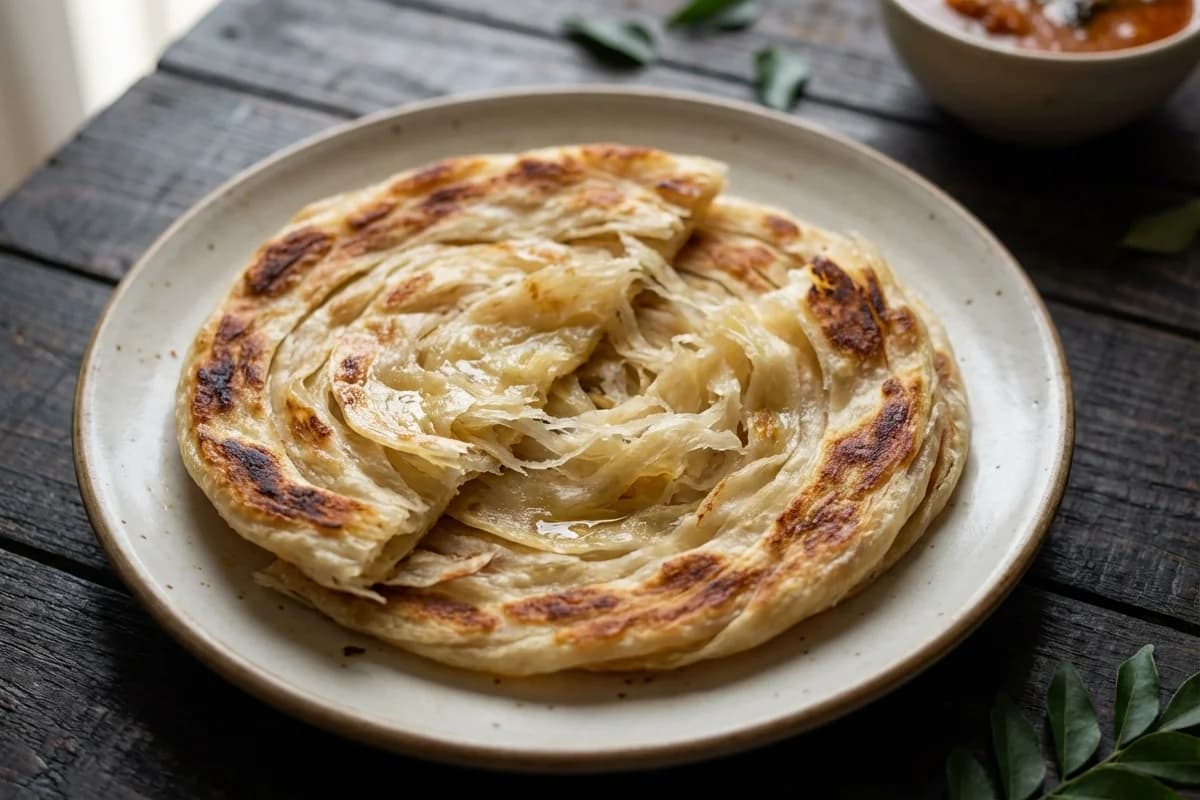
Flaky, layered, and irresistibly soft, this South Indian flatbread is a street food classic. Known as Kerala Parotta, it's famous for its intricate layers and chewy texture. Perfect for sopping up rich, spicy curries, making it at home is a rewarding culinary experience.
Prep50 min
Cook30 min
Soak150 min
Servings
About Chettinad Vegetable Kurma, Parotta and Onion Raita
Aromatic, perfectly spiced Chettinad Veg Kurma with flaky parotta and cool raita. Pure comfort food!
This chettinad dish is perfect for lunch. With 1120.09 calories and 15.06g of protein per serving, it's a nutritious choice for your meal plan.
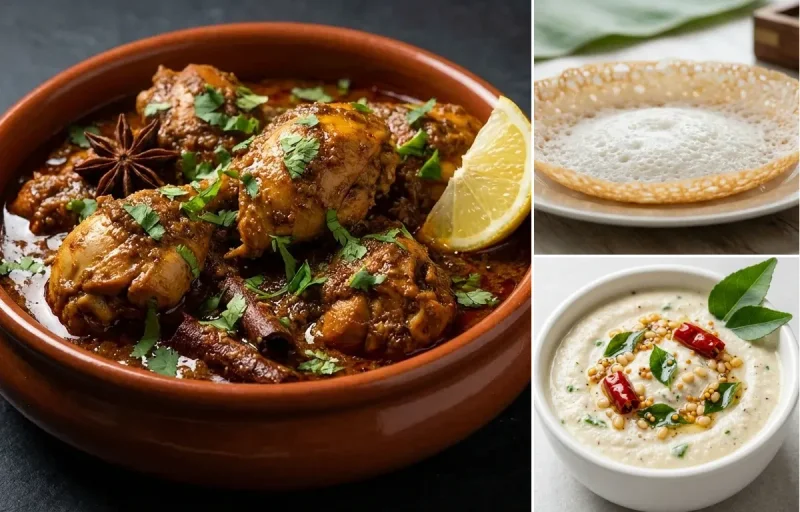
Other Cuisines to Explore
Discover authentic meals from cuisines around the world.
1 whole Star Anise (A single petal is sufficient if large)
1 tsp Stone Flower (Optional but highly recommended for authentic flavor)
3 tbsp Sesame Oil (Gingelly oil is traditional for Chettinad cuisine)
1 large Onion (Finely chopped)
2 medium Tomato (Finely chopped)
1 medium Carrot (Diced into 1/2-inch pieces)
0.75 cup Green Beans (Trimmed and cut into 1-inch pieces)
1 medium Potato (Peeled and diced into 1/2-inch pieces)
0.5 cup Green Peas (Fresh or frozen)
0.5 tsp Turmeric Powder
1 tsp Kashmiri Red Chili Powder (For color and mild heat)
1.5 tsp Coriander Powder
1.25 tsp Salt (Adjust to taste)
2 cup Water (About 1/2 cup for grinding and 1.5 cups for the gravy)
2 tbsp Coriander Leaves (Freshly chopped, for garnish)
Instructions
1
Prepare the Chettinad Masala Paste
In a small pan over low heat, dry roast the cinnamon, cloves, cardamom, star anise, and stone flower for 1-2 minutes until fragrant. Be careful not to burn them. Remove from heat.
In a blender jar, combine the toasted whole spices with grated coconut, fennel seeds, poppy seeds, cashew nuts, green chilies, ginger, and garlic.
Add about 1/2 cup of water and blend to a very smooth, thick paste. Scrape down the sides as needed. Set this paste aside.
2
Sauté Aromatics and Spices
Heat sesame oil in a heavy-bottomed pan or kadai over medium heat.
Add the finely chopped onion and sauté for 5-6 minutes until it becomes soft and translucent.
Add the chopped tomatoes and cook for another 5-7 minutes until they turn soft and mushy, and oil begins to separate from the masala.
Stir in the turmeric powder, Kashmiri red chili powder, and coriander powder. Cook for 1 minute, stirring constantly, until the raw smell of the spices disappears.
3
Cook Vegetables and Masala Paste
Add the diced potatoes, carrots, and green beans to the pan. Sauté for 2-3 minutes to coat them well with the masala.
Add the ground Chettinad masala paste and salt. Stir well and cook for 4-5 minutes, until the paste is aromatic and slightly darkened in color.
4
Simmer the Kurma
Pour in 1.5 cups of water and add the green peas. Mix everything thoroughly to combine.
Bring the curry to a boil, then reduce the heat to low. Cover the pan and let it simmer for 12-15 minutes, or until the vegetables are tender and the gravy has thickened to your desired consistency.
Stir occasionally to prevent it from sticking to the bottom.
5
Garnish and Serve
Once the vegetables are cooked, check the seasoning and adjust the salt if necessary.
Turn off the heat and garnish with freshly chopped coriander leaves.
Let the kurma rest for 5-10 minutes for the flavors to meld before serving hot.
4
Serving size: 1 serving
842cal
10gprotein
75gcarbs
56gfat
Ingredients
3 cup Maida (Approx 375g)
1 tbsp Sugar
1 tsp Salt
1 cup Sunflower Oil (Divided for dough, soaking, and cooking)
1 cup Lukewarm Water (Adjust as needed)
Instructions
1
Prepare and Rest the Dough
In a large mixing bowl, whisk together the maida, sugar, and salt.
Add 2 tablespoons of sunflower oil and mix it into the flour with your fingertips until it resembles coarse crumbs.
Gradually add lukewarm water while mixing to form a soft, pliable dough. The dough should be soft and slightly sticky.
Transfer the dough to a clean work surface and knead for 10-12 minutes until it becomes very smooth and elastic.
Apply a little oil over the dough, cover with a damp cloth, and let it rest for 30 minutes.
2
Divide and Soak the Dough
After the initial rest, divide the dough into 8 equal-sized balls.
Place the dough balls in a deep bowl or tray. Pour the remaining sunflower oil over them, ensuring they are fully coated.
Cover the bowl and let the dough balls soak in the oil for a minimum of 2 hours, or up to 4 hours at room temperature. This step is crucial for making the dough elastic.
3
Stretch, Pleat, and Coil
Generously oil your work surface. Take one dough ball (leave the others in the oil) and flatten it with your palm.
Using your fingers, gently stretch and pull the dough outwards from the center to form a large, paper-thin circle or rectangle. It should be translucent. Don't worry about small tears.
Starting from one edge, lift and fold the dough over to create thin, accordion-like pleats until you have a long, pleated rope.
Gently stretch this pleated rope to make it longer. Then, starting from one end, coil it into a tight spiral, tucking the tail end underneath.
Let the prepared coil rest for 10-15 minutes while you repeat the process for the remaining dough balls.
4
Cook the Parotta
Take a rested coil and gently flatten it with your palm or a rolling pin into a circle about 5-6 inches in diameter. Do not press too hard, as this will cause the layers to merge.
Heat a tawa or flat skillet over medium heat.
Place the parotta on the hot tawa and cook for about 1 minute until small bubbles appear.
Flip the parotta, drizzle a teaspoon of oil or ghee around the edges, and cook for another 2-3 minutes, pressing gently with a spatula, until golden brown spots appear.
Flip again, add a little more oil if needed, and cook the other side until it's crisp and golden brown. Repeat for all the parottas.
5
Fluff and Serve
Once cooked, remove the parotta from the tawa. While it's still hot, place it on a clean surface or hold it between your hands (using a cloth if too hot).
Gently clap or scrunch the parotta from the sides. This action is key to separating the layers and making it flaky.
Serve the hot, flaky parottas immediately with your favorite curry, such as vegetable kurma or chicken salna.