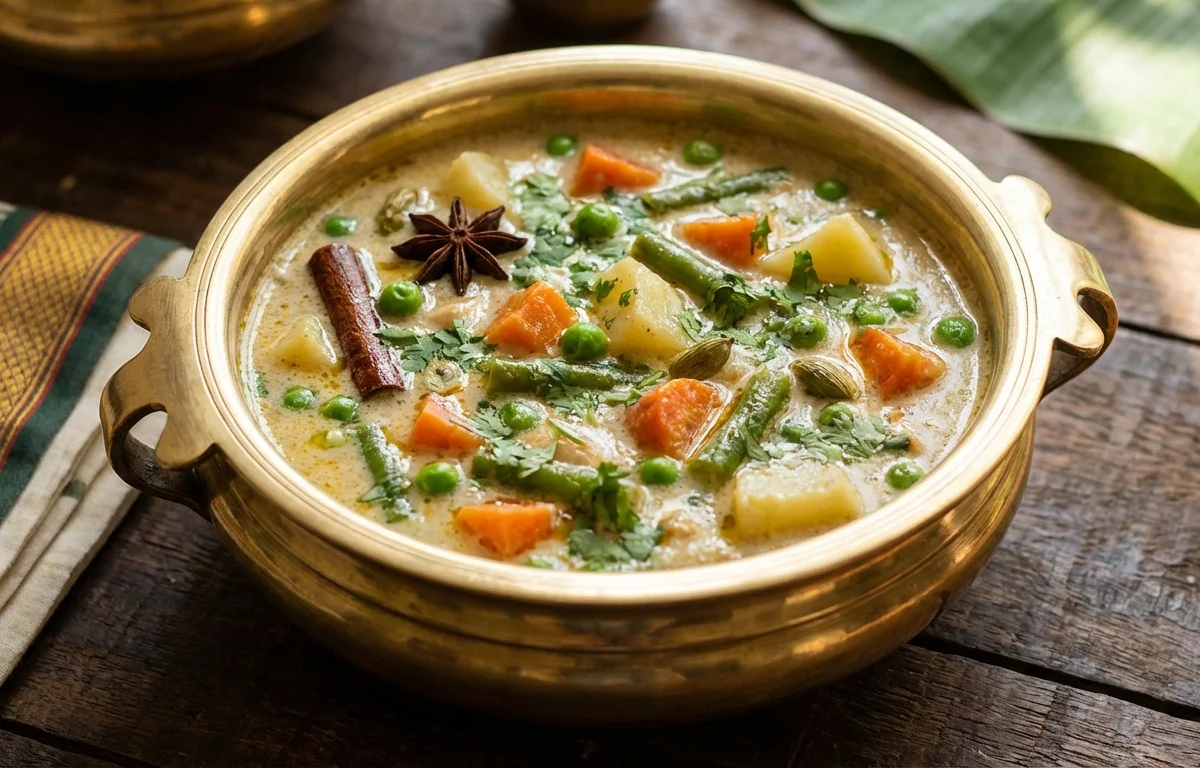
Chettinad Vegetable Kurma
A fragrant South Indian kurma with mixed vegetables simmered in a spiced coconut and poppy seed gravy. It is gently rich, lightly spicy, and fits beautifully with idiyappam, parotta, dosa, or plain rice.
For 4 servings
- prep · ~15 min
Prep the vegetables and soak the poppy seeds.
1.Cube the potato and carrot into small even pieces.2.Cut the beans and break the cauliflower into small florets.3.Slice the onions, chop the tomatoes, and slit the green chili.4.Soak the poppy seeds in a little water for 10 minutes.TIPSmall, even vegetable pieces cook at the same rate and give the kurma a better texture. - mix · ~5 min
Grind the coconut masala.
1.Add fresh coconut, soaked poppy seeds, cashews, ginger, garlic, fennel seeds, cumin seeds, and black pepper to a blender.2.Pour in a little water.3.Grind to a smooth, thick paste. - saute · ~7 min
Cook the whole spices and onions.
1.Heat oil in a kadai over medium heat.2.Add cinnamon, cloves, green cardamom, and bay leaf and cook until fragrant.3.Add sliced onions and green chili.4.Cook until the onions turn soft and lightly golden.TIPKeep the heat medium so the whole spices bloom without burning. - saute · ~6 min
Build the masala base.
1.Add chopped tomatoes and cook until soft.2.Add coriander powder, red chili powder, turmeric powder, and salt.3.Mix well and cook until the tomatoes break down and the masala looks glossy. - saute · ~3 min
Add the ground paste and cook briefly.
Stir in the coconut masala paste and cook for 2 to 3 minutes, stirring often, until the raw smell fades and the mixture thickens slightly.
- simmer · ~15 min
Simmer the vegetables in the kurma.
1.Add potato, carrot, beans, green peas, and cauliflower.2.Pour in water and mix well.3.Bring the kurma to a gentle boil.4.Cover and cook until the vegetables are tender and the gravy is thick.TIPStir once or twice while simmering so the coconut gravy does not catch at the bottom. - garnish · ~1 min
Finish with coriander leaves.
Check the seasoning, switch off the heat, and stir in the chopped coriander leaves.
- serve
Serve the Chettinad Vegetable Kurma hot.
What to keep in mind.
8 tips from the recipe — small details that make a real difference to the final dish.
- 1Grind the coconut-poppy seed paste very smooth, or the kurma will taste grainy instead of silky.
- 2Cook the onions only to light golden; dark browning can overpower the delicate coconut gravy.
- 3After adding the ground paste, stir constantly for the first few minutes so it does not stick to the kadai.
- 4Cut potato, carrot, beans, and cauliflower into similarly small pieces so they finish cooking together.
- 5Keep the simmer gentle once water is added; a hard boil can make the coconut-based gravy split.
- 6If serving with idiyappam or dosa, leave the kurma slightly looser because it thickens as it stands.
- 7This kurma tastes even better after 30 minutes of rest, when the fennel, pepper, and whole spices settle into the gravy.
- 8Reheat on low heat with a splash of water, since coconut and cashew gravy thickens noticeably in the fridge.
Adapt it for your goals.
Low-oil
Use 1 tablespoon oil and sauté onions with a splash of water as needed; good if you want a lighter but still flavorful kurma.
veganVegan
This recipe is already naturally vegan, making it a good curry option for parotta, dosa, or rice without any dairy substitutions.
jainJain
Skip onion, garlic, and potato; increase beans, peas, and cauliflower, and use a little more fennel and ginger for body and aroma.
spicierSpicier
Add extra black pepper or one more green chili for a more pronounced Chettinad-style heat without changing the gravy texture.
Why this is on our healthy list.
Vegetable-rich main dish
Potato, carrot, beans, peas, and cauliflower bring a mix of plant nutrients, color, and fiber to the kurma.
Plant-based fats from nuts and coconut
Fresh coconut and cashews add richness and satiety while helping carry the aromas of the spices through the gravy.
Digestive spice profile
Ginger, garlic, cumin, fennel, and black pepper contribute classic warming flavors often used to make rich curries feel balanced.
Frequently asked questions
Yes. Frozen peas can go in directly, and frozen cauliflower works too, though it may cook a little faster and become softer.