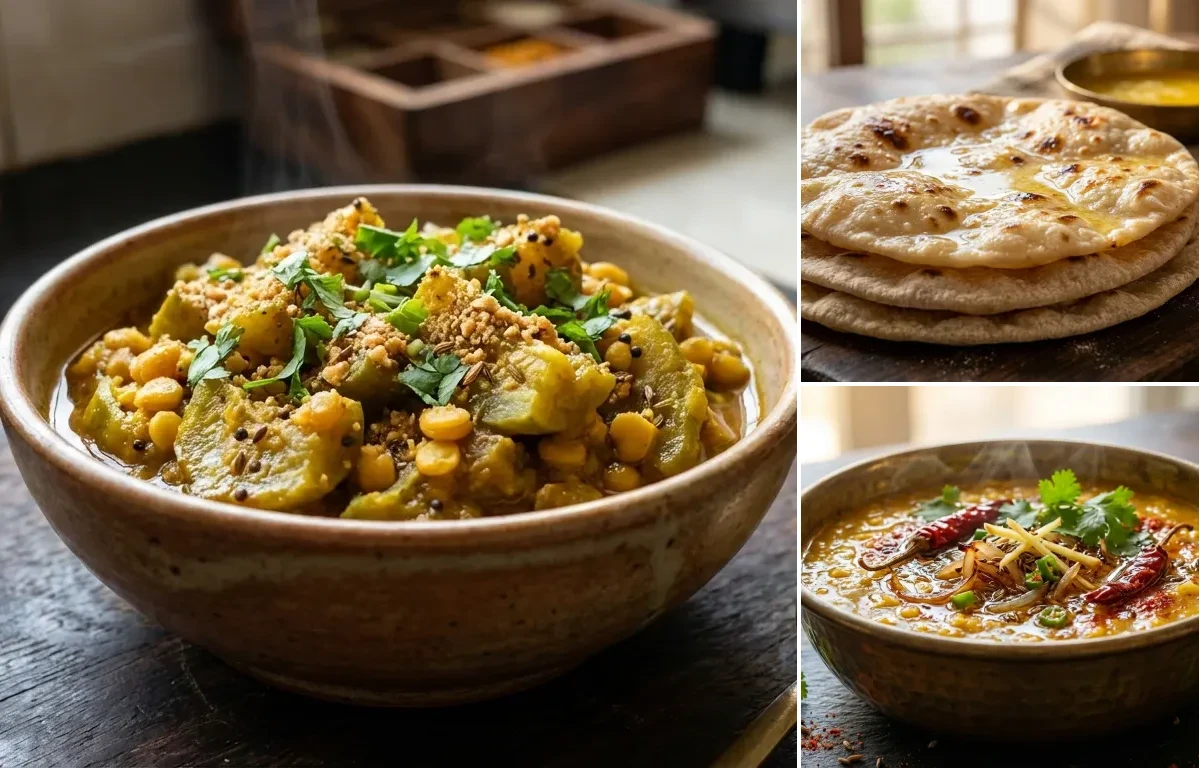
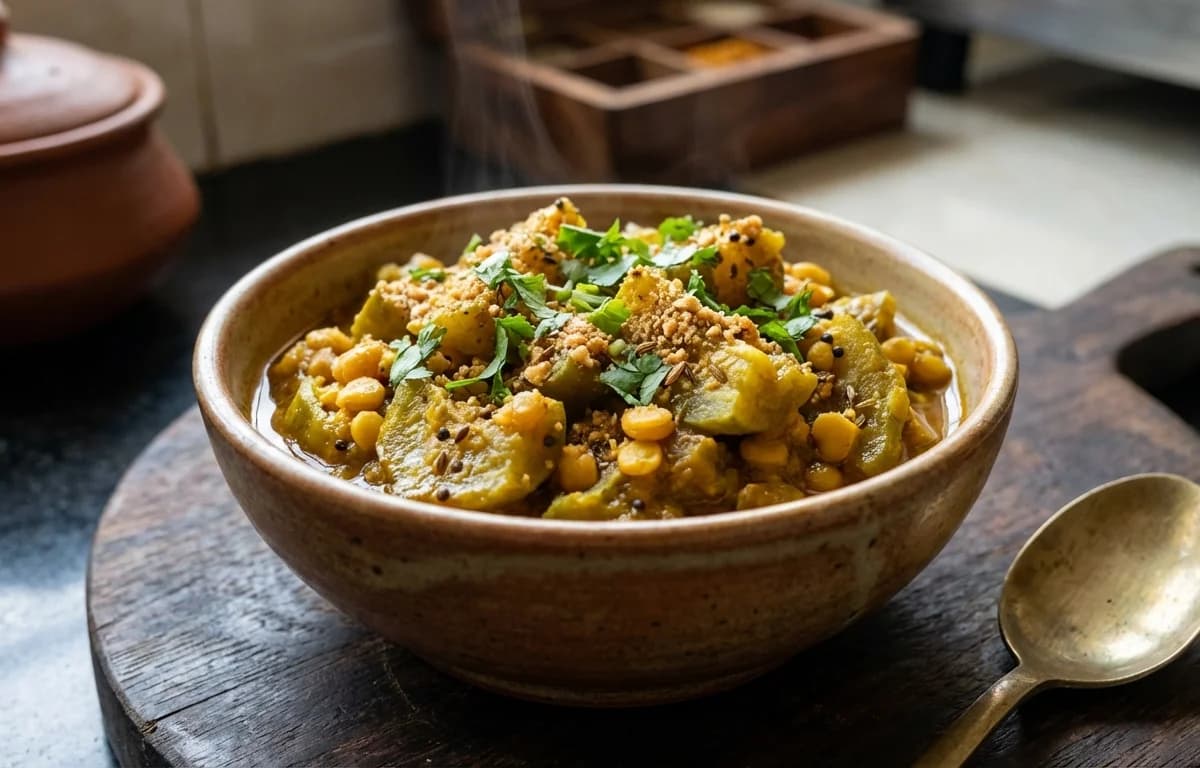
A simple Maharashtrian stir-fry with tender ridge gourd, crunchy peanuts, and aromatic goda masala. This comforting, everyday dish is quick to make and pairs perfectly with hot chapatis or dal rice.
Prep15 min
Cook20 min
Servings4
Serving size: 1 serving
191cal
4gprotein
16gcarbs
14g
Ingredients
500 g Ridge Gourd (About 2 medium, also known as Dodka or Turai)
2 tbsp Vegetable Oil
0.5 tsp Mustard Seeds
0.5 tsp Cumin Seeds
0.25 tsp Asafoetida (Also known as Hing)
8 leaves Curry Leaves
1 medium Onion (finely chopped)
0.25 tsp Turmeric Powder
0.5 tsp Red Chili Powder (Adjust to your spice preference)
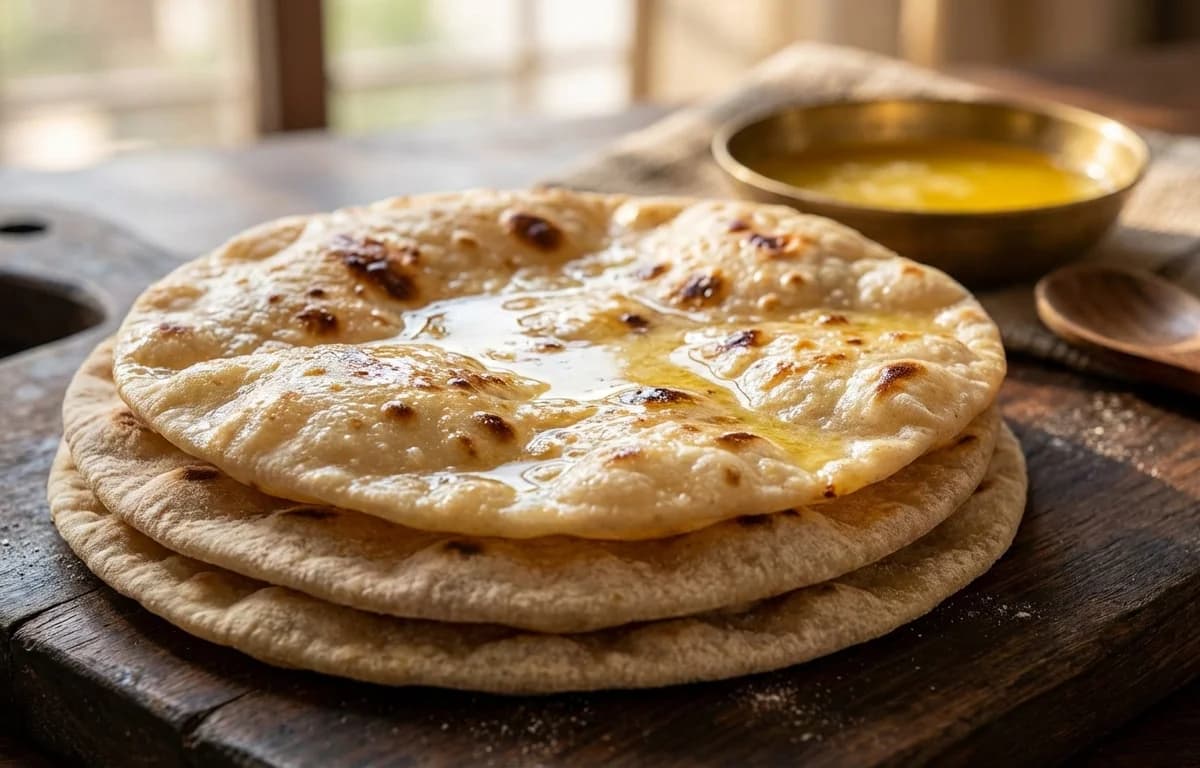
A staple in Indian households, these soft and thin whole wheat flatbreads are perfect for scooping up curries and dals. Made with just a few simple ingredients, they puff up beautifully on the flame, a hallmark of a perfectly made chapati.
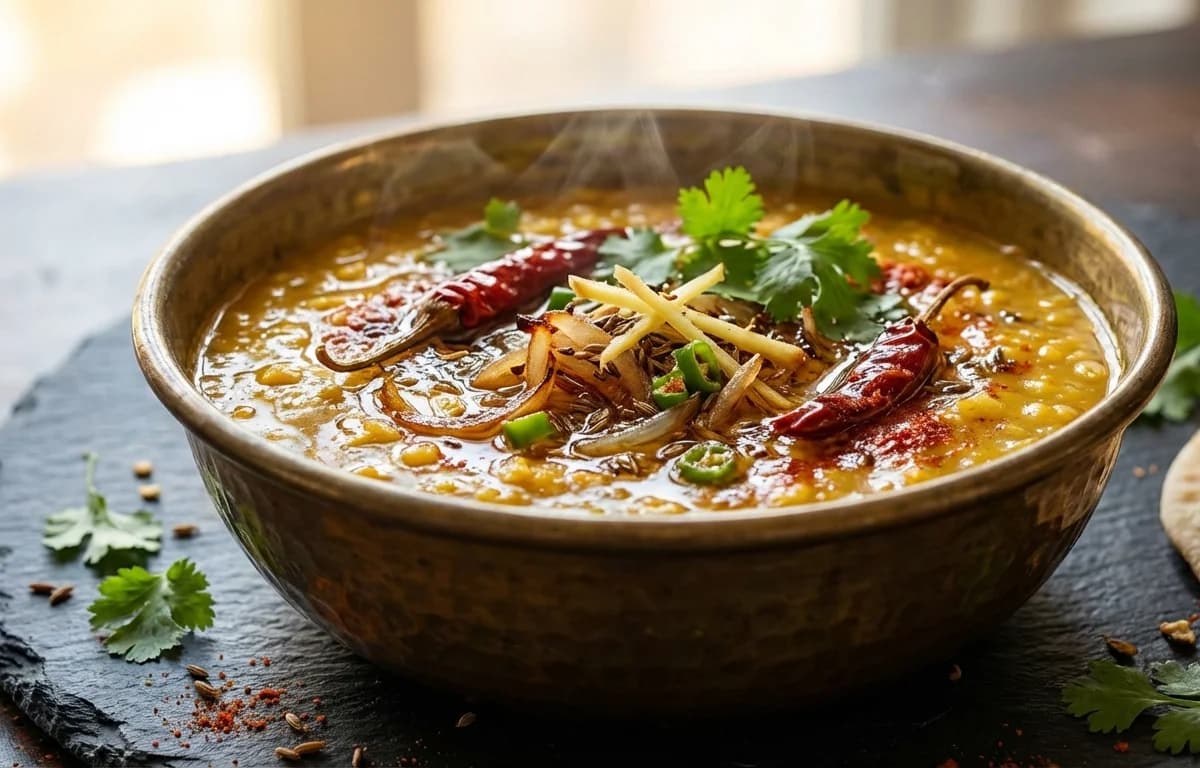
A comforting and classic North Indian lentil dish. Creamy yellow lentils are cooked until tender and then topped with a fragrant tempering of spices sizzled in ghee. Perfect with steamed rice or roti.
Prep10 min
Cook25 min
Soak30 min
Servings
About Dodkyachi Bhaji, Chapati and Dal Tadka
Homestyle Dodkyachi Bhaji with chapatis & protein-packed Dal Tadka. Gut-friendly & delicious!
This maharashtrian dish is perfect for dinner. With 667.6600000000001 calories and 24.54g of protein per serving, it's a high-fiber option for your meal plan.
Other Cuisines to Explore
Discover authentic meals from cuisines around the world.
0.5 tsp Jaggery (grated, optional for a hint of sweetness)
2 tbsp Coriander Leaves (freshly chopped, for garnish)
Instructions
1
Prepare the ridge gourd: Wash the gourd well. Use a peeler to lightly scrape off only the sharp, hard ridges, leaving the tender green skin in between. Chop it into small, 1/2-inch cubes. It's a good practice to taste a tiny piece to ensure it's not bitter.
2
Start the tempering: Heat oil in a kadai or pan over medium heat. Once hot, add the mustard seeds and let them splutter, which takes about 30 seconds. Then add cumin seeds, asafoetida, and curry leaves. Sauté for another 20 seconds until fragrant.
3
Sauté aromatics: Add the finely chopped onion to the pan and sauté for 3-4 minutes until it becomes soft and translucent.
4
Add spice powders: Lower the heat and add the turmeric powder, red chili powder, and goda masala. Stir continuously for about 30 seconds to prevent burning and to release their aromas.
5
Cook the ridge gourd: Immediately add the chopped ridge gourd and salt. Mix everything thoroughly to coat the vegetable with the spices.
6
Simmer until tender: Cover the pan with a lid and cook on low to medium heat for 10-12 minutes. The ridge gourd has high water content and will cook in its own juices. Stir occasionally to prevent sticking. Cook until the pieces are soft and tender.
7
Add finishing touches: Once the gourd is cooked, stir in the coarsely crushed roasted peanuts and the optional jaggery. Mix well and cook for another 2 minutes, allowing the flavors to meld.
8
Garnish and serve: Turn off the heat, garnish with freshly chopped coriander leaves. Serve hot with phulkas, chapatis, or as a side dish with dal and rice.
213cal
8gprotein
44gcarbs
2gfat
Ingredients
2 cup Atta (Also known as whole wheat flour)
1 cup Lukewarm Water (Adjust as needed, amount varies by flour type)
0.5 tsp Salt
1 tsp Ghee (For adding to the dough (optional))
Instructions
1
Prepare the Dough
In a large mixing bowl, combine 2 cups of atta and salt. If using, add 1 tsp of ghee and mix it into the flour with your fingertips until it resembles coarse crumbs.
Gradually add lukewarm water, a little at a time, mixing and gathering the flour to form a dough.
Knead the dough on a clean surface for 8-10 minutes, pressing and stretching with the heel of your hand. The final dough should be soft, pliable, smooth, and not sticky. It should have a texture similar to an earlobe.
Cover the dough with a damp cloth or a lid and let it rest for at least 20-30 minutes. This step is crucial for relaxing the gluten and ensuring soft chapatis.
2
Divide and Roll the Chapatis
After resting, knead the dough again for one minute to make it smooth.
Divide the dough into 8 equal-sized portions and roll them into smooth balls.
Take one ball and flatten it between your palms. Dip it into the dry atta for dusting, coating it lightly on both sides.
Place it on a rolling board (chakla) and roll it out into a thin, even circle of about 6-7 inches in diameter. Use minimal dry flour for dusting to avoid making the chapati hard.
3
Cook the Chapatis
Heat a tawa (flat griddle) on medium-high heat. To check if it's ready, sprinkle a pinch of dry flour; it should sizzle and turn brown quickly.
Carefully place the rolled chapati on the hot tawa. Cook for about 15-20 seconds until you see small bubbles forming on the surface.
Using tongs, flip the chapati. Cook the other side for about 30-40 seconds until light brown spots appear.
Using the tongs, lift the chapati and place it directly on a high gas flame. It should puff up like a balloon within 2-3 seconds.
Immediately flip it to cook the other side on the flame for another 2 seconds. Be careful not to burn it.
4
Finish and Serve
Remove the puffed chapati from the flame and place it in a casserole or a container lined with a clean kitchen towel. This traps the steam and keeps them soft.
Brush the top with a little ghee. This adds flavor and helps keep it soft.
Repeat the rolling and cooking process for the remaining dough balls.
Serve hot with your favorite dal, sabzi, or curry.
3 cup Water (for pressure cooking, plus more as needed)
0.5 tsp Turmeric Powder
1 tsp Salt (or to taste)
2 tbsp Ghee (divided)
1 tsp Cumin Seeds
0.5 tsp Mustard Seeds
1 medium Onion (finely chopped)
1 tbsp Ginger Garlic Paste
2 pcs Green Chili (slit lengthwise)
1 medium Tomato (finely chopped)
0.25 tsp Hing (asafoetida)
2 pcs Dried Red Chili (whole)
0.5 tsp Kashmiri Red Chili Powder (for color, adjust to taste)
0.5 tsp Garam Masala
2 tbsp Coriander Leaves (freshly chopped, for garnish)
1 tsp Lemon Juice (optional, for a tangy finish)
Instructions
1
Pressure Cook the Dal
Rinse the toor dal thoroughly under cold running water until the water runs clear. Drain.
Place the rinsed dal in a pressure cooker. Add 3 cups of water, turmeric powder, and 1/2 tsp of salt.
Secure the lid and pressure cook on medium-high heat for 4-5 whistles, or about 15 minutes, until the dal is completely soft and mushy.
Allow the pressure to release naturally. This extra time helps the dal become even creamier.
Once the pressure has subsided, open the cooker and whisk the dal gently until it reaches a smooth, consistent texture. If it's too thick, add a little hot water to reach your desired consistency.
2
Prepare the Masala Base
Heat 1 tbsp of ghee in a separate pan or kadai over medium heat.
Add 1/2 tsp of cumin seeds and let them sizzle.
Add the finely chopped onion and sauté for 3-4 minutes until it becomes soft and translucent.
Add the ginger-garlic paste and slit green chilies. Cook for another minute until the raw smell disappears.
Stir in the chopped tomatoes and the remaining 1/2 tsp of salt. Cook for 4-5 minutes, stirring occasionally, until the tomatoes break down and the mixture becomes pulpy.
Pour this onion-tomato masala into the cooked dal. Add the garam masala, stir well, and let it simmer on low heat for 5 minutes for the flavors to meld.
3
Prepare the Final Tempering (Tadka)
In a small tadka pan or small skillet, heat the remaining 1 tbsp of ghee over medium heat until hot.
Add the mustard seeds and the remaining 1/2 tsp of cumin seeds. Allow them to crackle and splutter, which should take about 30 seconds.
Add the whole dried red chilies and hing (asafoetida). Sauté for just 10-15 seconds, being careful not to burn them.
Turn off the heat completely. Immediately add the Kashmiri red chili powder to the hot ghee and give it a quick swirl. This prevents the powder from burning and turning bitter.
4
Combine and Serve
Immediately pour the sizzling hot tempering over the simmering dal. You should hear a satisfying sizzle as the tadka hits the dal.
Stir gently to incorporate the tempering. Stir in the optional lemon juice if using.
Garnish with freshly chopped coriander leaves.
Serve hot with steamed basmati rice, jeera rice, or fresh rotis.