
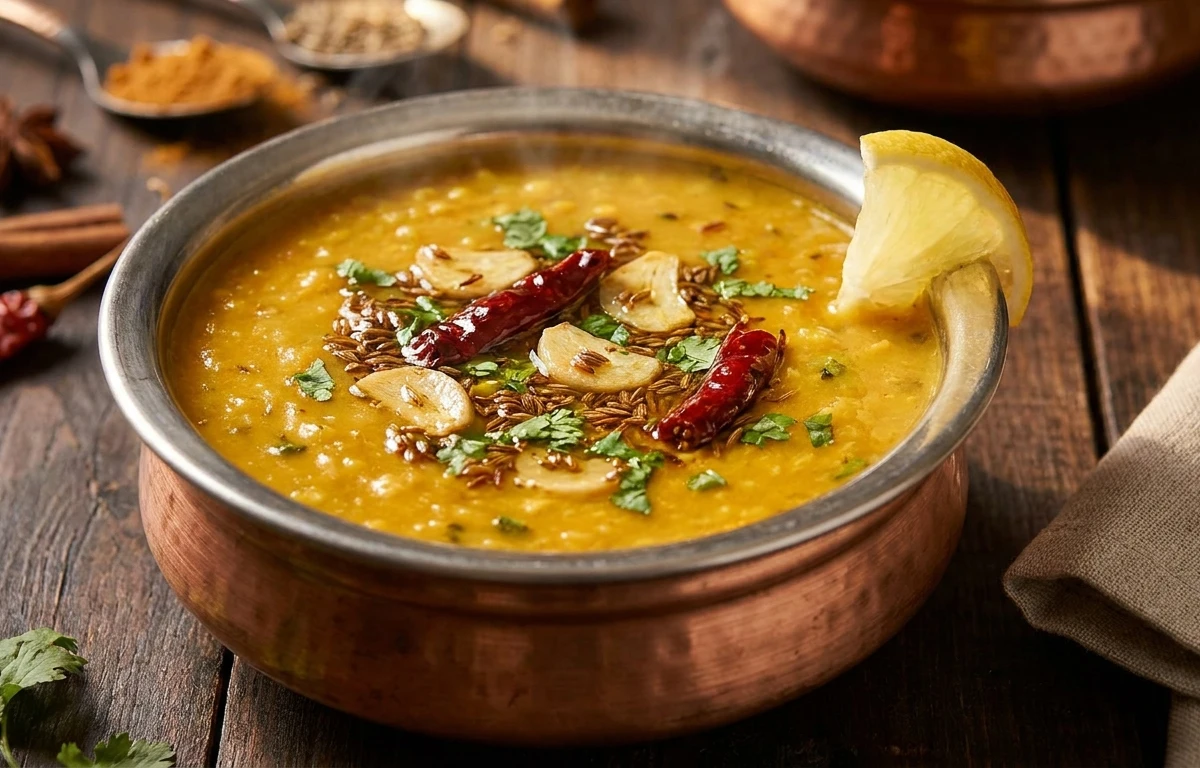
Dal Tadka
Comforting yellow lentils cooked until soft, then finished with a fragrant ghee tempering of cumin, garlic, onion, and spices. This everyday Indian favorite is warm, hearty, and perfect with rice or roti.
For 4 servings
- prep
Rinse the dal and prep the vegetables.
1.Rinse the toor dal in a few changes of water until the water runs clearer.2.Finely chop the onion, tomatoes, garlic, ginger, green chili, and coriander leaves.3.Keep the spices and ghee ready near the stove for the tempering. - pressure cook · ~18 min
Pressure cook the dal until soft.
1.Add the toor dal, 3 cups water, turmeric powder, and salt to a pressure cooker.2.Cook on medium heat for 15 to 18 minutes, until the dal is very soft.3.Let the pressure release naturally, then open the cooker and mash the dal lightly.TIPCook the dal until it breaks down easily for the smooth, homestyle texture Dal Tadka is known for. - temper · ~2 min
Make the tadka.
1.Heat ghee in a pan over medium heat.2.Add cumin seeds and asafoetida, and let them sizzle for 20 to 30 seconds.3.Add garlic, ginger, and green chili, and cook until fragrant for about 1 minute.TIPKeep the heat moderate so the garlic turns fragrant and lightly golden without burning. - saute · ~10 min
Cook the onion and tomato base.
1.Add the chopped onion and cook until soft and light golden, 4 to 5 minutes.2.Add the chopped tomatoes and cook until they soften and turn pulpy, 4 to 5 minutes.3.Stir in red chili powder and garam masala, and cook for 30 seconds. - simmer · ~5 min
Mix the cooked dal with the tadka.
Pour the cooked dal into the pan and mix well. Add 1 cup water if needed for a looser consistency, then simmer for 4 to 5 minutes so the flavors come together.
- garnish
Garnish with coriander leaves.
- serve
Serve hot with rice or roti.
What to keep in mind.
6 tips from the recipe — small details that make a real difference to the final dish.
- 1Mash the pressure-cooked toor dal while still hot for the smoothest homestyle texture.
- 2Let the cumin crackle fully in ghee before adding garlic; under-bloomed cumin tastes flat.
- 3Cook the onion only to light golden, not dark brown, so the dal keeps its classic mellow flavor.
- 4Simmer the dal for a few minutes after adding the tadka so the tempering perfumes the whole pot.
- 5If the dal thickens on standing, loosen it with hot water, not cold, before reheating.
- 6For leftovers, store the dal and a little extra fresh coriander separately to brighten it when serving again.
Adapt it for your goals.
Vegan
Replace ghee with a neutral oil or coconut oil for a dairy-free version that still carries the tempering spices well.
jainJain
Skip onion, garlic, and ginger; increase asafoetida slightly and use tomatoes, cumin, and green chili for a simpler but still aromatic tadka.
garlickyGarlicky
Double the chopped garlic and let part of it turn lightly golden in the ghee for a bolder, dhaba-style finish.
mixed dalMixed-dal
Swap part of the toor dal with moong dal for a softer, lighter texture that cooks down especially creamy.
Why this is on our healthy list.
Plant-Based Protein
Toor dal makes this dish filling and nourishing, with lentils providing protein that helps turn a simple meal into a satisfying one.
Fiber-Rich Comfort Food
The lentils, onion, and tomato add fiber, which supports fullness while keeping this everyday dal hearty rather than heavy.
Digestive Spice Support
Cumin, ginger, asafoetida, and garlic are traditional digestive spices often used to make dals more comfortable to eat.
Frequently asked questions
Yes. Simmer the rinsed toor dal in a covered pot until very soft, adding more water as needed; it will just take longer than pressure cooking.


