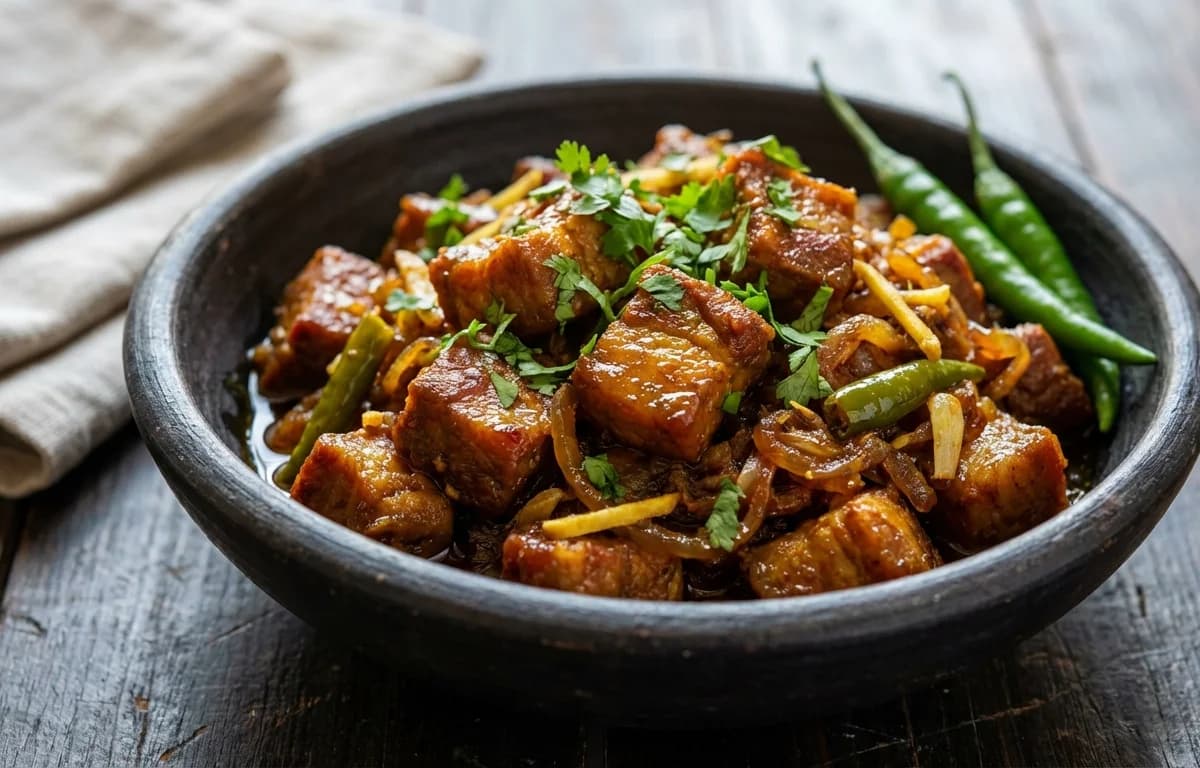
A rustic and flavorful Assamese pork fry, where tender pieces of pork are pan-fried with onions, ginger, and green chilies. This simple yet incredibly delicious dish from North East India is a true celebration of pork.
Prep15 min
Cook45 min
Servings4
Serving size: 1 serving
581cal
34gprotein
8gcarbs
46g
Ingredients
750 g Pork (Use pork belly or shoulder with a good fat ratio, cut into 1-inch cubes)
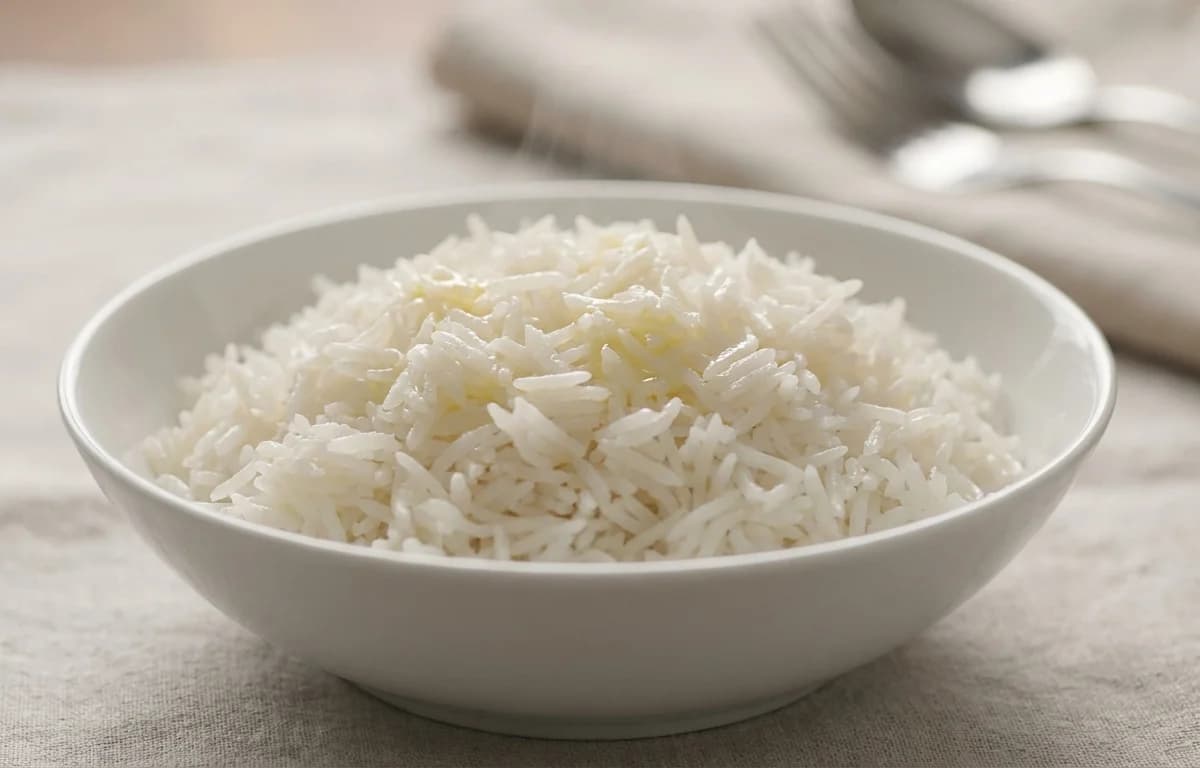
Perfectly fluffy, long-grained basmati rice with a delicate aroma. This simple, foolproof recipe gives you separate, non-sticky grains every time, making it the perfect base for any curry or dal.
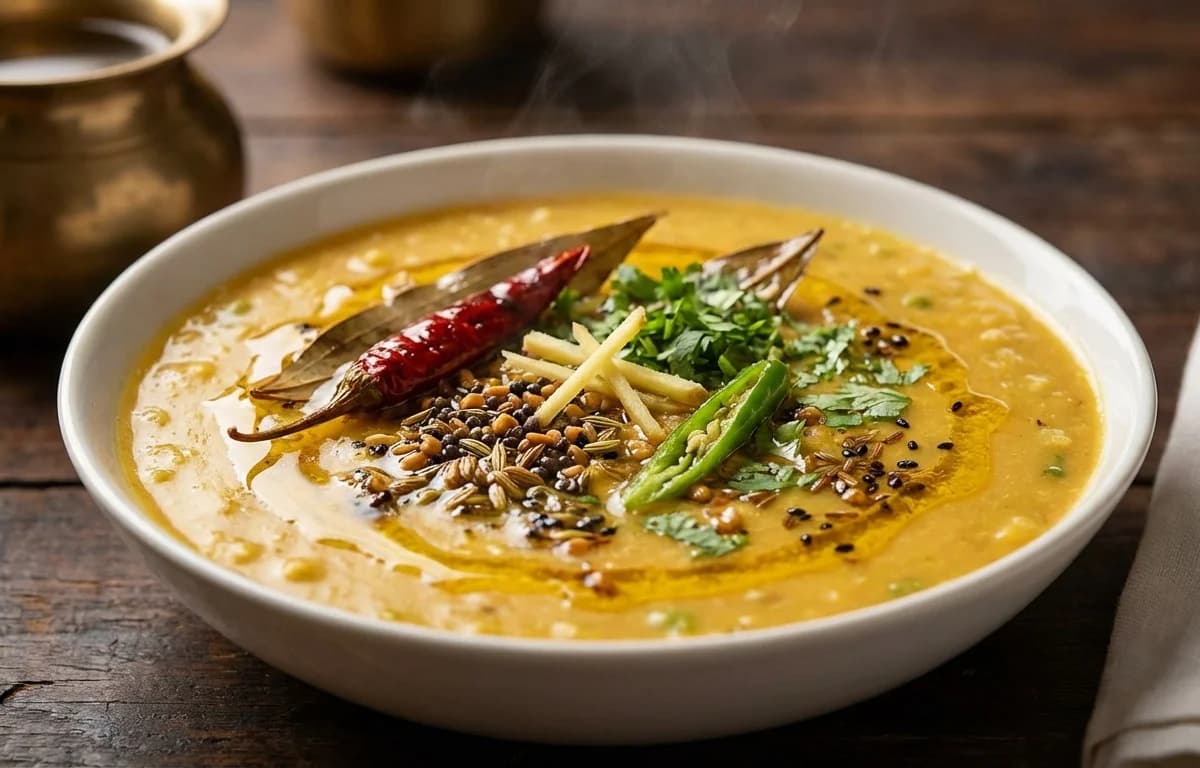
A classic Bengali comfort food, this yellow split pea dal is light, aromatic, and subtly sweet. Flavored with fresh ginger and a traditional panch phoron tempering, it's the perfect simple dish to serve with steamed rice.
A refreshing and crunchy Indian salad made with chopped onions, tomatoes, and cucumbers. It's seasoned with lemon juice and spices, making it the perfect cooling side dish for spicy curries and biryanis.
About Gahori Manxo Bhaja, Steamed Basmati Rice, Matar Dal and Kachumber Salad
Perfectly spiced Gahori Manxo Bhaja with rice & dal – a protein-packed, soul-satisfying treat!
This assamese dish is perfect for dinner. With 1158.7600000000002 calories and 52.29g of protein per serving, it's a nutritious choice for your meal plan.
fat
2 tbsp Coriander Leaves (Freshly chopped, for garnish)
Instructions
1
Marinate the Pork
Wash the pork pieces thoroughly under running water and pat them completely dry with paper towels.
In a mixing bowl, combine the pork pieces with the turmeric powder and 1 teaspoon of salt. Mix well to ensure each piece is evenly coated.
Set the marinated pork aside for at least 15 minutes to allow the flavors to penetrate.
2
Sear the Pork
Place a heavy-bottomed pan or kadai over medium-high heat. Add the mustard oil and heat it until it's very hot and just begins to smoke slightly. This helps mellow its pungent flavor.
Carefully add the marinated pork pieces to the hot oil in a single layer, avoiding overcrowding. You may need to do this in batches. Be cautious of splattering oil.
Sear the pork for 8-10 minutes, turning occasionally, until all sides are well-browned. This step is crucial for developing a deep, savory flavor.
3
Sauté Aromatics
Reduce the heat to medium. Add the sliced onions, crushed ginger, crushed garlic, and slit green chilies to the pan with the pork.
Sauté for 5-7 minutes, stirring frequently, until the onions soften and become translucent, and the raw smell of ginger and garlic disappears.
Mix everything together thoroughly, scraping up any browned bits from the bottom of the pan.
4
Slow Cook to Tenderize
Pour in 1/2 cup of warm water and add the remaining 1/2 teaspoon of salt. Stir well to combine.
Bring the mixture to a gentle simmer. Once simmering, reduce the heat to the lowest setting, cover the pan with a tight-fitting lid.
Allow the pork to slow cook for 20-25 minutes. The goal is to make the pork fork-tender as the fat renders out. Stir once or twice during this time to prevent sticking.
5
Final Fry (Bhaja)
After slow cooking, remove the lid. Most of the water should have evaporated. If there's excess liquid, cook on high heat for a few minutes until it reduces.
Increase the heat to medium-high. Fry the tender pork for another 5-8 minutes, stirring continuously.
Continue frying until the pork pieces are a deep brown color and have slightly crispy edges. The rendered fat will coat the pork, giving it a glossy finish.
6
Garnish and Serve
Turn off the heat. Garnish generously with freshly chopped coriander leaves.
Let the dish rest for 5 minutes before serving.
Serve hot as a main course with steamed rice and a simple dal, or as an appetizer.
Servings
4
Serving size: 1 serving
262cal
5gprotein
55gcarbs
1gfat
Ingredients
1.5 cup Basmati Rice (Use good quality, aged basmati rice for best results)
2.25 cup Water (For the absorption cooking method)
0.75 tsp Salt (Adjust to taste)
1 tsp Ghee (Optional, for flavor and to prevent sticking)
Instructions
1
Rinse and Soak the Rice (35 minutes)
Place the basmati rice in a large bowl. Add cold water and gently swirl the rice with your fingers. Drain the cloudy water. Repeat this process 3-4 times until the water runs mostly clear. This removes excess starch and prevents stickiness.
Cover the rinsed rice with fresh water and let it soak for 30 minutes. Soaking allows the grains to absorb water, ensuring they cook evenly and elongate beautifully.
After 30 minutes, drain the rice completely using a fine-mesh sieve and set aside.
2
Cook the Rice (15 minutes)
In a medium, heavy-bottomed saucepan with a tight-fitting lid, combine the drained rice, 2.25 cups of fresh water, salt, and ghee (if using).
Bring the mixture to a rolling boil over medium-high heat, uncovered.
As soon as it boils, give it one gentle stir, then immediately reduce the heat to the lowest possible setting. Cover the saucepan tightly with the lid.
Let the rice simmer for 12-15 minutes, or until all the water has been absorbed. Do not lift the lid during this time to prevent steam from escaping.
3
Rest and Fluff (10 minutes)
Turn off the heat but leave the saucepan on the stove, still covered. Let the rice rest and steam for 10 minutes. This step is crucial for finishing the cooking process and achieving a perfect texture.
After resting, remove the lid. Use a fork to gently fluff the rice, separating the long, delicate grains.
Serve hot as a perfect accompaniment to curries, dals, or grilled dishes.