A unique twist on a Rajasthani classic! This recipe features savory chickpea flour dumplings (gatte) enriched with egg for a softer, richer texture. The gatte are simmered in a tangy, spicy yogurt-based gravy, creating a hearty and flavorful main course that pairs beautifully with Indian breads or rice.
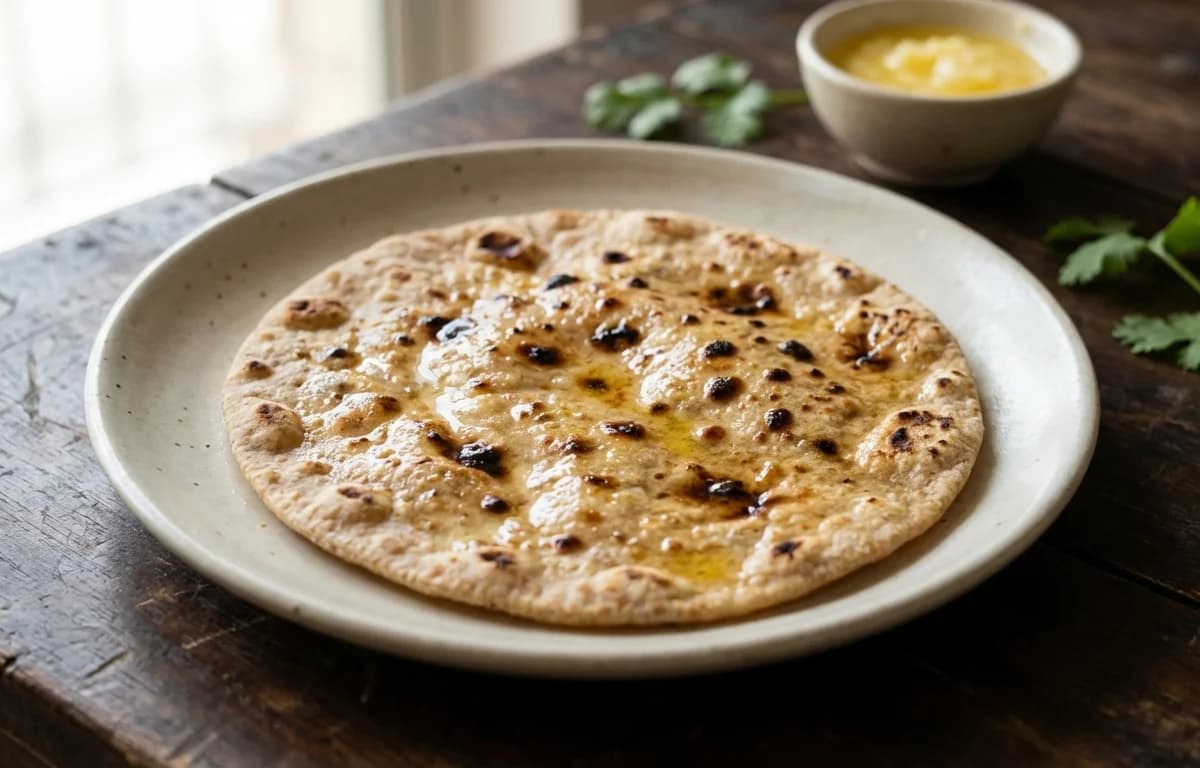
A soft, unleavened Indian flatbread made from whole wheat flour. This everyday staple is perfect for scooping up curries and dals, puffing up beautifully on an open flame.
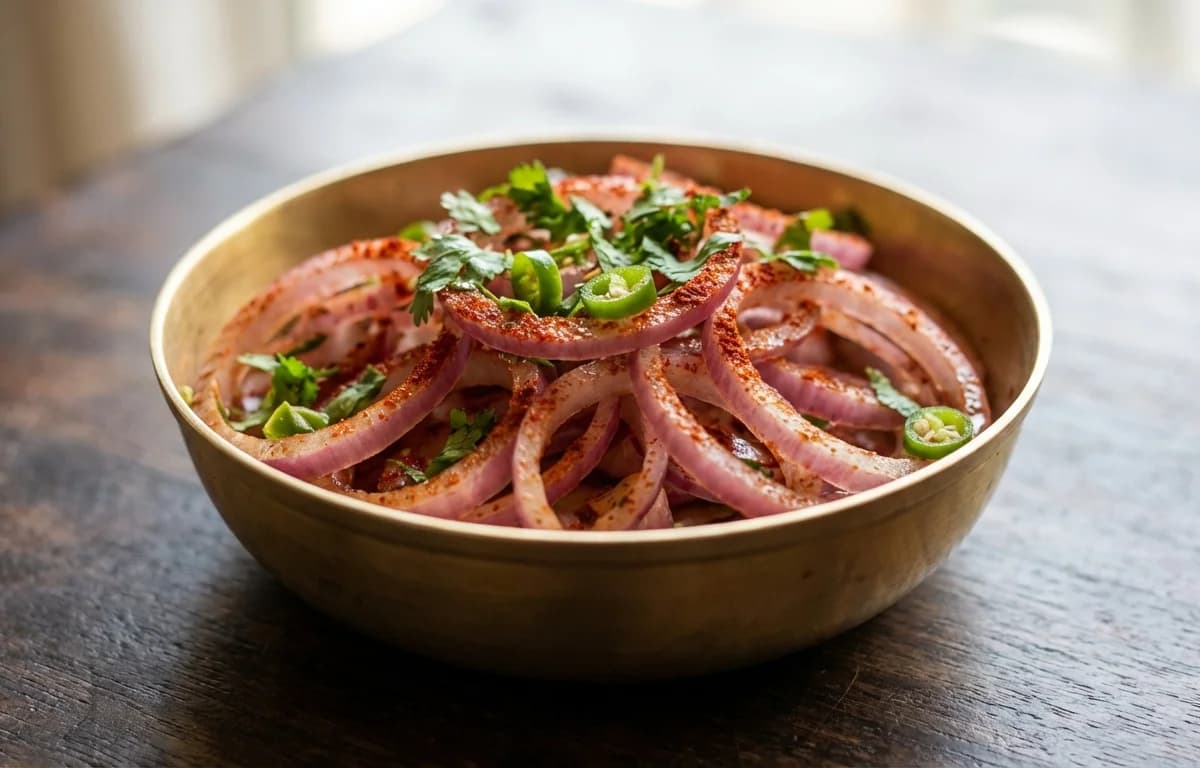
Crisp, sweet onion rings marinated in a tangy apple cider vinegar dressing with fresh parsley. A perfect, refreshing topping for burgers, grilled meats, or as a simple side for any barbecue.
Prep10 min
Cook0 min
Soak15 min
Servings
About Gatte ki Sabzi with Egg, Gehu Roti and Onion Salad
Gatte ki Sabzi with protein-rich boiled eggs & soft rotis – a soul-satisfying, homestyle meal!
This rajasthani dish is perfect for dinner. With 738.12 calories and 25.12g of protein per serving, it's a nutritious choice for your meal plan.
Other Cuisines to Explore
Discover authentic meals from cuisines around the world.
3 tbsp Coriander Leaves (Freshly chopped, for garnish)
6 cup Water (For boiling the gatte)
Instructions
1
Prepare the Gatte Dough
In a mixing bowl, combine 1.5 cups besan, 2 eggs, 2 tbsp ghee, 1 tsp salt, 1 tsp cumin seeds, 0.25 tsp asafoetida, 0.5 tsp turmeric powder, 1 tsp red chili powder, and 1 tsp coriander powder.
Mix all ingredients thoroughly. Knead into a firm, smooth dough for about 3-4 minutes. The moisture from the eggs should be sufficient; avoid adding water unless absolutely necessary for binding.
Divide the dough into 4-5 equal portions. Roll each portion between your palms to form a cylindrical log, about 1/2-inch in diameter.
2
Boil the Gatte
In a wide pot, bring 6 cups of water to a rolling boil.
Gently slide the prepared gatte logs into the boiling water. Do not overcrowd the pot; cook in batches if needed.
Boil for 12-15 minutes on medium-high heat. The gatte are cooked when they float to the surface and develop small bubbles or pores on their skin.
Using a slotted spoon, carefully remove the cooked gatte and set them aside to cool on a plate. CRITICAL: Do not discard the cooking water. Reserve it for the gravy.
Once the gatte have cooled for 5-10 minutes, slice them into 1/2-inch thick rounds.
3
Prepare the Yogurt Gravy Base
In a separate bowl, whisk 1.5 cups of curd until completely smooth and free of lumps.
To the whisked curd, add 0.5 tsp turmeric powder, 1 tsp red chili powder, and 2 tsp coriander powder. Whisk again until all the spices are well incorporated. Set this mixture aside.
Heat 3 tbsp of oil in a kadai or heavy-bottomed pan over medium heat. Once hot, add the remaining 1 tsp cumin seeds and 0.25 tsp asafoetida. Let them sizzle for 30 seconds until fragrant.
4
Cook the Masala
Add the finely chopped onions to the pan and sauté for 6-8 minutes, until they turn soft and golden brown.
Add the ginger-garlic paste and slit green chilies. Cook for another minute until the raw aroma disappears.
Stir in the tomato puree and cook for 5-7 minutes, until the mixture thickens and you see oil separating from the sides of the masala.
Reduce the heat to the absolute minimum. Slowly pour the spiced yogurt mixture into the pan, stirring continuously and vigorously with a whisk or spoon to prevent it from curdling.
Continue stirring and cook on low heat for 2-3 minutes until the yogurt is well integrated and the gravy starts to bubble gently.
5
Simmer and Finish
Gradually add 2 to 2.5 cups of the reserved gatte cooking water to the pan, stirring to combine. Add the remaining 1.5 tsp of salt and mix well.
Bring the gravy to a gentle simmer over medium heat.
Add the sliced gatte pieces to the gravy. Cover the pan and let it simmer on low heat for 8-10 minutes. This allows the gatte to absorb the flavors.
Turn off the heat. Stir in 0.75 tsp garam masala and 1 tbsp of crushed kasuri methi.
Garnish with freshly chopped coriander leaves. Let the sabzi rest for 5 minutes before serving hot with roti, paratha, or steamed rice.
272cal
8gprotein
44gcarbs
9gfat
Ingredients
2 cup Atta (Also known as whole wheat flour)
1 cup Water (Warm, adjust as needed)
0.5 tsp Salt
1 tsp Oil (Optional, for a softer dough)
2 tbsp Ghee (Optional, for brushing on cooked rotis)
Instructions
1
Prepare the Dough
In a large mixing bowl, combine 2 cups of atta and salt. If using, add the oil and mix it in with your fingertips.
Gradually pour in the warm water while mixing with your other hand to bring the flour together.
Knead for 7-8 minutes, adding a little water if necessary, until you have a soft, smooth, and pliable dough. It should not be sticky.
Cover the dough with a damp cloth or a lid and let it rest for at least 20-30 minutes. This step is crucial for soft rotis.
2
Divide and Roll the Rotis
After resting, knead the dough again for one minute.
Divide the dough into 8 equal-sized portions and roll each portion into a smooth ball between your palms.
Take one dough ball, flatten it slightly, and dredge it in the dry atta for dusting.
Place it on a clean, flat surface (chakla) and roll it out evenly with a rolling pin (belan) into a thin circle about 6-7 inches in diameter. Dust with a little more flour as needed to prevent sticking.
3
Cook the Roti on the Tawa
Heat a tawa (flat iron griddle) over medium-high heat. It should be properly hot before you start.
Carefully place the rolled roti onto the hot tawa. Let it cook for about 20-30 seconds, or until you see small bubbles forming on the surface.
Using tongs, flip the roti over. Cook the second side for about 30-40 seconds, until light brown spots appear.
4
Puff and Finish
Using tongs, carefully lift the roti off the tawa and place it directly on a medium-high gas flame. It should puff up into a ball within seconds.
Immediately flip it to cook the other side on the flame for just 2-3 seconds.
Remove the puffed roti and, if desired, brush one side with ghee. Place it in a cloth-lined container or a roti box (casserole) to keep it soft.
Repeat the rolling and cooking process for all the remaining dough balls.