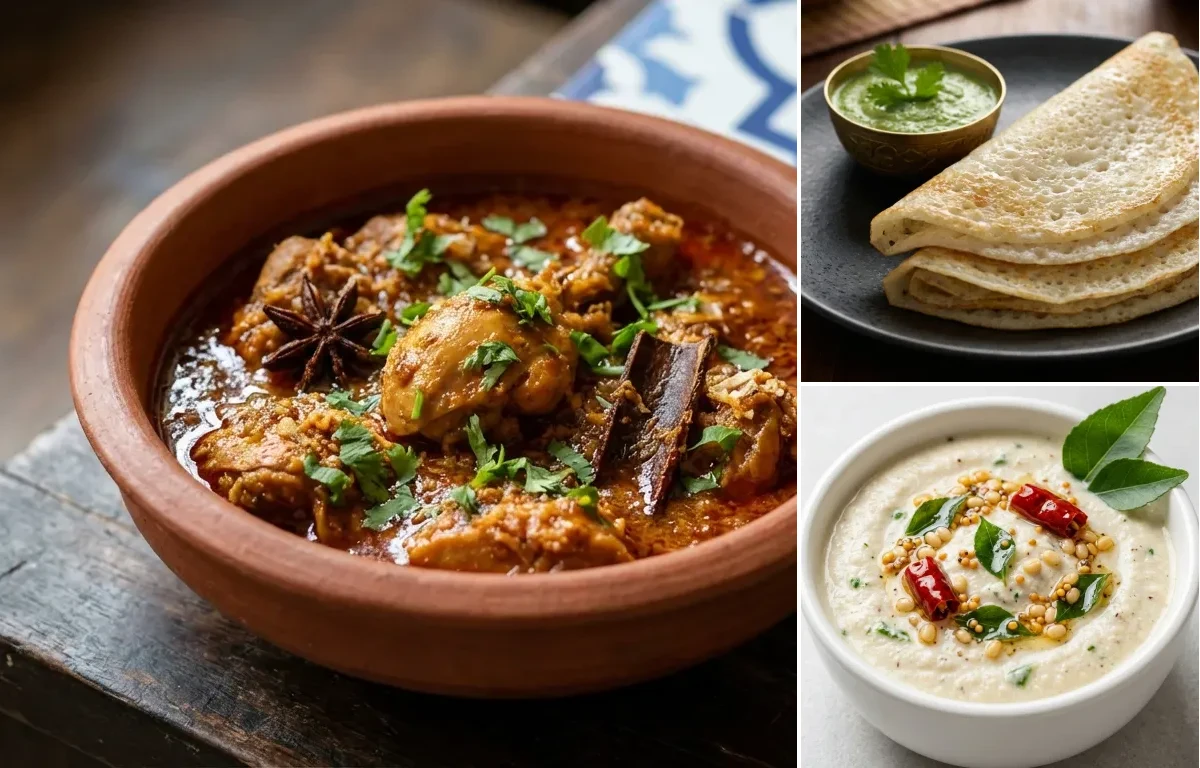
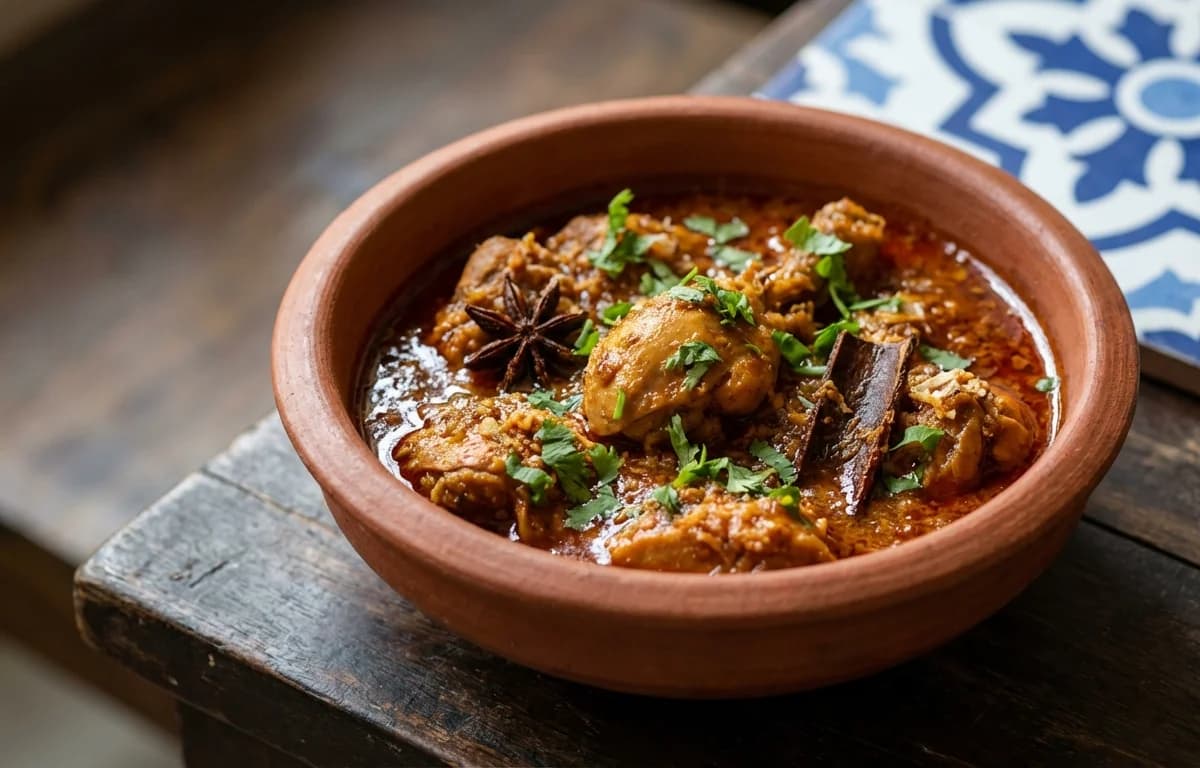
A fiery and aromatic Goan curry where tender chicken is simmered in a rich gravy of roasted coconut and a complex blend of toasted spices. This authentic dish brings the vibrant flavors of the Goan coast right to your kitchen.
Prep25 min
Cook40 min
Servings4
Serving size: 1 serving
461cal
31gprotein
17gcarbs
31g
Ingredients
600 g Chicken (Boneless, skinless, cut into 1.5-inch pieces)
1 tsp Turmeric Powder (Divided for marination and masala)
1.5 tsp Salt (Divided for marination and gravy, or to taste)
1 tbsp Lemon Juice
1 cup Fresh Coconut (Grated)
6 whole Dried Red Chilies (Use a mix of Kashmiri for color and Bedgi for heat)
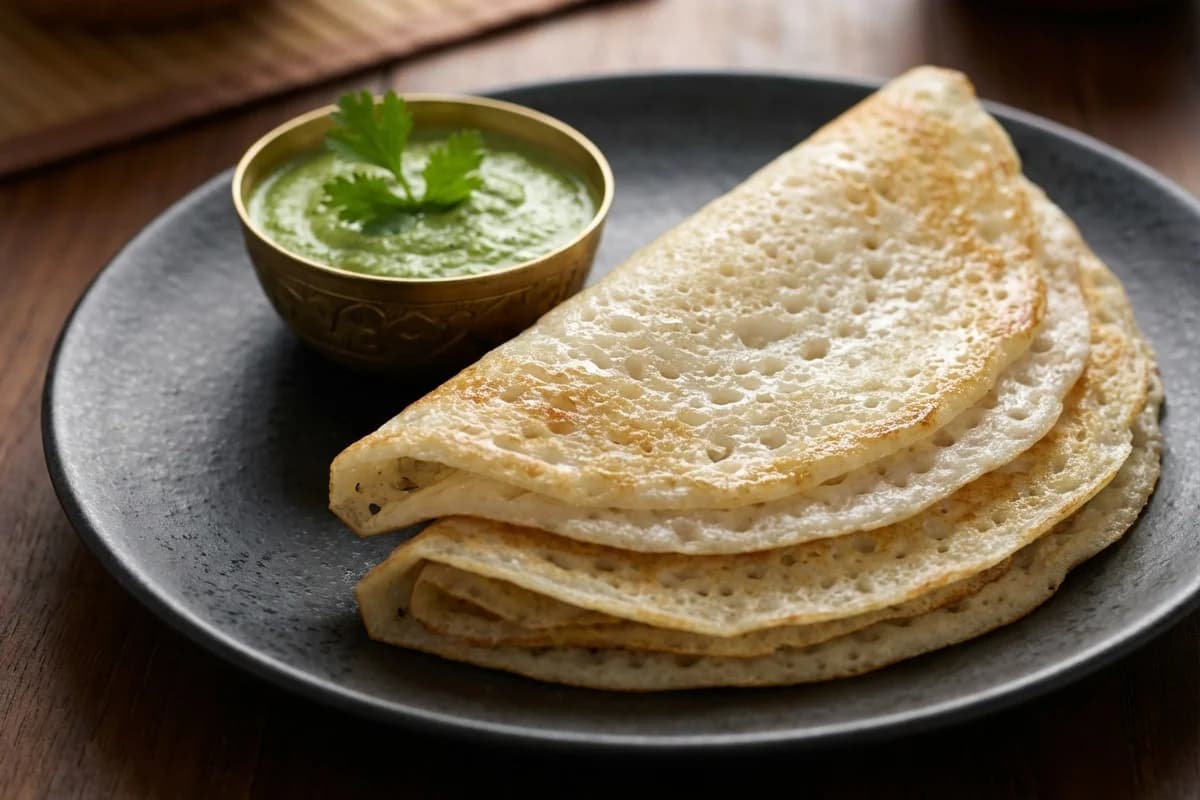
Lacy, soft rice flour crepes from the Konkan region of Maharashtra. These instant, no-fermentation dosas are incredibly light and pair perfectly with coconut chutney or spicy curries for a wholesome breakfast.
A creamy, savory, and slightly tangy South Indian staple. This fresh coconut chutney is the perfect accompaniment for idli, dosa, vada, and upma. Made with freshly grated coconut and aromatic spices, it's finished with a classic tempering (tadka) that elevates its flavor.
Prep10 min
Cook5 min
Servings4
Serving size: 1 serving
About Goan Chicken Sagoti, Ghavan and Coconut Chutney
Perfectly spiced, protein-rich Chicken Sagoti with soft Ghavan and tangy coconut chutney – pure comfort!
This maharashtrian dish is perfect for lunch. With 873.9200000000001 calories and 37.88g of protein per serving, it's a nutritious choice for your meal plan.
Other Cuisines to Explore
Discover authentic meals from cuisines around the world.
2 cups Water (Approx. 1/2 cup for grinding and 1.5 cups for gravy)
2 tbsp Coriander Leaves (Chopped, for garnish)
Instructions
1
Marinate the Chicken
In a mixing bowl, combine the chicken pieces with 1/2 tsp turmeric powder, 1/2 tsp salt, and the lemon juice.
Mix well to ensure all pieces are evenly coated.
Set aside to marinate for at least 20-30 minutes while you prepare the masala.
2
Roast the Spices and Coconut
Heat a heavy-bottomed pan over low-medium heat. Add the dried red chilies, coriander seeds, cumin seeds, peppercorns, fennel seeds, cloves, cinnamon, cardamom, star anise, and mace.
Dry roast for 2-3 minutes, stirring constantly, until they become fragrant. Be careful not to burn them.
Add the poppy seeds and nutmeg powder and roast for another 30 seconds. Remove all spices from the pan and set aside to cool.
In the same pan, add the grated coconut. Roast on low heat, stirring continuously for 8-10 minutes, until it turns a deep, uniform reddish-brown. This step is crucial for the authentic color and flavor.
Remove the coconut from the pan immediately to prevent further cooking and set aside.
3
Grind the Sagoti Masala Paste
Once cooled, transfer the roasted spices and roasted coconut to a high-speed blender or grinder jar.
Add the remaining 1/2 tsp of turmeric powder.
Add about 1/2 cup of water and grind to a very smooth, thick paste. Scrape down the sides as needed and add a little more water, a tablespoon at a time, only if necessary to facilitate grinding.
4
Prepare the Curry Base
Heat the vegetable oil in a large pot or kadai over medium heat.
Add the chopped onions and sauté for 7-8 minutes until they are soft and golden brown.
Add the ginger-garlic paste and cook for 1 minute until the raw smell disappears.
Add the chopped tomato and cook for 4-5 minutes, stirring occasionally, until it becomes soft and pulpy.
5
Cook the Chicken and Masala
Add the marinated chicken to the pot. Increase the heat to medium-high and sear the chicken for 5-7 minutes, until it's lightly browned on all sides.
Add the ground sagoti masala paste to the pot. Stir well to coat the chicken.
Sauté the masala with the chicken for 5-6 minutes, stirring frequently, until the paste darkens slightly and you see oil separating from the edges.
6
Simmer and Finish the Curry
Pour in 1.5 cups of warm water, add the remaining 1 tsp of salt, and the tamarind paste. Stir everything together well.
Bring the curry to a boil, then reduce the heat to low. Cover the pot and let it simmer for 15-20 minutes, or until the chicken is fully cooked and tender (internal temperature reaches 165°F or 74°C).
Check the seasoning and adjust salt if needed. If the gravy is too thick, add a splash of warm water.
Garnish with freshly chopped coriander leaves and serve hot.
251cal
4gprotein
40gcarbs
8gfat
Ingredients
2 cup Rice Flour (Use a fine variety for best results)
3.5 cup Water (Adjust for a very thin, watery consistency)
1 tsp Salt (Adjust to taste)
3 tbsp Oil (For greasing the pan)
Instructions
1
Prepare the Batter (5 minutes)
In a large mixing bowl, combine the rice flour and salt.
Gradually add 3 cups of water while whisking continuously with your other hand. This prevents lumps from forming.
Once smooth, add the remaining 1/2 cup of water, or more, until the batter is very thin and has a free-flowing consistency, similar to thin buttermilk.
2
Rest the Batter (15 minutes)
Cover the bowl and let the batter rest for at least 15 minutes. This step is crucial as it allows the rice flour to hydrate fully, resulting in softer ghavans.
3
Heat and Season the Tawa (3 minutes)
Place a non-stick tawa or a well-seasoned cast-iron griddle on medium-high heat. It needs to be quite hot.
To check if it's ready, sprinkle a few drops of water; they should sizzle and evaporate immediately.
Drizzle about 1/4 teaspoon of oil on the hot tawa and spread it evenly using a paper towel, a slice of onion, or a silicone brush.
4
Cook the Ghavan (2 minutes per ghavan)
CRITICAL: Stir the batter vigorously from the bottom before making each ghavan, as the rice flour settles very quickly.
Take a ladleful of the thin batter. From a height of 4-5 inches, start pouring the batter from the outer edge of the tawa, moving towards the center in a circular motion.
The batter should spread on its own, creating a lacy, net-like pattern. Do not try to spread it with the ladle. Fill any very large gaps with a few drops of batter.
Drizzle another 1/2 teaspoon of oil around the edges and on top of the ghavan.
Cook for about 90 seconds to 2 minutes on medium-high heat. The edges will become crisp and start to lift from the pan, and the top surface will appear cooked and dry.
Ghavan is traditionally cooked only on one side. There is no need to flip it.
5
Fold and Serve
Once cooked, gently fold the ghavan in half or into a quarter.
Remove it from the tawa and place it in a casserole or serve immediately.
Repeat the process for the remaining batter, remembering to stir the batter and lightly grease the tawa each time.
1 cup Fresh Coconut (Grated and tightly packed. Frozen can be used after thawing.)
2 tbsp Pottukadalai (Also known as roasted chana dal or chutney dal.)
2 pcs Green Chili (Adjust to your spice preference.)
0.5 inch Ginger (Peeled and roughly chopped.)
1 tsp Tamarind Paste (Or a small marble-sized piece of whole tamarind, deseeded.)
0.5 tsp Salt (Adjust to taste.)
0.5 cup Water (Use as needed for grinding to desired consistency.)
2 tsp Coconut Oil (For tempering. Ghee or another neutral oil can be used.)
0.5 tsp Mustard Seeds
1 tsp Urad Dal (Split and skinned black gram lentils.)
2 pcs Dry Red Chili (Broken into halves.)
1 sprig Curry Leaves (About 10-12 leaves.)
1 pinch Asafoetida (Also known as hing. Optional but recommended.)
Instructions
1
Grind the Chutney Base (5 minutes)
In a blender or mixie jar, combine the fresh grated coconut, pottukadalai (roasted chana dal), green chilies, chopped ginger, tamarind paste, and salt.
Add 1/4 cup of water to begin.
Blend in short bursts, scraping down the sides as needed, until you get a thick, smooth paste. Avoid over-blending to prevent the coconut from releasing excess oil.
Add more water, one tablespoon at a time, and blend briefly until you reach your desired consistency. Transfer the chutney to a serving bowl.
2
Prepare the Tempering (Tadka) (5 minutes)
Heat the coconut oil in a small tadka pan over medium heat. Test if the oil is hot enough by dropping in one mustard seed; it should sizzle immediately.
Add the mustard seeds and allow them to splutter completely, which takes about 30 seconds.
Lower the heat, then add the urad dal. Sauté for 30-40 seconds, stirring continuously, until it turns a pale golden brown.
Quickly add the broken dry red chilies, fresh curry leaves, and a pinch of asafoetida. Stir for another 15-20 seconds until the curry leaves become crisp and fragrant. Immediately remove from heat to prevent burning.