Ghavan
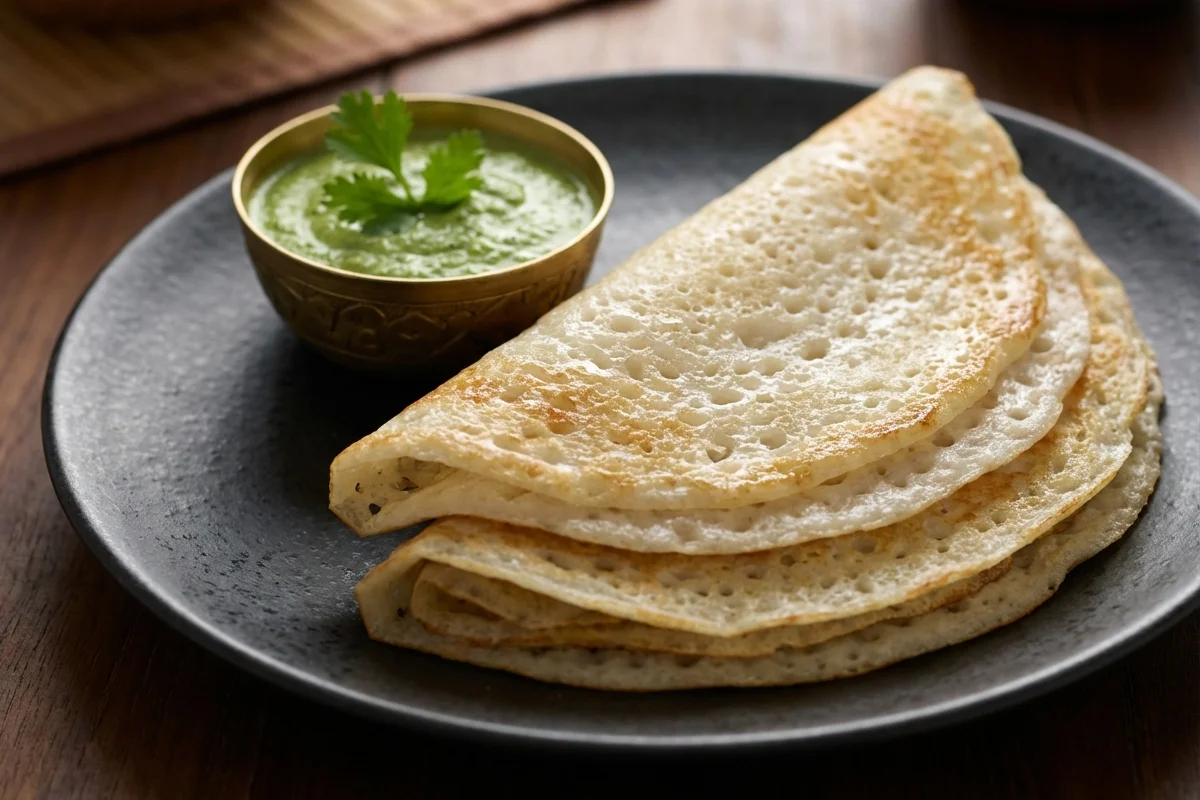
Thin, lacy rice crepes from the Konkan coast, made with a simple pourable batter and cooked until soft with delicate crisp edges. Ghavan is light, comforting, and lovely with chutney, vegetable curry, or a little jaggery.
For 8 servings
- prep · ~240 min
Soak the rice.
Wash the rice well until the water runs fairly clear. Soak it in fresh water for 4 hours, then drain completely.
- mix · ~7 min
Grind the batter.
1.Add the drained rice and grated coconut to a blender jar.2.Pour in a little water and grind to a very smooth batter.3.Transfer the batter to a bowl.4.Add salt and 2.5 cups water, then mix well to make a thin, pourable batter.TIPThe batter should be thinner than dosa batter so it spreads easily when the pan is tilted. - rest · ~10 min
Rest the batter.
Let the batter stand for 10 minutes so the rice settles and hydrates evenly. Stir again before making each ghavan.
- fry · ~2 min
Cook the ghavan.
1.Heat a small nonstick or cast-iron pan over medium heat and lightly grease it with a few drops of oil.2.Stir the batter well and pour a ladleful into the center of the pan.3.Quickly lift and tilt the pan so the batter runs into a thin round layer.4.Cover and cook until the surface looks set and the edges turn lacy, 1 to 2 minutes.TIPDo not spread the batter with the ladle. Tilting the pan gives ghavan its light texture and tiny holes. - assemble · ~18 min
Lift and stack the ghavan.
There is no need to flip. Loosen the edges, lift the ghavan gently, and stack it on a plate. Repeat with the remaining batter, greasing the pan lightly as needed.
- serve
Serve the ghavan warm.
What to keep in mind.
7 tips from the recipe — small details that make a real difference to the final dish.
- 1Keep the batter quite thin; if it coats the pan heavily instead of flowing, add a splash of water.
- 2Stir the batter before every ghavan, because the ground rice settles quickly at the bottom.
- 3Use medium heat, not high, so the crepe sets gently and stays soft while the edges turn lacy.
- 4Grease the pan very lightly; too much oil prevents the batter from gripping the surface and forming holes.
- 5Covering the pan is important here, since ghavan cooks from trapped steam and usually does not need flipping.
- 6If using cast iron, heat it well first and wipe with a thin film of oil to avoid sticking.
- 7Stack cooked ghavan and keep them covered with a cloth or plate so they remain soft and pliable.
Adapt it for your goals.
No-coconut
Skip the fresh coconut for a plainer, lighter ghavan that pairs especially well with spicy chutney or curry.
jaggery sweetJaggery-sweet
Add a little jaggery to the batter or serve with jaggery and coconut for a mildly sweet breakfast-style version.
fermentedFermented
Rest the ground batter longer in a warm place for a lightly tangy flavor and slightly softer texture.
neer dosa styleNeer-dosa-style
Thin the batter a bit more for an even lighter, more delicate crepe if you prefer very soft folds over lacy body.
Why this is on our healthy list.
Light and Easy to Digest
Made mainly from soaked rice and water, ghavan is a simple, light dish that many people find gentle and comforting.
Naturally Gluten Free
Since the batter is based on rice rather than wheat, this dish suits gluten-free eating when prepared with compatible sides.
Contains Healthy Fats from Coconut
Fresh coconut adds richness and flavor along with plant fats that make the crepes more satisfying.
Frequently asked questions
The batter is usually too thick, the pan is not hot enough, or there is too much oil on the surface. Thin the batter slightly, wipe off excess oil, and pour onto a properly heated pan.



.webp)