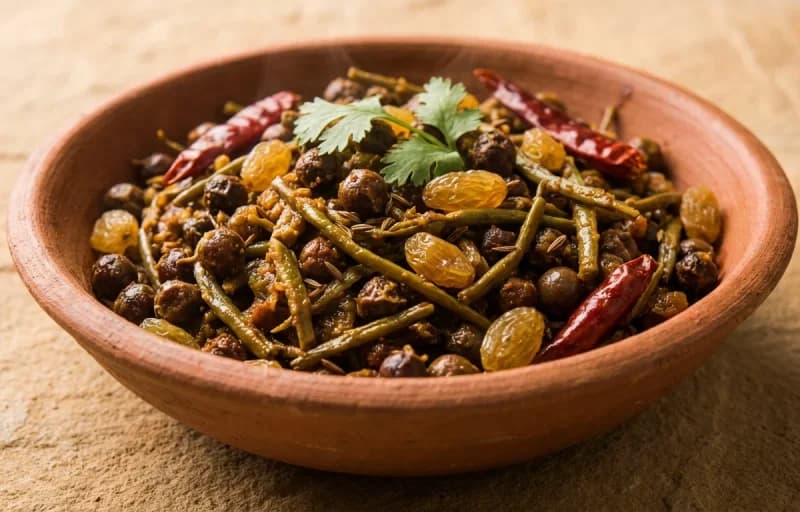
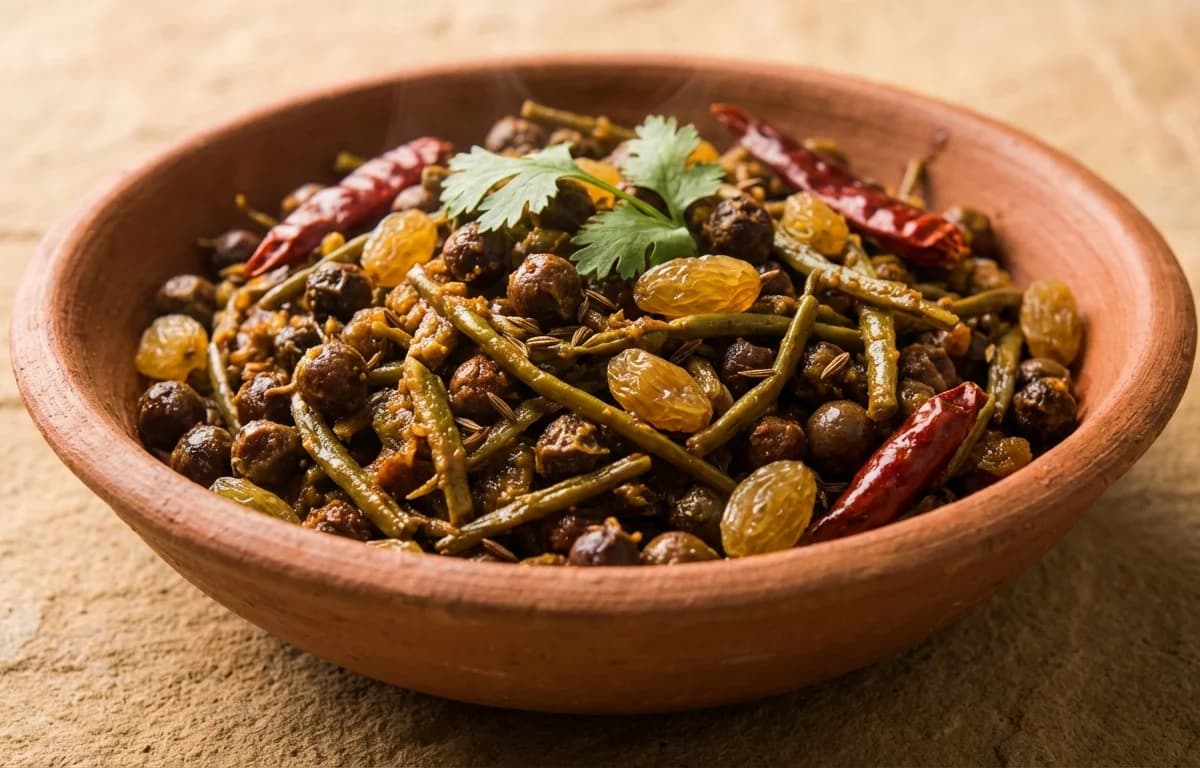
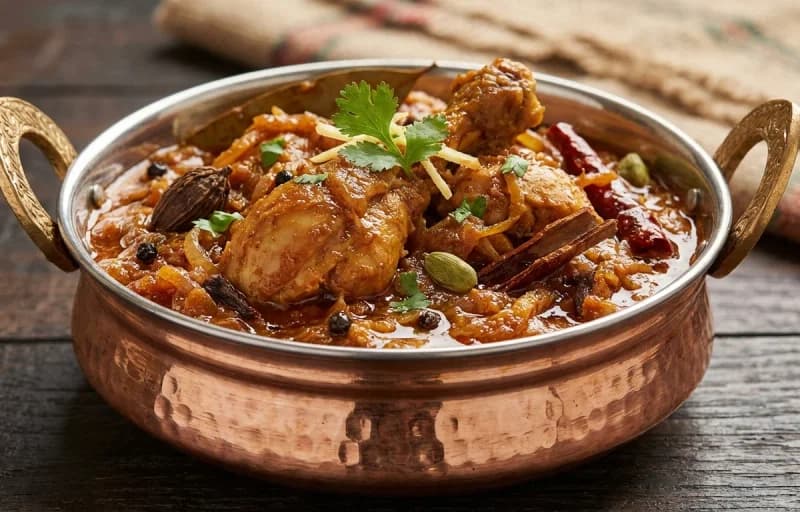
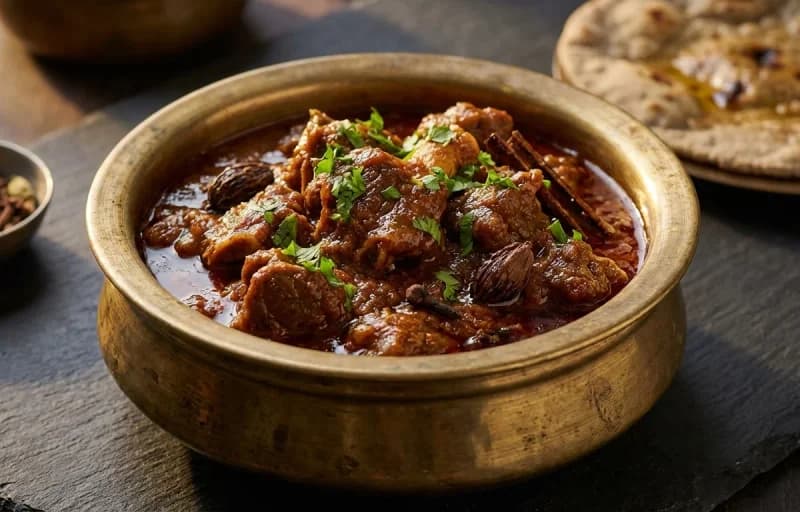
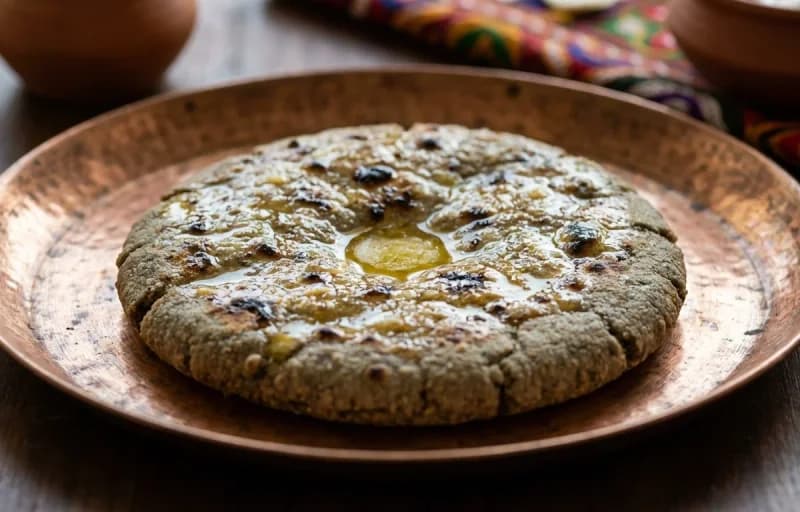
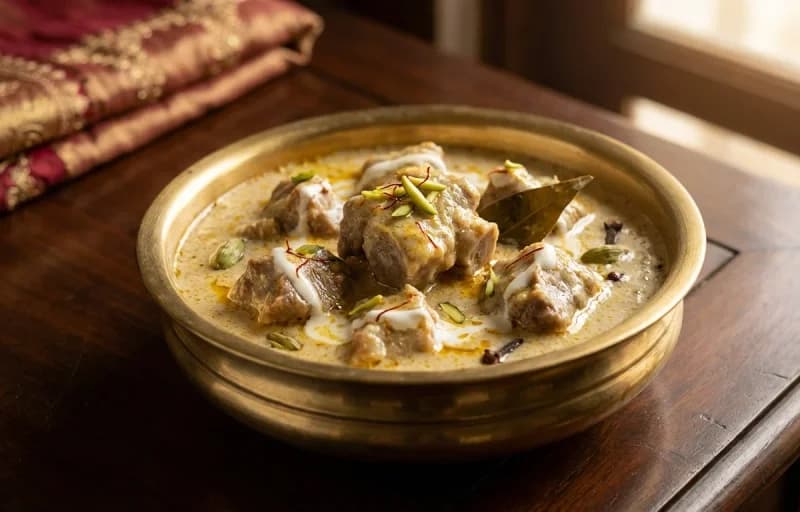
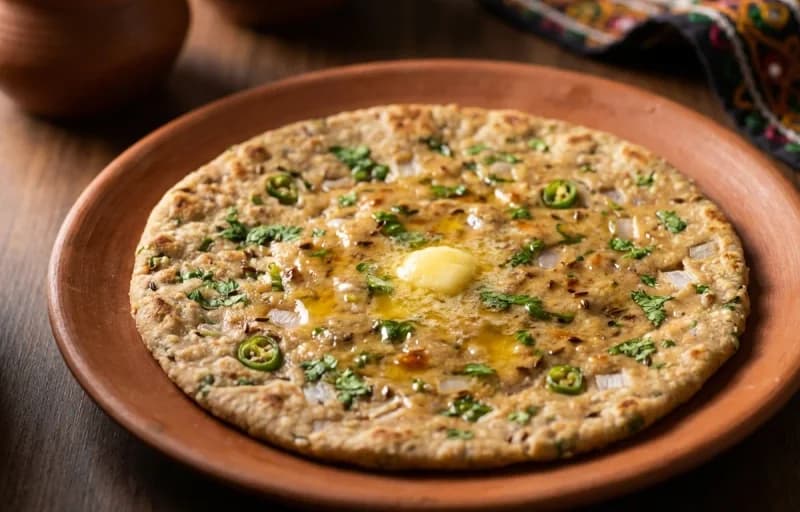
A quintessential Rajasthani delicacy made from dried desert beans and berries. This tangy and spicy curry is a burst of unique flavors, traditionally enjoyed with bajra roti.
Prep15 min
Cook30 min
Soak480 min
Servings4
Serving size: 1 serving
214cal
7gprotein
21gcarbs
Ingredients
0.5 cup Sangri (dried)
0.25 cup Ker (dried)
0.5 cup Curd (whisked until smooth)
3 tbsp Mustard Oil
1 tsp Cumin Seeds
0.25 tsp Asafoetida (use gluten-free variety if needed)
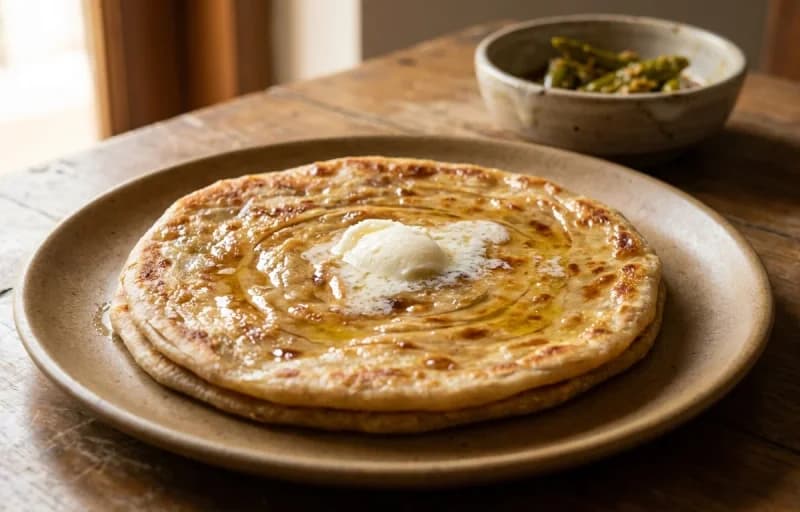
A quick and flavorful Indian-style scrambled egg dish, spiced with onions, tomatoes, and aromatic spices. Perfect for a hearty breakfast or a light meal, ready in under 30 minutes and best served with pav or roti.
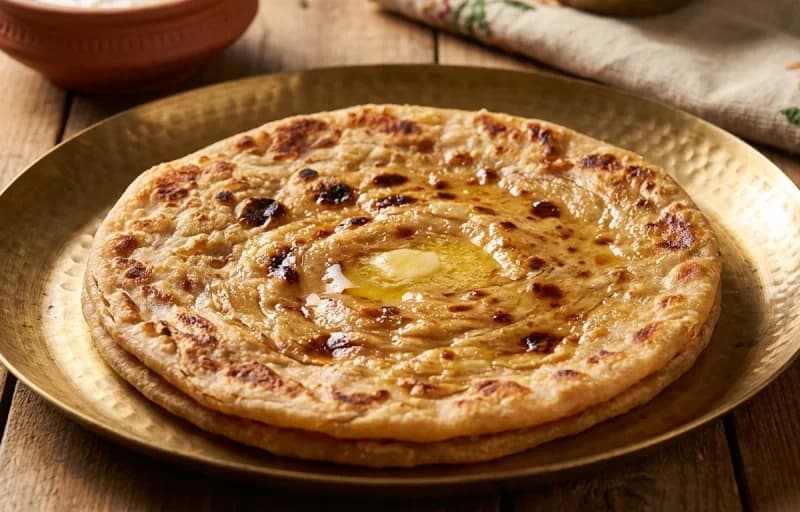
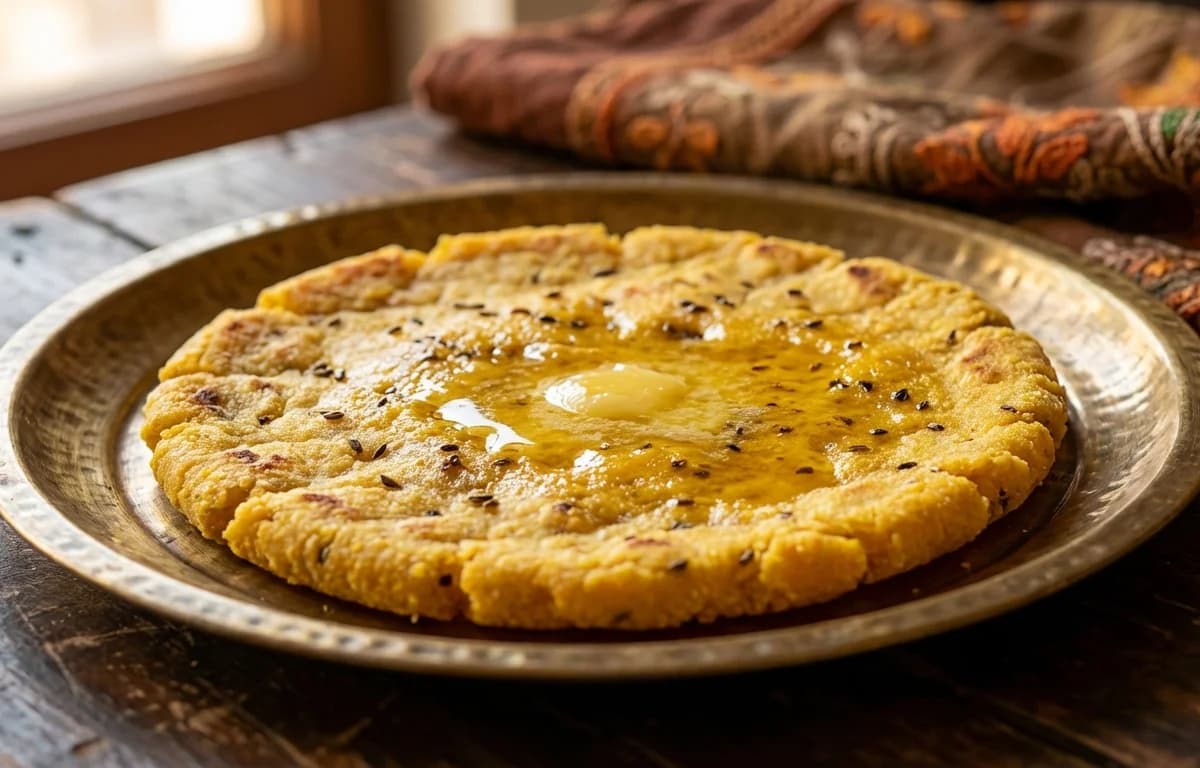
A rustic, gluten-free flatbread from Punjab made with maize flour. Its slightly sweet, earthy flavor and crumbly texture pair perfectly with Sarson ka Saag and a dollop of white butter.
About Ker Sangri Sabzi, Anda Bhurji and Makki ki Roti
Fiber-rich Ker Sangri and protein-packed Anda Bhurji with hearty Makki ki Roti. A perfectly spiced, homestyle treat!
This rajasthani dish is perfect for lunch. With 918.99 calories and 30.740000000000002g of protein per serving, it's a nutritious choice for your meal plan.
12gfat
1.5 tsp
Coriander Powder
1 tsp Amchur Powder (dried mango powder)
1 tbsp Raisins (optional, for a hint of sweetness)
1 tsp Salt (divided, adjust to taste)
4 cup Water (for soaking)
Instructions
1
Soak and Prepare Ker Sangri
Rinse the dried ker and sangri separately under running water 3-4 times to remove any dirt.
Place them in two separate large bowls and cover with plenty of water (about 2 cups each).
Let them soak overnight, or for at least 8 hours. They will soften and swell to about triple their size.
After soaking, drain the water completely and rinse them one more time.
2
Pressure Cook
Transfer the soaked and drained ker and sangri to a pressure cooker.
Add 2 cups of fresh water and 1/2 teaspoon of salt.
Secure the lid and pressure cook on medium heat for 3-4 whistles, which should take about 15 minutes.
The ker and sangri should be tender but still hold their shape with a slight bite. Do not overcook.
Allow the pressure to release naturally. Once safe, open the cooker, drain any excess water, and set the cooked ker sangri aside.
3
Prepare the Yogurt Masala
In a small bowl, add the whisked curd.
To the curd, add the turmeric powder, red chili powder, and coriander powder.
Whisk everything together until you have a smooth, lump-free paste. This step is crucial to prevent the curd from splitting in the hot pan.
4
Sauté and Finish the Sabzi
Heat mustard oil in a heavy-bottomed pan or kadai over medium-high heat until it just begins to smoke. This removes its pungent raw smell.
Reduce the heat to medium-low. Add the cumin seeds, asafoetida, and broken dried red chilies. Sauté for 30-40 seconds until the seeds crackle and become fragrant.
Turn the heat to the lowest setting. Slowly pour in the yogurt-spice mixture, stirring continuously.
Cook this masala for 5-7 minutes, stirring constantly, until it thickens and you see oil separating from the sides.
Add the cooked ker sangri, raisins (if using), and the remaining 1/2 teaspoon of salt. Gently mix to coat everything evenly with the masala.
Pour in 1/4 cup of water, stir, and cover the pan. Let it simmer on low heat for 5-6 minutes for the flavors to meld together.
Uncover, add the amchur powder, and give it a final mix. Cook for one more minute.
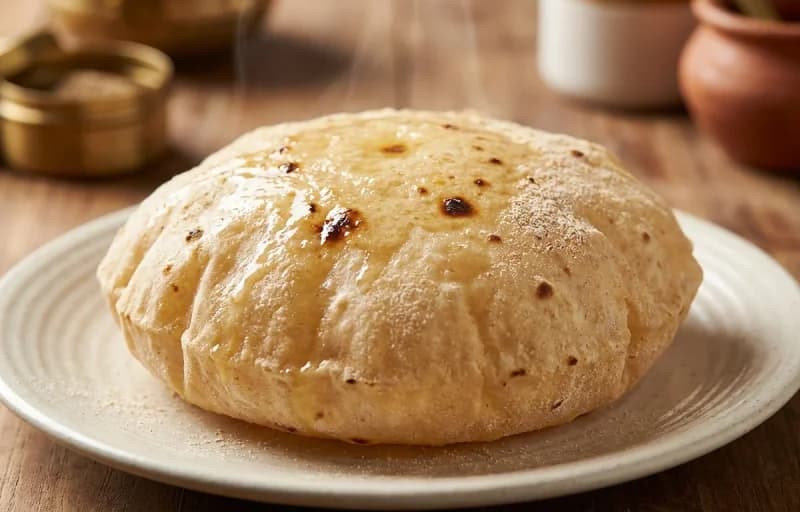
Turn off the heat. Serve hot with bajra roti or phulka.
257cal
15gprotein
13gcarbs
17gfat
Ingredients
8 pcs Eggs (Use large, room temperature eggs for the best texture.)
2 tbsp Ghee (Can be substituted with a neutral oil like sunflower oil.)
1 tsp Cumin Seeds
2 medium Red Onion (Finely chopped.)
2 medium Roma Tomatoes (Finely chopped.)
1 inch Ginger (Peeled and finely grated.)
4 cloves Garlic (Finely minced.)
2 pcs Green Chilies (Finely chopped. Adjust quantity to your spice preference.)
0.5 tsp Turmeric Powder
0.75 tsp Red Chili Powder (Kashmiri chili powder is recommended for color and mild heat.)
1 tsp Salt (Adjust to taste.)
0.5 tsp Garam Masala (Add at the end for the best aroma.)
2 tbsp Cilantro (Freshly chopped, for garnish.)
Instructions
1
In a medium bowl, crack the eggs. Add salt and whisk vigorously for about 1 minute until the yolks and whites are fully combined and slightly frothy. Set aside.
2
Heat ghee in a non-stick pan or skillet over medium heat. Once the ghee is hot and shimmering, add the cumin seeds and let them sizzle for about 30 seconds until fragrant.
3
Add the finely chopped onions and sauté for 4-5 minutes until they become soft and translucent. Then, add the grated ginger, minced garlic, and green chilies. Sauté for another minute until the raw aroma disappears.
4
Stir in the finely chopped tomatoes. Cook for 5-6 minutes, stirring occasionally, until the tomatoes break down, become soft and pulpy, and the mixture starts to thicken.
5
Add the turmeric powder and red chili powder. Mix well and cook the masala for 2-3 minutes, until the oil begins to separate from the mixture at the edges of the pan. This indicates the masala is well-cooked.
6
Reduce the heat to low. Pour the whisked egg mixture into the pan. Let it sit undisturbed for 20-30 seconds to allow the bottom to set slightly.
7
Using a spatula, gently scrape the cooked egg from the bottom and sides of the pan, folding it towards the center. Continue this gentle scraping and folding motion for 2-3 minutes until the eggs are about 90% cooked but still soft and moist. Avoid over-stirring to maintain soft curds.
3 tbsp Ghee (1 tbsp for the dough and 2 tbsp for cooking)
Instructions
1
Prepare the Dough
In a large mixing bowl (parat), combine the maize flour, carom seeds, and salt. Mix well.
Add 1 tablespoon of ghee to the flour and rub it in with your fingertips until it resembles coarse breadcrumbs.
Gradually add warm water, a little at a time, and start gathering the flour to form a dough.
Knead the dough for 5-7 minutes using the heel of your palm, pushing and folding. The dough should be smooth, soft, and pliable with no cracks. Do not make the dough too soft or too stiff.
2
Divide and Shape
Divide the dough into 8 equal-sized portions.
Roll each portion between your palms to form a smooth, crack-free ball. Keep the dough balls covered with a damp cloth to prevent them from drying out.
3
Roll the Roti
Take one dough ball. If the dough feels dry, knead it again for 30 seconds with a few drops of water.
Place the ball on a rolling board or between two sheets of parchment paper/plastic.
Gently flatten it with your fingers and then use a rolling pin to roll it into a 5-6 inch circle, about 1/4 inch thick. Alternatively, use the traditional method of patting the dough between your moist palms to flatten it into a circle.
Don't worry about perfect edges; the rustic, slightly cracked edges are characteristic of this roti.
4
Cook the Roti
Heat a tawa (griddle) over medium-high heat. The tawa should be hot before you place the roti on it.
Carefully lift the rolled roti and place it on the hot tawa.
Cook for about 1-1.5 minutes, or until the top surface changes color slightly and small bubbles appear.
Flip the roti using a spatula. Apply about 1/4 teaspoon of ghee on the semi-cooked side.
Cook the second side for another 1-1.5 minutes until golden-brown spots appear.
Flip again and apply ghee to the other side. Gently press the roti with the spatula to ensure it cooks evenly from the inside.
For a puffed roti, you can carefully place it on a wire rack over a direct flame for a few seconds until it puffs up. This is optional.
5
Serve
Remove the roti from the tawa and place it in a casserole or on a plate.
Repeat the rolling and cooking process for the remaining dough balls.
Serve the Makki ki Roti immediately, topped with a generous dollop of white butter (makhan) or more ghee, alongside Sarson ka Saag and jaggery.
Turn off the heat. The residual heat will finish cooking the eggs. Sprinkle the garam masala and chopped fresh cilantro over the eggs. Give it a final gentle stir to combine. Serve immediately.