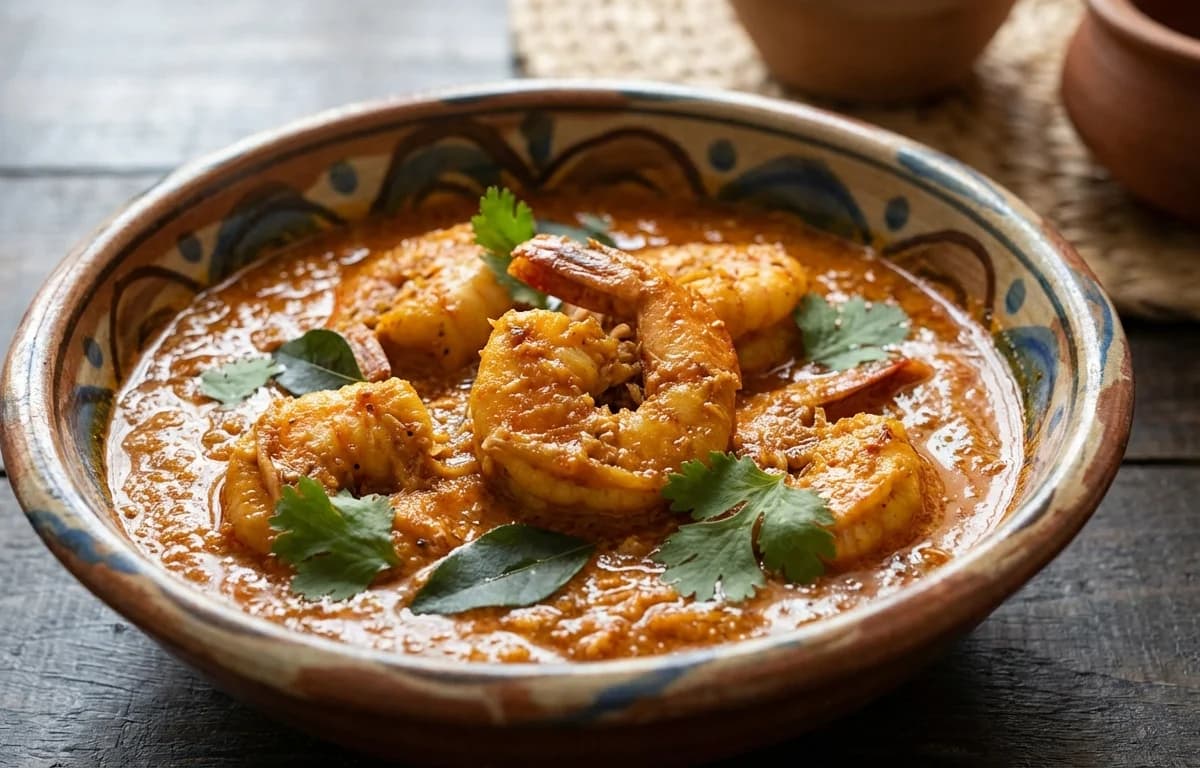
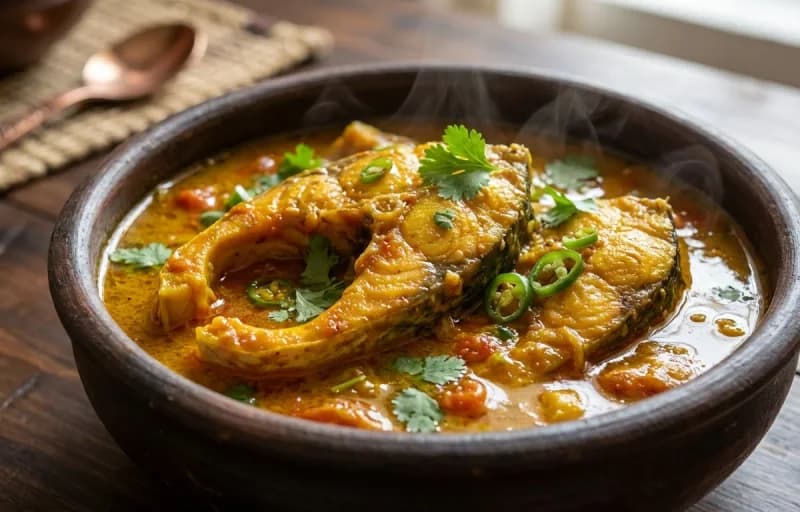
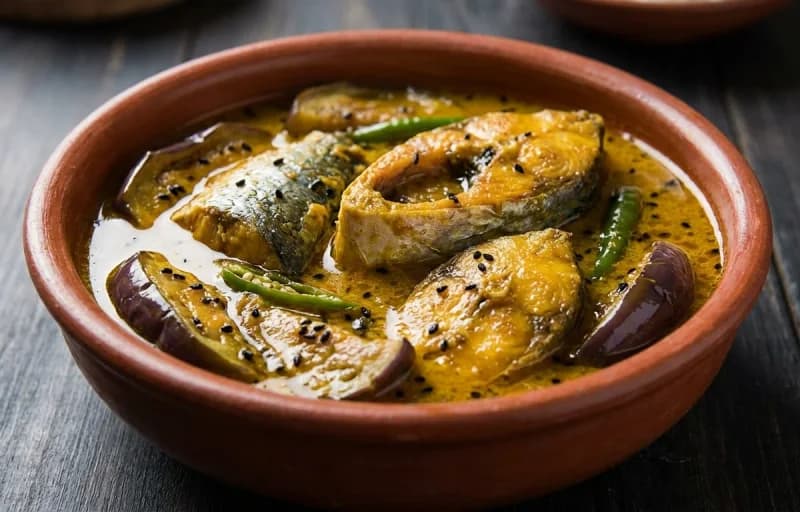
A vibrant and tangy prawn curry from the coastal region of Mangalore. This dish features a rich, aromatic coconut-based gravy spiced with roasted red chilies and tamarind, a perfect pairing with steamed rice or neer dosa.
Prep20 min
Cook25 min
Soak15 min
Servings4
Serving size: 1 serving
370cal
28gprotein
18gcarbs
Ingredients
500 g Prawns (Cleaned and deveined)
3 tbsp Coconut Oil (Divided)
2 tbsp Coriander Seeds
1 tsp Cumin Seeds
0.25 tsp Fenugreek Seeds
1 tsp Black Peppercorns
7 pcs Dried Byadgi Chilies (Soak in hot water for 15 minutes before grinding)
1 small Onion (Roughly chopped, for the masala paste)
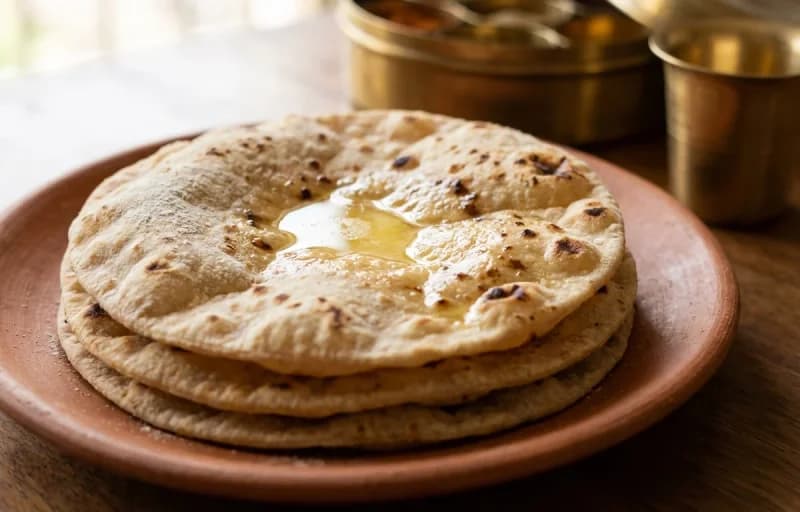
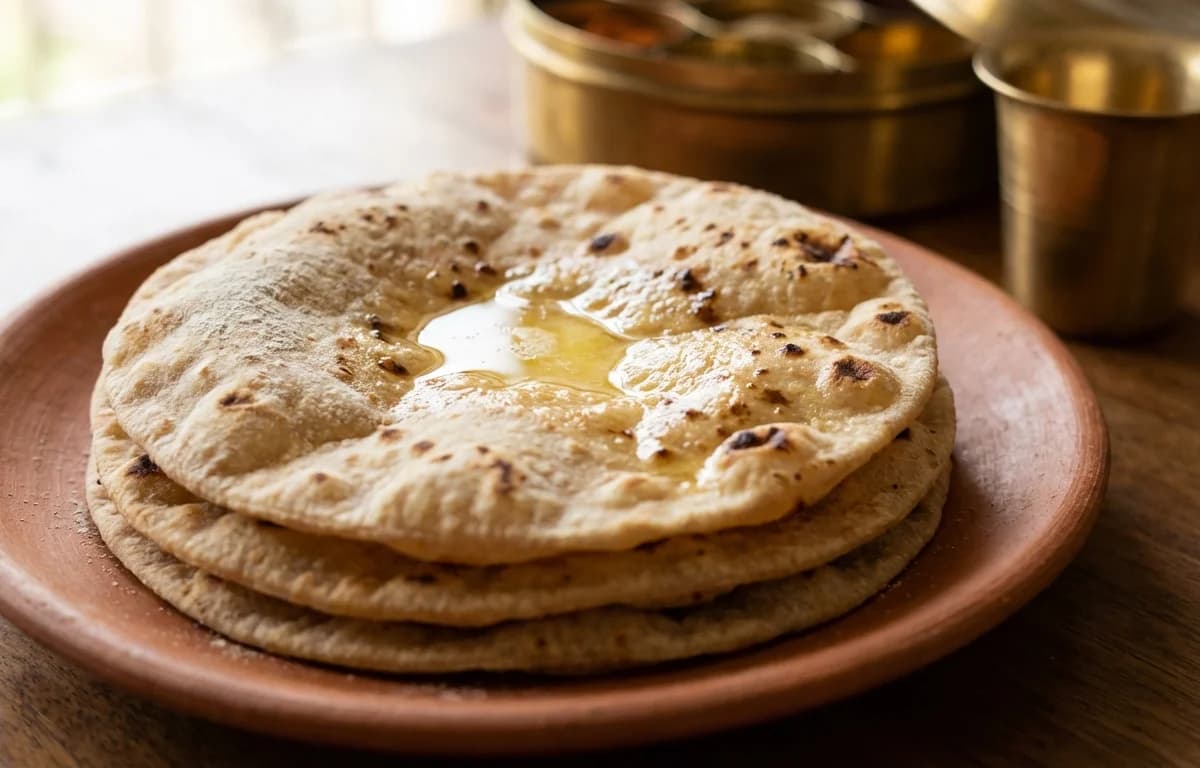
Soft, unleavened whole wheat flatbread, a daily staple in Indian households. Perfect for scooping up curries and dals, this simple, wholesome bread is puffed up on an open flame for that classic, airy texture.
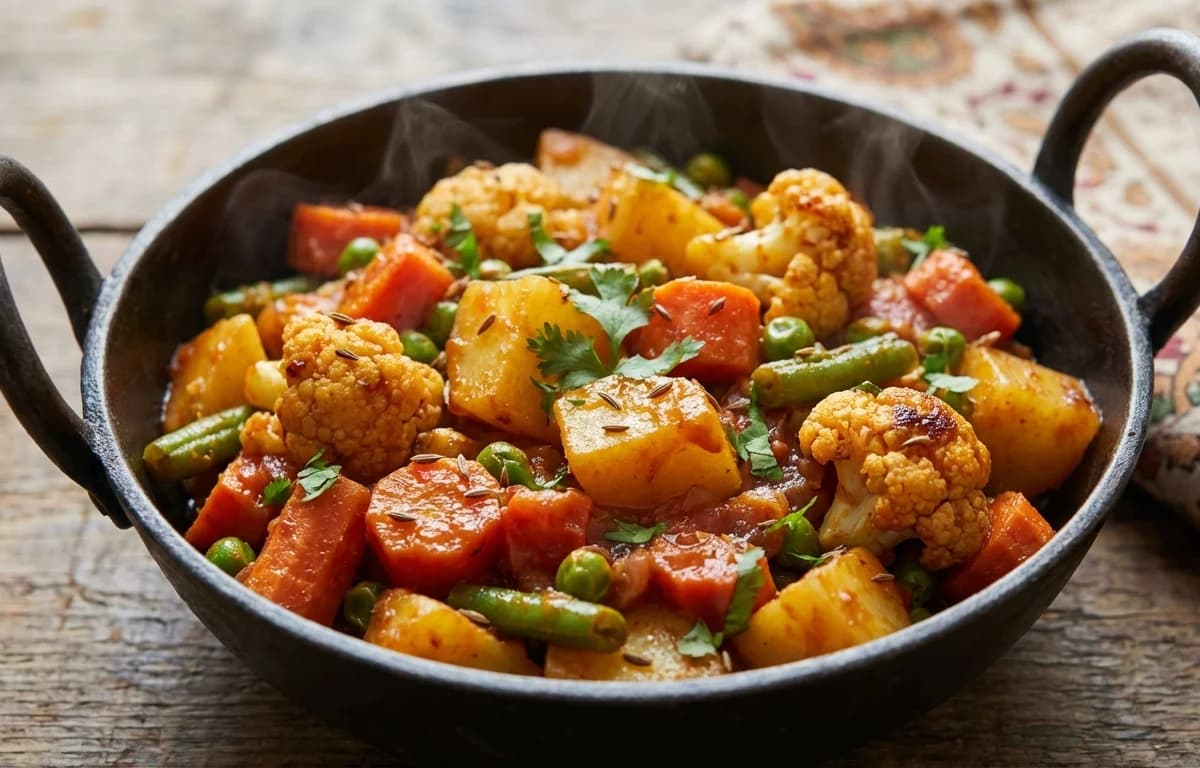
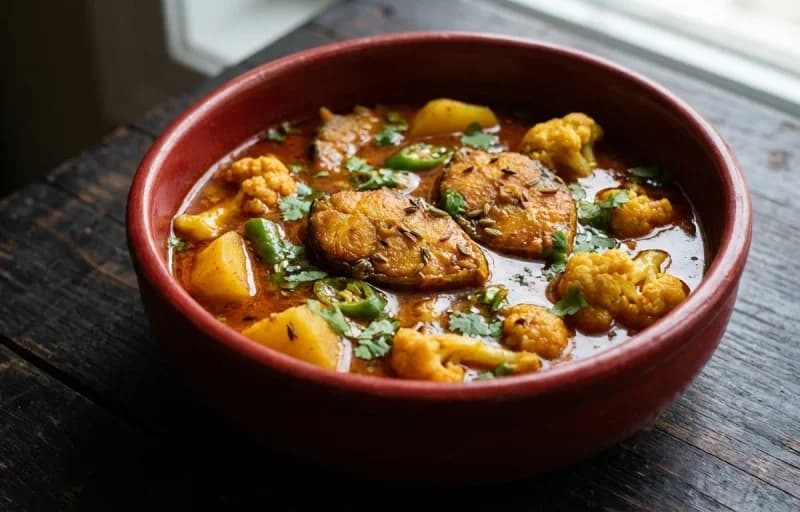
A vibrant and wholesome medley of fresh vegetables cooked with aromatic Indian spices. This classic North Indian dry curry is a perfect, healthy side for rotis or dal and comes together in under 40 minutes.
About Mangalorean Prawn Curry, Roti and Mixed Vegetable Sabji
Aromatic, perfectly spiced Koni Anja with soft rotis and fiber-rich veggie sabji. Wholesome and tasty!
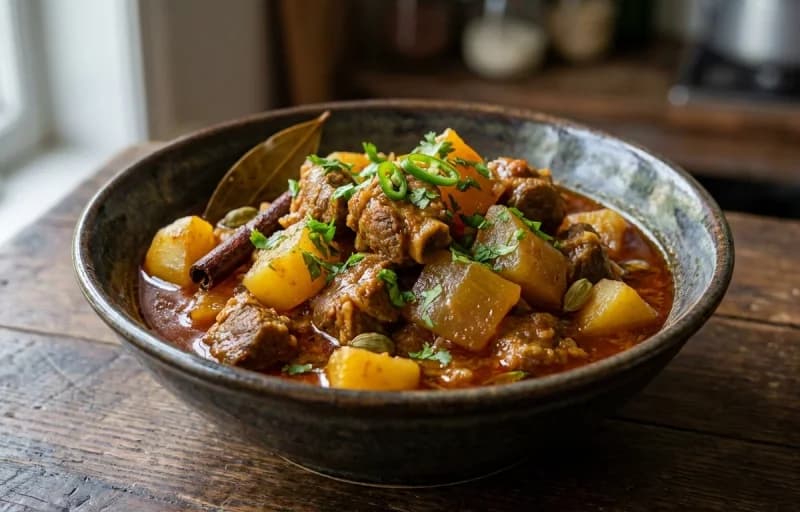
This assamese dish is perfect for lunch. With 745.41 calories and 40.019999999999996g of protein per serving, it's a nutritious choice for your meal plan.
22gfat
1 inch
Ginger
(Peeled and roughly chopped)
0.5 tsp Turmeric Powder
1.5 cup Grated Coconut (Fresh or thawed frozen)
2 tbsp Tamarind Pulp (Extracted from a small lime-sized ball of tamarind)
1 sprig Curry Leaves
1.5 cup Water (Divided - 0.5 cup for grinding and 1 cup for gravy)
1.5 tsp Salt (Or to taste)
2 tbsp Coriander Leaves (Freshly chopped, for garnish)
Instructions
1
Prepare Masala Ingredients
Soak the dried Byadgi chilies in hot water for 15-20 minutes to soften them. This helps in achieving a smooth paste.
While the chilies soak, prepare the tamarind pulp if using whole tamarind.
2
Roast Spices
Heat 1 tbsp of coconut oil in a small pan over low-medium heat.
Add coriander seeds, cumin seeds, fenugreek seeds, and black peppercorns. Roast for 1-2 minutes until they become fragrant, stirring continuously.
Add the roughly chopped small onion, garlic cloves, and ginger. Sauté for 3-4 minutes until the onion softens. Turn off the heat and let the mixture cool completely.
3
Grind the Masala Paste
In a high-speed blender, combine the cooled roasted spice mixture, soaked and drained red chilies, grated coconut, turmeric powder, and tamarind pulp.
Add 1/2 cup of water and grind to a very smooth, fine paste. Scrape down the sides as needed. The paste should be completely smooth for the best gravy texture.
4
Cook the Curry Base
Heat the remaining 2 tbsp of coconut oil in a heavy-bottomed pot or kadai over medium heat.
Add the finely chopped medium onion and sauté for 6-8 minutes until it turns soft and golden brown.
Add the curry leaves and sauté for another 30 seconds until they sizzle and release their aroma.
5
Simmer the Gravy
Add the ground masala paste to the pot. Stir well and cook for 5-7 minutes, stirring occasionally, until the raw smell disappears and oil begins to separate from the sides of the paste.
Pour the remaining 1 cup of water into the blender jar, swirl it around to collect any leftover paste, and add this water to the pot. Add salt and mix well.
Bring the curry to a gentle boil, then reduce the heat and let it simmer for 5 minutes for the flavors to meld.
6
Cook the Prawns
Gently add the cleaned and deveined prawns to the simmering gravy.
Cook for just 3-5 minutes, or until the prawns turn pink and curl up. Do not overcook, as they will become tough and rubbery.
Turn off the heat as soon as the prawns are cooked.
7
Garnish and Serve
Garnish with freshly chopped coriander leaves.
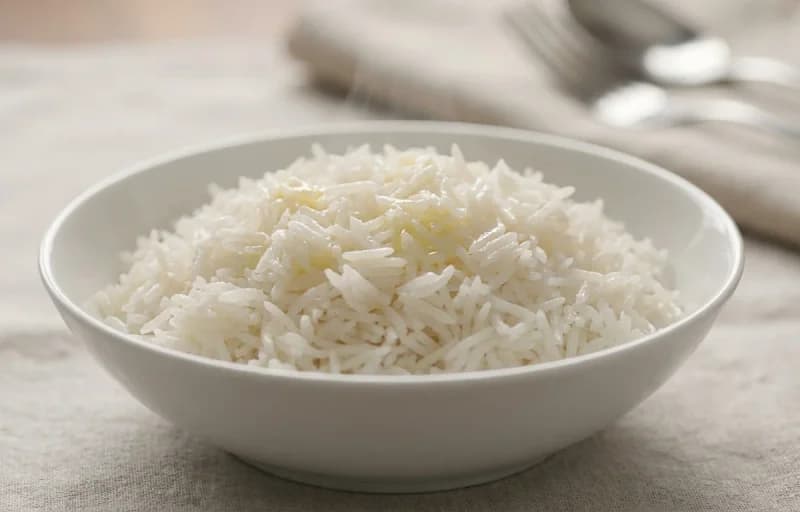
Serve hot with steamed rice, neer dosa, or sannas (steamed rice cakes).
213cal
8gprotein
44gcarbs
2gfat
Ingredients
2 cup atta (Use a fine-milled whole wheat flour for best results.)
1 cup lukewarm water (Adjust quantity as needed; dough should be soft and pliable.)
1 tsp ghee (For the dough, plus extra for brushing (optional).)
Instructions
1
Prepare the dough
In a large mixing bowl, combine the atta and 1 tsp of ghee.
Gradually add lukewarm water, a little at a time, mixing with your fingers to form a shaggy dough.
Knead the dough on a clean surface for 8-10 minutes, using the heel of your palm to push and fold until it is smooth, soft, and pliable, but not sticky.
Cover the dough with a damp cloth or a lid and let it rest for at least 20-30 minutes. This step is crucial for relaxing the gluten and ensuring soft rotis.
2
Divide and roll the rotis
After resting, knead the dough for another minute.
Divide the dough into 8 equal-sized portions and roll each into a smooth, crack-free ball.
Take one dough ball, flatten it, and dip it in dry atta for dusting.
On a rolling board, use a rolling pin to roll it into an even circle about 6-7 inches in diameter. Ensure the edges are as thin as the center for proper puffing.
3
Cook the roti
Heat a flat griddle (tawa) over medium-high heat. It's ready when a pinch of flour sprinkled on it sizzles and turns brown in seconds.
Place the rolled roti on the hot tawa. Cook for about 20-30 seconds, until you see small bubbles appear on the surface.
Using tongs, flip the roti. Cook the second side for about 45-60 seconds, until light brown spots appear.
4
Puff the roti
Using tongs, carefully remove the roti from the tawa and place it directly over a medium-high open flame. It should puff up into a ball almost instantly. Flip it once and remove immediately to avoid burning.
Alternatively, if you don't have a gas stove, flip the roti back onto the tawa and gently press the edges with a folded kitchen towel. This traps steam and helps the roti puff up.
Once puffed, immediately remove the roti from the heat.
5
Finish and serve
Brush one side with ghee, if desired, for extra flavor and softness.
Place the finished roti in a casserole dish or a container lined with a clean kitchen towel to keep them soft and warm.
Repeat the process for all remaining dough balls. Serve hot with your favorite dal, curry, or sabzi.
2 tbsp Coriander Leaves (freshly chopped, for garnish)
Instructions
1
Sauté Aromatics
Heat oil in a heavy-bottomed pan or kadai over medium heat. Once hot, add the cumin seeds and let them splutter for 30 seconds.
Add the asafoetida, followed by the finely chopped onion. Sauté for 4-5 minutes until the onions turn soft and light golden.
Add the ginger paste, garlic paste, and slit green chilies. Sauté for another minute until the raw aroma disappears.
2
Build the Masala Base
Add the chopped tomatoes and cook for 5-6 minutes, stirring occasionally, until they become soft and mushy.
Add the turmeric powder, Kashmiri red chili powder, coriander powder, and salt. Mix well and cook for 2-3 minutes, until the spices are fragrant and you see oil separating from the masala.
3
Cook the Vegetables
Add the cubed potatoes, carrots, cauliflower florets, and green beans to the pan. Stir gently for 2-3 minutes to coat the vegetables evenly with the masala.
Add 1/4 cup of water, reduce the heat to low, cover the pan with a tight-fitting lid, and let the vegetables cook for 10-12 minutes. This process, known as 'dum cooking', steams the vegetables in their own juices.