Mangalorean Prawn Curry
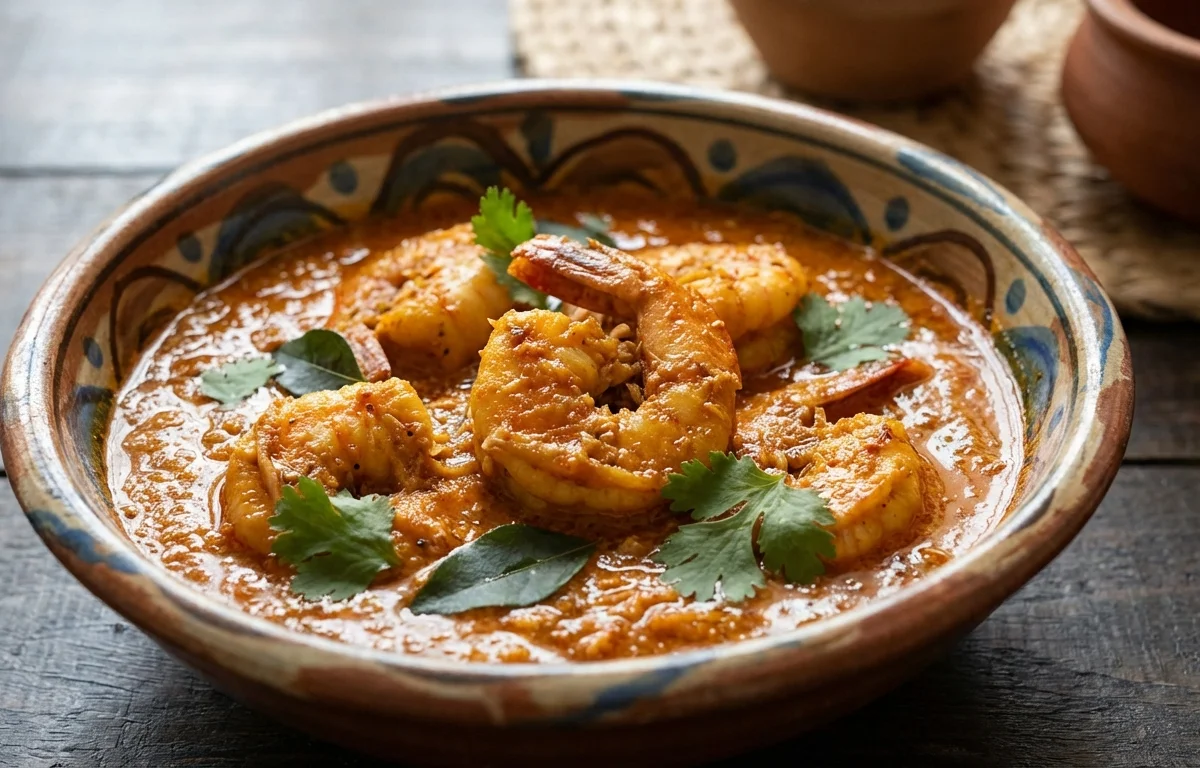
A coastal Karnataka favorite with tender prawns simmered in a bright, coconut-based gravy. Roasted spices, tamarind, and red chilies give it a deep, balanced flavor that tastes especially good with plain rice.
For 4 servings
- prep · ~15 min
Marinate the prawns.
Mix the cleaned prawns with 1 pinch turmeric powder and a small pinch of the salt. Set aside for 15 minutes while you prepare the masala.
- roast · ~6 min
Roast the spices and coconut.
1.Heat a dry pan over medium heat.2.Roast dried red chili, coriander seeds, cumin seeds, and black peppercorns until fragrant, about 2 minutes.3.Add grated coconut, garlic, and ginger and roast until the coconut turns lightly golden, 3 to 4 minutes.4.Take everything off the heat and cool slightly. - mix · ~3 min
Grind the curry masala.
Transfer the roasted mixture to a blender with tamarind, the remaining pinch of turmeric powder, and 1 cup water. Grind to a smooth, thick paste.
- saute · ~8 min
Cook the onion base.
1.Heat coconut oil in a pan over medium heat.2.Add curry leaves and sliced onion and cook until soft and light golden, 4 to 5 minutes.3.Add chopped tomato and cook until softened, 3 minutes. - simmer · ~6 min
Simmer the masala gravy.
Add the ground masala to the pan and rinse the blender with the remaining 1 cup water. Pour it in, add the remaining salt, and bring the gravy to a gentle simmer for 5 to 6 minutes.
- simmer · ~5 min
Cook the prawns in the curry.
Add the marinated prawns and simmer just until they curl and turn opaque, 4 to 5 minutes. Do not overcook or they will turn rubbery.
TIPPrawns cook fast, so switch off the heat as soon as they are just done. - rest · ~5 min
Let the curry rest briefly.
Rest the curry for 5 minutes so the coconut masala settles and the flavors come together.
- serve
Serve hot.
Serve the Mangalorean prawn curry hot with plain rice.
What to keep in mind.
7 tips from the recipe — small details that make a real difference to the final dish.
- 1Roast the coconut only to light golden; dark browning can make the gravy taste bitter.
- 2Cool the roasted mixture a bit before grinding so the masala blends smoother and thicker.
- 3If using very sour tamarind, start with less and adjust after the gravy simmers.
- 4Add prawns only after the masala has cooked and lost its raw smell.
- 5Switch off the heat as soon as the prawns turn opaque and curl into a loose C shape.
- 6Let the curry rest 5 to 10 minutes before serving so the coconut masala settles and the flavor rounds out.
- 7This curry tastes even better with plain rice after a short rest, but avoid long reheating once prawns are cooked.
Adapt it for your goals.
Fish
Swap prawns for firm fish like seer fish or pomfret pieces; simmer gently so the fish holds its shape in the coconut gravy.
spicierSpicier
Use a hotter variety of dried red chili or add a few extra peppercorns if you want more heat without changing the curry's body.
thicker gravyThicker-gravy
Use slightly less water while grinding and simmering for a richer, thicker curry that coats rice more heavily.
shallot basedShallot-based
Replace the onion with sliced shallots for a sweeter, more traditional coastal flavor profile.
Why this is on our healthy list.
Protein-Rich Seafood
Prawns provide lean protein, making the curry filling while still feeling lighter than many meat-based curries.
Spice-Driven Digestive Support
Ginger, garlic, cumin, coriander, and black pepper bring flavor along with traditional digestive warmth in the gravy.
Naturally Dairy-Free
The creamy texture comes from coconut rather than dairy, which suits cooks looking for a dairy-free curry.
Frequently asked questions
Yes. Thaw them fully, pat them dry, and then marinate briefly so they do not water down the masala.