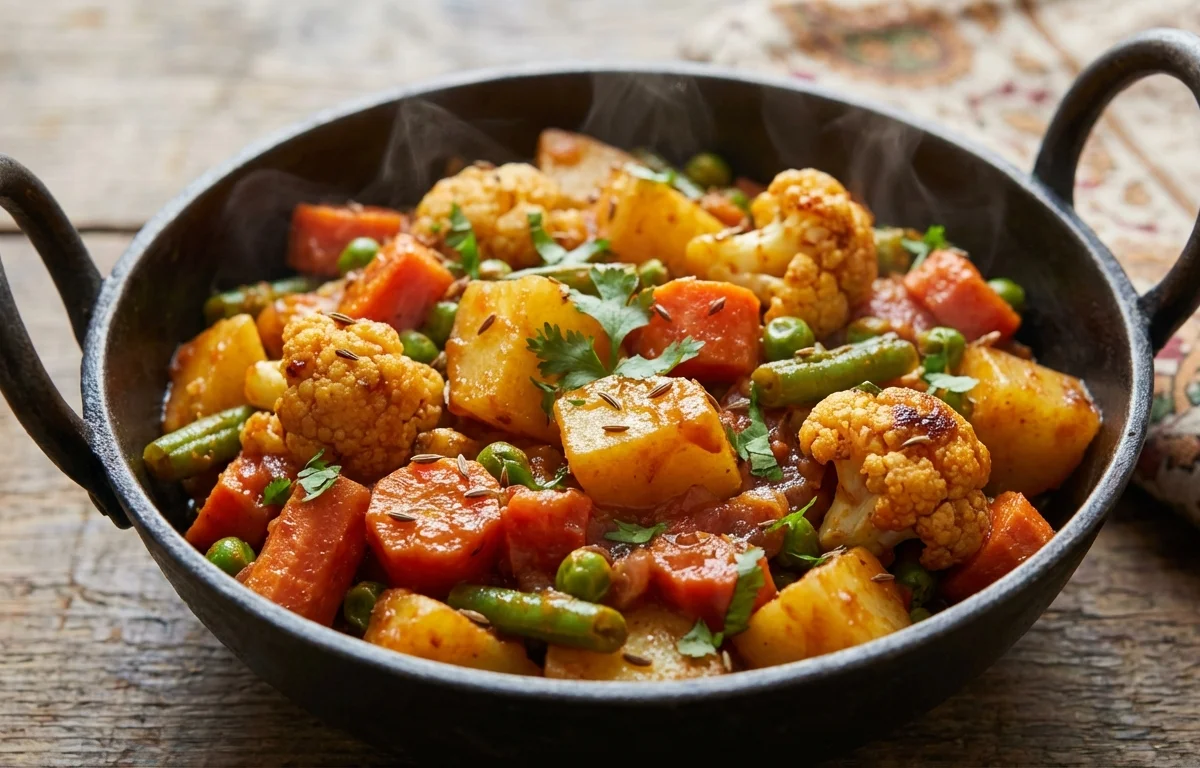
Mixed Vegetable Sabji
A simple homestyle sabji made with everyday vegetables, warm spices, and a light masala coating. It cooks into a colorful, comforting side that goes well with roti, dal, or plain rice.
For 4 servings
- prep · ~15 min
Prepare the vegetables.
1.Peel and cube the potato into small even pieces.2.Peel and dice the carrot.3.Cut the cauliflower into small florets and chop the beans.4.Finely chop the onion, tomato, ginger, garlic, and coriander leaves, then slit the green chili.TIPKeep the vegetables close in size so they cook evenly and the sabji finishes together. - temper · ~1 min
Make the tempering.
1.Heat oil in a kadai over medium heat.2.Add cumin seeds and let them crackle for 20 to 30 seconds.3.Add asafoetida and stir briefly. - saute · ~7 min
Cook the onion and aromatics.
1.Add onion and cook until soft and light golden, about 5 to 6 minutes.2.Add ginger, garlic, and green chili.3.Cook for 1 minute until the raw smell goes away.TIPUse medium heat here so the garlic does not burn and turn bitter. - saute · ~6 min
Cook the tomato and spices.
1.Add tomato and cook until soft and pulpy, about 4 to 5 minutes.2.Add turmeric powder, red chili powder, coriander powder, garam masala, and salt.3.Mix well and cook for 1 minute so the masala smells fragrant. - saute · ~2 min
Coat the vegetables in the masala.
1.Add potato, carrot, cauliflower, green peas, and beans.2.Mix well so the vegetables are coated with the masala.3.Cook for 2 minutes, stirring gently. - simmer · ~15 min
Cover and cook the sabji.
Pour in water, mix once, then cover and cook on low heat for 12 to 15 minutes. Stir once or twice during cooking until the vegetables are tender and the moisture is mostly gone.
TIPIf the pan looks dry before the vegetables are cooked, add 1 to 2 tablespoons more water, not a large splash. - garnish · ~1 min
Finish with dry mango powder and coriander leaves.
Sprinkle dry mango powder and coriander leaves over the cooked sabji. Mix gently and cook uncovered for 1 minute to bring everything together.
- serve
Serve hot.
Serve the mixed vegetable sabji hot with roti, paratha, or plain rice.
What to keep in mind.
7 tips from the recipe — small details that make a real difference to the final dish.
- 1Cut potato, carrot, beans, and cauliflower to a similar small size so all the vegetables turn tender together.
- 2Let the cumin fully crackle in the hot oil before adding onion; this gives the sabji a deeper base flavor.
- 3Cook the tomato masala until it looks pulpy and the raw smell disappears, or the sabji will taste flat.
- 4Stir gently after adding the vegetables so the cauliflower florets do not break and turn mushy.
- 5Keep the pan on low while covered; high heat can burn the masala before the potatoes cook through.
- 6Add amchur only at the end so its tang stays bright instead of dulling during the simmer.
- 7This sabji reheats well; warm it uncovered with a splash of water to loosen the masala coating.
Adapt it for your goals.
No-onion-no-garlic
Skip onion and garlic, increase ginger slightly, and rely on cumin, hing, tomato, and coriander powder for a lighter satvik-style sabji.
low oilLow-oil
Reduce the oil slightly and use a heavy pan with a tight lid; the vegetables will steam in the masala with less fat.
spicierSpicier
Add an extra green chili or a little more red chili powder for a sharper heat that pairs well with roti.
seasonal mixSeasonal-mix
Swap in capsicum, cabbage, or sweet corn based on what you have, while keeping potato for body and structure.
Why this is on our healthy list.
Vegetable-Rich Side Dish
This sabji combines potato, carrot, cauliflower, peas, and beans, giving the meal a wide mix of plant nutrients and texture.
Good Fiber From Whole Vegetables
The mix of peas, beans, cauliflower, carrot, and potato makes this a satisfying side that can help round out a balanced meal.
Includes Digestive Spices
Cumin, ginger, garlic, hing, and coriander are classic Indian aromatics that add flavor while making vegetable dishes feel lighter.
Frequently asked questions
Cut the vegetables evenly, avoid too much water, cook on low heat, and stop as soon as the potatoes are tender and the cauliflower still holds its shape.