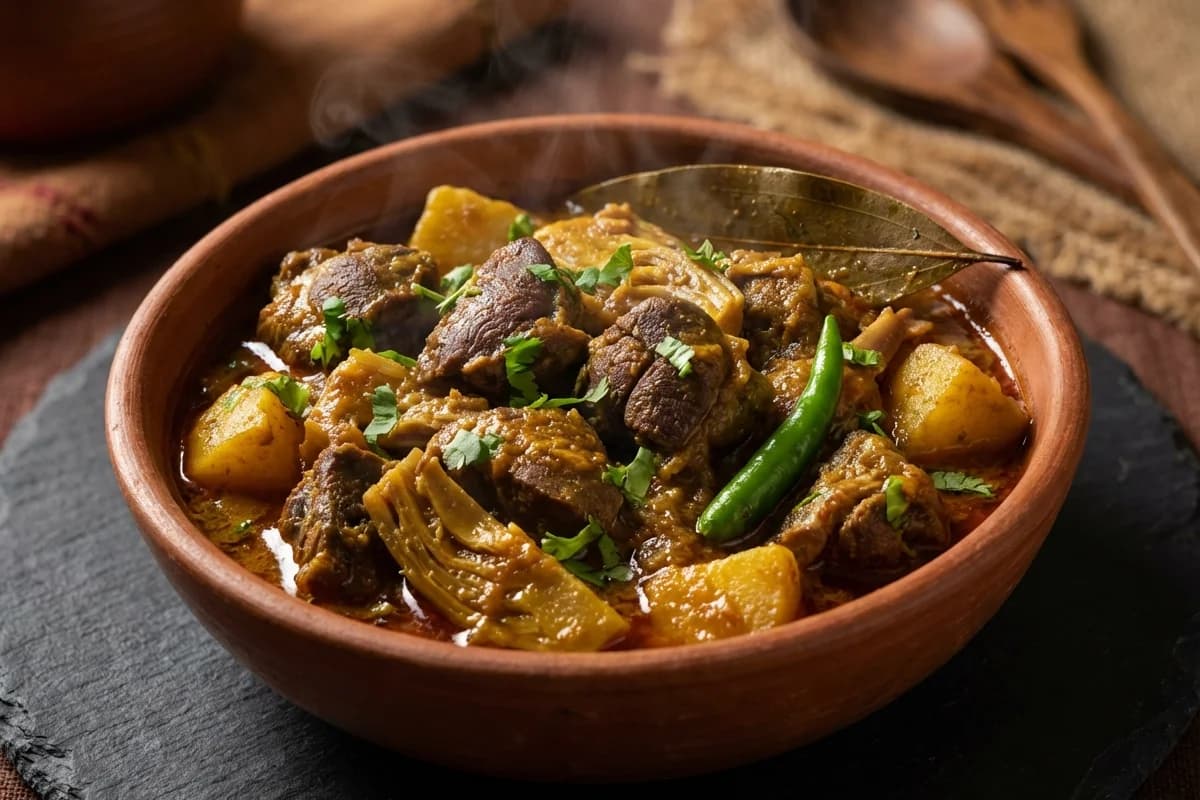
A rustic and flavorful Assamese delicacy, this dish features tender pigeon meat cooked with finely chopped banana flower. The unique combination creates a savory, aromatic curry that's a true taste of Northeast India.
Prep30 min
Cook50 min
Soak15 min
Servings4
Serving size: 1 serving
432cal
26gprotein
28gcarbs
Ingredients
500 g Pigeon Meat (Cleaned and cut into medium pieces)
1 pcs Banana Flower (Medium-sized, about 500g whole)
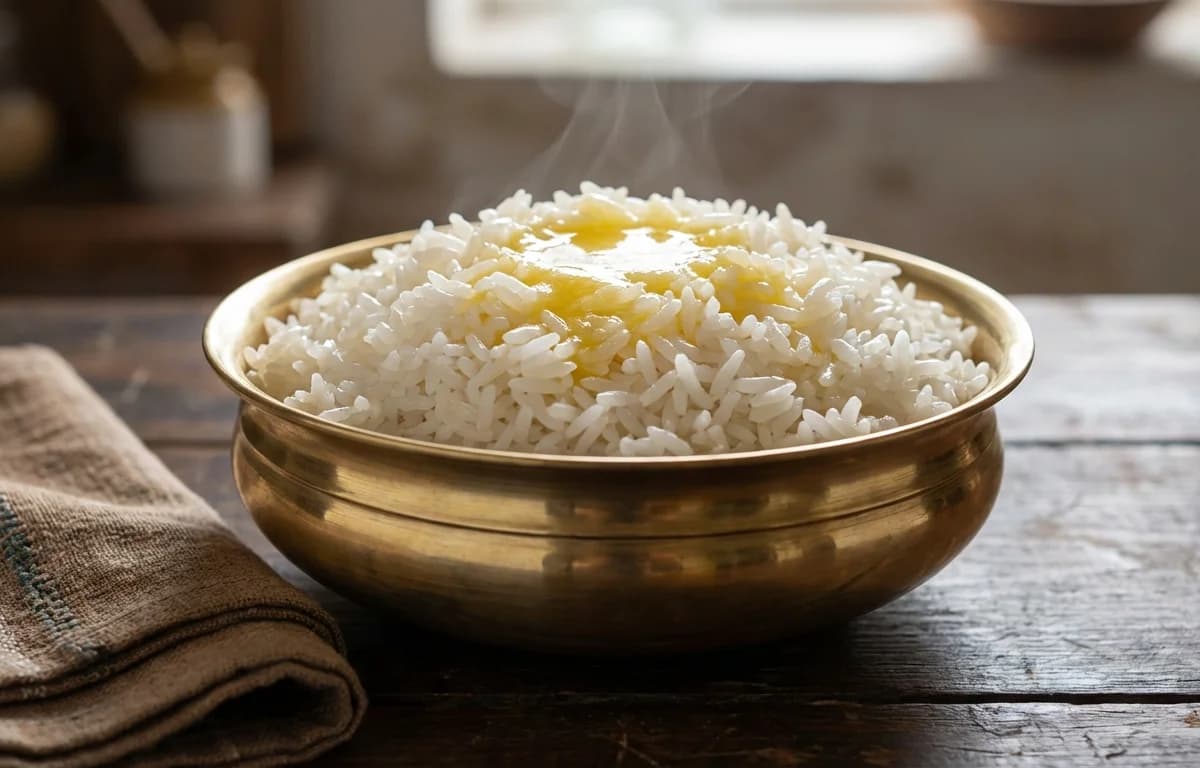
Discover the simple art of cooking Joha rice, a small-grained aromatic jewel from Assam. This naturally fragrant rice cooks up soft and fluffy, making it a perfect, delicate base for rich curries and simple dals. Its unique sweet aroma fills the kitchen as it cooks, promising a delightful meal.
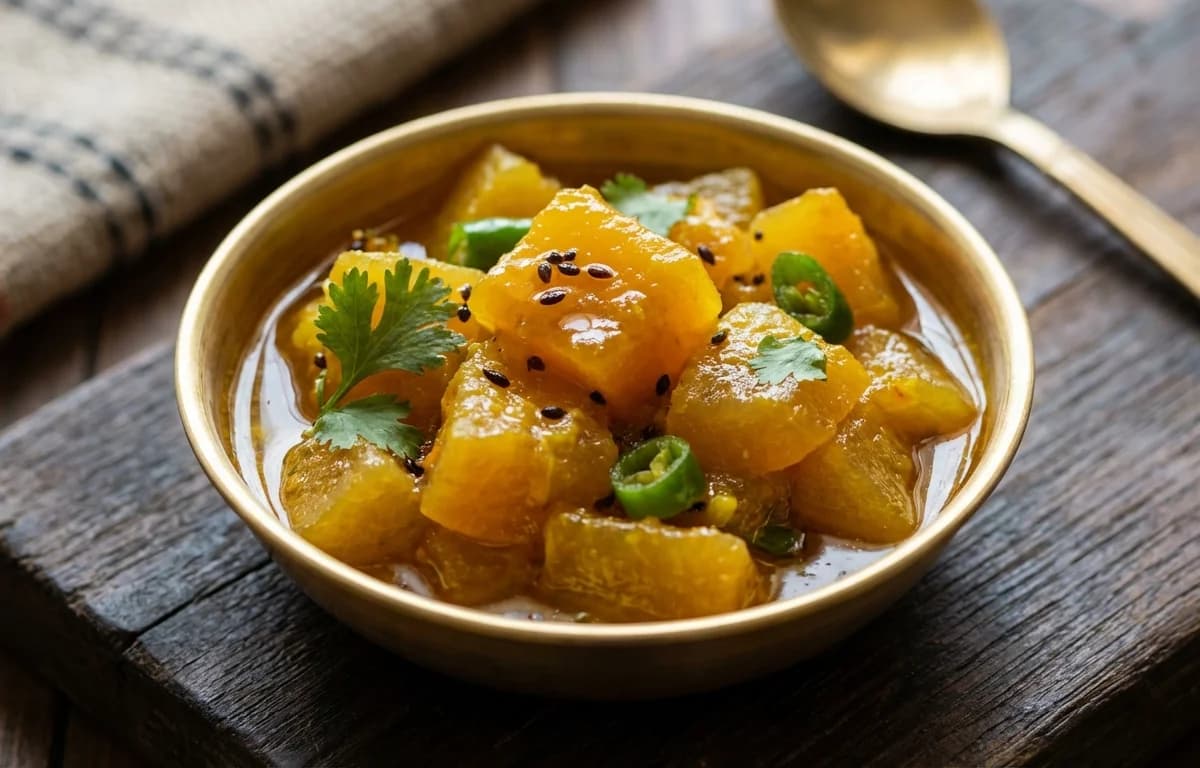
A unique and traditional Assamese delicacy made with raw papaya and an alkaline base called 'khar'. This simple, soupy curry has a distinct savory and earthy flavor, and is traditionally enjoyed as the first course with steamed rice to cleanse the palate.
Prep10 min
Cook20 min
Servings4
Serving size: 1 serving
About Paro Mangxo Koldil, Joha Rice and Papaya Khar
Protein-packed pigeon curry with aromatic rice and gut-friendly Khar. A truly unique and satisfying meal!
This assamese dish is perfect for lunch. With 822.44 calories and 31.919999999999998g of protein per serving, it's a muscle-gain option for your meal plan.
Other Cuisines to Explore
Discover authentic meals from cuisines around the world.
(1 tsp for curry, 1/2 tsp for soaking banana flower)
1 tsp Cumin Powder
1 tsp Coriander Powder
0.5 tsp Garam Masala
0.5 tsp Black Pepper Powder
1.5 tsp Salt (Adjust to taste)
2 cup Water (Hot, used in stages)
2 tbsp Coriander Leaves (Freshly chopped, for garnish)
Instructions
1
Prepare the Banana Flower
Grease your hands with a little oil to prevent staining. Remove the outer dark purple layers (bracts) of the banana flower until you reach the paler, tender core.
For the outer layers, collect the florets. From each floret, remove the single tough pistil (a matchstick-like stalk) and the small, translucent outer petal. These are bitter and tough.
Finely chop the cleaned florets and the tender inner core of the flower.
Immediately place the chopped flower into a bowl of water mixed with 1/2 tsp of turmeric powder and a pinch of salt. Let it soak for 20 minutes to prevent browning and reduce bitterness. Drain well before use.
2
Marinate the Pigeon Meat
In a mixing bowl, combine the pigeon meat pieces with 1/2 tsp of the turmeric powder and 1/2 tsp of salt.
Mix thoroughly to coat the meat evenly. Set aside to marinate for at least 15-20 minutes.
3
Sauté Aromatics and Meat
Heat mustard oil in a pressure cooker over medium-high heat until it just begins to smoke. This removes its raw pungency.
Reduce heat to medium, add the bay leaves. Then, add the chopped onions and sauté for 6-8 minutes until they are soft and golden brown.
Add the ginger and garlic paste and cook for 2 minutes until the raw aroma disappears.
Add the marinated pigeon meat to the cooker. Increase the heat and sear for 4-5 minutes, stirring occasionally, until the meat is browned on all sides.
4
Pressure Cook the Meat
Stir in the remaining 1/2 tsp turmeric powder, cumin powder, coriander powder, and slit green chilies. Sauté for 1 minute until the spices are fragrant.
Pour in 1.5 cups of hot water and the remaining 1 tsp of salt. Stir well to combine.
Secure the lid of the pressure cooker. Cook on high heat for 1 whistle, then reduce the heat to medium-low and cook for 4-5 more whistles (about 15-20 minutes). The meat should be about 80% cooked.
Turn off the heat and allow the pressure to release naturally.
5
Add Vegetables and Finish Cooking
Carefully open the cooker lid. Add the drained, chopped banana flower and the cubed potatoes.
Stir everything together. If the mixture seems too dry, add the remaining 1/2 cup of hot water.
Secure the lid again and pressure cook on medium heat for 2 more whistles, or until the potatoes are tender and the meat is fully cooked.
Let the pressure release naturally once more.
6
Garnish and Serve
Open the cooker. Stir in the garam masala and black pepper powder.
Simmer without the lid for 2-3 minutes to allow the gravy to thicken slightly and the flavors to meld.
Garnish with freshly chopped coriander leaves. Let the dish rest for 10 minutes before serving.
Serve hot with steamed rice for an authentic Assamese meal.
Servings
4
Serving size: 1 serving
269cal
5gprotein
57gcarbs
1gfat
Ingredients
1.5 cup Joha Rice (An aromatic short-grain rice from Assam.)
3 cup Water (Use filtered water for the best taste.)
0.5 tsp Salt (Optional, adjust to your taste.)
1 tsp Ghee (Optional, for flavour and to prevent sticking. Use a neutral oil for a vegan option.)
Instructions
1
Rinse and Soak the Rice (Optional but Recommended)
Place the Joha rice in a fine-mesh sieve or a bowl. Rinse it under cold running water, gently swirling with your fingers, until the water runs mostly clear. This removes excess starch and prevents stickiness.
Drain the rice thoroughly. If you have time, soak the rinsed rice in fresh water for 15-20 minutes. Soaking helps the grains cook more evenly and become fluffier.
2
Cook the Rice
Drain the soaked rice completely and transfer it to a heavy-bottomed pot with a tight-fitting lid.
Add 3 cups of fresh water, the optional salt, and ghee.
Place the pot on the stove over high heat and bring the water to a rolling boil.
Once boiling, immediately reduce the heat to the lowest possible setting. Cover the pot with the lid and let it simmer for 12-15 minutes.
Do not lift the lid during this time to ensure the rice steams properly.
3
Rest and Fluff
After 15 minutes, turn off the heat. Let the pot stand, still covered, for at least 10 minutes. This crucial resting period allows the grains to absorb the last of the steam, firm up, and finish cooking.
Remove the lid and gently fluff the rice with a fork or a spatula to separate the grains.
Serve hot as a perfect accompaniment to Assamese curries, dals, or any vegetable dish.
500 g raw papaya (peeled, deseeded, and cut into 1-inch cubes)
2 tbsp mustard oil
1 tsp panch phoron (bengali five-spice blend)
2 pc green chili (slit lengthwise)
1 tsp ginger paste
0.25 tsp turmeric powder
0.5 tsp baking soda (substitute for traditional kola khar)
0.75 tsp salt (adjust to taste)
1.5 cup water
2 tbsp coriander leaves (freshly chopped, for garnish)
Instructions
1
Prepare the Papaya: Peel the raw papaya, slice it in half, and scoop out the seeds. Cut the flesh into small, uniform 1-inch cubes. Rinse the cubes under cold water and set aside.
2
Make the Tempering (Tadka): Heat mustard oil in a kadai or a medium-sized pot over medium-high heat until it just begins to smoke. Reduce the heat to medium, add the panch phoron, and allow the seeds to crackle and become fragrant, which takes about 30 seconds.
3
Sauté the Aromatics: Add the slit green chilies and ginger paste to the hot oil. Sauté for another 30-45 seconds, stirring continuously, until the raw smell of the ginger disappears.
4
Cook the Papaya: Add the cubed raw papaya to the pot. Stir well to coat the papaya with the oil and spices. Sauté for 2-3 minutes.
5
Simmer the Curry: Pour in 1.5 cups of water, then add the turmeric powder and salt. Stir everything together. Bring the mixture to a boil, then reduce the heat to low, cover the pot, and let it simmer for 10-15 minutes, or until the papaya pieces are tender when pierced with a fork.
6
Add the Khar (Alkali): Once the papaya is fully cooked and soft, add the baking soda. Stir gently. The liquid might froth slightly, which is normal. Let it cook uncovered for another 2 minutes. This step gives the dish its characteristic flavor.
Garnish and Serve: Turn off the heat. Garnish with freshly chopped coriander leaves. Serve the Papaya Khar hot as the first course with a plate of steamed rice.