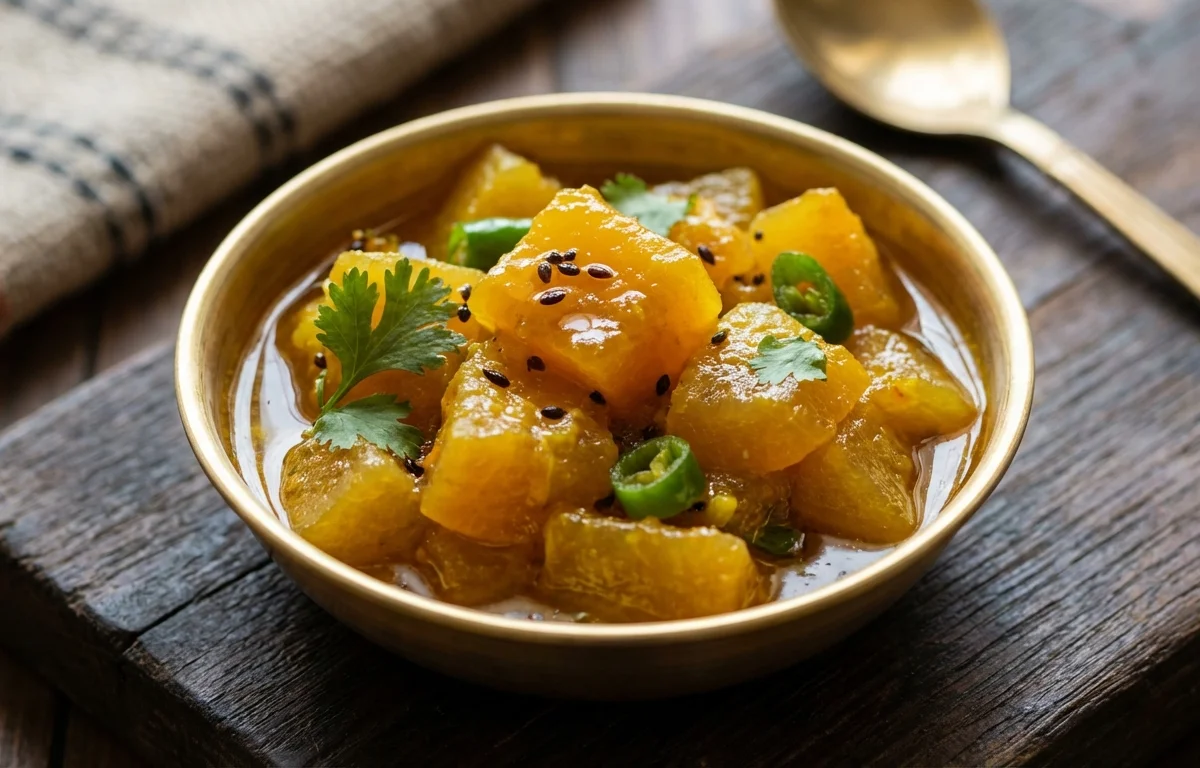
Papaya Khar
A gentle Assamese curry made with green papaya and the distinctive alkaline touch of khar. It cooks up light, clean, and comforting, with soft papaya pieces and a delicate flavor that sits beautifully beside rice.
For 4 servings
- prep
Prepare the papaya.
Peel the green papaya, remove the seeds, and cut it into medium cubes so the pieces cook evenly and hold their shape in the khar.
- saute · ~2 min
Heat the oil and flavor it.
1.Heat mustard oil in a pot over medium heat until it just starts to smoke lightly.2.Lower the heat and add bay leaf, dried red chili, and crushed ginger.3.Stir for 20 to 30 seconds until fragrant.TIPDo not let the spices burn, or the khar will taste bitter. - boil · ~7 min
Cook the papaya.
1.Add the papaya cubes and stir for 1 minute to coat them in the flavored oil.2.Pour in the water and add salt.3.Bring to a gentle boil over medium-high heat. - simmer · ~15 min
Simmer until the papaya softens.
Reduce the heat to medium-low and cook uncovered for 12 to 15 minutes, until the papaya is tender but not falling apart.
- simmer · ~4 min
Add the khar and finish the dish.
Stir in the filtered khar and simmer gently for 3 to 4 minutes. The broth should stay light and clear, with a clean alkaline taste and soft papaya pieces.
TIPAdd khar only after the papaya is nearly cooked so its flavor stays balanced and the vegetable keeps a pleasant texture. - serve
Serve hot with plain rice.
What to keep in mind.
7 tips from the recipe — small details that make a real difference to the final dish.
- 1Cut the papaya into even medium cubes so they soften at the same rate without breaking apart.
- 2Let the mustard oil lightly smoke first; this mellows its raw sharpness and suits the clean taste of khar.
- 3Keep the ginger only lightly crushed, not minced, so it perfumes the broth without making it cloudy.
- 4Simmer the papaya uncovered to keep the broth light and clear, which is part of good khar texture.
- 5Add khar only after the papaya is tender; boiling it too long can make the flavor harsh and the texture overly soft.
- 6If your khar is very strong, start with less and adjust after 2 minutes of simmering to avoid an overly alkaline finish.
- 7Papaya Khar is best eaten fresh, but leftovers keep well for a day in the fridge and should be reheated very gently.
Adapt it for your goals.
Low-oil
Use a little less mustard oil for an even lighter everyday version; the broth stays delicate while keeping the classic khar profile.
spicierSpicier
Add one extra dried red chili for a warmer finish if you want more heat without changing the dish's clean character.
mixed vegetableMixed-vegetable
Combine green papaya with a little bottle gourd or raw banana for a fuller vegetable khar while staying close to Assamese home-style cooking.
ginger forwardGinger-forward
Increase the crushed ginger slightly for a more aromatic broth, especially nice in cooler weather with plain rice.
Why this is on our healthy list.
Light and Gentle Dish
Made with green papaya, water, and a small amount of oil, this preparation is light and easy to pair with simple rice-based meals.
Vegetable-Based Comfort Food
Green papaya brings plant-based fiber and freshness, making this a soothing curry centered on a single vegetable.
Moderately Spiced
With just ginger, bay leaf, and one dried chili, the dish stays flavorful without relying on a heavy spice load.
Frequently asked questions
No, ripe papaya will turn sweet and soft. Green papaya is needed for the mild flavor and tender-but-holding texture of this khar.