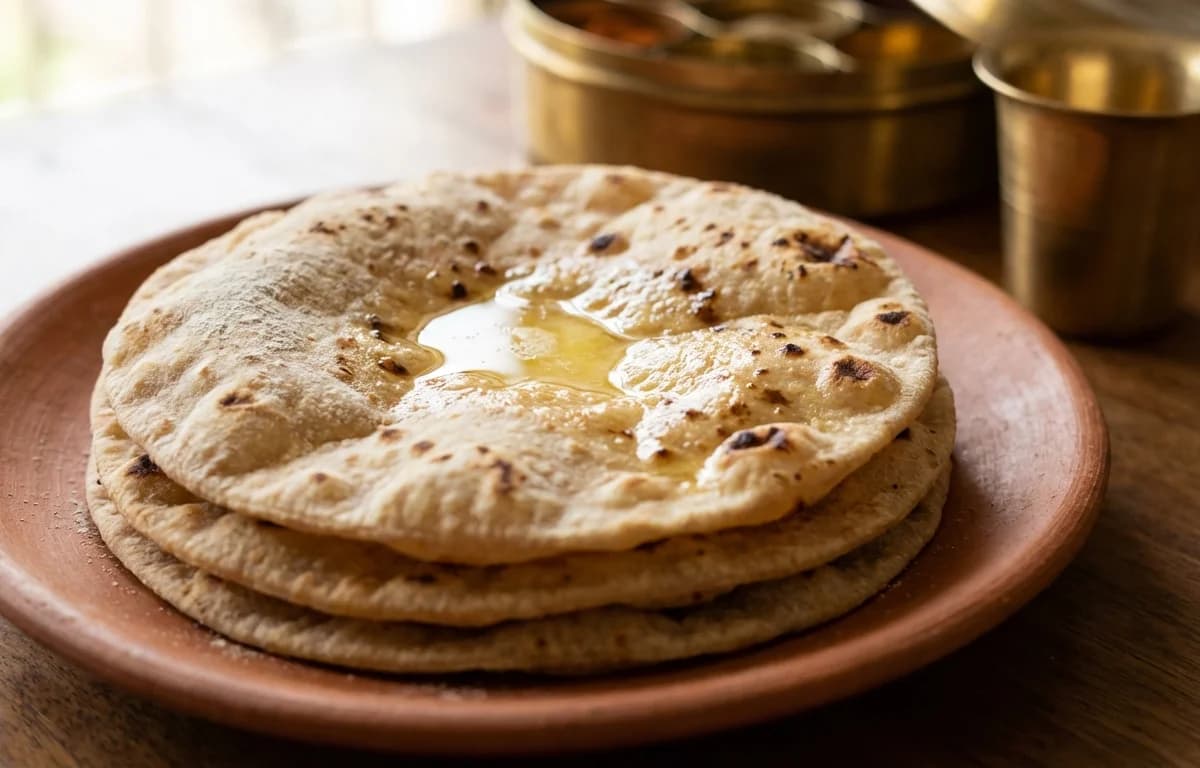
Soft, unleavened whole wheat flatbread, a daily staple in Indian households. Perfect for scooping up curries and dals, this simple, wholesome bread is puffed up on an open flame for that classic, airy texture.
Prep35 min
Cook15 min
Servings4
Serving size: 1 serving
213cal
8gprotein
44gcarbs
2gfat
Ingredients
2 cup atta (Use a fine-milled whole wheat flour for best results.)
1 cup lukewarm water (Adjust quantity as needed; dough should be soft and pliable.)
1 tsp ghee (For the dough, plus extra for brushing (optional).)
Instructions
1
Prepare the dough
In a large mixing bowl, combine the atta and 1 tsp of ghee.
Gradually add lukewarm water, a little at a time, mixing with your fingers to form a shaggy dough.
Knead the dough on a clean surface for 8-10 minutes, using the heel of your palm to push and fold until it is smooth, soft, and pliable, but not sticky.
Cover the dough with a damp cloth or a lid and let it rest for at least 20-30 minutes. This step is crucial for relaxing the gluten and ensuring soft rotis.
A simple and comforting Bengali-style cabbage stir-fry with tender potatoes and sweet green peas. This lightly spiced dish, flavored with panch phoron, is a staple in Bengali homes and pairs perfectly with rice and dal.
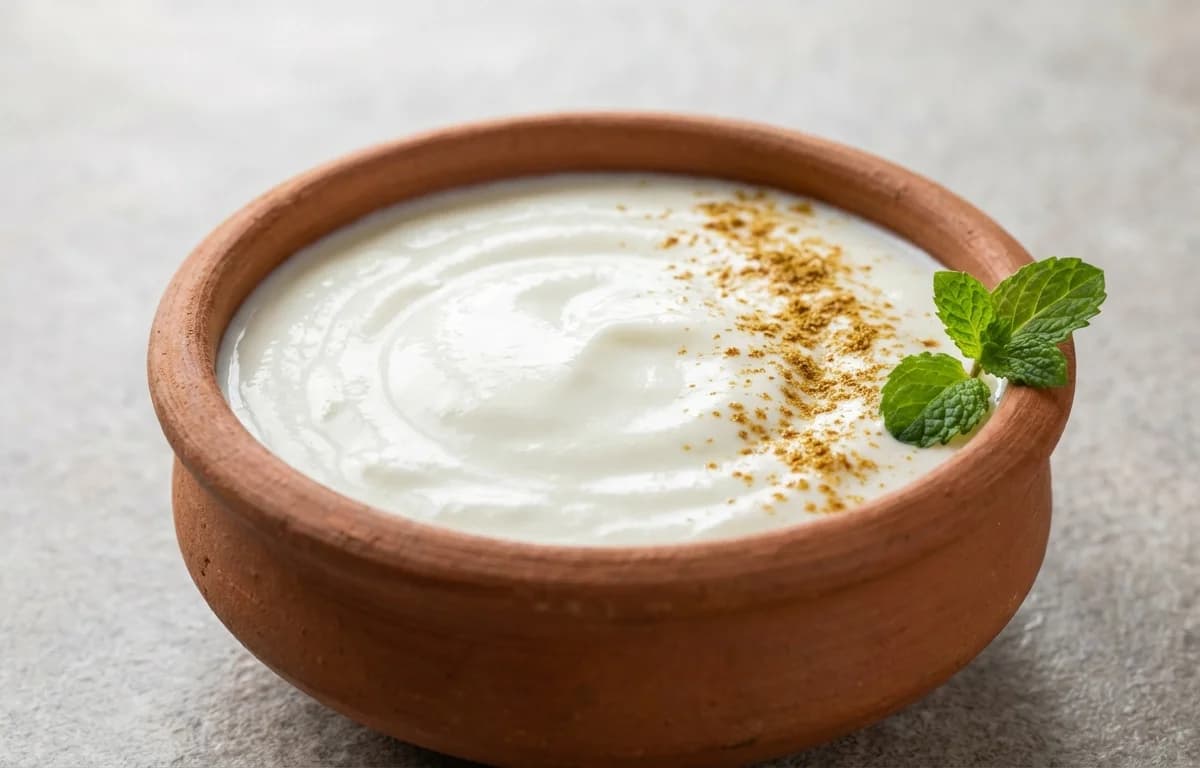
Creamy, tangy, and rich homemade yogurt, a staple in every Indian household. This simple recipe uses just two ingredients to create perfect, thick dahi every time, ideal for raitas, curries, or enjoying plain.
Prep5 min
Cook10 min
Ferment480 min
Servings4
About Roti, Bandhakobi Tarkari and Dahi
Soft rotis with fiber-rich cabbage stir-fry and cool, gut-friendly dahi. Pure comfort!
This odia dish is perfect for dinner. With 614.28 calories and 22.310000000000002g of protein per serving, it's a high-fiber option for your meal plan.
Other Cuisines to Explore
Discover authentic meals from cuisines around the world.
After resting, knead the dough for another minute.
Divide the dough into 8 equal-sized portions and roll each into a smooth, crack-free ball.
Take one dough ball, flatten it, and dip it in dry atta for dusting.
On a rolling board, use a rolling pin to roll it into an even circle about 6-7 inches in diameter. Ensure the edges are as thin as the center for proper puffing.
3
Cook the roti
Heat a flat griddle (tawa) over medium-high heat. It's ready when a pinch of flour sprinkled on it sizzles and turns brown in seconds.
Place the rolled roti on the hot tawa. Cook for about 20-30 seconds, until you see small bubbles appear on the surface.
Using tongs, flip the roti. Cook the second side for about 45-60 seconds, until light brown spots appear.
4
Puff the roti
Using tongs, carefully remove the roti from the tawa and place it directly over a medium-high open flame. It should puff up into a ball almost instantly. Flip it once and remove immediately to avoid burning.
Alternatively, if you don't have a gas stove, flip the roti back onto the tawa and gently press the edges with a folded kitchen towel. This traps steam and helps the roti puff up.
Once puffed, immediately remove the roti from the heat.
5
Finish and serve
Brush one side with ghee, if desired, for extra flavor and softness.
Place the finished roti in a casserole dish or a container lined with a clean kitchen towel to keep them soft and warm.
Repeat the process for all remaining dough balls. Serve hot with your favorite dal, curry, or sabzi.
239cal
6gprotein
27gcarbs
12gfat
Ingredients
500 g Cabbage (about 1 medium, finely shredded)
2 medium Potato (peeled and diced into 1/2-inch cubes)
1 cup Green Peas (fresh or frozen)
3 tbsp Mustard Oil
1 tsp Panch Phoron (Bengali five-spice blend)
2 whole Dried Red Chili
1 whole Bay Leaf
1 tsp Ginger Paste
0.5 tsp Turmeric Powder
1 tsp Cumin Powder
2 whole Green Chili (slit lengthwise)
1 tsp Sugar (adjust to taste)
1 tsp Salt (or to taste)
1 tsp Ghee (optional, for finishing)
2 tbsp Coriander Leaves (freshly chopped, for garnish)
Instructions
1
Prep Vegetables: Finely shred the cabbage. Peel and dice the potatoes into small, 1/2-inch cubes. Slit the green chilies lengthwise. Rinse the vegetables and set aside.
2
Temper Spices: Heat mustard oil in a kadai or heavy-bottomed pan over medium-high heat until it is lightly smoking. Reduce the heat to medium, add the panch phoron, dried red chilies, and bay leaf. Sauté for 30-45 seconds until the spices crackle and become fragrant.
3
Sauté Potatoes: Add the diced potatoes to the pan. Sauté for 4-5 minutes, stirring occasionally, until they are light golden brown on the edges.
4
Add Aromatics and Spices: Add the ginger paste and sauté for 1 minute until its raw aroma disappears. Then, add the turmeric powder and cumin powder, stir for 30 seconds.
5
Cook Cabbage: Add the shredded cabbage, slit green chilies, and salt. Mix thoroughly to coat the cabbage with the spices. The cabbage will begin to release water and wilt.
6
Simmer: Cover the pan, reduce the heat to low, and cook for 10-12 minutes. Stir every few minutes to prevent sticking. The cabbage will reduce significantly in volume.
7
Add Peas and Finish: Uncover, add the green peas and sugar. Mix well. Cover again and cook for another 8-10 minutes, or until both the cabbage and potatoes are completely tender and fork-soft. If the mixture seems too dry at any point, sprinkle a tablespoon or two of water.
1 L Full-Fat Milk (Whole milk provides the creamiest texture. Avoid UHT milk as it may not set well.)
2 tbsp Plain Yogurt (Use a good quality, live culture yogurt as a starter. Ensure it's at room temperature.)
Instructions
1
Boil and Thicken Milk
Pour the milk into a heavy-bottomed saucepan. Bring it to a rolling boil over medium heat, watching carefully to prevent it from boiling over.
Once boiling, reduce the heat to low and let it simmer for 5-7 minutes. Stir occasionally to prevent a skin from forming and to stop it from scorching at the bottom. This step helps thicken the milk, resulting in creamier dahi.
2
Cool Milk to the Right Temperature
Remove the pan from the heat and allow the milk to cool down until it is lukewarm. The ideal temperature is between 40-45°C (105-115°F).
To test without a thermometer, dip a clean finger into the milk. It should feel comfortably warm, not hot. You should be able to hold your finger in for about 10 seconds.
3
Inoculate with Starter
In a small bowl, whisk the starter yogurt (dahi) until it is smooth and lump-free.
Add a few tablespoons of the warm milk to the whisked starter and mix well. This tempers the starter and ensures it mixes evenly without curdling.
Pour this tempered starter mixture into the pot with the rest of the lukewarm milk and stir gently 2-3 times to combine everything.
4
Set the Dahi to Ferment
Transfer the milk mixture into a setting container, such as a clay pot (matka), glass bowl, or steel pot.
Cover the container with a lid and place it in a warm, draft-free place for 6 to 8 hours, or overnight. Do not disturb it during this time.
In colder climates, you can place the container in a preheated (and turned off) oven, a microwave with the light on, or wrap it in a thick towel to maintain warmth.
5
Chill and Serve
After 6-8 hours, check if the dahi is set. It should be firm and not jiggle like a liquid when gently tilted.
Once set, transfer the container to the refrigerator and chill for at least 3-4 hours. Chilling stops the fermentation process (preventing it from becoming too sour) and helps it thicken further.
Serve chilled as a side, use it to make raita, or enjoy it plain.
Garnish and Serve: Turn off the heat. Stir in the optional ghee for a rich aroma. Garnish with freshly chopped coriander leaves. Let it rest for 5 minutes before serving hot with rice, dal, or rotis.