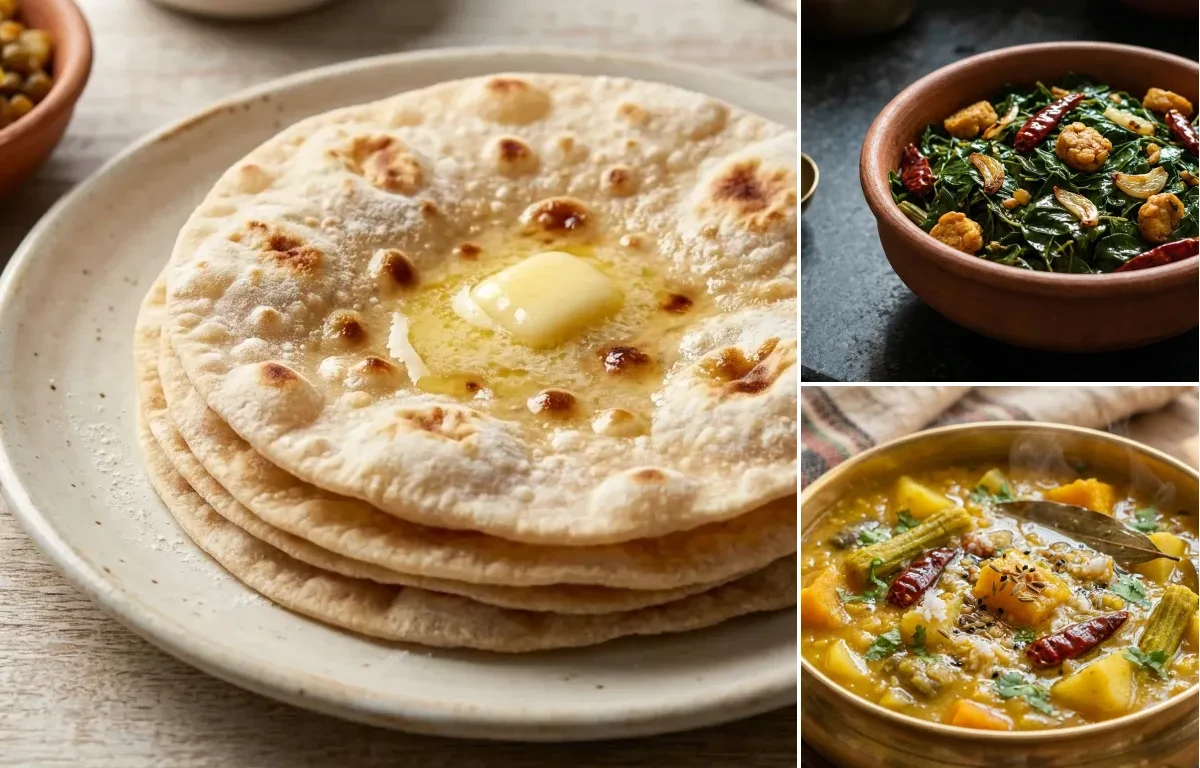
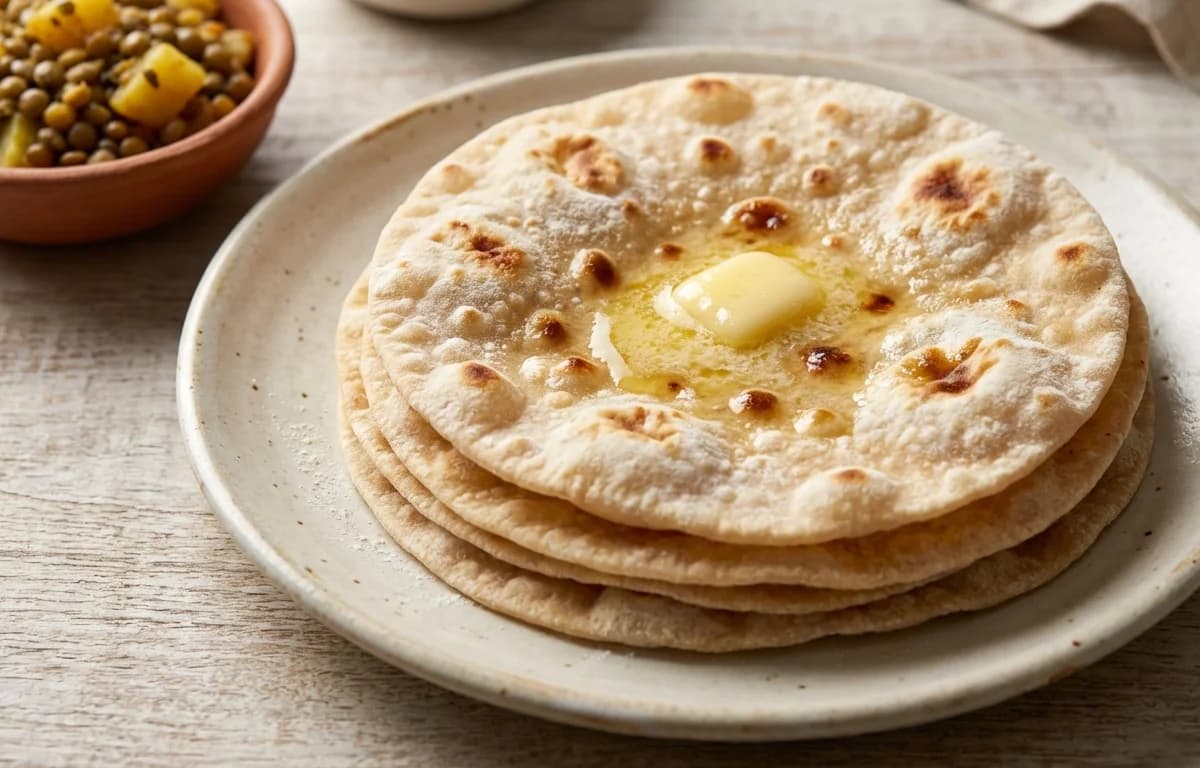
A staple in every Bengali household, these soft, unleavened whole wheat flatbreads are perfect for scooping up curries and dals. They puff up beautifully on an open flame, creating a light, airy texture that is both comforting and delicious.
Prep40 min
Cook15 min
Servings4
Serving size: 2 pieces
214cal
8gprotein
44gcarbs
3g
Ingredients
2 cup Atta (Whole wheat flour)
1 cup Warm Water (Adjust as needed)
0.5 tsp Salt
1 tsp Vegetable Oil (Optional, for a softer dough)
Instructions
1
Prepare the Dough
In a large mixing bowl (gamla), combine 2 cups of atta and 0.5 tsp of salt. Mix well.
If using, add 1 tsp of vegetable oil and rub it into the flour with your fingertips until it resembles coarse breadcrumbs.
Gradually pour in the warm water, a little at a time, mixing with your other hand to bring the flour together.
Once a shaggy dough forms, begin to knead. Continue kneading on a clean, flat surface for 8-10 minutes, pushing with the heel of your hand and folding. The final dough should be soft, smooth, and pliable, but not sticky.
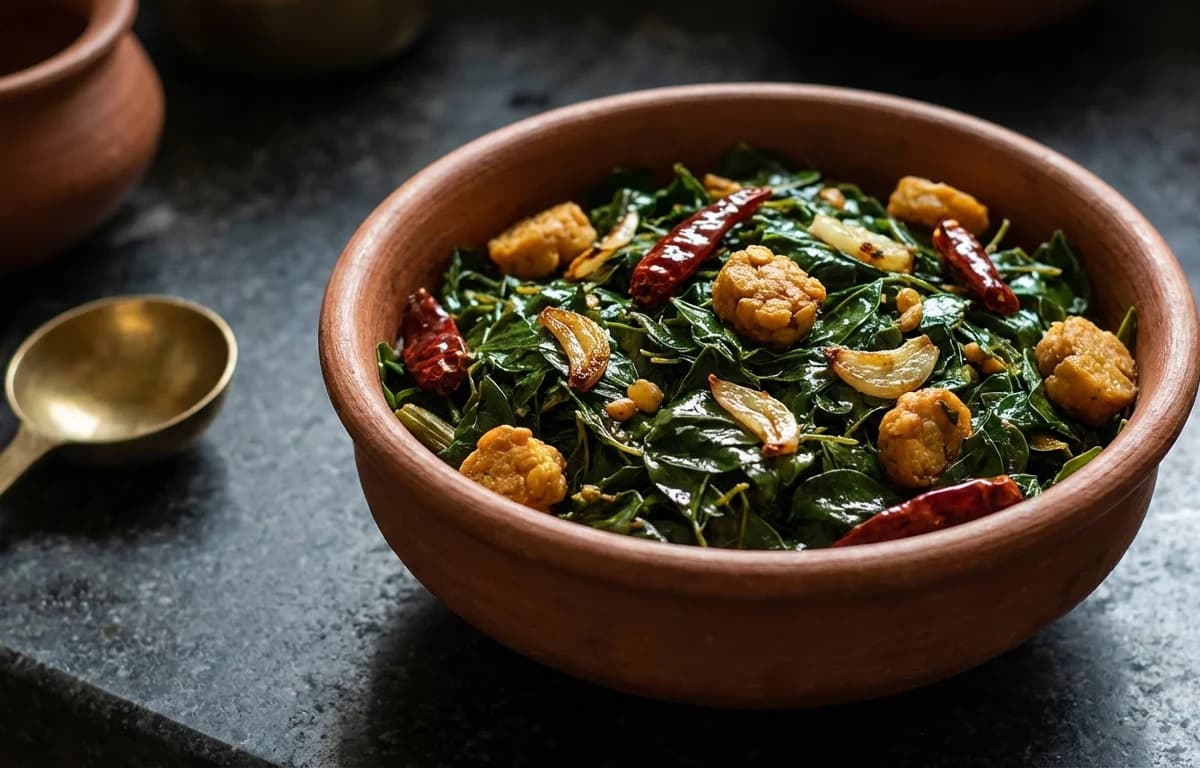
An authentic and nutritious Odia stir-fry featuring tender moringa leaves (Sajana Saga) sautéed with pungent garlic, red chilies, and crunchy sun-dried lentil dumplings (badi). This simple, healthy side dish is a staple in Odia households and comes together in minutes.
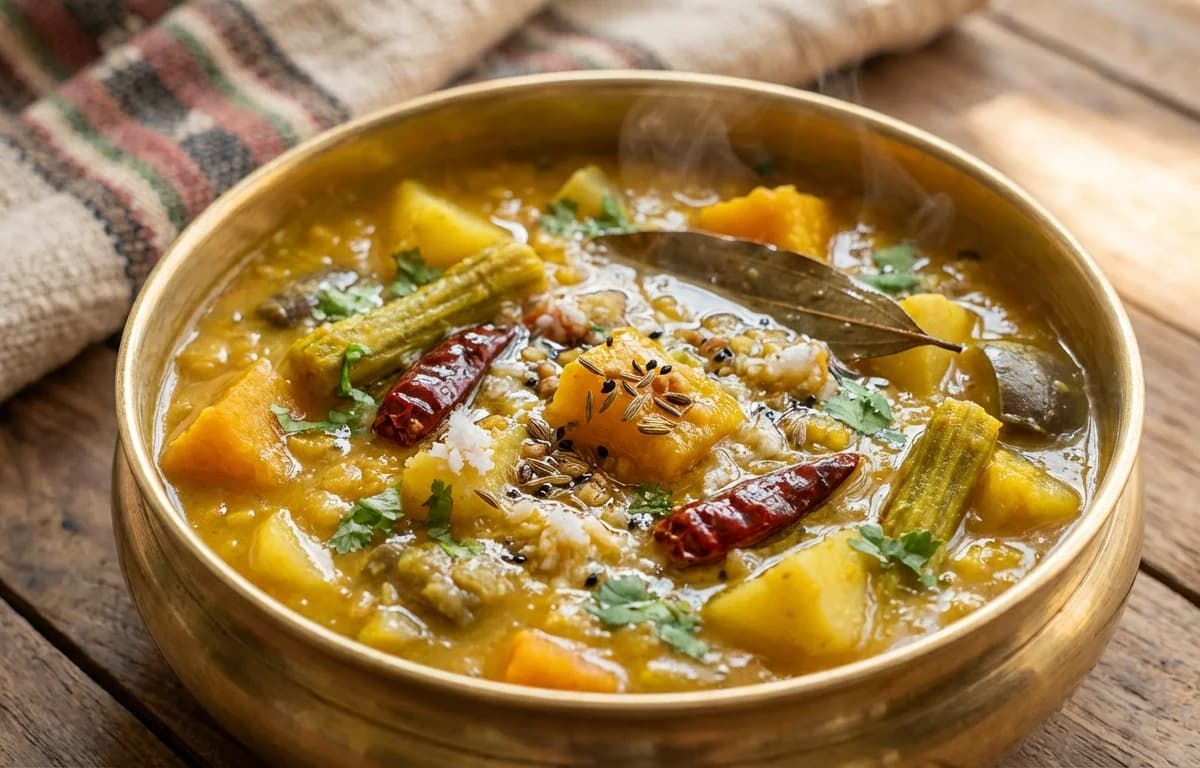
A comforting one-pot lentil and vegetable stew from Odisha. This wholesome dish combines toor dal with a medley of vegetables, seasoned with a unique five-spice tempering and a hint of roasted coconut.
Homestyle roti with iron-boosting drumstick greens and protein-packed dal. So wholesome!
This odia dish is perfect for dinner. With 641.8299999999999 calories and 27.33g of protein per serving, it's a high-fiber, muscle-gain option for your meal plan.
fat
Rest the Dough
Form the dough into a ball, place it back in the bowl, and cover it with a damp kitchen towel or a lid.
Let the dough rest for a minimum of 30 minutes. This step is crucial as it allows the gluten to relax, resulting in softer rutis.
3
Divide and Roll
After resting, knead the dough again for 1 minute.
Divide the dough into 8 equal-sized portions and roll them into smooth balls (lechi).
Take one ball, flatten it between your palms, and dip it lightly in the dry atta for dusting.
Place it on a rolling board (chakla) and use a rolling pin (belan) to roll it into a thin, even circle about 6-7 inches in diameter. Apply gentle, even pressure and dust with more flour if it starts to stick.
4
Cook the Ruti
Heat a flat griddle (tawa) over medium-high heat. The tawa should be hot before you start.
Place the rolled ruti onto the hot tawa. Cook for about 15-20 seconds, until you see small bubbles appear on the surface.
Flip the ruti using tongs. Cook the second side for about 30-40 seconds, until light brown spots (chiti) appear.
Using tongs, carefully lift the ruti off the tawa and place it directly on a medium-high open flame. It should puff up into a ball almost instantly.
Quickly flip it to cook the other side on the flame for just a couple of seconds.
Remove the puffed ruti and place it in a casserole or a container lined with a clean cloth to keep it soft.
5
Repeat and Serve
Repeat the rolling and cooking process for all the remaining dough balls.
For extra flavor, you can brush the hot rutis with a little ghee.
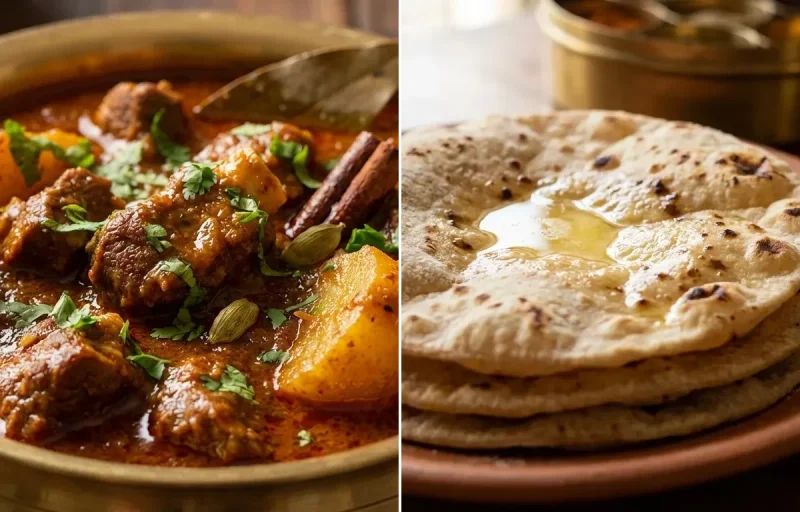
Serve immediately with your favorite dal, tarkari (vegetable curry), or mangsher jhol (meat curry).
145cal
8gprotein
13gcarbs
8gfat
Ingredients
250 g Moringa Leaves (Also known as Sajana Saga, leaves plucked from stems)
2 tbsp Mustard Oil
10 pieces Urad Dal Badi (Sun-dried lentil dumplings)
8 cloves Garlic (Roughly chopped)
2 pieces Dry Red Chilies (Broken in half)
0.25 tsp Turmeric Powder
0.75 tsp Salt (Or to taste)
Instructions
1
Prepare the Moringa Leaves
Carefully pluck the moringa leaves from the thick, woody stems. Discard the stems.
Place the leaves in a colander and wash them thoroughly under running water to remove any grit or dirt.
Shake off excess water and let them drain completely. Patting them gently with a kitchen towel can speed up the process.
2
Fry the Badi
Heat mustard oil in a kadai or pan over medium heat until it is fragrant and slightly smoking.
Add the urad dal badi and fry for 1-2 minutes, stirring constantly, until they turn a deep golden brown and become crispy.
Using a slotted spoon, remove the fried badi and set them aside on a plate. Once they cool down, lightly crush them into smaller, bite-sized pieces.
3
Prepare the Tempering (Tadka)
In the same pan with the remaining oil, add the broken dry red chilies and the roughly chopped garlic.
Sauté for 30-45 seconds until the garlic releases its aroma and turns a light golden color. Be careful not to burn it.
4
Cook the Leaves
Add the clean, dry moringa leaves to the pan all at once.
Sprinkle the salt and turmeric powder over the leaves.
Stir everything together well. The leaves will begin to wilt quickly from the heat.
Cover the pan and cook on low heat for 4-5 minutes, stirring once or twice in between, until the leaves are tender. Do not add any water.
5
Combine and Serve
Uncover the pan and add the crushed fried badi.
Gently mix to combine and cook for one more minute, allowing the badi to absorb the flavors.
Turn off the heat. Serve the Sajana Saga Bhaja hot as a side dish with steamed rice and dal.
Rinse the toor dal thoroughly under running water until the water runs clear.
Soak the dal in sufficient water for 30 minutes, then drain completely.
Wash and chop all the vegetables (pumpkin, potato, raw banana, brinjal) into 1-inch cubes.
2
Pressure Cook the Dalma
In a pressure cooker, combine the drained dal, all chopped vegetables, chopped tomato, grated ginger, turmeric powder, and salt.
Pour in 4 cups of fresh water and give it a good stir.
Secure the lid and pressure cook on medium heat for 3-4 whistles, or for about 15 minutes, until the dal is completely soft.
Allow the pressure to release naturally before opening the cooker.
3
Prepare Garnish and Tempering (Chhunka)
While the dal is cooking, place the grated coconut in a small, dry pan. Roast over low heat for 2-3 minutes until it's lightly golden and aromatic. Set aside.
In the same pan or a separate tadka pan, heat the ghee over medium heat.
Add the bay leaf and dried red chillies. Sauté for 30 seconds.
Add the pancha phutana and allow the seeds to crackle and splutter, which should take about 30-45 seconds.
Finally, add the hing, give it a quick stir for 5 seconds, and immediately turn off the heat to prevent it from burning.
4
Combine and Finish
Open the pressure cooker. Using the back of a ladle, gently mash some of the dal and vegetables against the side of the pot to create a creamy, cohesive texture.
Pour the hot tempering (chhunka) over the cooked dalma.
Add the roasted coconut and freshly chopped coriander leaves.
Stir everything together well. Place the cooker back on low heat and let the dalma simmer for 2-3 minutes to allow the flavors to meld beautifully.
Check for seasoning and add more salt if needed. Serve hot with steamed rice.