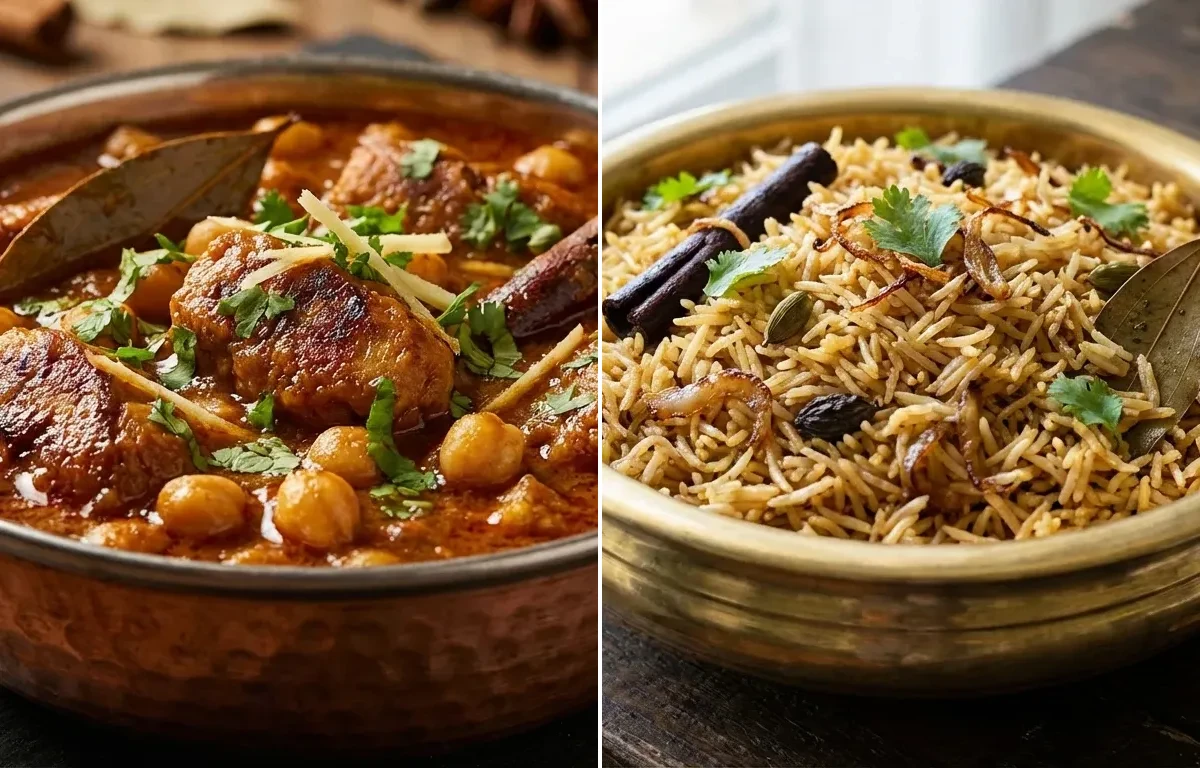
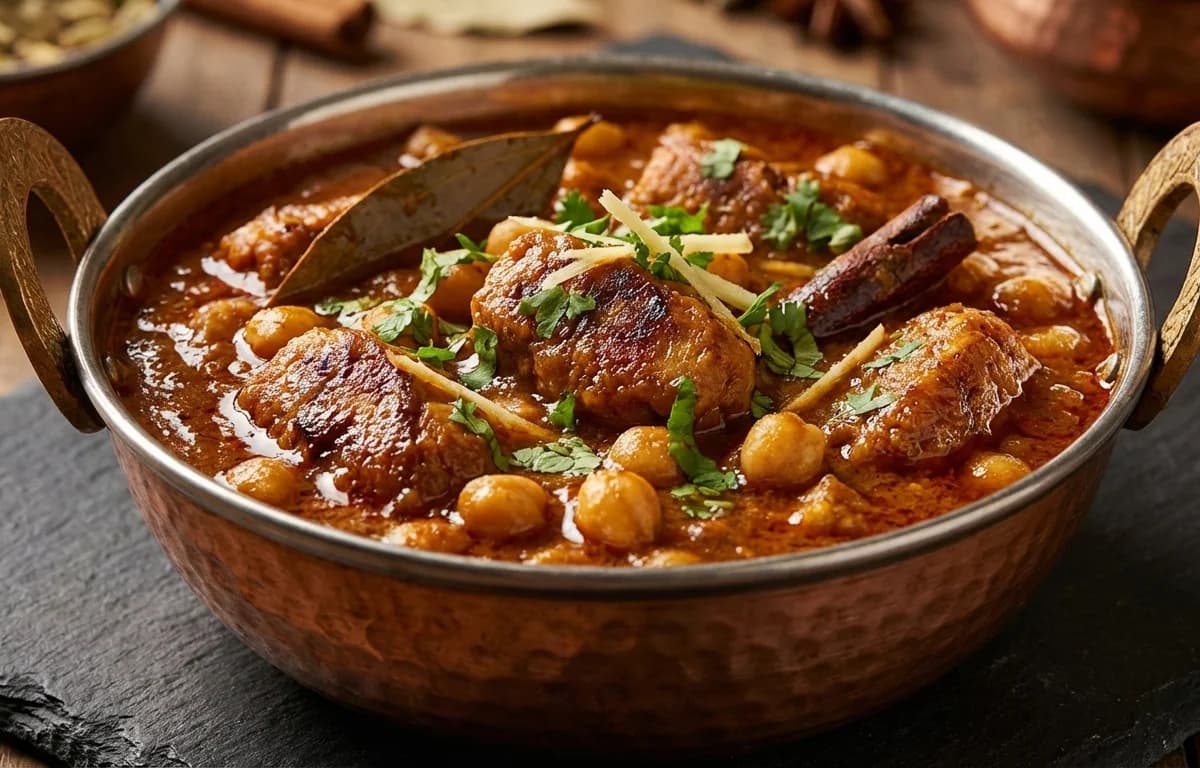
Tender soya chaap and hearty chickpeas simmered in a robust, spicy Punjabi-style onion-tomato gravy. This protein-packed curry is a delicious and satisfying vegetarian main course, perfect with naan or rice.
Prep20 min
Cook50 min
Soak480 min
Servings4
Serving size: 1 serving
696cal
43gprotein
62gcarbs
Ingredients
1 cup Chickpeas (dried, also known as chole or kabuli chana)
3 cup Water (for pressure cooking chickpeas)
0.5 tsp Salt (for cooking chickpeas)
250 g Soya Chaap Sticks (about 8 sticks, fresh or frozen)
4 tbsp Neutral Oil (divided, for frying chaap and making gravy)
Protein-packed Chaap Chola with aromatic Bhuga Chawar - a perfectly spiced, energy-giving delight!
This sindhi dish is perfect for lunch. With 696.25 calories and 42.79g of protein per serving, it's a low-sodium, high-fiber option for your meal plan.
Other Cuisines to Explore
Discover authentic meals from cuisines around the world.
2 tbsp Fresh Cream (can use coconut cream for a vegan option)
3 tbsp Coriander Leaves (freshly chopped, for garnish)
Instructions
1
Pressure Cook the Chickpeas
Wash and soak the dried chickpeas in ample water for at least 8 hours or overnight.
Drain the soaking water. Transfer the chickpeas to a pressure cooker, add 3 cups of fresh water and 1/2 tsp of salt.
Pressure cook on medium heat for 4-5 whistles, or until the chickpeas are tender but not mushy. Do not discard the cooking water; reserve it for the gravy.
2
Prepare and Fry the Soya Chaap
If using frozen soya chaap, thaw them first. Carefully remove the sticks from the center.
Cut the chaap into 1-inch thick rounds. Pat them dry with a paper towel.
Heat 2 tbsp of oil in a wide pan or kadai over medium-high heat. Shallow fry the soya chaap pieces for 5-7 minutes, turning occasionally, until they are golden brown and slightly crisp on all sides.
Remove the fried chaap from the pan and set aside.
3
Build the Gravy Base (Tadka)
In the same pan, add the remaining 2 tbsp of oil. Heat over medium flame.
Add the whole spices: bay leaf, cinnamon stick, green cardamom pods, and cloves. Sauté for 30 seconds until fragrant.
Add the cumin seeds and allow them to splutter.
Add the finely chopped onions and sauté for 8-10 minutes, stirring frequently, until they turn a deep golden brown. This step is crucial for the flavor of the curry.
Add the ginger-garlic paste and slit green chilies. Cook for another minute until the raw aroma disappears.
4
Cook the Masala
Lower the heat and add the tomato puree to the pan.
Stir in all the powdered spices: turmeric powder, red chili powder, coriander powder, cumin powder, and chole masala. Add the remaining 1 tsp of salt.
Mix everything thoroughly and cook the masala on medium-low heat for 8-10 minutes. Stir occasionally until the masala thickens and you see oil separating from the sides.
5
Combine and Simmer the Curry
Add the fried soya chaap pieces and the cooked chickpeas to the masala. Gently stir to coat everything well.
Pour in about 2 cups of the reserved chickpea water. Stir to combine.
Bring the curry to a boil, then reduce the heat to low. Cover the pan and let it simmer for 15-20 minutes. This allows the soya chaap to absorb all the delicious flavors of the gravy.
6
Finish and Garnish
Uncover the pan. Stir in the fresh cream, garam masala, and crushed kasuri methi (rub it between your palms before adding).
Gently mix and let it cook for another 2 minutes on low heat.
Turn off the heat. Garnish with freshly chopped coriander leaves.
Let the curry rest for 5-10 minutes before serving hot with naan, roti, or jeera rice.