
Loading...
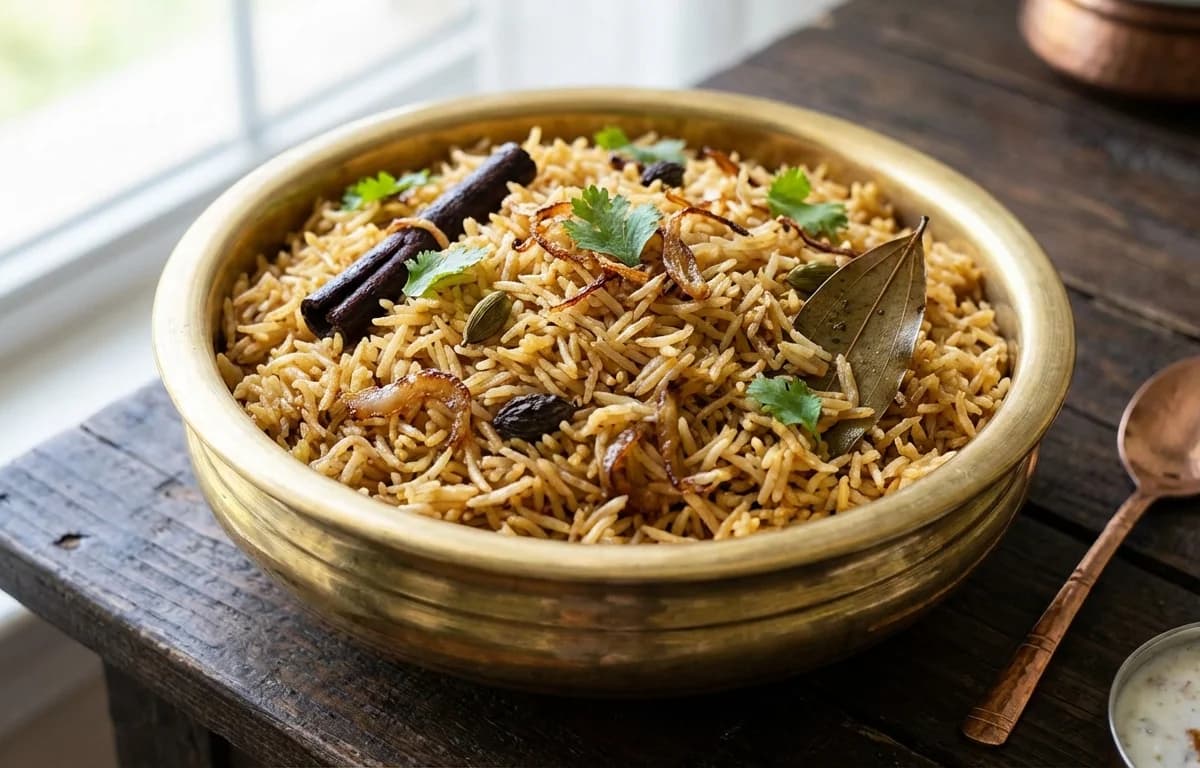
A classic Sindhi rice pilaf where fragrant basmati rice is cooked with deeply caramelized onions and whole spices. This simple yet flavorful dish gets its signature brown color and sweet, savory taste from the slow-browning of the onions.
For 4 servings
Prepare the Rice: Rinse the basmati rice under cold running water until the water runs clear. This removes excess starch. Soak the rinsed rice in ample water for 20-30 minutes. After soaking, drain it completely using a colander and set aside.
Caramelize the Onions (The 'Bhuga' Process): Heat oil or ghee in a heavy-bottomed pot or pressure cooker over medium heat. Add the whole spices (cinnamon, cloves, green and black cardamoms, bay leaf) and sauté for about 30 seconds until they become fragrant. Add the thinly sliced onions and a pinch of salt. Cook, stirring frequently, for 15-20 minutes. The onions will go through stages: translucent, light pink, golden, and finally a deep, rich brown. This slow caramelization is crucial for the dish's signature color and flavor. Be patient and do not let them burn.
Sauté the Rice: Once the onions are deep brown, add the drained rice to the pot. Gently fold the rice with the onions and spices for 1-2 minutes, being careful not to break the delicate grains. This step toasts the rice slightly and coats it in flavor.
Cook the Pulao: Pour in 3 cups of hot water and the remaining salt. Stir gently just once to combine everything. Bring the water to a vigorous boil.
A refreshing and protein-packed salad combining fluffy quinoa, hearty chickpeas, and crisp vegetables. The creamy lemon-tahini dressing ties everything together for a light yet satisfying meal, perfect for a healthy lunch.
A comforting and flavorful baked dish where assorted vegetables are cooked in a spiced yogurt-based gravy and baked to perfection. A wholesome Indian take on a classic casserole, perfect for a hearty meal.
A simple yet satisfying breakfast bowl featuring creamy yogurt topped with crunchy homemade granola and fresh berries. It's a quick, healthy, and delicious way to start your day.
A light, fluffy, and protein-packed omelette made with only egg whites and loaded with fresh vegetables and mild Indian spices. It's a perfect healthy and quick start to your day, ready in under 15 minutes.
A classic Sindhi rice pilaf where fragrant basmati rice is cooked with deeply caramelized onions and whole spices. This simple yet flavorful dish gets its signature brown color and sweet, savory taste from the slow-browning of the onions.
This indian recipe takes 45 minutes to prepare and yields 4 servings. At 425.37 calories per serving with 6.25g of protein, it's a moderately challenging recipe perfect for lunch or dinner.
Rest and Serve: Once cooked, turn off the heat and let the rice rest, covered, for at least 10 minutes. This allows the grains to firm up and absorb any remaining steam. After resting, gently fluff the rice with a fork to separate the grains. Serve hot with your favorite curry or raita.
Add 1 cup of mixed vegetables like green peas, diced carrots, and potatoes along with the rice to make it a one-pot meal.
Sauté 1-2 slit green chilies along with the whole spices for an extra kick of heat.
For added texture and richness, garnish the finished pulao with a tablespoon of cashews or almonds, fried in ghee until golden.
Basmati rice is a good source of complex carbohydrates, which are the body's primary fuel source, providing sustained energy for daily activities.
Onions, especially when cooked, are rich in flavonoids like quercetin, which act as antioxidants, helping to combat oxidative stress in the body.
The whole spices used, such as cloves, cardamom, and cinnamon, are known in traditional medicine for their digestive properties, helping to reduce bloating and improve gut health.
'Bhuga' is a Sindhi word that means 'to brown' or 'sautéed'. The name refers to the key process of browning the onions, which gives the dish its characteristic color, aroma, and sweet-savory flavor.
Bitterness is almost always caused by burnt onions. It's crucial to caramelize them slowly over medium heat until they are deep brown, but not black or charred. If you see any dark spots forming too quickly, reduce the heat immediately.
One serving of Bhuga Chawal (approximately 1 cup or 285g) contains around 380-420 calories, primarily from carbohydrates in the rice and fats from the oil.
Bhuga Chawal can be part of a balanced meal. It provides energy from carbohydrates. The onions and whole spices offer some micronutrients and antioxidants. To make it healthier, use a moderate amount of oil and pair it with a protein-rich side like dal, a vegetable curry like Sai Bhaji, or yogurt.
While long-grain Basmati rice is traditional and gives the best fluffy texture, you can use other long-grain white rice varieties like Sona Masoori. You may need to adjust the water-to-rice ratio slightly depending on the rice used.
Store leftover Bhuga Chawal in an airtight container in the refrigerator for up to 2-3 days. To reheat, sprinkle a little water over the rice and microwave for 1-2 minutes or gently heat in a pan on the stovetop until warmed through.