
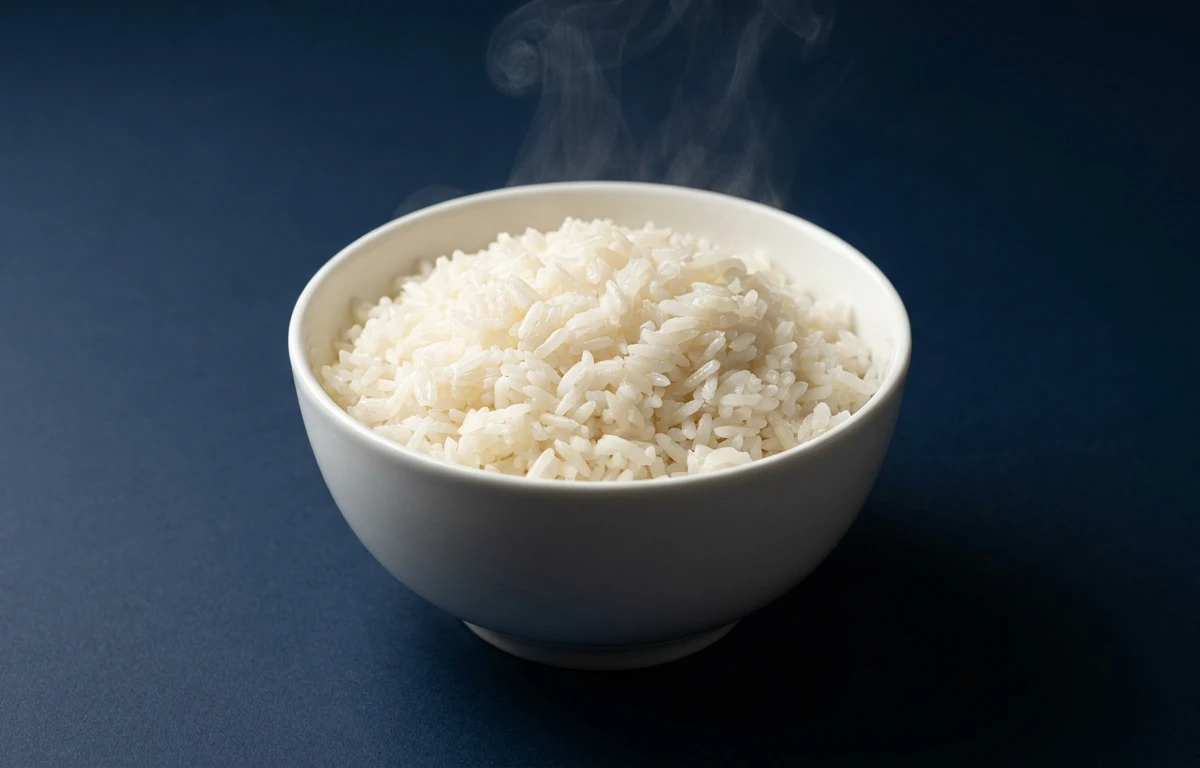
Bhaat
Soft, fluffy steamed rice that's the heart of every Bengali meal. Made with short-grain Govindabhog or medium-grain rice, each grain stays separate yet tender, carrying the gentle aroma of ghee and a whisper of salt. This simple staple lets curries, dal, and bhajas shine while standing beautifully on its own.
For 4 servings
- prep · ~2 min
Rinse the rice.
Wash the gobindabhog rice under running water in a fine-mesh strainer. Gently rub the grains with your fingers until the water runs almost clear. Drain well and set aside.
TIPDon't skip the rinse — it removes excess starch so the grains stay separate and fluffy. - boil · ~4 min
Bring water to a boil.
1.Pour 3.75 cups of water into a heavy-bottomed pot and place over high heat.2.Add a pinch of salt and 1 teaspoon of ghee.3.Bring to a full rolling boil.TIPThe ghee in the water coats each grain lightly and prevents sticking. - boil · ~5 min
Cook the rice.
1.Add the drained rice to the boiling water.2.Give it one gentle stir with a spoon.3.Let it boil uncovered on high heat for 5 minutes until the grains start dancing and the water level drops just below the rice surface.TIPWatch for the 'dancing grain' stage — small craters appear on the surface when it's time to cover. - simmer · ~11 min
Cover and simmer until fluffy.
1.Reduce the heat to the lowest possible setting.2.Cover the pot tightly with a lid.3.Let it steam undisturbed for 10–12 minutes until all water is absorbed.TIPDon't lift the lid during steaming — the trapped steam is what makes each grain cook evenly. - rest · ~5 min
Rest the rice off the heat.
Turn off the heat and keep the pot covered for 5 minutes. The residual steam finishes the cooking and makes the grains plump and tender.
TIPResting is the secret to bhaat that doesn't turn mushy — it lets the moisture settle evenly. - serve · ~1 min
Fluff gently and serve hot.
Remove the lid. Use a fork or a rice paddle to fluff the rice gently, lifting from the bottom. Spoon into katoris and serve immediately alongside dal, bhaja, or a simple curry.
What to keep in mind.
6 tips from the recipe — small details that make a real difference to the final dish.
- 1Use freshly harvested Gobindabhog rice for the most authentic floral aroma and tender bite.
- 2Soak rinsed rice for 10–15 minutes before cooking to reduce the boiling time and improve grain separation.
- 3Cook the rice uncovered on high heat only until the water level drops below the grain surface—this prevents overcooking.
- 4Rest the rice off heat for exactly 5 minutes; this step firms the grains and prevents a sticky texture.
- 5Fluff with a fork rather than a spoon to avoid mashing the delicate short grains.
- 6To rewarm leftover bhaat, sprinkle a tablespoon of water over the rice and steam in a covered pan for 2 minutes.
Adapt it for your goals.
Turmeric rice
Add ¼ teaspoon turmeric powder to the boiling water for a golden color and earthy flavor, common in festive Bengali meals.
ghee freeGhee-free
Skip the ghee and use neutral oil or skip entirely for a dairy-free version that still yields fluffy rice.
herbed bhaatHerbed bhaat
Add 1 tablespoon of chopped fresh coriander or curry leaves during the resting stage for a fresh herby note.
lemon rice twistLemon rice twist
Add 1 tablespoon lemon juice and ½ teaspoon mustard seeds (tempered in ghee) after fluffing for a tangy south-Indian style variation.
Why this is on our healthy list.
Gut-Friendly Starch
Short-grain rice like Gobindabhog is naturally low in resistant starch but easy to digest, making bhaat gentle on sensitive stomachs.
Energy from Complex Carbs
A serving of bhaat provides sustained energy for hours, ideal for active lifestyles or long afternoons.
Mineral Boost from Ghee
The teaspoon of ghee adds a small amount of fat-soluble vitamins A, D, and K2, supporting bone health and immunity.
Frequently asked questions
Overcooking is the main cause—reduce the covered steaming time by 2 minutes or use ¼ cup less water next time.




-curry.webp)
.webp)