Chettinad Parotta
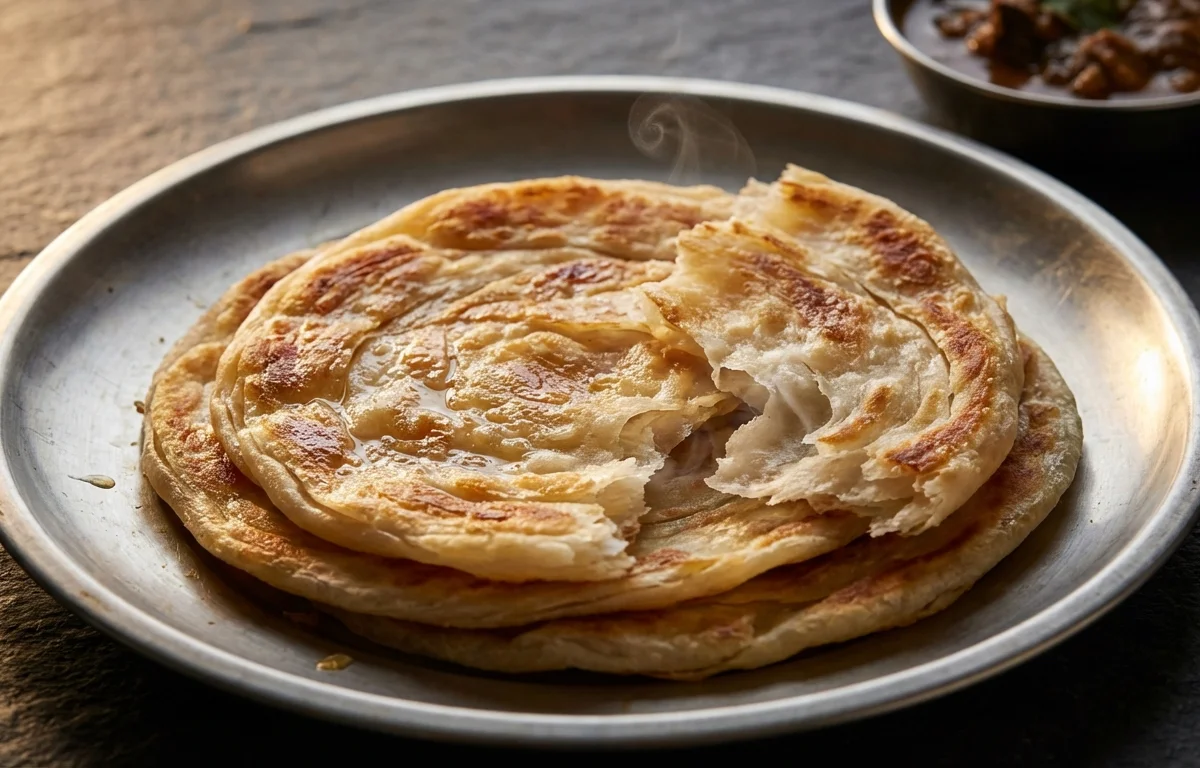
Flaky, layered, and utterly irresistible flatbread from the Chettinad region of Tamil Nadu. Made with maida, egg, and a generous amount of oil, the dough is stretched whisper-thin, pleated into a coil, and rolled out again before hitting a hot tawa. The result is a golden, crispy exterior that pulls apart into soft, delicate layers — perfect for sopping up rich Chettinad curries.
For 4 servings
- mix · ~10 min
Make the parotta dough.
1.In a mixing bowl, combine all-purpose flour, salt, and sugar.2.Add the egg and 2 tablespoons of oil. Mix with your fingers until the mixture resembles coarse crumbs.3.Gradually add water, little by little, and knead for 8-10 minutes to form a very soft, pliable, and slightly sticky dough.TIPThe dough must be soft and smooth. A stiff dough will not stretch easily and will result in a hard parotta. - rest · ~60 min
Rest the dough.
Cover the dough with a damp cloth and let it rest for at least 1 hour at room temperature. This relaxes the gluten and is crucial for stretching.
TIPDo not skip the resting time. Well-rested dough will stretch paper-thin without tearing. - prep · ~1 min
Divide the dough.
Place 2 teaspoons of oil in a small bowl. Grease your palms lightly. Divide the rested dough into 4 equal lemon-sized balls. Coat each ball lightly with oil.
- prep · ~2 min
Roll out the first layer.
1.Take one oiled dough ball and place it on a clean, oiled work surface or a wide metal plate.2.Using your oiled palms and fingers, gently press and stretch the dough into a very thin, translucent sheet. It should be almost see-through.3.Don't worry if it tears slightly; the layers will hide it.TIPIf using a rolling pin, use very light pressure. The traditional method uses only hands to stretch the dough. - assemble · ~1 min
Form the pleated coil.
1.Brush a thin layer of oil from the layering oil over the entire stretched dough sheet.2.Starting from one edge, carefully fold the dough like a fan or sari pleats, making each fold about 1 inch wide.3.You will end up with a long, pleated strip of dough. - assemble · ~10 min
Shape the parotta.
1.Holding the pleated strip by both ends, gently stretch it slightly to lengthen it.2.Roll the stretched coiled strip into a tight spiral, tucking the end firmly underneath.3.Gently press the top of the spiral to flatten it slightly. Set aside and cover with a damp cloth. Repeat for all dough balls.4.Let the shaped spirals rest for another 10 minutes.TIPResting the spirals before the final roll relaxes the dough again, making it easier to roll out without shrinking back. - prep · ~1 min
Final roll.
Take one rested spiral and, using a rolling pin, gently roll it into a 6-7 inch circle, about 0.25 inch thick. Do not press too hard; you want to preserve the distinct layers.
- fry · ~3 min
Cook the parotta on a hot tawa.
1.Place a flat tawa or griddle over medium-high heat. Let it get hot.2.Place the rolled parotta on the hot tawa. Cook for 30 seconds until you see small bubbles on the surface.3.Flip it over and cook the other side for another 30 seconds. Drizzle a few drops of oil around the edges and on top.4.Flip again, pressing gently with a spatula or a clean cloth, rotating it until both sides are golden brown with crispy spots.TIPUse medium-high, not low heat. Low heat will dry out the parotta instead of making it crispy and flaky. - assemble
Fluff the layers.
Once cooked, remove the parotta from the tawa and place it on a flat surface. While it's still hot, gently crush it with both hands from the sides towards the center to open up and fluff the layers. This is the signature 'clapping' action.
TIPCrush the parotta as soon as it's off the tawa. The steam inside helps separate the flaky layers beautifully. - serve
Serve immediately.
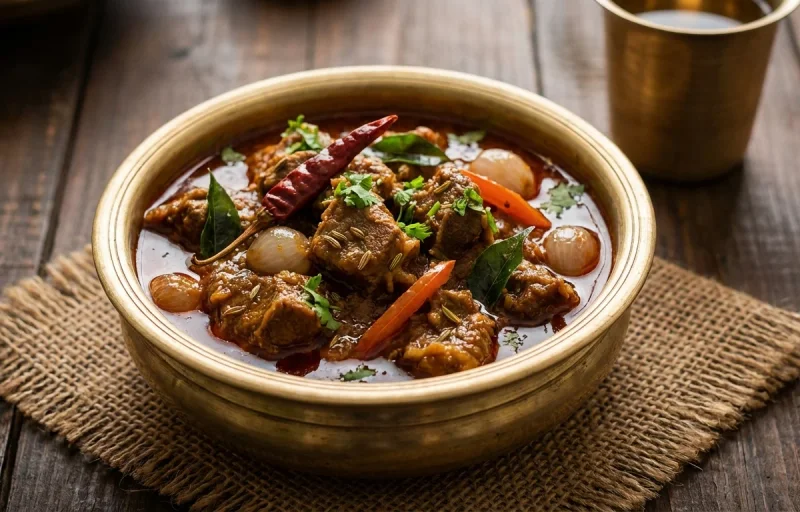
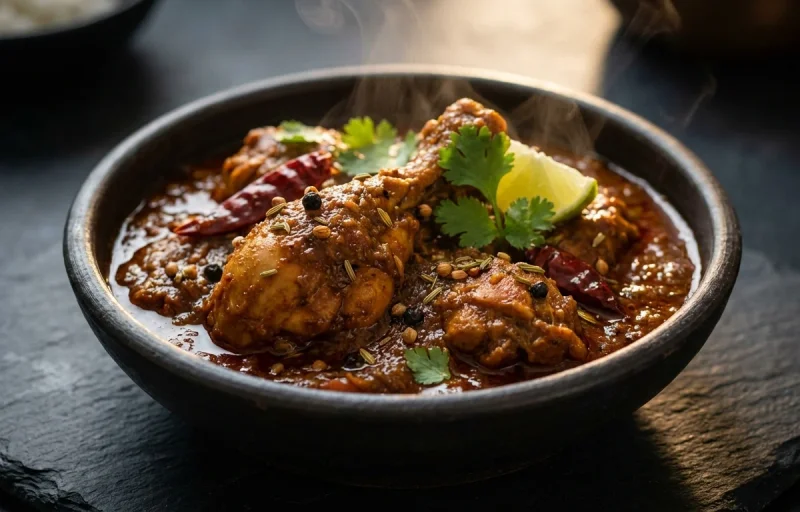
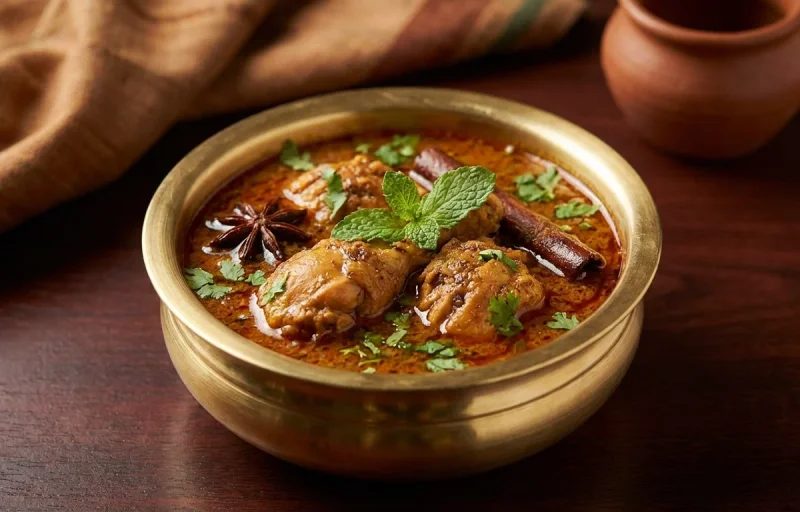
Serve the Chettinad Parotta hot, alongside Chettinad chicken curry or vegetable kurma. It is best eaten fresh off the tawa.
What to keep in mind.
6 tips from the recipe — small details that make a real difference to the final dish.
- 1Rest the dough for at least 1 hour; a well-rested dough stretches paper-thin without tearing and gives flakier layers.
- 2Use oil on your palms and work surface while stretching — this prevents sticking and helps create distinct, separate layers.
- 3When pleating the dough, keep folds about 1 inch wide for even, delicate layers that pull apart beautifully after cooking.
- 4Let the shaped spirals rest for 10 minutes before the final roll; this relaxes the gluten so the parotta doesn’t shrink on the tawa.
- 5Cook on medium-high heat: low heat dries out the parotta, while proper heat gives a golden, crispy exterior with soft, steamy interior.
- 6Crush the hot parotta immediately off the tawa using the classic 'clapping' motion — the trapped steam separates the layers right before your eyes.
Adapt it for your goals.
Eggless / Vegan
Replace the egg with 2 tablespoons of yogurt (or dairy-free yogurt) plus 1 extra tablespoon of oil. This maintains the softness and stretchability needed for the thin layers, making the parotta suitable for those avoiding eggs.
Whole WheatWhole Wheat
Substitute half the all-purpose flour with whole wheat flour (atta). The parotta will be slightly denser and nuttier, but still flaky. Add an extra tablespoon of oil to compensate for the drier whole wheat flour.
Spiced ParottaSpiced Parotta
Mix 1/2 teaspoon of cumin seeds, 1/4 teaspoon of crushed black pepper, and a pinch of asafoetida into the dough for a subtly spiced, aromatic flatbread that pairs beautifully with simple dal or yogurt.
Stuffed Parotta (Kothu Parotta base)Stuffed Parotta (Kothu Parotta base)
Before the final roll, spread a layer of seasoned minced vegetables or paneer on the stretched dough, then pleat and coil as usual. Once cooked and crushed, you have a ready-to-use base for Chettinad-style Kothu Parotta.
Why this is on our healthy list.
Moderate Protein from Egg
The single egg in the dough adds about 6 grams of high-quality protein, helping to make the parotta more satiating than plain flour flatbreads.
Quick Energy Source
All-purpose flour provides readily available carbohydrates, making Chettinad Parotta an excellent energy-dense flatbread for active individuals or post-workout refuelling.
Contains Iron from Maida
All-purpose flour (maida) is commonly fortified with iron and B vitamins in many countries, contributing to daily micronutrient intake when consumed as part of a balanced meal.
Frequently asked questions
The dough likely needs more resting time or more moisture. Ensure you rested it for at least 1 hour under a damp cloth. Also, a slightly sticky dough (not dry) stretches best — add water if needed.