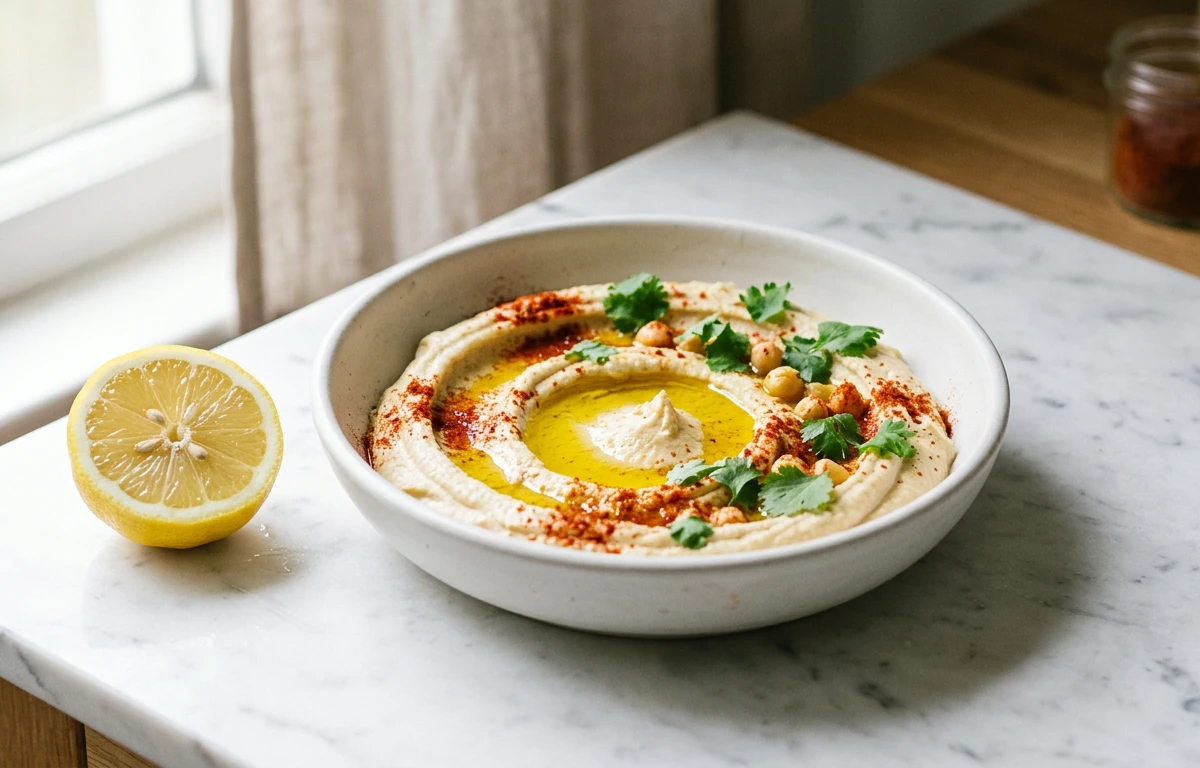
Classic Creamy Hummus
Silky smooth chickpea dip whipped with tahini, lemon, and garlic until impossibly creamy. A Middle Eastern staple that comes together in minutes with a few pantry ingredients. Perfect for dipping warm pita or crunchy vegetables.
For 4 servings
- prep
Prepare the chickpeas.
1.Soak dried chickpeas in plenty of water overnight (8-12 hours).2.Drain, rinse, and boil in fresh water until very tender and skins slide off easily (45-60 minutes).3.Drain and let cool slightly. For extra smoothness, gently rub between your palms to loosen and discard any floating skins.TIPOvercooking the chickpeas slightly makes them blend much smoother. They should mash easily between your fingers. - mix · ~1 min
Whip the tahini and lemon juice.
In the food processor, combine tahini and lemon juice. Blend for 1 minute until the mixture turns pale, thick, and almost paste-like. This emulsifying step is the secret to ultra-creamy hummus.
TIPDon't skip this step — whipping tahini with lemon juice first transforms the texture completely. - mix · ~1 min
Add garlic and blend.
Add the garlic clove, cumin powder, and salt to the food processor. Blend for 30 seconds until the garlic is completely broken down and the mixture is fragrant.
- mix · ~4 min
Add chickpeas and blend until smooth.
Scrape down the sides. Add the cooked chickpeas and ice cubes. Blend for 3-4 minutes, stopping to scrape down the sides once or twice, until the hummus is very smooth and creamy.
TIPThe ice cubes whip air into the hummus and keep it cold, giving it that light, fluffy texture. - mix · ~1 min
Stream in olive oil and adjust consistency.
With the food processor running, drizzle in 1 tablespoon of olive oil. If the hummus is too thick, add ice-cold water a tablespoon at a time and blend until you reach your desired consistency. Taste and adjust salt or lemon juice if needed.
TIPThe hummus will thicken slightly when refrigerated, so aim for a consistency just slightly looser than you want it to be. - assemble · ~1 min
Transfer and garnish.
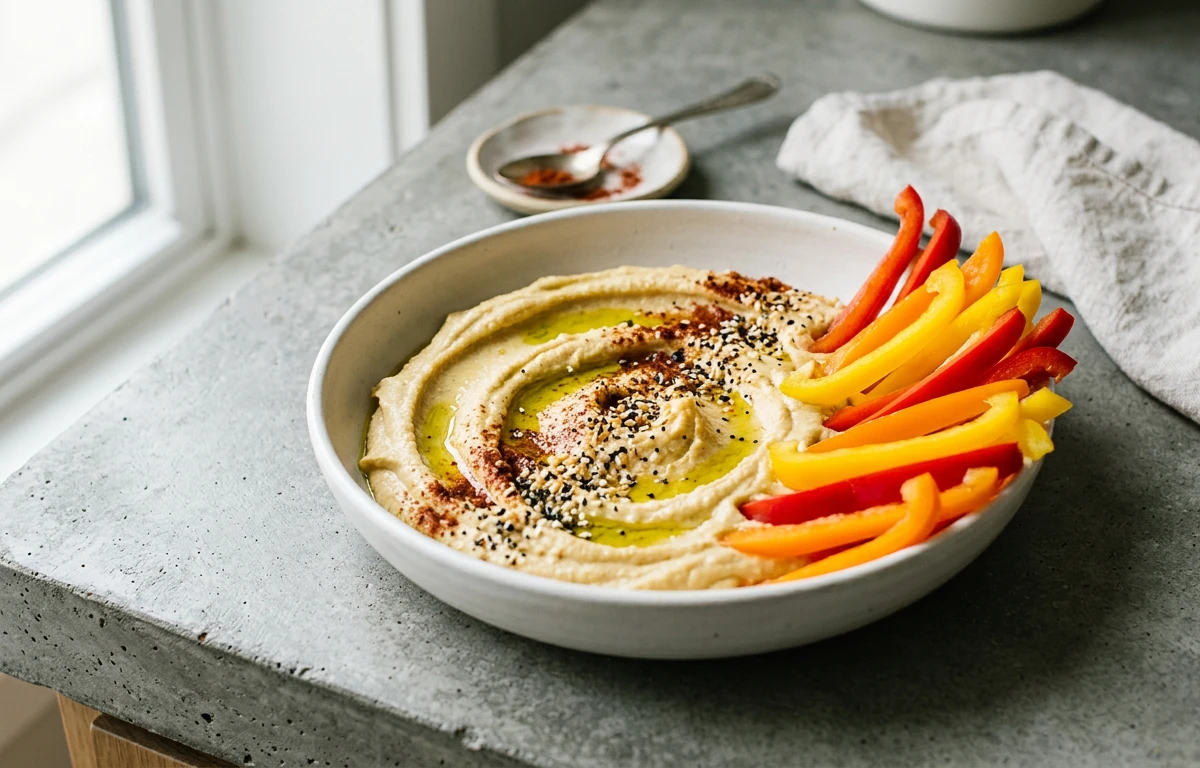
1.Spoon the hummus into a shallow serving bowl.2.Use the back of a spoon to create a well in the center.3.Drizzle the remaining 1 tablespoon of olive oil into the well.4.Dust the top with a pinch of paprika. - serve
Serve at room temperature with warm pita.
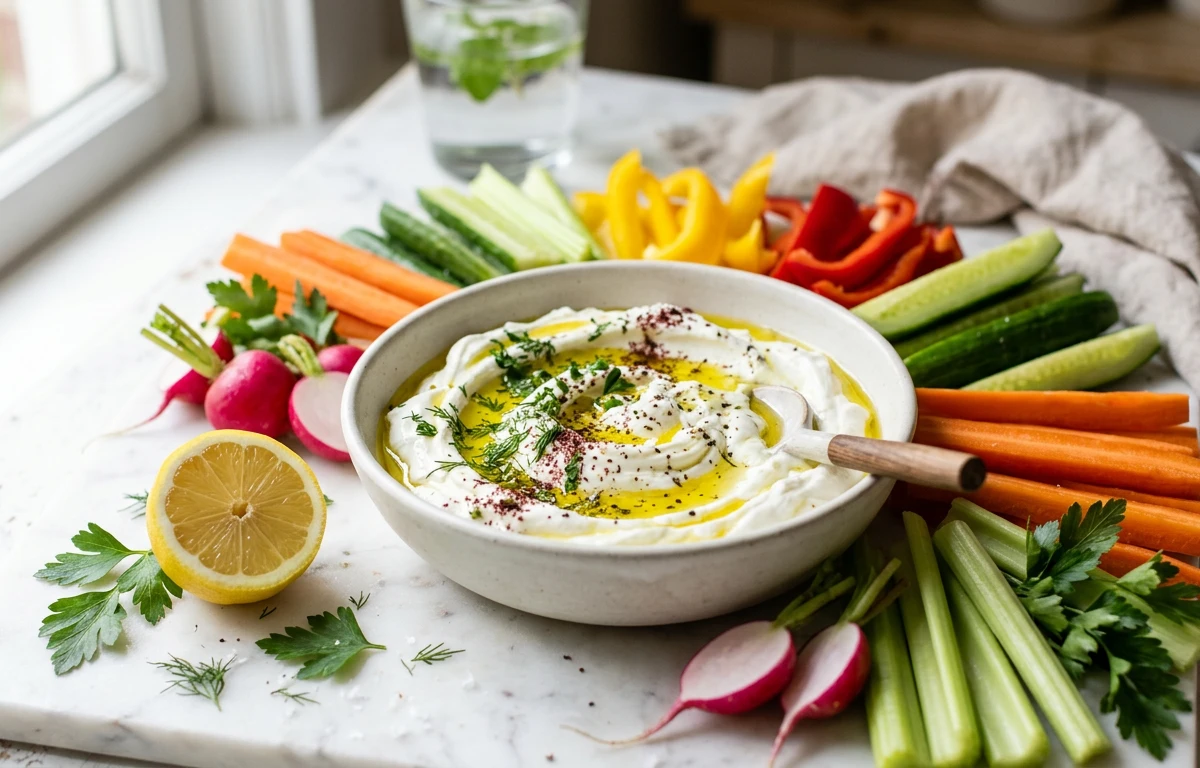
Hummus tastes best when not fridge-cold. Let it sit for 15-20 minutes if made ahead. Serve with warm pita bread, crunchy vegetables, or as part of a mezze platter.
What to keep in mind.
7 tips from the recipe — small details that make a real difference to the final dish.
- 1For ultra-smooth hummus, remove the chickpea skins by rubbing them between a clean kitchen towel.
- 2Add the ice cubes while blending — they aerate the hummus for a light, fluffy texture.
- 3Always use freshly squeezed lemon juice; bottled juice will taste flat and acidic.
- 4Blend the tahini with lemon juice first until pale — this emulsifies the paste and prevents graininess.
- 5Let the hummus rest at room temperature for 15-20 minutes before serving; cold dulls the flavour.
- 6Store leftover hummus in an airtight container with a thin layer of olive oil on top to prevent drying.
- 7Adjust consistency with ice-cold water, not olive oil, to keep the flavour clean and not greasy.
Adapt it for your goals.
Roasted Red Pepper Hummus
Add 1/2 cup of roasted red peppers (drained) in step 4 along with the chickpeas for a sweet-smoky twist and a vibrant colour.
Spicy Harissa HummusSpicy Harissa Hummus
Stir 1-2 tablespoons of harissa paste into the finished hummus for a North African-inspired kick that pairs beautifully with grilled vegetables.
Herb & Green HummusHerb & Green Hummus
Blend in a handful of fresh parsley or cilantro with the chickpeas for a fresh, grassy flavour and a pretty green hue.
Oil Free / Low Fat HummusOil-Free / Low-Fat Hummus
Replace the olive oil with an extra 2-3 tablespoons of aquafaba (chickpea cooking liquid) — it keeps the hummus creamy with less fat.
Beet HummusBeet Hummus
Add 1 small cooked beet (peeled and chopped) in step 4 for an earthy sweetness and a stunning magenta colour.
Why this is on our healthy list.
Rich in Plant Protein
Chickpeas provide a solid source of plant-based protein, supporting muscle repair and keeping you full longer.
High in Dietary Fibre
The chickpeas and tahini together deliver a good amount of fibre, which aids digestion and stabilises blood sugar levels.
Heart-Healthy Fats
Tahini is made from sesame seeds, which contain unsaturated fats that support cardiovascular health when eaten in moderation.
Packed with Minerals
Tahini and chickpeas are both rich in iron, magnesium, and phosphorus — essential for energy production and bone health.
Naturally Gluten-Free
This hummus contains no wheat or gluten, making it a safe and satisfying choice for those with gluten sensitivities.
Frequently asked questions
The skins contain tough fibre that prevents a truly silky texture — removing them is the key to ultra-creamy, restaurant-quality hummus.