Classic Hoppin' John
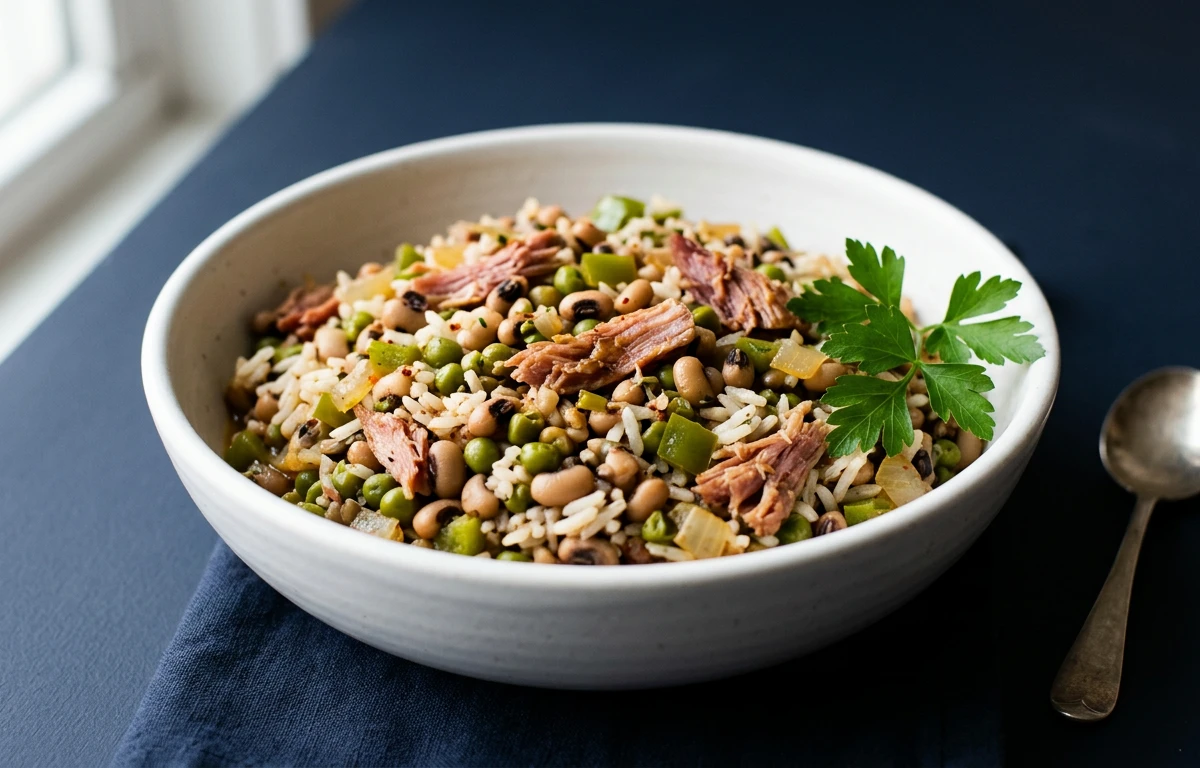
A soulful Southern one-pot dish of tender black-eyed peas simmered with smoky pork, served over a bed of fluffy rice. This Lowcountry classic brings luck and comfort to the table, especially on New Year's Day.
For 4 servings
- prep
Soak the black-eyed peas.
Rinse the dried black-eyed peas under cold water and pick out any stones. Place in a large bowl, cover with 3 inches of water, and soak overnight or quick-soak by boiling 2 minutes then letting stand 1 hour. Drain and set aside.
TIPQuick-soak method works perfectly — just bring to a boil, cover, let sit 1 hour, and drain. - simmer · ~10 min
Simmer the ham hock.
Place the drained black-eyed peas in a large heavy-bottomed pot or Dutch oven. Add the smoked ham hock and 4 cups of water. Bring to a boil over high heat, then reduce to a gentle simmer. Skim off any foam that rises to the surface.
- saute · ~5 min
Sauté the trinity vegetables.
1.Add chopped onion, celery, and green bell pepper directly into the pot with the simmering peas.2.Stir in the minced garlic, bay leaf, dried thyme, cayenne, and black pepper.3.Stir everything together and bring back to a gentle simmer.TIPNo need to sauté in separate oil — the fat from the ham hock will render and flavor the vegetables beautifully as they cook. - simmer · ~50 min
Cook the peas until tender.
Cover the pot and let simmer gently for 45-60 minutes, stirring occasionally, until the peas are tender and creamy but still hold their shape. Add a splash of water if the pot looks dry at any point.
TIPDon't let the peas boil hard — a gentle simmer keeps them intact and creamy. - steam · ~20 min
Cook the rice.
While the peas simmer, cook the rice. Bring 2 cups of water to a boil in a medium saucepan. Add the rice, stir once, cover, and reduce heat to lowest setting. Steam for 18 minutes, then remove from heat and let sit covered for 5 minutes. Fluff with a fork.
TIPResist lifting the lid while the rice cooks — the steam is doing the work. - prep · ~5 min
Remove the ham hock and shred the meat.
Once the peas are tender, carefully remove the ham hock to a cutting board. Let it cool for a few minutes, then pull off any meat from the bone. Discard the bone, skin, and excess fat. Roughly chop the meat and stir it back into the pot.
- mix · ~2 min
Season and finish the peas.
Stir in the salt. Taste the peas and adjust seasoning if needed — the ham hock brings saltiness, so you may not need much. Remove the bay leaves. The peas should be brothy but not soupy; if too thin, simmer uncovered for a few minutes to reduce.
TIPHam hocks vary in saltiness — always taste before adding more salt. - assemble
Assemble and serve.
1.Spoon a generous portion of fluffy white rice into each bowl.2.Ladle the black-eyed peas and pot liquor over the rice.3.Top with a scattering of sliced scallions.4.Serve immediately with hot sauce and cornbread on the side.TIPThe pot liquor — the seasoned broth from cooking — is the soul of Hoppin' John. Don't skimp on ladling it over the rice.
What to keep in mind.
7 tips from the recipe — small details that make a real difference to the final dish.
- 1For the creamiest black-eyed peas without mushiness, soak them overnight rather than using the quick-soak method.
- 2Skim the foam that rises during the first 10 minutes of simmering the ham hock to keep the pot liquor clear and clean-tasting.
- 3Resist the urge to stir the peas too often; gentle stirring once every 15 minutes is plenty to prevent sticking.
- 4To test doneness, press a pea between your fingers — it should smash easily but still hold its shape.
- 5The pot liquor should be slightly thick and flavorful; if it's too thin after cooking, simmer uncovered for 10–15 more minutes.
- 6Make this dish a day ahead — the flavors deepen overnight, and the peas absorb more of the smoky broth.
- 7Leftover Hoppin' John freezes well for up to 3 months; store in an airtight container and reheat gently with a splash of water.
Adapt it for your goals.
Vegetarian
Skip the ham hock and use vegetable broth plus 1 tablespoon of liquid smoke and 2 tablespoons of olive oil. Add 1 teaspoon of smoked paprika for depth. This version is fully plant-based, perfect for Meatless Monday or for vegetarian guests craving Southern comfort food.
spicy cajunSpicy cajun
Add 1 smoked andouille sausage (sliced), increase cayenne to 1/2 teaspoon, and stir in 1 teaspoon of hot sauce during the last 15 minutes of simmering. The sausage adds extra protein and a punch of spice for those who want a bolder, Cajun-inspired kick.
low sodiumLow-sodium
Use a smoked turkey leg instead of ham hock to reduce sodium significantly while keeping smoky flavor. Omit added salt entirely and season only with black pepper, cayenne, and a splash of apple cider vinegar at the end. Ideal for anyone watching their salt intake without sacrificing taste.
Why this is on our healthy list.
Rich in Plant-Based Protein
Black-eyed peas are an excellent source of plant protein, providing a hearty, meat-free protein boost that supports muscle health and keeps you full longer.
High in Dietary Fiber
A single cup of cooked black-eyed peas delivers about 8 grams of fiber, aiding digestion, promoting gut health, and helping to maintain stable blood sugar levels.
Good Source of B Vitamins
Black-eyed peas are packed with folate (a B vitamin) and thiamine, which are essential for energy production and red blood cell formation, especially important for pregnant women.
Low in Saturated Fat
When made with a lean smoked pork hock and trimmed of visible fat, Hoppin' John is naturally low in saturated fat, making it a heart-conscious comfort meal.
Frequently asked questions
Yes, but skip the soaking and simmering step. Drain and rinse two 15-ounce cans, then add them during the last 20 minutes of simmering with the vegetables to avoid mushiness.