Classic Kanda Poha
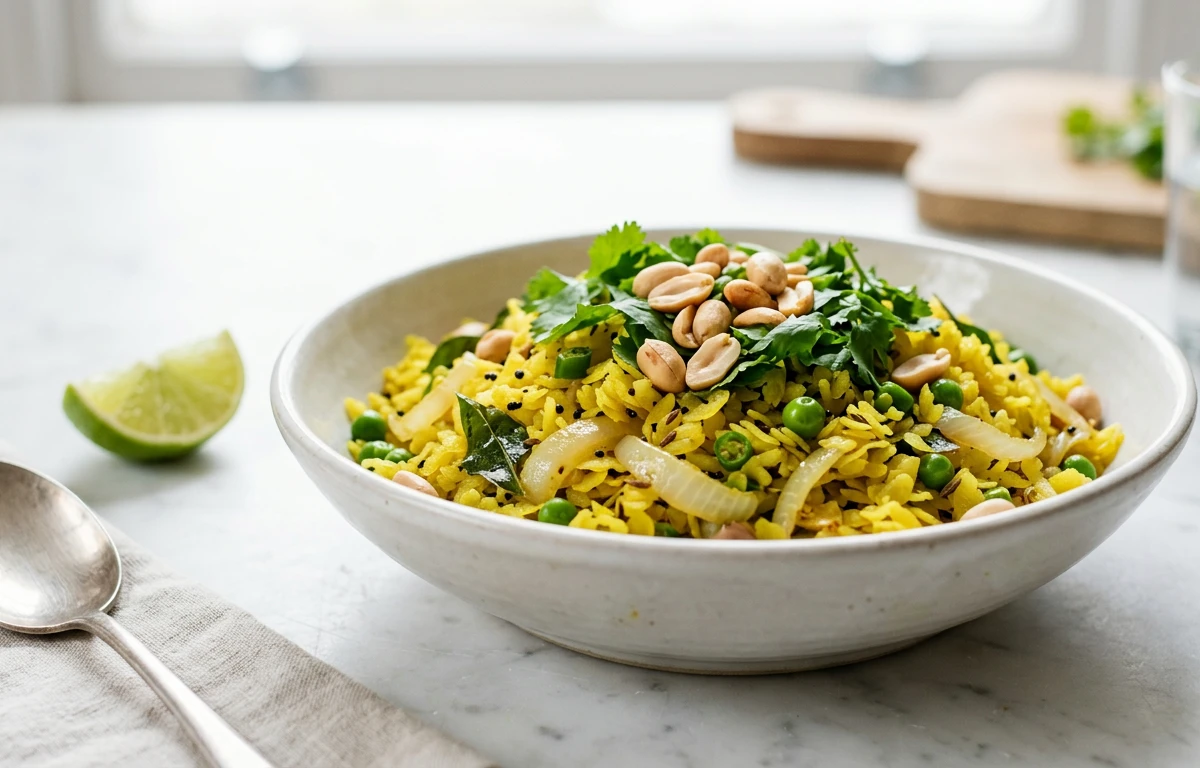
A light, fluffy Maharashtrian breakfast staple made with flattened rice, crunchy peanuts, and sweet caramelized onions. Tempered with mustard seeds, curry leaves, and green chilies, this quick dish comes together in under 15 minutes and tastes best with a squeeze of lemon and a steaming cup of chai.
For 4 servings
- prep · ~5 min
Wash and drain the poha.
1.Place poha in a colander and rinse under running water for 30 seconds.2.Set aside to drain completely for 5 minutes until soft and fluffy.3.Fluff gently with a fork after draining.TIPThick poha works best. If using thin poha, just sprinkle water and toss — never soak it. - temper · ~1 min
Make the tempering.
1.Heat oil in a wide kadhai or pan over medium heat.2.Add mustard seeds and let them pop (30 seconds).3.Add cumin seeds and curry leaves, then sauté until fragrant (20 seconds). - saute · ~9 min
Sauté the peanuts, potatoes, and aromatics.
1.Add peanuts and sauté until lightly golden (1-2 minutes).2.Add cubed potato and cook until edges start to crisp and potatoes are cooked through (4-5 minutes).3.Add sliced onions and green chilies, then cook until onions turn translucent and soft (3-4 minutes).TIPCut the potato small so it cooks fast. A quick sprinkle of water helps steam the potato if it starts to stick. - mix · ~2 min
Season and combine with poha.
1.Sprinkle turmeric powder and salt over the onion-potato mixture.2.Add the drained poha and sugar to the pan.3.Gently toss everything together until poha is evenly coated yellow and heated through (2 minutes).TIPToss gently to avoid breaking the poha flakes. Use a light hand. - garnish
Finish and serve hot.
1.Turn off the heat and squeeze fresh lemon juice on top.2.Garnish with chopped coriander leaves and grated fresh coconut.3.Serve immediately in individual bowls.
What to keep in mind.
7 tips from the recipe — small details that make a real difference to the final dish.
- 1Use thick poha; thin poha turns mushy when washed.
- 2Wash poha in a colander, not a bowl, so excess water drains away.
- 3Let the drained poha rest 5 minutes so it absorbs moisture evenly.
- 4Cut potato into small cubes so they cook through in the same time as peanuts.
- 5Toss poha gently with a light hand to keep flakes intact.
- 6Add a pinch of sugar to balance the savory and tangy flavors.
- 7Serve immediately; poha dries out and clumps as it cools.
Adapt it for your goals.
High-protein
Add a handful of roasted chickpeas (dalia) or crumbled paneer for extra protein, perfect for a post-workout breakfast.
low oilLow-oil
Reduce oil to 1 tablespoon and dry-roast the peanuts and potato before adding a splash of water for steaming — cuts fat while keeping the dish light.
jainJain
Omit the potato and replace with diced raw banana or pumpkin; skip garlic and onion if following strict Jain diet — use asafoetida for flavor.
veganVegan
Already vegan as written; ensure the garnish of fresh coconut is used and skip optional dairy-based sides for a fully plant-based meal.
colorful veggieColorful veggie
Add diced carrots, green peas, or bell peppers along with the potato for extra color and nutrients — a hit with kids.
Why this is on our healthy list.
Light & Easy to Digest
Flattened rice (poha) is a light carbohydrate that digests quickly, making this an ideal breakfast or post-illness recovery meal.
Good Source of Plant Protein
Peanuts in this dish provide plant-based protein and healthy unsaturated fats to keep you full longer.
Rich in Antioxidants
Turmeric and curry leaves contribute anti-inflammatory curcumin and antioxidants that support overall health.
Low in Saturated Fat
Made with minimal oil and no dairy, this dish is naturally low in unhealthy saturated fats.
Iron from Flattened Rice
Poha is a source of iron, especially when paired with vitamin C from lemon juice to enhance absorption.
Frequently asked questions
Thin poha will turn mushy if washed; instead, just sprinkle it lightly with water and fluff before adding to the tempering.



.webp)